ARTE
BELEZA E BEM-ESTAR
ARTESANATO
CULTURA E HISTÓRIA
ENTRETENIMENTO
MEIO AMBIENTE
COMIDA E BEBIDAS
ENGENHARIA REVERSA
CIÊNCIAS
ESPORTES
TECNOLOGIA
TECNOLOGIA VESTÍVEL
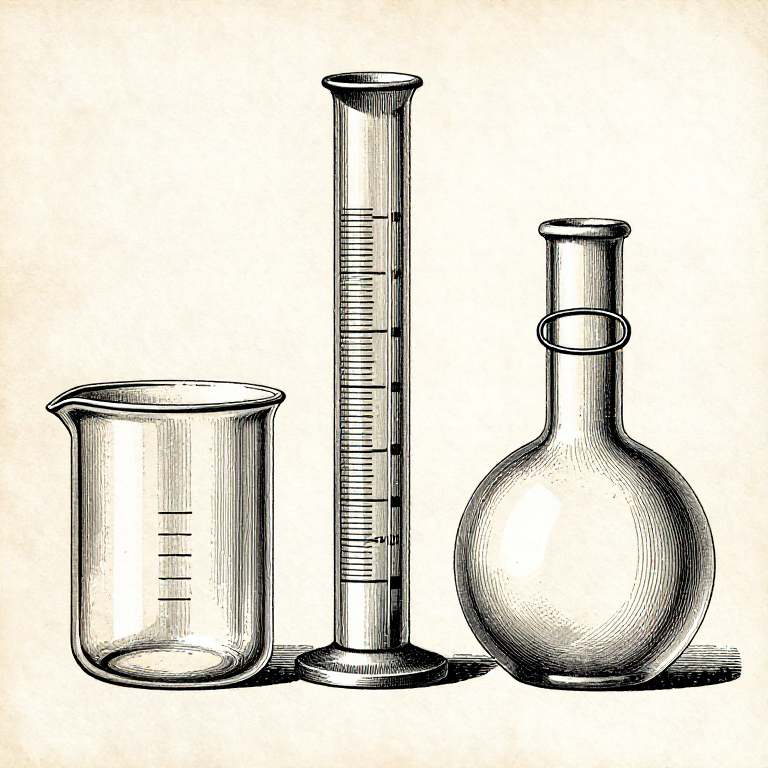


Making Up a Solution: Which Glassware Actually Measures, and Which Only Looks Like It
The graduations printed on a beaker are decoration. They are there so you can see roughly how full it is, and they are commonly 5% out — which is a hundred times worse than the flask standing next to it.
Glassware divides into two families and the difference is enormous. VOLUMETRIC glassware — volumetric flasks, bulb pipettes, burettes — is made and tested to deliver one stated volume accurately. Everything else is a container with marks on it.
Which you reach for is a decision about what the solution is FOR. Rinsing something out needs a beaker; a solution whose concentration will appear in a result needs a volumetric flask, and using the wrong one quietly poisons every number downstream.
Iniciante
2 hours
Instruções
1
1
Weigh the solid, and dissolve it somewhere else first
Weigh the solid, and dissolve it somewhere else first
Weigh the solid on a precision balance, into a weighing container rather than onto the pan, and write the ACTUAL mass down — not the mass you intended. The difference between 5.00 g and 5.03 g is the difference between a calculated concentration and a guessed one.
Dissolve it in a BEAKER with a smaller volume of solvent than the final target, not in the volumetric flask. Solids dissolve slowly, need stirring, and sometimes need warming, and a volumetric flask has a narrow neck that makes all three awkward.
Make sure it is completely dissolved before going any further. Undissolved solid transferred into the flask is solid that is not in your solution, and the concentration you calculate will be higher than the one you have.
Materiais para este passo:
 Cloreto de sódio (sal)1 peça
 Água destilada1 litro
Ferramentas necessárias:
 Balança de precisão
 Copo de vidro (gobelé)
 Espátula
 Vareta de agitação
2
2
Transfer, rinse, and rinse again
Transfer, rinse, and rinse again
Pour the dissolved solution into the volumetric flask through a funnel, then rinse the beaker with a little solvent and pour that in too. Then do it again. Rinse the stirring rod and the funnel into the flask as well.
Whatever stays behind in the beaker is solute missing from your solution. A beaker that looks empty holds a film worth a percent or more of a small quantity, and three small rinses recover nearly all of it.
A wash bottle makes this easy and precise: a thin jet reaches the walls and the rod without adding much volume. The rinsings go into the flask, never into the sink — they are part of the measurement.
Materiais para este passo:
Água destilada1 litroFerramentas necessárias:
 Balão volumétrico
 Funil de vidro com haste
 PissetaCopo de vidro (gobelé)
3
3
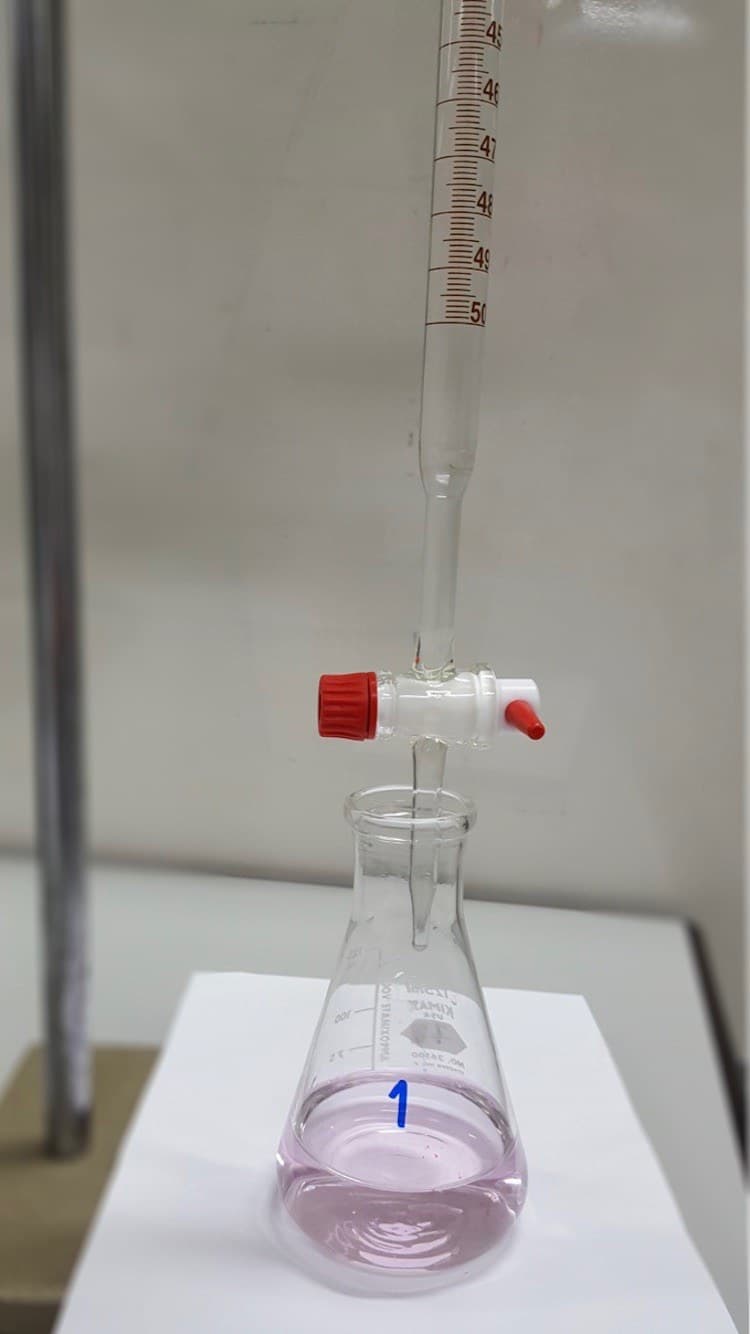
Make up to the mark — and what the mark means
Make up to the mark — and what the mark means
A carregar o notebook Jupyter…
Materiais para este passo:
Água destilada1 litroFerramentas necessárias:
Balão volumétrico Proveta graduadaBalança de precisão
 Computador de secretária
4
4
Invert to mix, then label
Invert to mix, then label
Stopper the flask and invert it completely, twenty times or so, letting the bubble travel the full length each time. Swirling does not mix a volumetric flask: the dense solution sits in the bulb and the neck stays nearly pure solvent.
This matters more than it sounds. An unmixed flask sampled from the neck gives a concentration far below the real one, and it is a mistake that produces beautifully reproducible wrong answers — the systematic error the measurement batch warns about.
Then label it: substance, concentration, solvent, date, initials. And do not STORE solutions in volumetric flasks; transfer to a proper bottle. A volumetric flask is a measuring instrument, and leaving solution to dry in the neck around the graduation is how one stops being accurate.
Materiais para este passo:
 Etiquetas adesivas1 peça
Ferramentas necessárias:
Balão volumétrico Marcador permanente
 Caderno
Materiais
3- 1 peçaReferência
- 3 litrosReferência
- 1 peçaReferência
Ferramentas necessárias
11- Referência
- Referência
- Referência
- Referência
- Balão volumétrico10% de comissãoReferência
- Referência
- Pisseta10% de comissãoReferência
- Referência
- Referência
- Referência
- Referência
Blueprints relacionados
Estes blueprints compartilham conhecimento — técnicas, materiais ou princípios

CC0 Domínio Público
Este blueprint é liberado sob CC0. Você é livre para copiar, modificar, distribuir e usar este trabalho para qualquer finalidade, sem pedir permissão.
Apoie o Maker comprando produtos através do Blueprint, onde ele ganha uma Comissão Maker definida pelos vendedores, ou crie uma nova versão deste Blueprint e inclua-o como conexão no seu próprio Blueprint para compartilhar receita.