Colaboração
ARTE
BELEZA E BEM-ESTAR
ARTESANATO
CULTURA E HISTÓRIA
ENTRETENIMENTO
MEIO AMBIENTE
COMIDA E BEBIDAS
ENGENHARIA REVERSA
CIÊNCIAS
ESPORTES
TECNOLOGIA
TECNOLOGIA VESTÍVEL
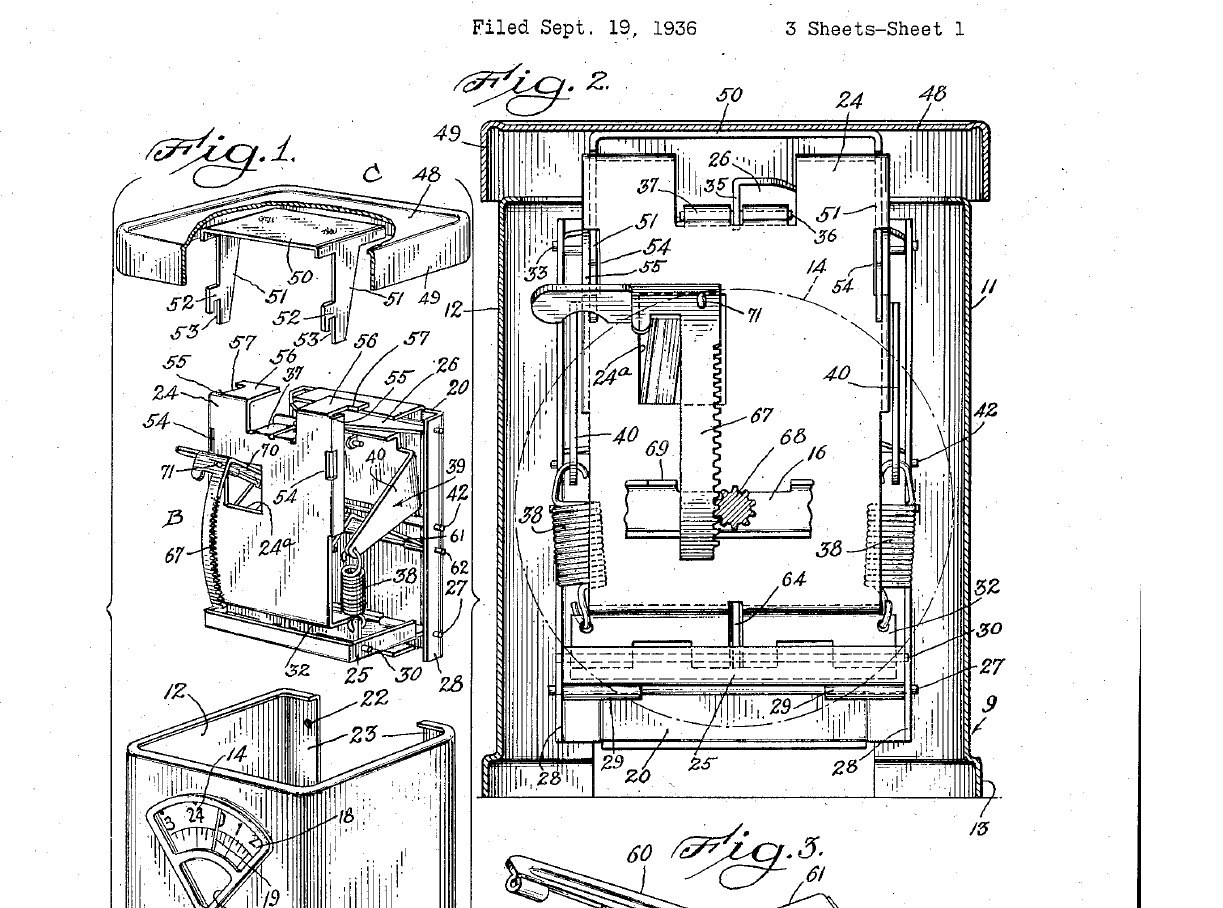


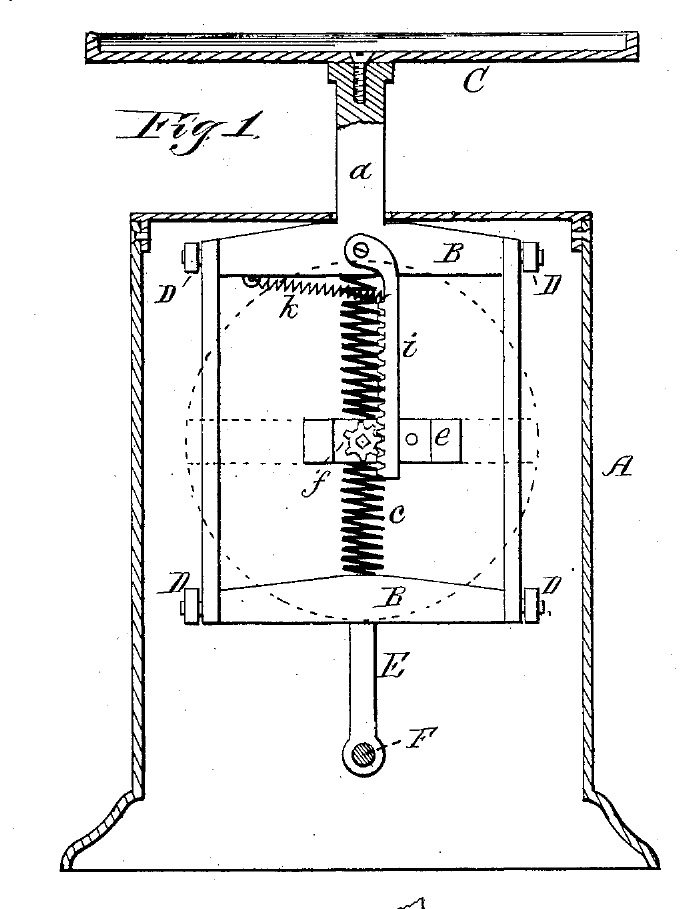
Mechanical Kitchen Scale: Sheet-Metal Case, Guided Plate and Two Springs to a Dial (Hansen, 1939)
The everyday kitchen spring scale, built almost entirely from sheet metal. The platform hangs from a plate that two pivoted links keep moving straight up and down, the way Roberval's frame keeps a pan level. Two springs carry the load, and a rack turns the numbered dial behind a small window.
Result: a household scale that reads the true weight even when the food is put on one edge of the platform, because the dial is driven from the point midway between the two springs. It goes together from three units: case, weighing works and platform.
Source: M. H. Hansen (Hanson Scale Co.), US Patent 2,145,480 (1939). Unknown: the sheet metal and its sizes, the springs, the capacity and how the dial is marked. Picture: patent drawing.
Avançado
3 days
Instruções
1
1
Make the case and fit the dial
Make the case and fit the dial
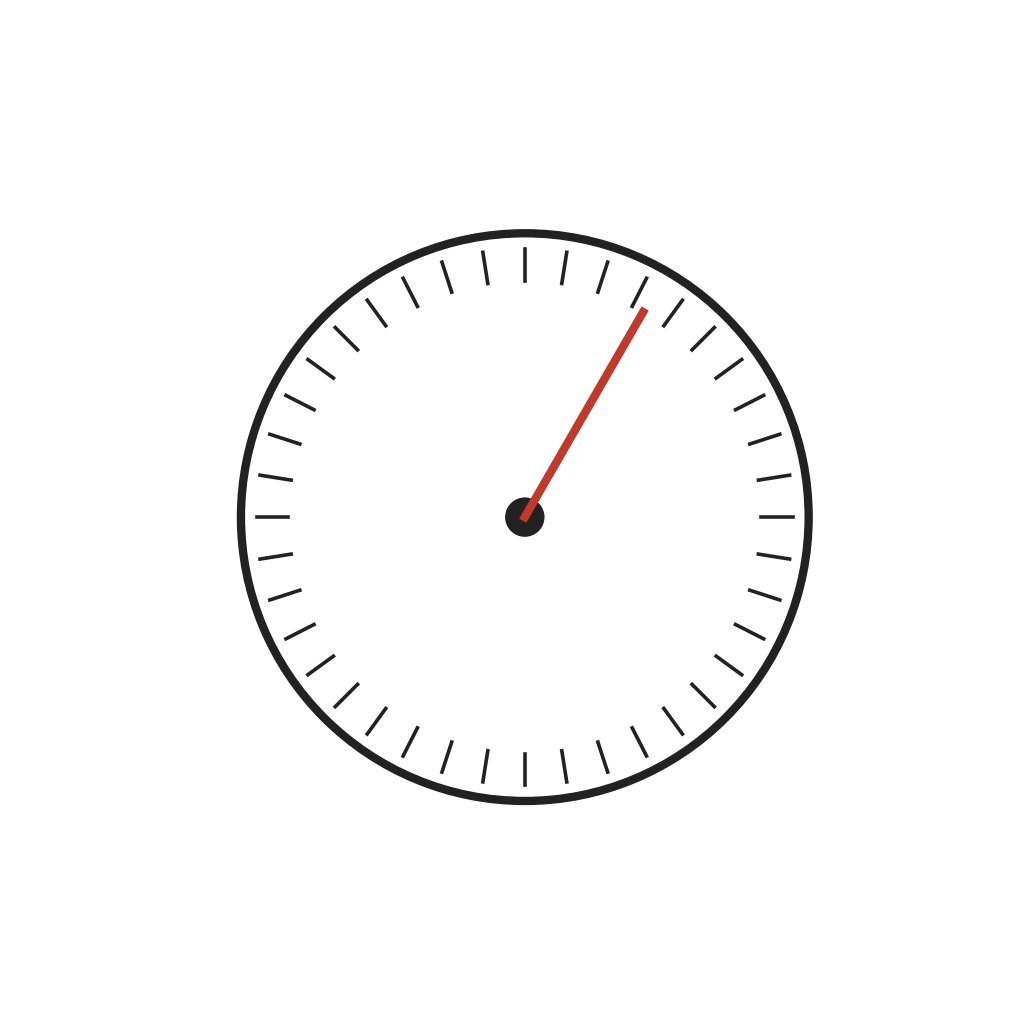
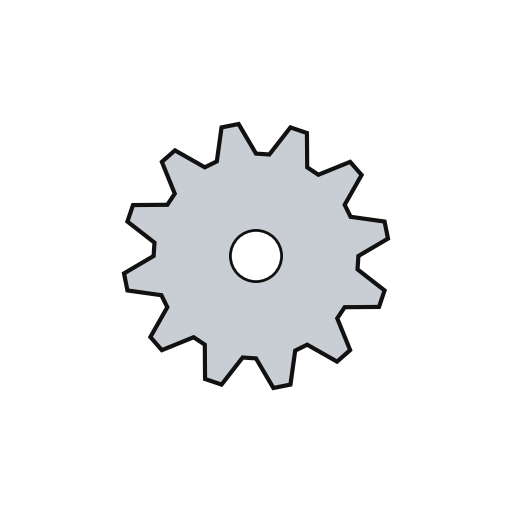
Bend sheet metal into a U: a front wall and two side walls, the lower edges flared outward to stand steady, open at the top and back, with inturned flanges on the back edges. Cut a sector-shaped window in the front and glaze it. Fix a bracket across the side walls, and run the dial shaft from the front wall to the bracket. On the shaft goes the round dial, numbered on its face, and a pinion behind it. Fit a fixed pointer at the window. Not given: the metal, gauge and sizes, and how the dial is numbered.
Materiais para este passo:
 Metal desconhecido1 folha
 Vidraça1 window
 Mostrador e ponteiro da balança1 peça
 Pinhão1 peça
Ferramentas necessárias:
 Tesoura de chapa
 Conjunto de alicates
 Dimensões desconhecidas
2
2
Build the guided plate on two springs
Build the guided plate on two springs
On a flat rear plate, pin two horizontal links: a lower rectangular one and an upper triangular one. Pin their front ends to an upright plate, which can now only move straight up and down. Hang the upright plate from two tension springs at its lower corners. Hook their tops to the arms of a U-shaped bracket pivoted on the rear plate. A bolt through the rear plate, with a compression spring and a nut, swings the bracket to set the zero.
Materiais para este passo:
Metal desconhecido1 folha Alfinetes1 conjunto
 Mola de tração2 peças
 Conjunto de molas de compressão1 one spring
 Parafusos de máquina1 zero bolt
 Porca sextavada1 peça
Ferramentas necessárias:
Tesoura de chapaConjunto de alicatesDimensões desconhecidas3
3
Drive the dial from the middle
Drive the dial from the middle
Pivot an arm on the rear plate and join it by a short link to the upright plate at the pin midway between the two springs. If food sits off-centre, the platform tips and one spring stretches more, but the middle point moves by the average, so the arm gives the true weight. Pass the arm through a hole in the upright plate. Pin it to a curved rack cut in one piece with its extension, so a loose arm cannot skew the rack. The rack will mesh with the dial pinion.
Materiais para este passo:
Metal desconhecido1 folhaAlfinetes1 conjuntoFerramentas necessárias:
Tesoura de chapaConjunto de alicates4
4
Make the platform
Make the platform
Cut a rectangular sheet-metal platform with a flange turned down all round. Make the flange clear the case walls, so a tipped platform cannot rub and dirt stays out. Rivet a U-shaped bracket under it. Its two arms end in slotted hooks that drop into openings in the upright plate, held by its flanges so the platform cannot tilt on it.
Materiais para este passo:
Metal desconhecido1 folha Rebites de aço1 a few
Ferramentas necessárias:
Tesoura de chapaConjunto de alicates5
5
Assemble and set the zero
Assemble and set the zero
Lower the weighing works into the case through the open top: the rack drops into mesh with the dial pinion. Screw the rear plate to the case flanges. Hook the platform on. With the platform empty, turn the zero nut until the zero on the dial stands at the pointer. Turn it again later if the springs stretch. Ours: check the reading with a known weight.
Materiais para este passo:
Parafusos de máquina1 rear plate screwsFerramentas necessárias:
 Conjunto de chaves de fendas
 Peso
Materiais
10- 1 folhaReferência
- 1 windowReferência
- Referência
- 1 peçaReferência
- 2 conjuntosReferência
- 2 peçasReferência
- 1 one springReferência
- 1 rear plate screwsReferência
- 1 peçaReferência
- 1 a fewReferência
Materiais de Blueprints conectados
Este projeto faz
Blueprints relacionados
Estes blueprints compartilham conhecimento — técnicas, materiais ou princípios
CC0 Domínio Público
Este blueprint é liberado sob CC0. Você é livre para copiar, modificar, distribuir e usar este trabalho para qualquer finalidade, sem pedir permissão.
Apoie o Maker comprando produtos através do Blueprint, onde ele ganha uma Comissão Maker definida pelos vendedores, ou crie uma nova versão deste Blueprint e inclua-o como conexão no seu próprio Blueprint para compartilhar receita.