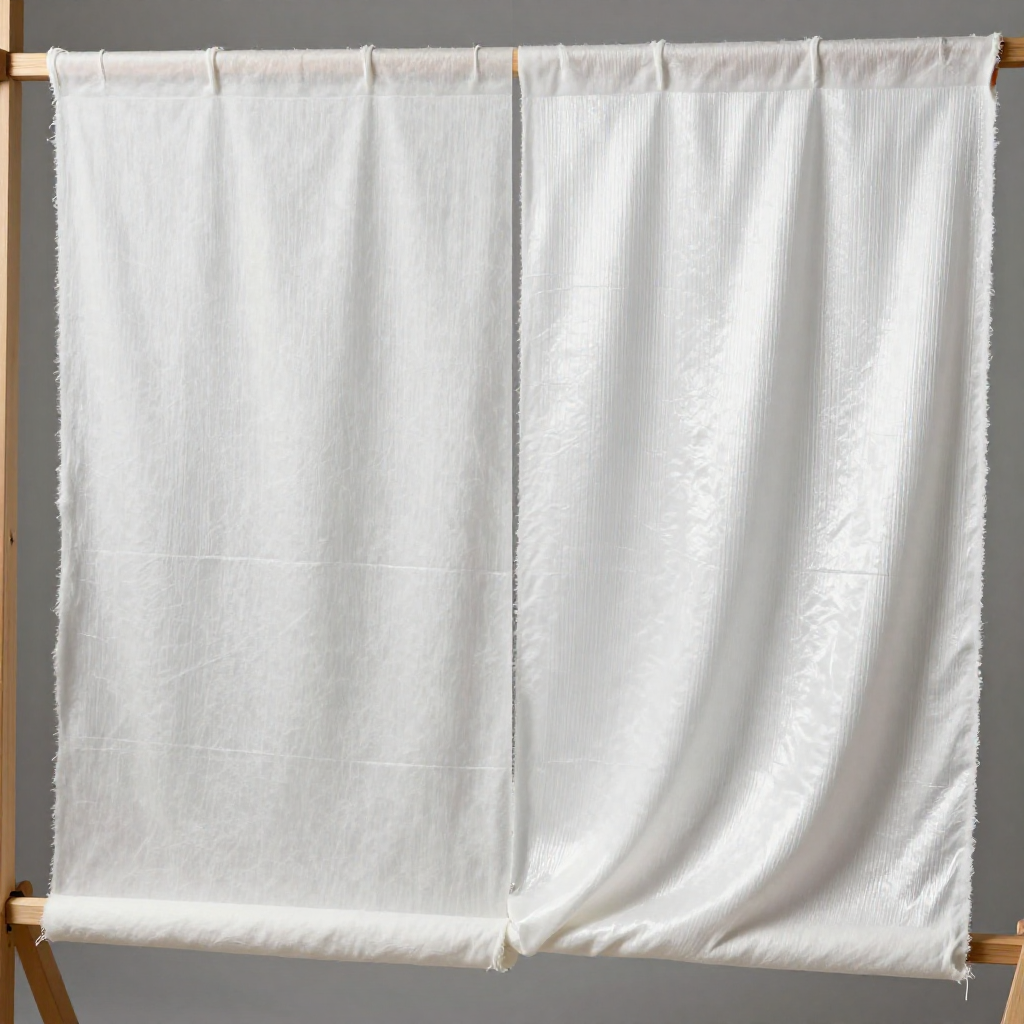

Mercerization — Treating Cotton with Caustic Soda for Luster and Strength
In 1844, English calico printer John Mercer discovered that immersing cotton fabric in a strong solution of sodium hydroxide (caustic soda) permanently changed the fiber's properties. The treated cotton swelled, shrank, became stronger, took dye more readily, and acquired a subtle silky luster. Mercer patented the process in 1850, but it had a drawback: the cotton shrank by 20–25%, which increased fabric cost per square meter. The textile trade showed little interest.
The breakthrough came in 1890 when Horace Lowe discovered that if the cotton was held under tension during the caustic soda treatment — stretched on a frame or stenter to prevent shrinkage — the luster effect was dramatically amplified. The treated cotton gained a brilliant, permanent sheen that closely resembled silk. This 'Lowe mercerization' process was an immediate commercial success and remains the standard today.
The chemistry is elegant. Sodium hydroxide (15–25% concentration) penetrates the cotton fiber and disrupts its crystalline structure, converting the cellulose from its natural form (cellulose I) to a swollen, amorphous state. When the caustic is washed out and the fiber dries under tension, the cellulose recrystallizes into a denser, smoother form (cellulose II). The rounder cross-section reflects light more uniformly, producing the characteristic luster. Mercerized cotton is 10–25% stronger than untreated cotton and absorbs 25–30% more dye. Every high-quality cotton dress shirt, fine bedsheet, and embroidery thread you encounter has been mercerized.
Instruções
Select untreated cotton fabric or yarn
Select untreated cotton fabric or yarn
Choose a tightly woven cotton fabric (such as poplin or broadcloth) or a skein of combed cotton yarn. The cotton must be scoured — free of natural waxes, pectins, and sizing — so the caustic soda can penetrate the fibers evenly. Unscoured cotton repels the solution and mercerizes unevenly. Combed cotton responds better than carded cotton because its fibers are more parallel and uniform.
Materiais para este passo:
 Pano de algodão1 metro
Prepare the sodium hydroxide solution
Prepare the sodium hydroxide solution
Dissolve sodium hydroxide (NaOH) in cold water to produce a 20% concentration by weight — 200 grams of NaOH per liter of water. The solution must be cold: 5–15°C is ideal. Hot caustic soda degrades cellulose instead of mercerizing it. Adding NaOH to water is exothermic — add it slowly while stirring and monitor the temperature. The solution is extremely corrosive: it causes severe chemical burns on contact with skin.
Materiais para este passo:
 Hidróxido de sódio em solução a 10 %500 ml
Stretch the fabric on a frame under tension
Stretch the fabric on a frame under tension
Pin or clamp the cotton fabric onto a rigid frame, stretching it evenly in both warp and weft directions. The tension must be firm enough to prevent any shrinkage during the caustic treatment — this is the key improvement Horace Lowe added in 1890. Without tension, the cotton shrinks 20–25% and gains only modest luster. Under tension, the fibers swell but cannot contract, forcing them into a rounder cross-section that reflects light brilliantly.
Ferramentas necessárias:
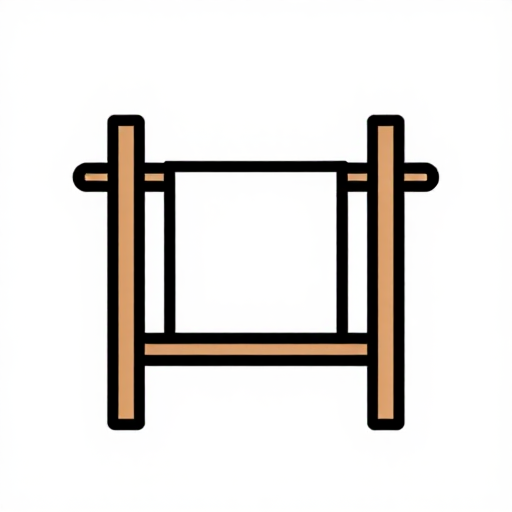 Râmola
Immerse or pad the fabric with caustic soda
Immerse or pad the fabric with caustic soda
While the fabric is held under tension, saturate it thoroughly with the cold 20% NaOH solution. In industrial mercerizing, the fabric passes through a trough of caustic soda and between squeeze rollers. For small-scale work, brush or sponge the solution evenly across the entire surface, ensuring complete saturation. The fabric becomes translucent as the fibers swell — this visible change confirms the caustic is penetrating.
Hold the fabric under tension for 30–60 seconds
Hold the fabric under tension for 30–60 seconds
Allow the caustic soda to act on the cotton for 30–60 seconds while maintaining tension. Longer exposure (up to 2 minutes) increases the effect but risks weakening the fiber. During this time, the NaOH penetrates the cotton cellulose, breaking hydrogen bonds between cellulose chains and allowing the crystalline structure to swell and rearrange. The fiber diameter increases by 20–30% as water and NaOH enter the structure.
Rinse thoroughly while still under tension
Rinse thoroughly while still under tension
Wash the fabric with copious amounts of clean water while keeping it stretched on the frame. The rinse must remove all residual NaOH — any caustic left in the fiber will continue degrading the cellulose after the process is complete. Rinse with cold water first, then warm water. Test the rinse water with pH paper: continue rinsing until the pH drops below 8. Industrial mercerizing machines recover the NaOH for reuse.
Neutralize any remaining alkali
Neutralize any remaining alkali
After rinsing, pass the fabric through a dilute acid bath — 1–2% acetic acid (white vinegar) or dilute sulfuric acid — to neutralize any traces of NaOH trapped in the fiber. Rinse again with clean water. This neutralization step ensures the fabric is pH-neutral before drying, preventing long-term fiber degradation from residual alkali.
Dry the fabric under tension
Dry the fabric under tension
Keep the fabric stretched on the frame and allow it to air dry, or dry it in a heated stenter oven. Drying under tension is essential — if the fabric is released while still damp, it shrinks and loses much of the luster gained during the caustic treatment. As the swollen cellulose loses water, it recrystallizes in its new, denser, rounder form — cellulose II — locking in the mercerized properties permanently.
Observe the mercerized finish
Observe the mercerized finish
Compare the mercerized fabric with an untreated sample side by side. The mercerized cotton has a visible, silky sheen — light reflects smoothly off the rounder fiber surfaces instead of scattering off the irregular, kidney-shaped cross-section of natural cotton. The fabric also feels smoother and slightly heavier. Hold both samples up to the light: the mercerized fabric appears more translucent because the denser fiber structure transmits light more evenly.
Test the improved dye absorption
Test the improved dye absorption
Dye a mercerized sample and an untreated sample in the same dye bath. The mercerized cotton absorbs 25–30% more dye, producing deeper, more saturated color. This is because the restructured cellulose has more accessible hydroxyl groups — the chemical sites where dye molecules bond. Mercerized cotton thread is the standard for embroidery (sold as 'pearl cotton' or 'perle cotton') precisely because it takes dye so vividly.
Test the increased tensile strength
Test the increased tensile strength
Pull both samples with equal force. The mercerized cotton is 10–25% stronger than the untreated sample. The denser cellulose II crystal structure and the more parallel fiber arrangement (locked by tension during treatment) both contribute to increased tensile strength. This strength gain is permanent and does not wash out. Mercerized sewing thread is preferred for high-stress seams because of this strength advantage.
Understand the safety requirements
Understand the safety requirements
Sodium hydroxide at 20% concentration causes immediate, severe chemical burns on contact with skin, eyes, or mucous membranes. Wear chemical-resistant gloves (nitrile or neoprene), full-face splash goggles, and a chemical apron. Have running water immediately accessible for emergency flushing — NaOH burns require at least 20 minutes of continuous flushing. Never add water to solid NaOH (violent exothermic reaction) — always add NaOH to water slowly while stirring.
Recognize mercerization's place in textile finishing
Recognize mercerization's place in textile finishing
Mercerization was the first chemical finishing process for cotton — a treatment that permanently improves the fiber's properties without applying a coating. It bridged the gap between cotton and silk: mercerized cotton has the luster, smooth hand, and dye affinity of silk at a fraction of the cost. Today, virtually all high-quality cotton goods are mercerized — fine shirts, bed linens, embroidery thread, and dress fabrics. The process has been refined (liquid ammonia mercerization, double mercerization) but the principle remains exactly what Mercer discovered in 1844: caustic soda transforms cotton at the molecular level.
Materiais
2- 1 metroReferência
- Referência
Materiais de Blueprints conectados
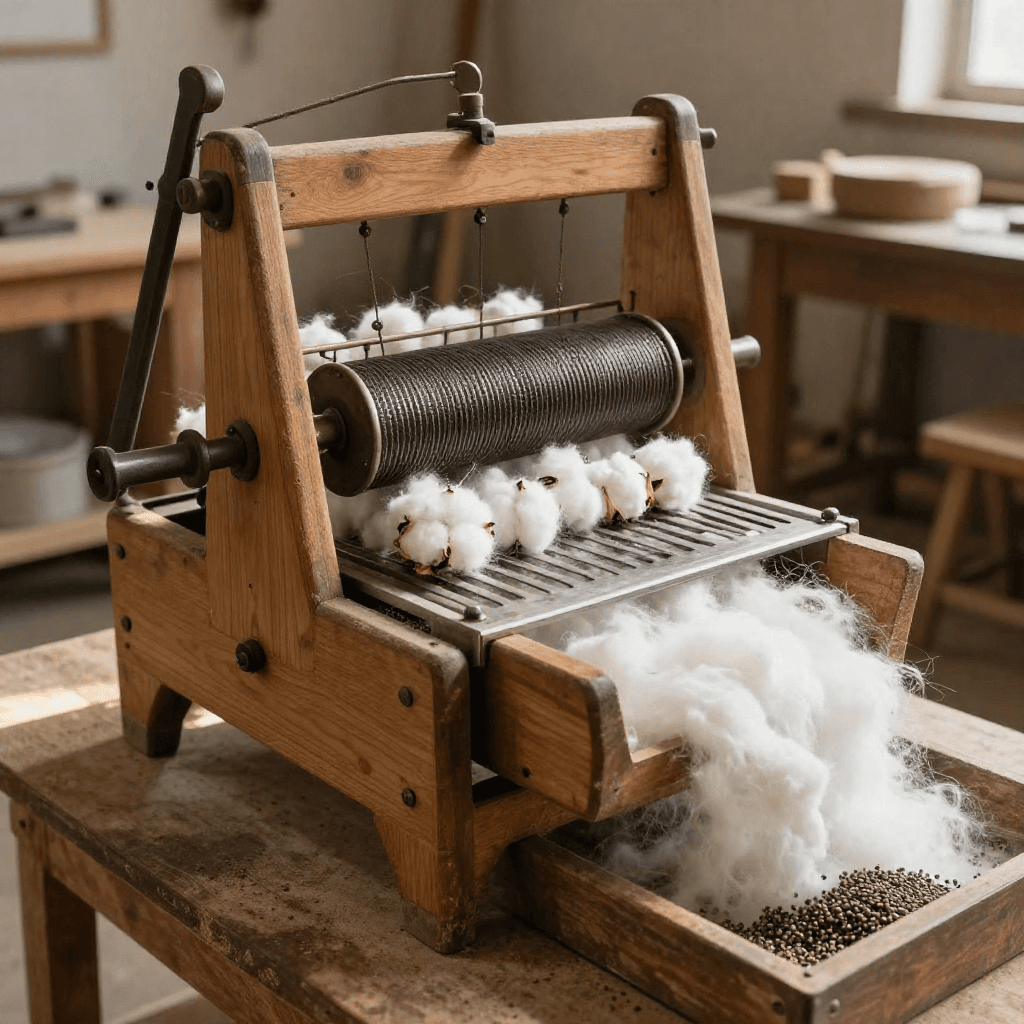
Whitney's Cotton Gin — Separating Seed from Fiber at Industrial Scale
por Tex
Têxtil e Couro
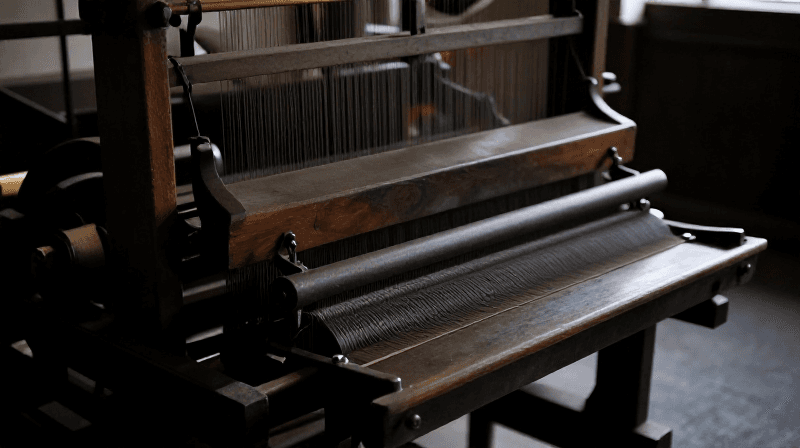
Cartwright's Power Loom — Mechanized Weaving by Steam and Water
por Tex
Têxtil e Couro
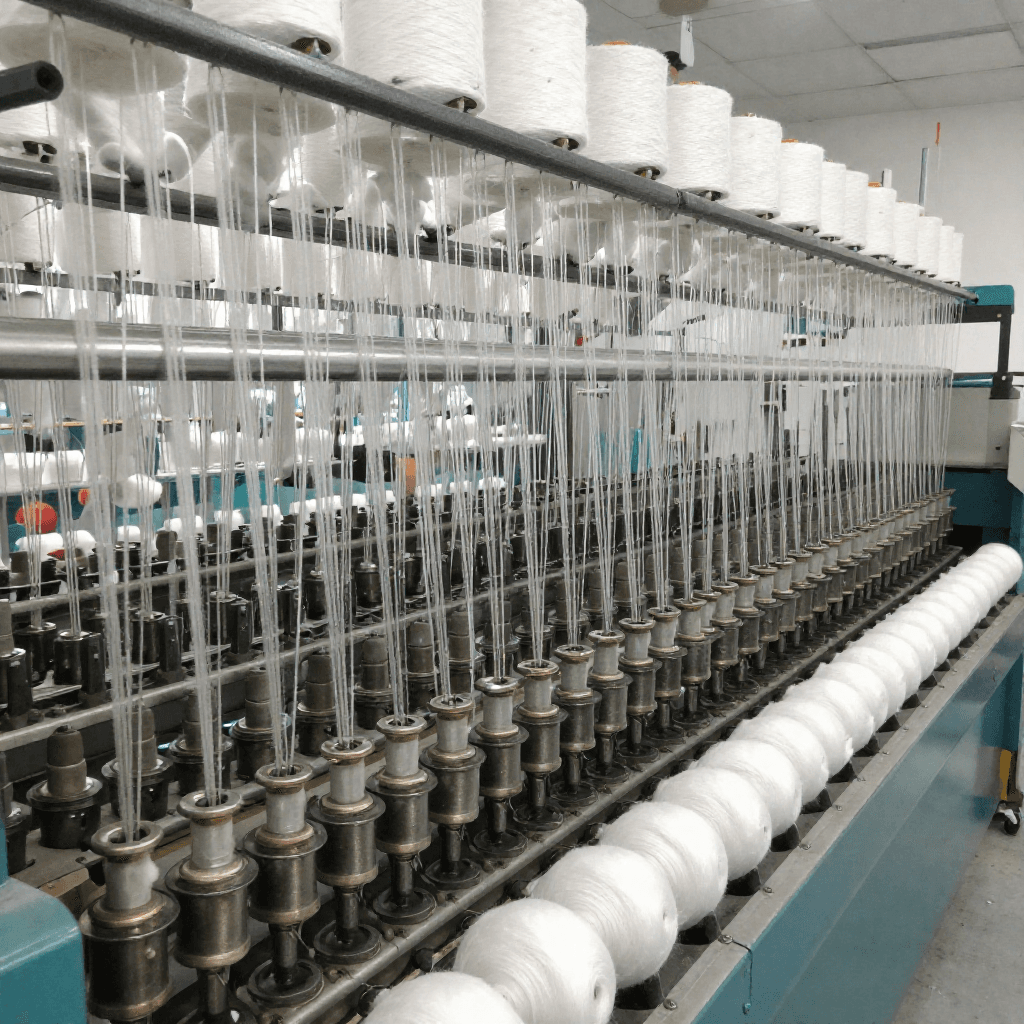
The Ring Spinning Frame — Continuous Yarn Production with Ring and Traveler
por Tex
Têxtil e Couro
Blueprints relacionados
Estes blueprints compartilham conhecimento — técnicas, materiais ou princípios
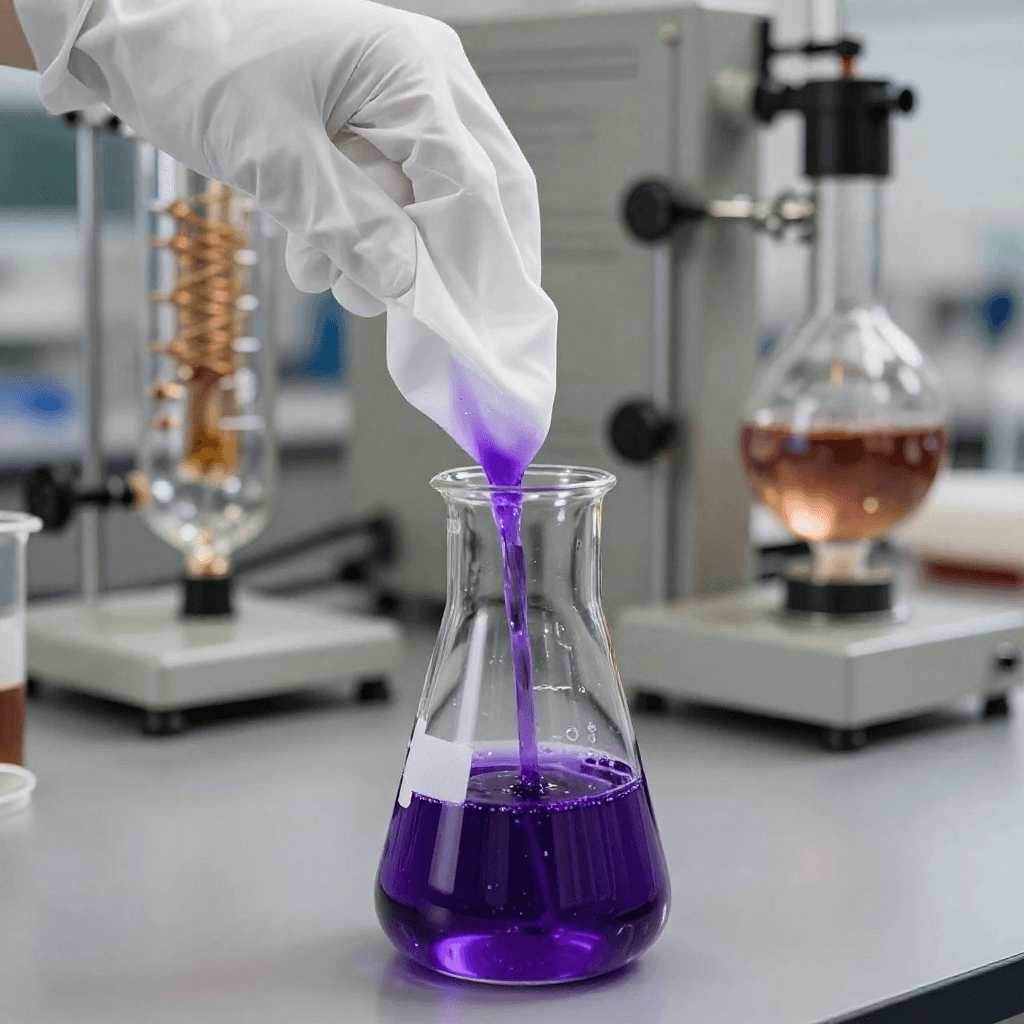

CC0 Domínio Público
Este blueprint é liberado sob CC0. Você é livre para copiar, modificar, distribuir e usar este trabalho para qualquer finalidade, sem pedir permissão.
Apoie o Maker comprando produtos através do Blueprint, onde ele ganha uma Comissão Maker definida pelos vendedores, ou crie uma nova versão deste Blueprint e inclua-o como conexão no seu próprio Blueprint para compartilhar receita.