ARTE
BELEZA E BEM-ESTAR
ARTESANATO
CULTURA E HISTÓRIA
ENTRETENIMENTO
MEIO AMBIENTE
COMIDA E BEBIDAS
ENGENHARIA REVERSA
CIÊNCIAS
ESPORTES
TECNOLOGIA
TECNOLOGIA VESTÍVEL
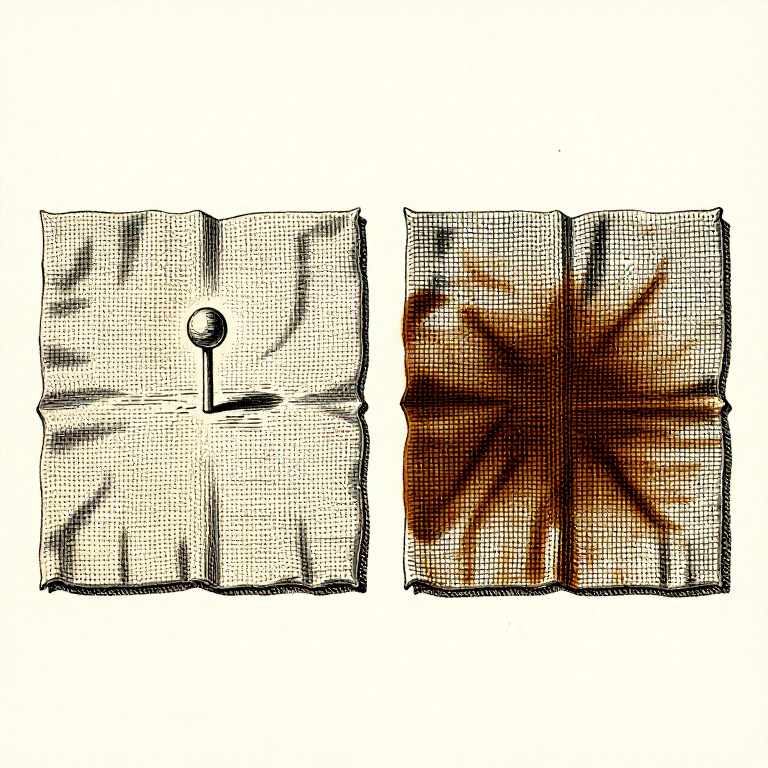


Scouring: Dye Cannot Reach What Is Still Covered in Grease
Blotchy dyeing is almost never the dye's fault. New wool carries lanolin and the residue of spinning oil; new cotton and linen carry natural waxes and pectins plus whatever the mill sized them with; anything off a shelf carries handling grease.
Dye and mordant are carried in water, and water cannot wet what is greasy, so the treatment lands on the clean patches and not on the rest.
Scouring is the wash that removes all of it before anything else happens. It is the one step beginners skip and the one that most reliably ruins the result — and the two big fibre families need two different scours.
Iniciante
3 hours
Instruções
1
1
The test that tells you whether you need to
The test that tells you whether you need to
Drop a small piece of the dry fibre onto the surface of a bowl of cool water and leave it.
Properly scoured fibre sinks, or at least wets right through, within about thirty seconds. Fibre that still carries grease or wax floats, sometimes for hours, and when it does sink it does so unevenly.
This is the same test a dyer uses at the end to decide whether the scour worked, so run it twice: before, to see what you are dealing with, and after, to see whether you are done. It costs a scrap of yarn and it is the only honest answer.
Do not judge by smell or by feel. Wool can feel dry and squeaky and still be carrying enough spinning oil to resist a mordant.
Materiais para este passo:
 Fio de lã por tingir1 meada
 Tecido de algodão (leve)1 m
Ferramentas necessárias:
 Frascos de vidro com tampa
 Tesoura
2
2
Scouring wool and silk: hot, gentle, and never stirred
Scouring wool and silk: hot, gentle, and never stirred
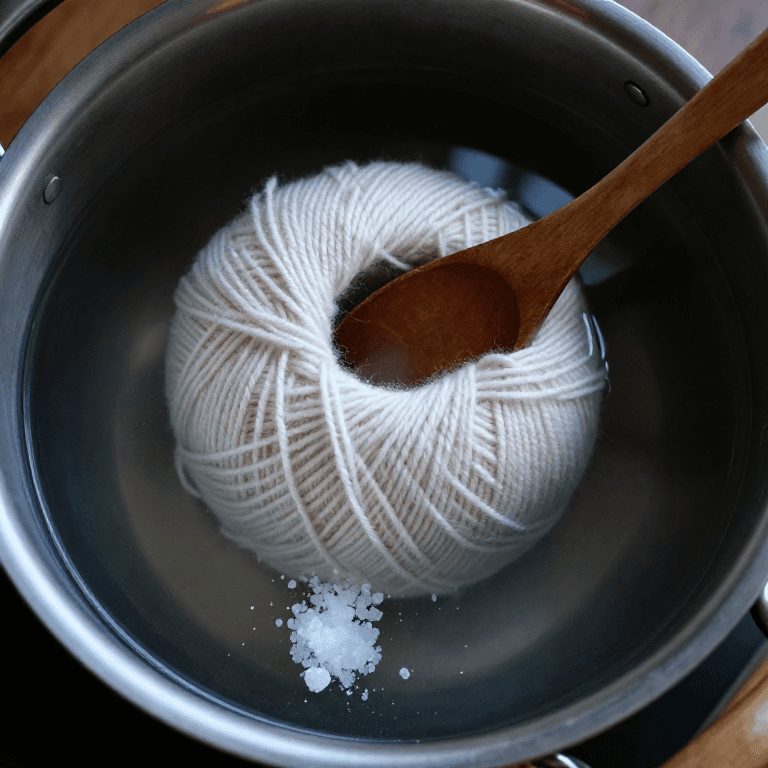
Protein fibres are scoured with a neutral or barely alkaline detergent at about 60 to 70 C for half an hour or so. That is enough to melt and lift lanolin without attacking the fibre.
Three rules, and all three matter more than the recipe:
**No sudden temperature change.** Wool felts when it is shocked. Bring it up with the water and let it cool with the water, and rinse at the temperature the bath is at.
**No agitation.** Stirring, rubbing and wringing are what actually felt wool — the scales interlock and never come apart. Lift and squeeze, never twist.
**Nothing strongly alkaline.** Washing soda, caustic soda and strong laundry powders dissolve protein. Wool goes harsh and yellow and loses strength; silk loses its lustre. Save the soda for the cellulose scour.
Rinse until the water runs clear, then go straight on to the mordant while the fibre is still wet. A scoured fibre allowed to dry and sit picks grease up again.
Materiais para este passo:
Fio de lã por tingir2 meadas Fio de seda1 meada
 Detergente suave1 peça
Ferramentas necessárias:
 Panela alta
 Termómetro
 Tenazes
 Luvas de borracha
3
3
Scouring cotton, linen and hemp: hotter, longer, alkaline
Scouring cotton, linen and hemp: hotter, longer, alkaline
Cellulose fibres are the opposite case. They are not damaged by alkali and they are not felted by agitation, and the waxes and pectins in them are far more stubborn than lanolin.
So the scour is harder: washing soda at roughly 20 g per kilo of dry fibre plus a little detergent, held at a rolling simmer for one to two hours, stirred freely.
The water will turn brown or grey and that is the point — it is the wax, the pectin and the mill's sizing coming out. Linen in particular can need two of these before it wets evenly.
Rinse thoroughly. Any alkali left behind will shift the colour of the dye later and will do it unevenly, which looks exactly like a bad dyebath.
**Handle the soda with gloves.** Washing soda is not dangerous like caustic soda, but hot alkaline water strips skin and stings eyes.
Materiais para este passo:
Tecido de algodão (leve)2 m Tecido de linho1 m
 Carbonato de sódio1 peçaDetergente suave1 peça
Ferramentas necessárias:
Panela altaTermómetro Vareta de agitaçãoLuvas de borracha
 Balança de precisão
4
4
Tie the skeins first, and tie them loosely
Tie the skeins first, and tie them loosely
A skein that is not tied comes out of a scour as a tangle, and a skein that is tied tightly comes out with pale stripes where the tie was.
Use figure-of-eight ties in a contrasting cotton thread — cotton, because it will not take a wool mordant and stays visible as a marker — in at least four places around the skein, each loose enough to slide a finger under.
The same applies to any fabric that is folded or bunched. Whatever is pressed against itself does not get scoured, mordanted or dyed, which is the whole principle shibori works on. When it is not wanted, it is called a resist mark and it is the commonest defect in a first dye.
Keep the bath big enough that the fibre floats freely. Crowding is the other half of the same fault: fibre packed into a small pot is fibre pressed against itself.
Materiais para este passo:
Fio de lã por tingir2 meadasTecido de algodão (leve)1 mFerramentas necessárias:
TesouraPanela alta Secador
Materiais
6- 5 meadasReferência
- Referência
- 1 meadaReferência
- 1 peçaReferência
- Referência
- 1 peçaReferência
Blueprints relacionados
Estes blueprints compartilham conhecimento — técnicas, materiais ou princípios

CC0 Domínio Público
Este blueprint é liberado sob CC0. Você é livre para copiar, modificar, distribuir e usar este trabalho para qualquer finalidade, sem pedir permissão.
Apoie o Maker comprando produtos através do Blueprint, onde ele ganha uma Comissão Maker definida pelos vendedores, ou crie uma nova versão deste Blueprint e inclua-o como conexão no seu próprio Blueprint para compartilhar receita.