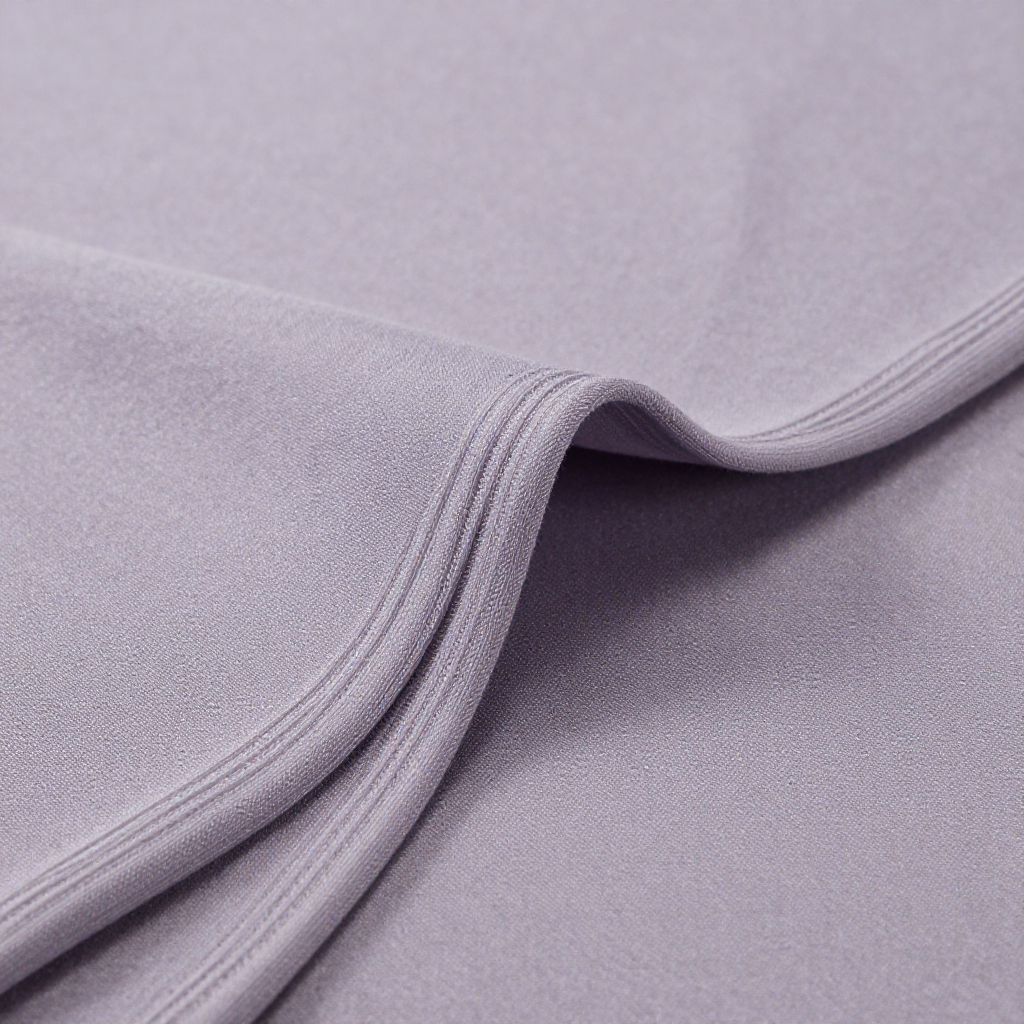

Spandex (Lycra) — The Elastic Fiber That Revolutionized Fit
In 1958, Joseph Clements Shivers Jr. at DuPont's Benger Laboratory in Waynesboro, Virginia, synthesized the first commercially viable elastane fiber — a segmented polyurethane that could stretch to 500–600% of its original length and snap back completely. DuPont trademarked it as Lycra in 1959 and began commercial production in 1962. The generic name 'spandex' (an anagram of 'expands') became the international standard; in Europe it is called 'elastane.'
Spandex is not a single polymer — it is a block copolymer consisting of alternating 'hard' and 'soft' segments. The soft segments are long, flexible polyether or polyester chains that coil and uncoil like springs, providing the stretch. The hard segments are short, rigid polyurethane blocks that aggregate through hydrogen bonding into physical crosslinks — tiny crystalline domains that act as anchors, preventing the soft segments from sliding past each other permanently. When you stretch spandex, the soft segments straighten; when you release, the hard-segment anchors pull them back.
Before spandex, the only elastic textile material was natural rubber thread, which was heavy, degraded in contact with body oils and chlorine, could not be dyed, and had to be wrapped in fabric for comfort. Spandex is lighter, more durable, dyeable, resistant to body oils and perspiration, and can be blended with virtually any other fiber. It transformed swimwear, activewear, underwear, hosiery, and eventually everyday clothing — the stretchy comfort of modern jeans, yoga pants, and fitted shirts depends entirely on a small percentage (2–20%) of spandex blended into the fabric.
Instruções
Understand the block copolymer concept
Understand the block copolymer concept
Spandex is fundamentally different from nylon or polyester, which are made from a single repeating unit. Spandex is a block copolymer — its chain alternates between two chemically distinct segments. The 'soft' segments (about 60–80% of the chain) are long, flexible polyether or polyester chains (typically polytetramethylene ether glycol, PTMEG) that provide elasticity. The 'hard' segments (20–40%) are short polyurethane blocks formed from a diisocyanate and a chain extender, which hydrogen-bond together into rigid domains. This two-phase architecture — rubbery matrix anchored by glassy domains — is what gives spandex its unique combination of extreme stretch and complete recovery.
React the polyol with diisocyanate to form a prepolymer
React the polyol with diisocyanate to form a prepolymer
Combine polytetramethylene ether glycol (PTMEG, a liquid polyol with molecular weight 1,000–2,000) with an excess of 4,4'-methylene diphenyl diisocyanate (MDI) at 70–80°C. The hydroxyl end-groups of PTMEG react with the isocyanate groups of MDI to form urethane linkages (-NH-COO-), creating a 'prepolymer' — a PTMEG chain capped at both ends with unreacted isocyanate groups. This prepolymer is the building block: it contains the soft segment (PTMEG core) with reactive isocyanate tips ready for chain extension.
Materiais para este passo:
 Etilenoglicol200 ml
Ferramentas necessárias:
 Balão de destilação de vidro
Extend the chain with a diamine
Extend the chain with a diamine
Dissolve the prepolymer in dimethylacetamide (DMAc) solvent and add a short-chain diamine — typically ethylenediamine (H₂N-CH₂-CH₂-NH₂). The amine groups react instantly with the isocyanate-capped prepolymer ends, forming urea linkages (-NH-CO-NH-) that connect prepolymer units into long chains. These urea-linked sections become the hard segments. The reaction is fast and exothermic — temperature control and mixing speed are critical to achieve uniform chain length. The result is a viscous solution of high-molecular-weight segmented polyurethane-urea in DMAc.
Spin the polymer solution into fiber (dry spinning)
Spin the polymer solution into fiber (dry spinning)
Pump the polymer solution through a spinneret into a heated spinning tower (200–250°C). Hot air or inert gas evaporates the DMAc solvent as the filaments fall through the tower, solidifying them into continuous fibers. This is dry spinning — the same principle used for cellulose acetate, but at higher temperatures due to DMAc's high boiling point (165°C). Each spinneret hole produces one filament; multiple filaments are gathered and fused together by residual solvent tack into a single multifilament yarn. DuPont's Lycra was exclusively dry-spun; other producers also use wet spinning and melt spinning variants.
Apply a finishing oil and wind the fiber
Apply a finishing oil and wind the fiber
Apply a silicone-based finishing oil to the spun fiber. This lubricant is critical — without it, spandex filaments stick to each other and to every surface they contact, making downstream textile processing impossible. The finished, lubricated spandex yarn is wound onto bobbins under controlled tension. Unlike nylon or polyester, spandex is never drawn (stretched to orient molecules) after spinning — the elasticity comes from the soft-segment/hard-segment architecture, not from molecular orientation. Drawing would disrupt the hard-segment domains and destroy the elastic properties.
Understand the stretch-recovery mechanism
Understand the stretch-recovery mechanism
At rest, the soft PTMEG segments are coiled randomly between the hard-segment anchor points. When you stretch spandex, these soft segments straighten and extend — the molecular chains literally uncoil. The hard-segment domains, held together by strong hydrogen bonds between urea groups, resist deformation and stay intact. When the stretching force is removed, the soft segments spontaneously re-coil (driven by entropy — the coiled state is statistically more probable), and the hard-segment anchors ensure the fiber returns to its original length. This is why spandex recovers to within 1–2% of its original length even after being stretched to 500%.
Blend spandex with other fibers by covered yarn methods
Blend spandex with other fibers by covered yarn methods
Spandex is almost never used alone — it is blended with nylon, polyester, cotton, or wool. The most common method is 'covering': the spandex core yarn is wrapped helically with one or two layers of a companion fiber (nylon or polyester). In single-covered yarn, one wrapping layer spirals around the stretched spandex core. In double-covered yarn, two wrapping layers spiral in opposite directions, producing a balanced, round yarn. The wrapping fiber provides abrasion resistance, dyeability, and hand-feel; the spandex core provides stretch and recovery.
Knit or weave with spandex-blend yarn
Knit or weave with spandex-blend yarn
Spandex-blend yarns are processed on standard knitting and weaving machinery, but with modifications for elastic tension. In circular knitting (hosiery, activewear), the spandex is fed under controlled tension alongside the companion yarn — the knitting needles loop both together. In warp knitting (swimwear, lingerie), spandex is threaded through the guide bars under tension. In weaving, spandex is typically used only in the weft direction for stretch across the width. The key to fabric quality is consistent spandex tension: too little produces baggy fabric, too much produces fabric that is tight and restrictive.
Heat-set the finished fabric
Heat-set the finished fabric
After knitting or weaving, the fabric is heat-set at 180–195°C for 30–60 seconds on a stenter frame. Heat-setting stabilizes the spandex at its relaxed dimensions, preventing uncontrolled shrinkage during subsequent dyeing and finishing. The temperature must be carefully controlled — above 200°C, the hard-segment domains begin to soften and the elastic properties degrade permanently. Heat-setting also establishes the fabric's stretch percentage and recovery force, which are specified by the garment designer.
Dye the fabric
Dye the fabric
Spandex accepts disperse dyes (the same dyes used for polyester) but is sensitive to high temperatures and acidic or alkaline conditions during dyeing. When blended with nylon, the fabric is typically dyed with acid dyes at 95–100°C — mild enough for spandex. When blended with cotton, reactive dyes are used. The dyeing process must be carefully managed to avoid three common defects: spandex degradation from excessive heat, uneven stretch from non-uniform tension during dyeing, and differential dye uptake between the spandex and companion fibers that creates a streaky appearance.
Recognize the safety considerations
Recognize the safety considerations
Spandex production involves several hazardous chemicals. MDI (methylene diphenyl diisocyanate) is a potent respiratory sensitizer — even low-level exposure can cause occupational asthma that is irreversible once developed. Ethylenediamine is corrosive and toxic. DMAc (dimethylacetamide) is a reproductive toxin that is readily absorbed through the skin. The dry spinning process involves evaporating large quantities of DMAc, which must be recovered (not vented) for both safety and cost reasons. Industrial spandex plants require enclosed systems, continuous air monitoring, and strict personal protective equipment protocols.
Understand spandex's transformation of clothing
Understand spandex's transformation of clothing
Spandex is used in small quantities — typically 2–20% of a fabric blend — but its impact on clothing is disproportionately large. Before spandex, fitted clothing required precise tailoring; stretch fabrics did not exist outside of knitted goods and rubber-cored yarns. After spandex, a single size could fit a range of body shapes, garment comfort increased dramatically, and entirely new categories of clothing emerged: yoga pants, compression sportswear, shapewear, stretch denim. Global spandex production exceeds 1 million tonnes per year. The fiber accounts for less than 1% of total fiber production by weight, but it is present in over 80% of garments sold in developed markets. Shivers' insight — that a two-phase polymer architecture could replicate rubber's elasticity in a spinnable, dyeable, durable fiber — is one of the most commercially consequential innovations in textile history.
Materiais
1- 200 mlReferência
Ferramentas necessárias
1- Referência
Materiais de Blueprints conectados
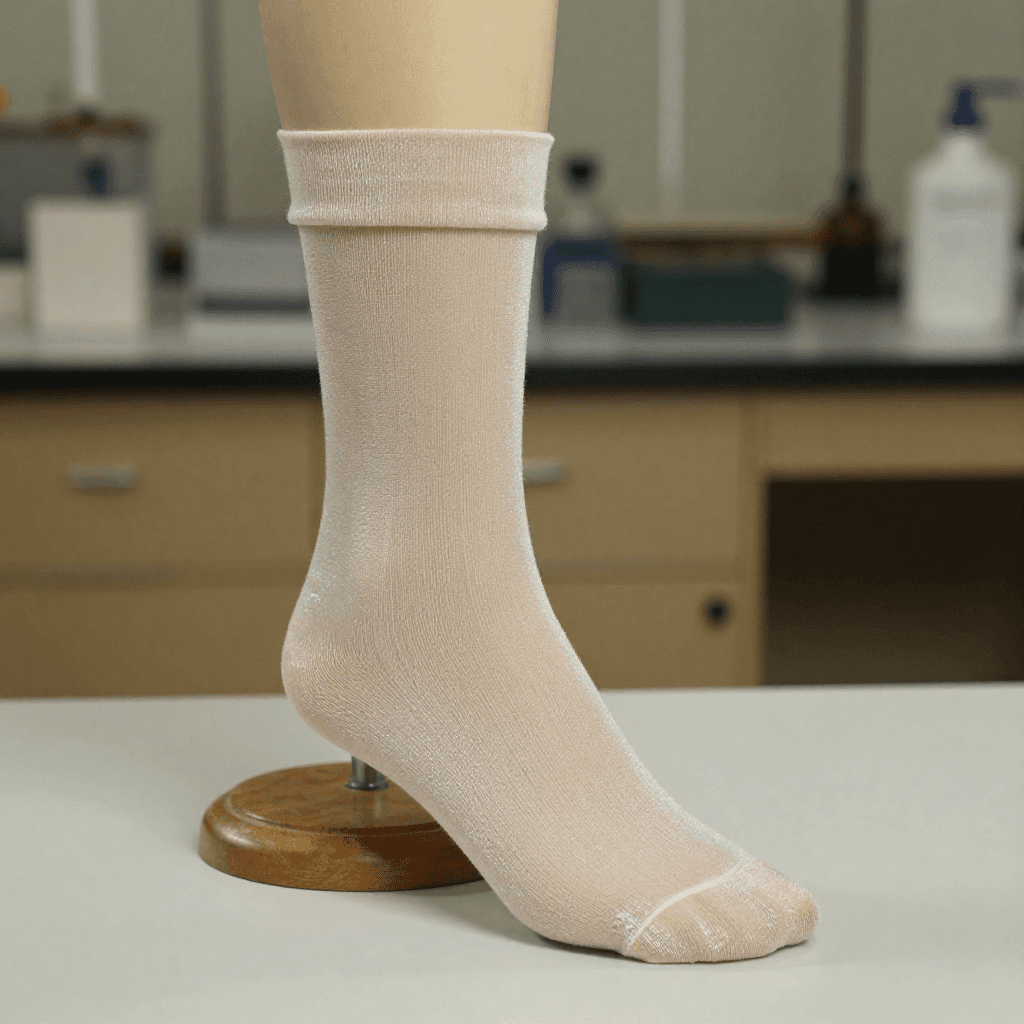
Nylon — The First Fully Synthetic Fiber from Coal, Air, and Water
por Tex
Têxtil e Couro
Polyester (PET) — The Fiber That Clothed the World
por Tex
Têxtil e Couro
Viscose Rayon — The First Artificial Fiber from Wood Cellulose
por Tex
Têxtil e Couro
Blueprints relacionados
Estes blueprints compartilham conhecimento — técnicas, materiais ou princípios
CC0 Domínio Público
Este blueprint é liberado sob CC0. Você é livre para copiar, modificar, distribuir e usar este trabalho para qualquer finalidade, sem pedir permissão.
Apoie o Maker comprando produtos através do Blueprint, onde ele ganha uma Comissão Maker definida pelos vendedores, ou crie uma nova versão deste Blueprint e inclua-o como conexão no seu próprio Blueprint para compartilhar receita.