ARTE
BELEZA E BEM-ESTAR
ARTESANATO
CULTURA E HISTÓRIA
ENTRETENIMENTO
MEIO AMBIENTE
COMIDA E BEBIDAS
ENGENHARIA REVERSA
CIÊNCIAS
ESPORTES
TECNOLOGIA
TECNOLOGIA VESTÍVEL
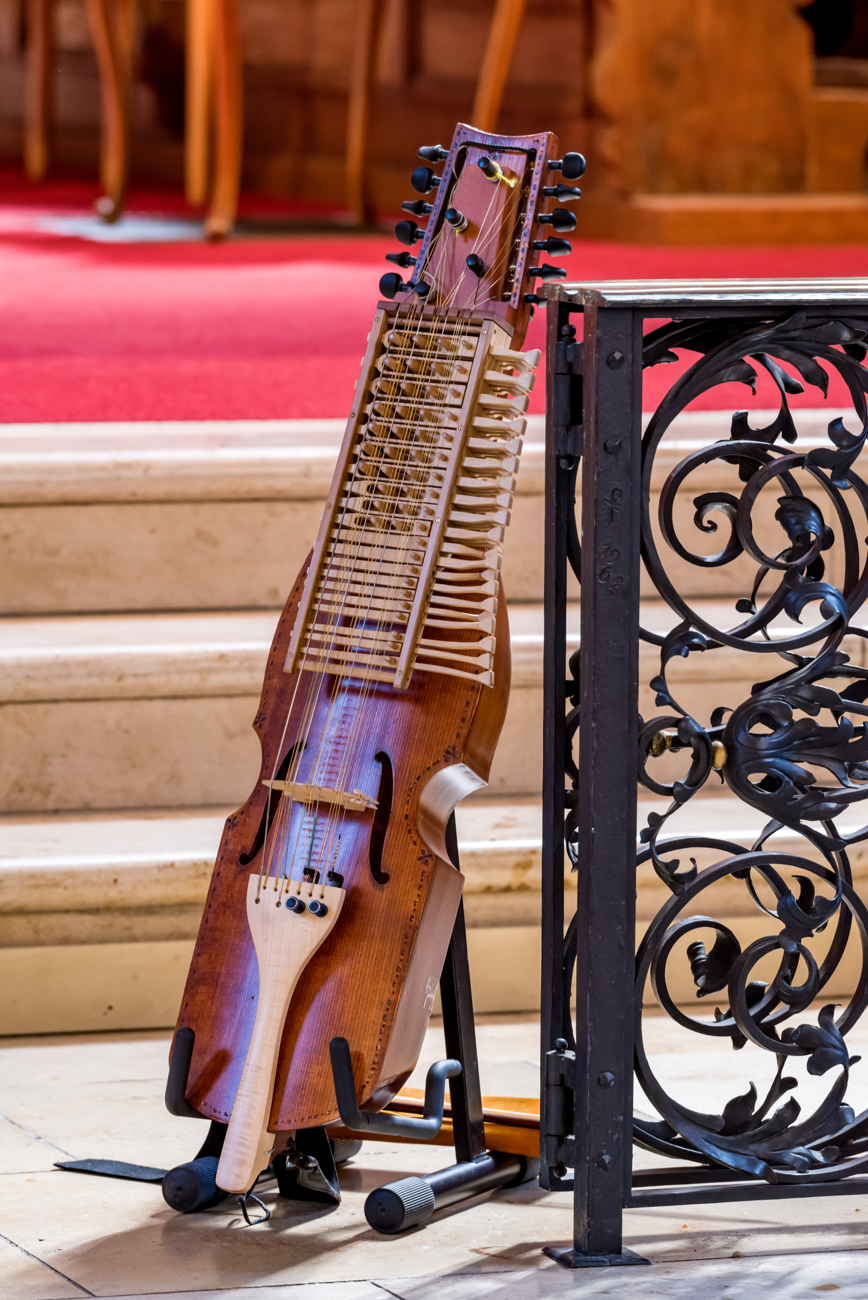


Building a Nyckelharpa — The Swedish Keyed Fiddle
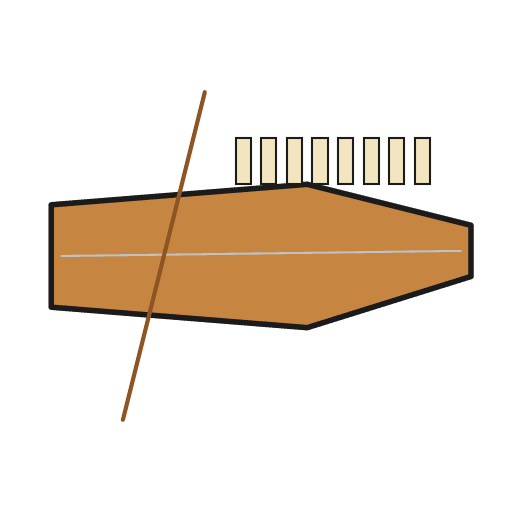
Build a nyckelharpa: a bowed Swedish fiddle played not with fingers on a fingerboard but with a row of wooden KEYS whose tangents press the string to each note. It also carries sympathetic strings that ring on their own. A serious maker build in the bowed string, the tangent keyboard and sympathetic resonance.
Intermediário
Several hours over several sessions
Instruções
1
1
A fiddle with a keyboard
A fiddle with a keyboard
The nyckelharpa is a bowed Swedish fiddle, but instead of pressing the strings with your fingers you press wooden KEYS. Each key drives a little tangent against the string to make a note.
2
2
Build the soundbox
Build the soundbox
Build a long, hollow wooden body with a light soundboard on top. This box amplifies the bowed strings.
Materiais para este passo:
 Placa de contraplacado1 peça
 Tábua de resinosa seca1 peça
 Cola branca para madeira (PVA)1 peça
Ferramentas necessárias:
 Serra de arco para metais
3
3
Fit the strings
Fit the strings
Stretch a melody string and one or two drone strings along the top, over a bridge, tuned with pegs.
Materiais para este passo:
 Corda de aço para instrumentos 0,032"1 peça
 Cravelhas4 peças
Ferramentas necessárias:
 Sovela
4
4
Add sympathetic strings
Add sympathetic strings
Under the melody string, run a set of thin strings you never touch — the SYMPATHETIC strings. Tuned to the scale, they ring on their own whenever their note is played, giving the halo of sound.
Materiais para este passo:
Corda de aço para instrumentos 0,032"1 peça5
5
Build the key-box
Build the key-box
Build a box under the neck holding a row of sliding wooden keys, each carrying a small hardwood tangent.
Materiais para este passo:
 Vareta de madeira (cavilha)1 peça
Ferramentas necessárias:
 Faca de talha sloyd
6
6
Set the tangents
Set the tangents
Position each key's tangent so that pressing the key from below stops the melody string at the next note of the scale — a keyboard of frets you push up into the string.
7
7
Make the bow
Make the bow
String a short springy stick with horsehair to make a bow, and rub it with pine rosin.
Materiais para este passo:
 Ramo curvo (arco)1 peça
 Crina para arcos1 peça
8
8
Bow and key
Bow and key
Hold the harpa across your body on a strap, bow the strings with one hand, and press the keys with the other. The keys pick out the tune while the drones and sympathetic strings shimmer beneath.
9
9
Compendium — bowing through a keyboard
Compendium — bowing through a keyboard
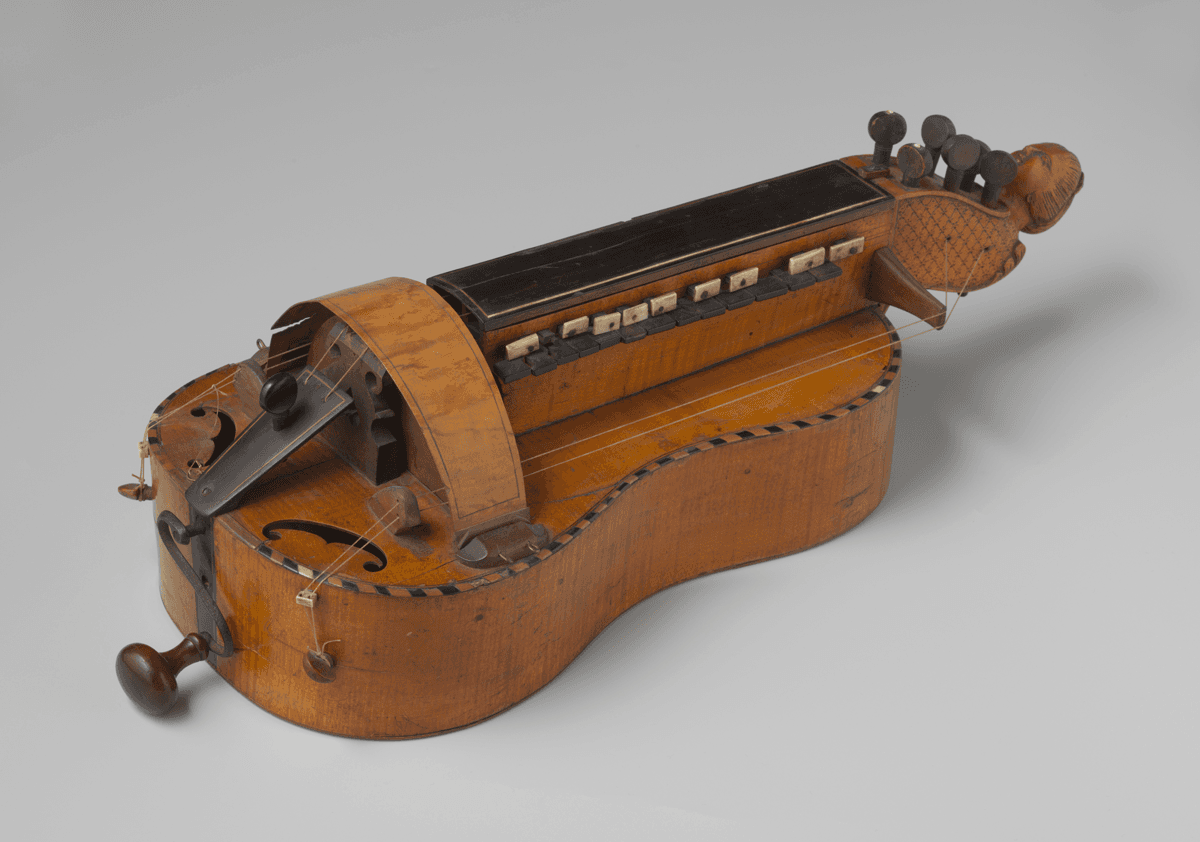
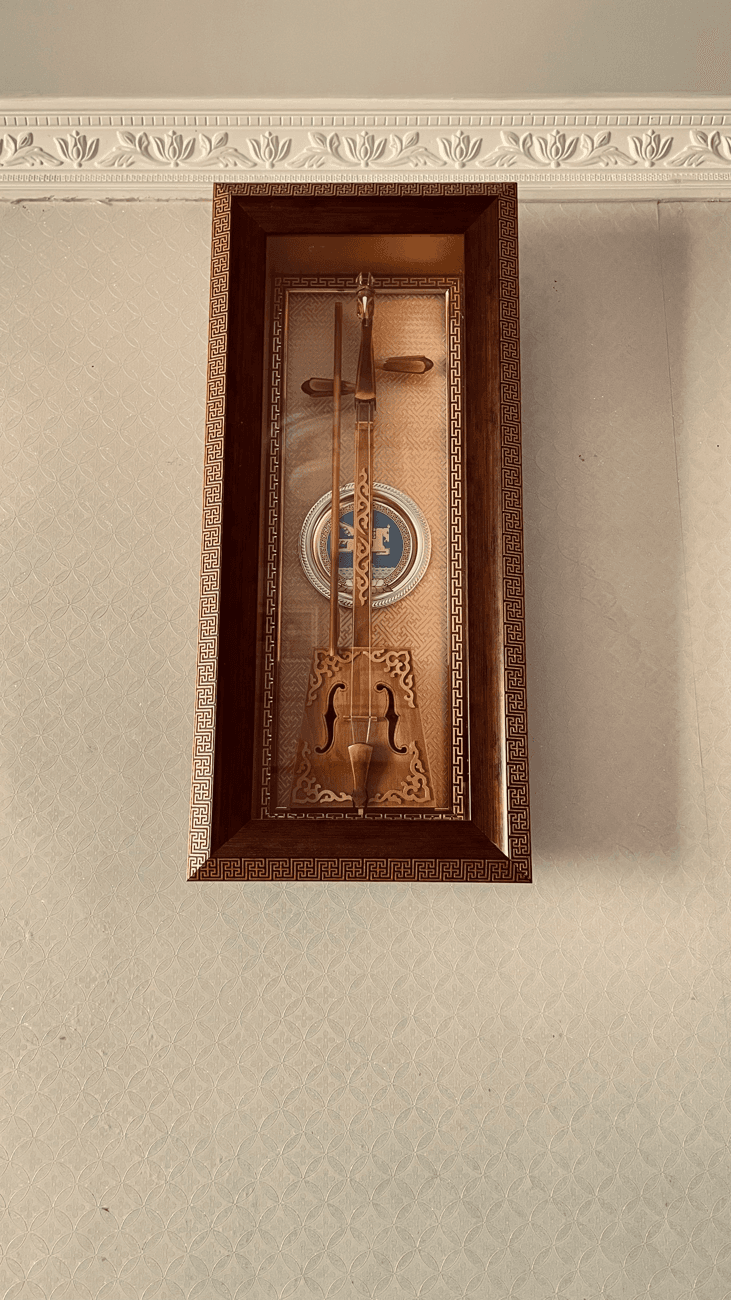
The nyckelharpa joins two ideas. First it is a bowed instrument: drawing a rosined bow across a string sets it into steady stick-slip vibration, the same Helmholtz motion as the erhu or violin, so the note sings on as long as you bow. Second, it is stopped by a KEYBOARD rather than by fingers: each key carries a tangent, a little hard ridge that pushes against the string to shorten its speaking length to a fixed note, exactly as a fret does — the same mechanism that fingers the melody on a hurdy-gurdy, but here you bow by hand instead of turning a wheel. What gives the nyckelharpa its glittering, cathedral-like tone is a third set of strings, the SYMPATHETIC strings, stretched under the melody string and never touched: each is tuned to a note of the scale, and whenever that note sounds on the bowed string, the matching sympathetic string is shaken into vibration by resonance and rings along on its own, wrapping every note in a soft halo — the same resonance trick used by the Indian sitar and sarangi. Played in Sweden since the Middle Ages and pictured on medieval church walls, the nyckelharpa is a cousin of the hurdy-gurdy (its keyed neighbour) and of the whole bowed-string family.
Materiais
8- 1 peçaReferência
- 1 peçaReferência
- Referência
- Referência
- 4 peçasReferência
- Referência
- 1 peçaReferência
- 1 peçaReferência
Ferramentas necessárias
3- Referência
- Referência
- Referência
Este projeto faz
Blueprints relacionados
Estes blueprints compartilham conhecimento — técnicas, materiais ou princípios
CC0 Domínio Público
Este blueprint é liberado sob CC0. Você é livre para copiar, modificar, distribuir e usar este trabalho para qualquer finalidade, sem pedir permissão.
Apoie o Maker comprando produtos através do Blueprint, onde ele ganha uma Comissão Maker definida pelos vendedores, ou crie uma nova versão deste Blueprint e inclua-o como conexão no seu próprio Blueprint para compartilhar receita.