ARTE
BELEZA E BEM-ESTAR
ARTESANATO
CULTURA E HISTÓRIA
ENTRETENIMENTO
MEIO AMBIENTE
COMIDA E BEBIDAS
ENGENHARIA REVERSA
CIÊNCIAS
ESPORTES
TECNOLOGIA
TECNOLOGIA VESTÍVEL
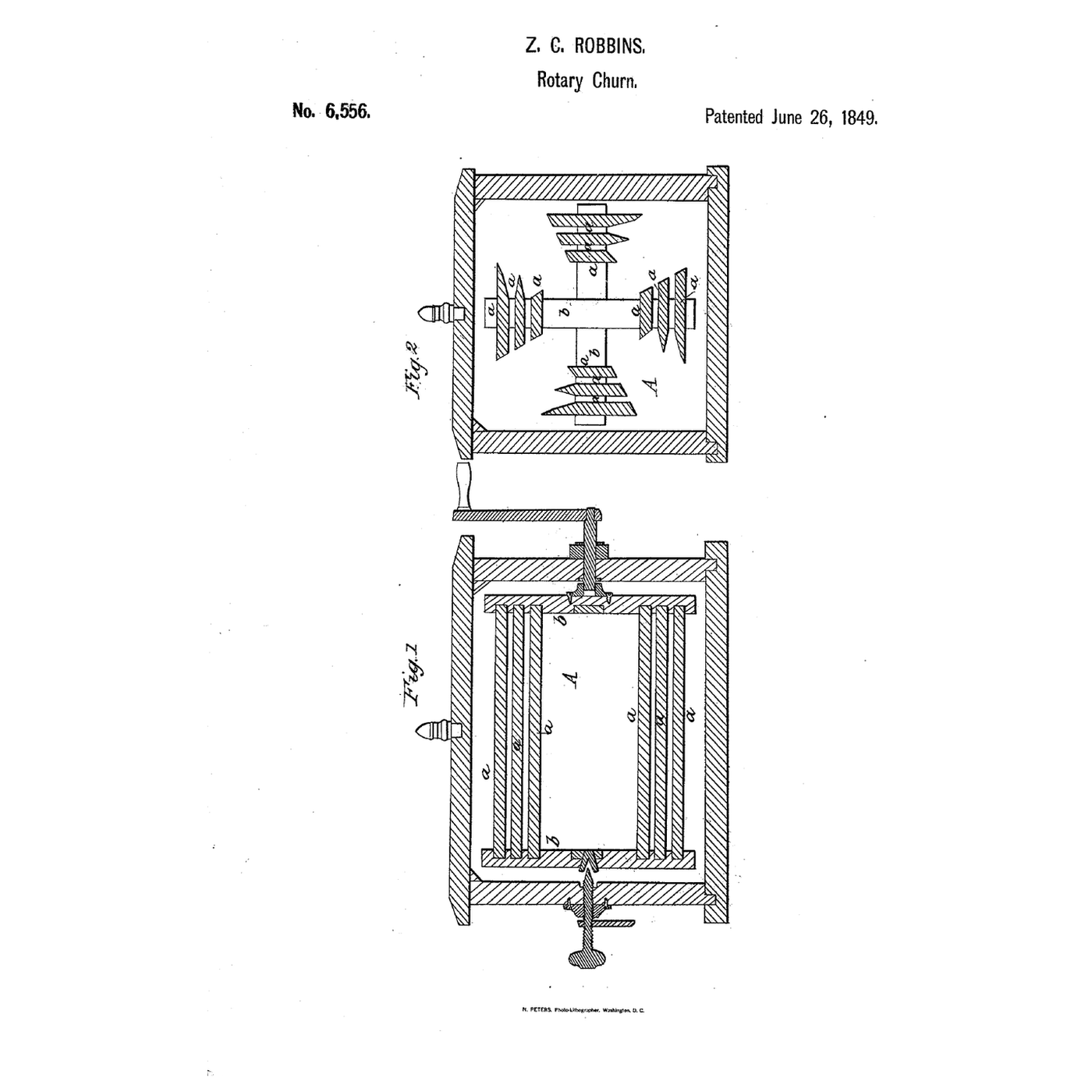

Telegraph Beater Churn: Nested Knife-Edged Beaters That Whip the Cream
Robbins compared his agitator's work on cream to that "produced by knives upon the whites of eggs, during the process of what is called whipping them up."
Z. C. Robbins of St. Louis, Missouri, received US 6,556, dated 26 June 1849 (antedated 1 June 1849, reissued as No. 159), for what he called the Telegraph Churn: a rotating agitator of four series of thin beaters on radial arms, each series of two, three or more slats one within another with narrow spaces between, narrowing inward. Their front edges are bevelled sharp, their rear edges blunt; reversed, "the butter will be collected into the center."
This rung works out when the cream would fly off, then prints the beater series and spiders, fits them in a box, and makes butter.
Intermediário
About 3 hours, plus printing
Instruções
1
1
When the cream flies off
When the cream flies off
A carregar o notebook Jupyter…
2
2
Bevelled beaters on a crank before it
Bevelled beaters on a crank before it
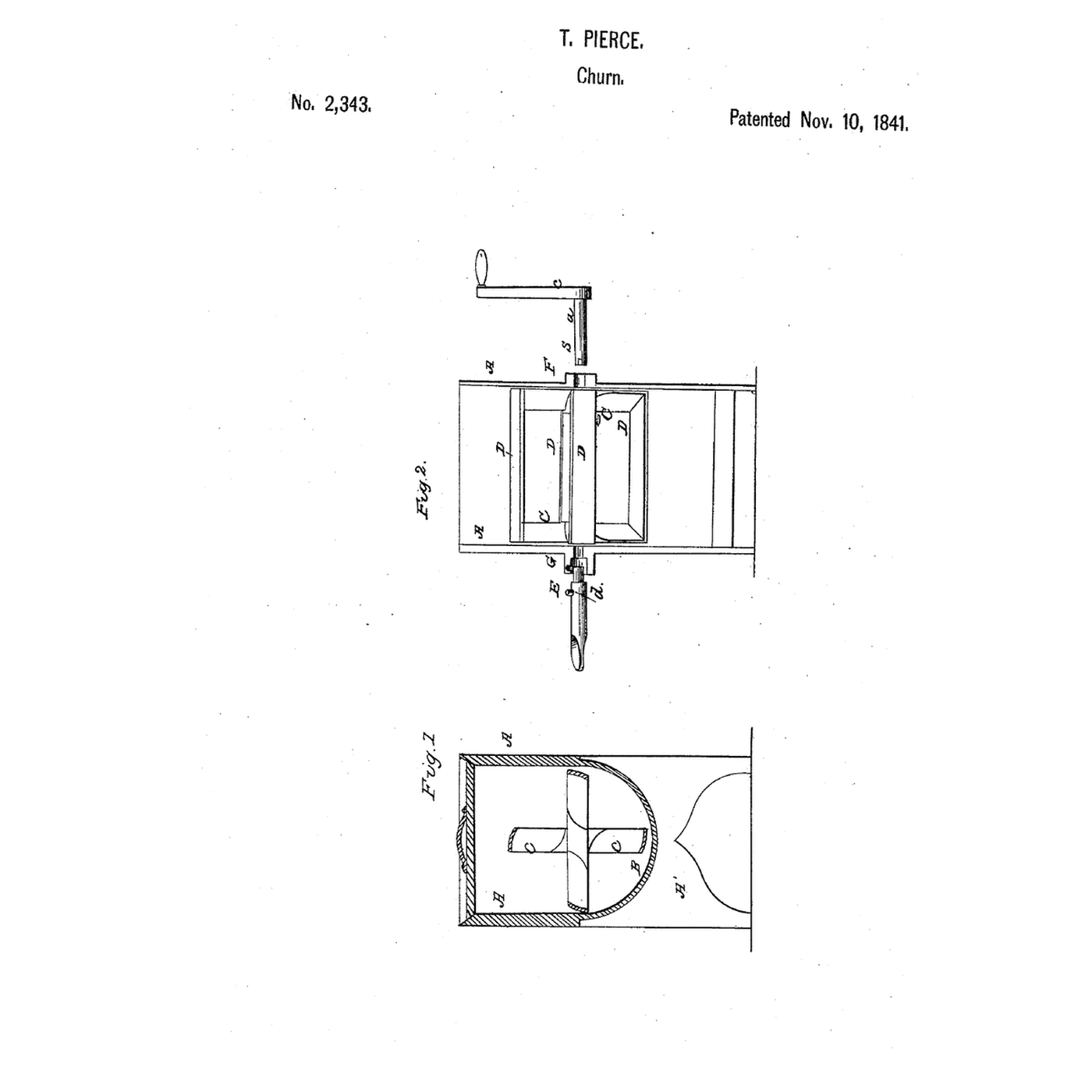
The embedded blueprint bevels its buckets to drive the cream inward. Robbins nests thin knife-edged slats and reverses them to gather the butter.
3
3
Read US 6,556
Read US 6,556
"When the agitator is rotated in milk or cream placed in the churn box, the sharp edges of the beaters cut into and divide the particles, and gather the milk or cream between them by their converging surfaces; and as the beaters ascend, they carry up quantities of milk or cream in the spaces between them, which is discharged in their curved sheets at their rear edges in the atmosphere in the upper part of the churn."
4
4
Print the parts
Print the parts
Print four beater series on end (/uploads/blueprints/telegraph-beater-churn-beater-series.stl): three nested slats, narrowing inward, sharp at the front and blunt at the rear, joined at both ends. Print two spiders (/uploads/blueprints/telegraph-beater-churn-spider.stl) and the crank arm (/uploads/blueprints/telegraph-beater-churn-crank-arm.stl). Print in PETG at 0.2 mm layers, 30 % infill, 4 walls; wash before first use.
Materiais para este passo:
 Filamento PETG1 peça
Ferramentas necessárias:
 Impressora 3D de filamento (FDM)
5
5
Assemble the agitator
Assemble the agitator
Glue the two spiders on a 10 mm square hardwood axle 130 mm apart, arms in line. Screw a beater series between each pair of arms with M3 screws, all with their sharp edges leading the same way.
Materiais para este passo:
 Cavilhas de madeira dura1 peça
 Parafusos de máquina1 peça
 Cola de madeira1 peça
Ferramentas necessárias:
 Serrote
 Conjunto de chaves de fendas
6
6
The box
The box
Take a food-safe box about 200 × 170 × 170 mm. Drill both ends on the axis 85 mm up, round the axle where it runs, pass it through, and glue the crank arm and a dowel handle on its outer end. He found it could run uncovered.
Materiais para este passo:
 Recipiente de armazenamento de grau alimentar1 peçaCola de madeira1 peça
Ferramentas necessárias:
 Berbequim sem fios
 Jogo de brocas
 Lixa
Lixa7
7
The build in 3D
The build in 3D
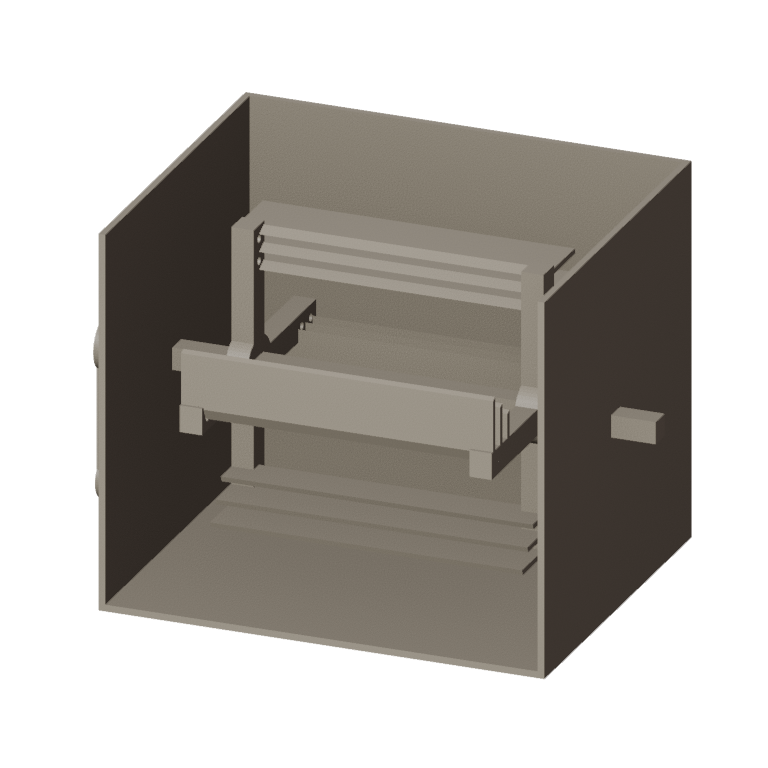
FreeCAD model of this build, not of the patent: the box with one side off to show the agitator of two spiders and four series of nested beaters on the axle, and the crank.
8
8
Crank, then reverse to gather
Crank, then reverse to gather
Let the heavy cream stand until it reaches about 15 °C, checked with the thermometer. Pour in 1.5 litres. Crank steadily, sharp edges leading; time until the butter comes. Then crank backward a while so the blunt rear edges gather it to the centre. Pour off the buttermilk, add cold water, churn a little and pour off again until it runs clear; work in a pinch of salt and weigh the butter.
Materiais para este passo:
 Natas para bater1500 ml
 Sal marinho grosso1 peça
 Água1 peça
Ferramentas necessárias:
 Termómetro de sonda permanente
 Cronómetro
 Balança digital de cozinha
 Taça grande de aço inoxidável
9
9
Cream thrown out, butter not gathered
Cream thrown out, butter not gathered
Telegraph beater churn troubleshooting.
Flow
Loading...
10
10
History and honest limits
History and honest limits
**Z. C. Robbins** of St. Louis, Missouri, received US 6,556, dated 26 June 1849; antedated by request 1 June 1849; reissued as No. 159. He wrote that "butter has been produced from milk at the usual churning temperature with this churn, in two minutes"; that is his claim, not our measurement. He did not limit himself to the number or proportions of the parts, nor to any material. He claimed the series of floats or beaters so formed that their thick inclined rear edges gather the butter toward the centre when the motion is reversed.
**Honest limits.** A food-safe box and printed beaters stand in for his. FDM prints hold food in their layer lines, so wash well and replace when worn. Your times and weights are the result.
Materiais
8- 1 peçaReferência
- 1 peçaReferência
- 1 peçaReferência
- 2 peçasReferência
- Referência
- 1500 mlReferência
- 1 peçaReferência
- 1 peçaReferência
Ferramentas necessárias
10- Referência
- Referência
- Referência
- 1 vendor sell this, none ship to you yetReferência
- Referência
- Referência
- Referência
- Referência
- Referência
- Referência
Ficheiros de design
1Blueprints relacionados
Estes blueprints compartilham conhecimento — técnicas, materiais ou princípios
Shaftless Dasher-Wheel Churn: Bevelled Buckets Drive the Cream to the Centre
por Martin
COMIDA E BEBIDAS
1
0
0
0
0
0
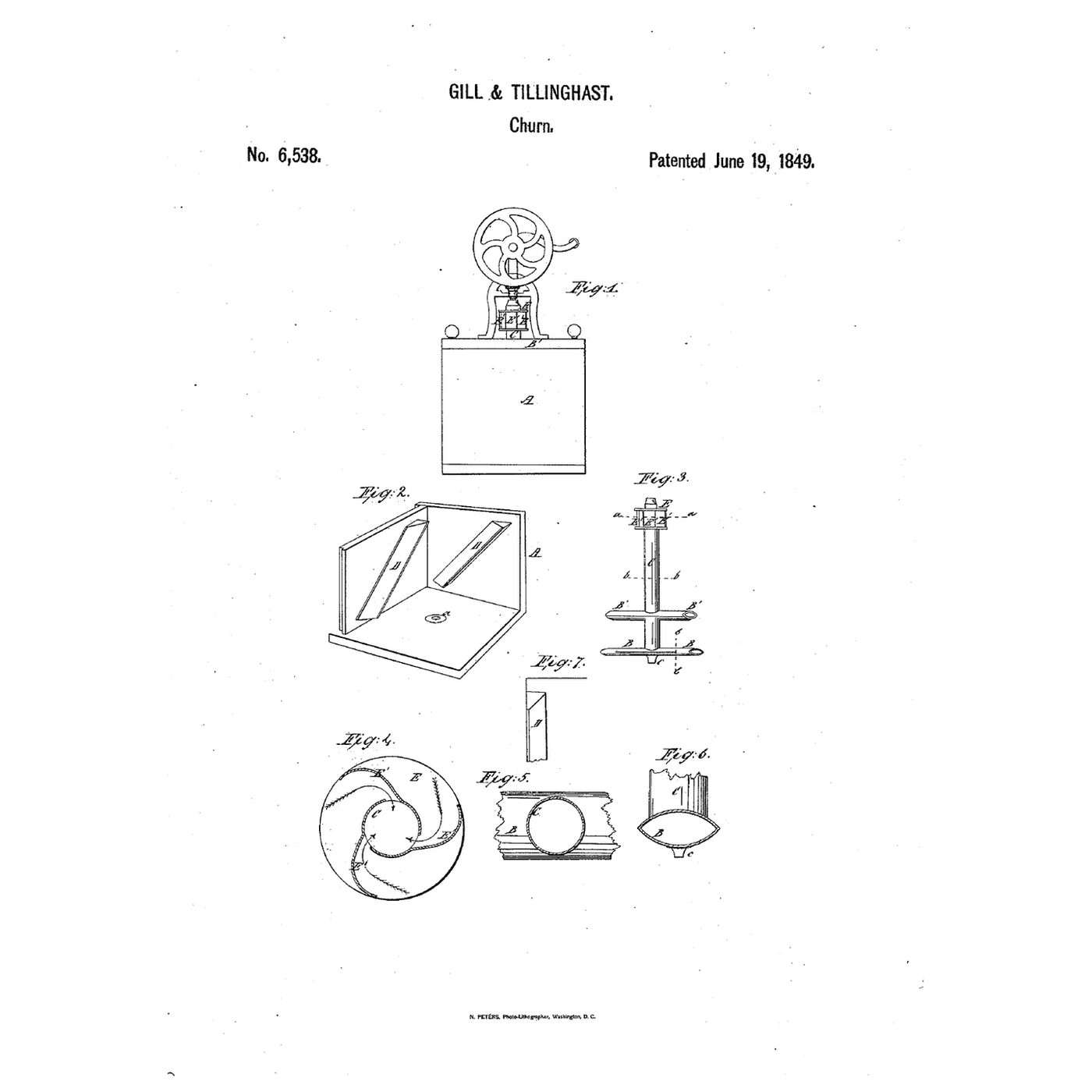
Inclined-Stop Air Churn: Diagonal Stops That Hold the Cream and Gather the Butter
por Karen
COMIDA E BEBIDAS
0
0
0
0
0
0
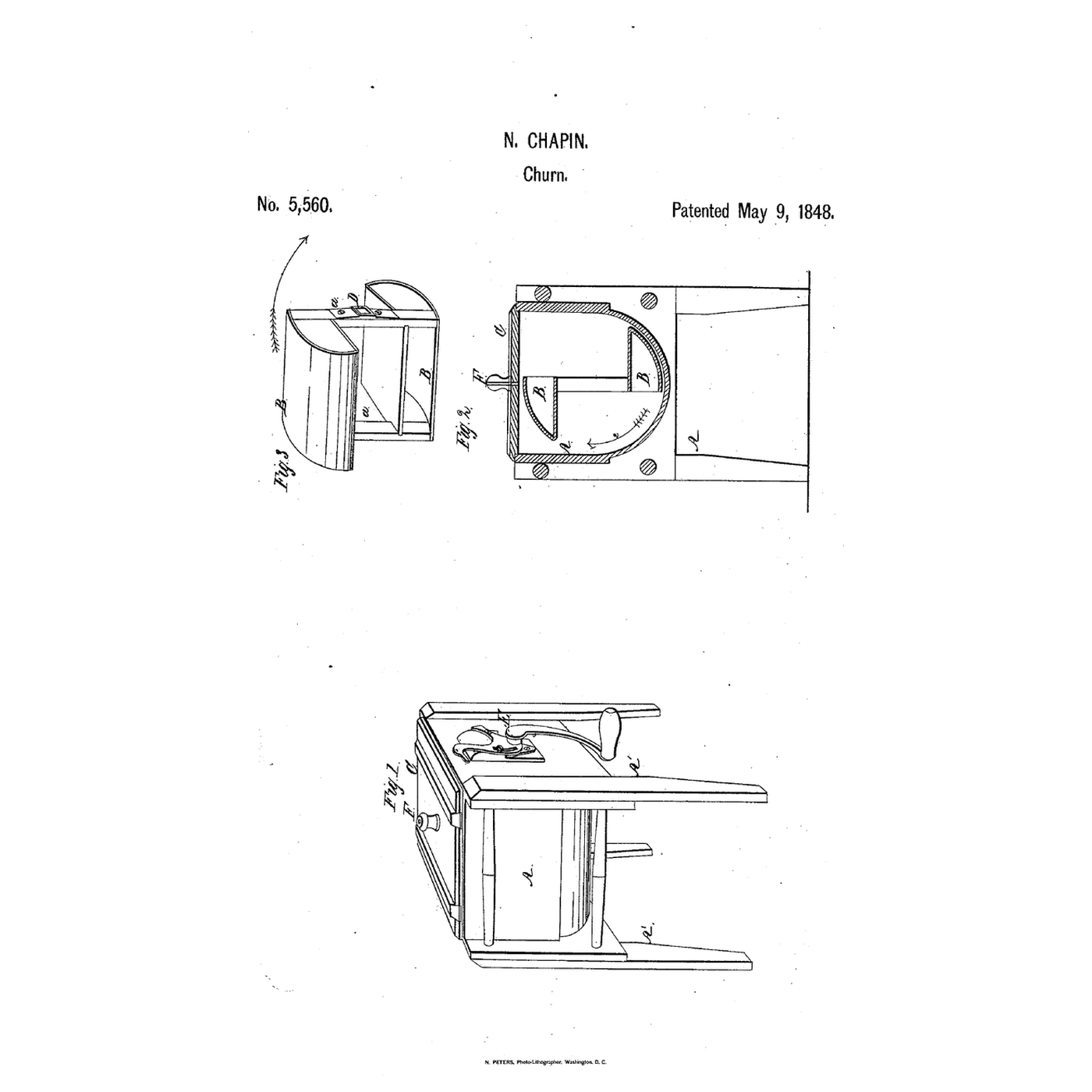
Air-Bucket Churn: Buckets That Carry Air Down and Cream Up
por Karen
COMIDA E BEBIDAS
1
0
0
0
0
0
CC0 Domínio Público
Este blueprint é liberado sob CC0. Você é livre para copiar, modificar, distribuir e usar este trabalho para qualquer finalidade, sem pedir permissão.
Apoie o Maker comprando produtos através do Blueprint, onde ele ganha uma Comissão Maker definida pelos vendedores, ou crie uma nova versão deste Blueprint e inclua-o como conexão no seu próprio Blueprint para compartilhar receita.