ARTE
BELEZA E BEM-ESTAR
ARTESANATO
CULTURA E HISTÓRIA
ENTRETENIMENTO
MEIO AMBIENTE
COMIDA E BEBIDAS
ENGENHARIA REVERSA
CIÊNCIAS
ESPORTES
TECNOLOGIA
TECNOLOGIA VESTÍVEL


Shaftless Dasher-Wheel Churn: Bevelled Buckets Drive the Cream to the Centre
Earlier dasher wheels turned on a shaft running through the churn.
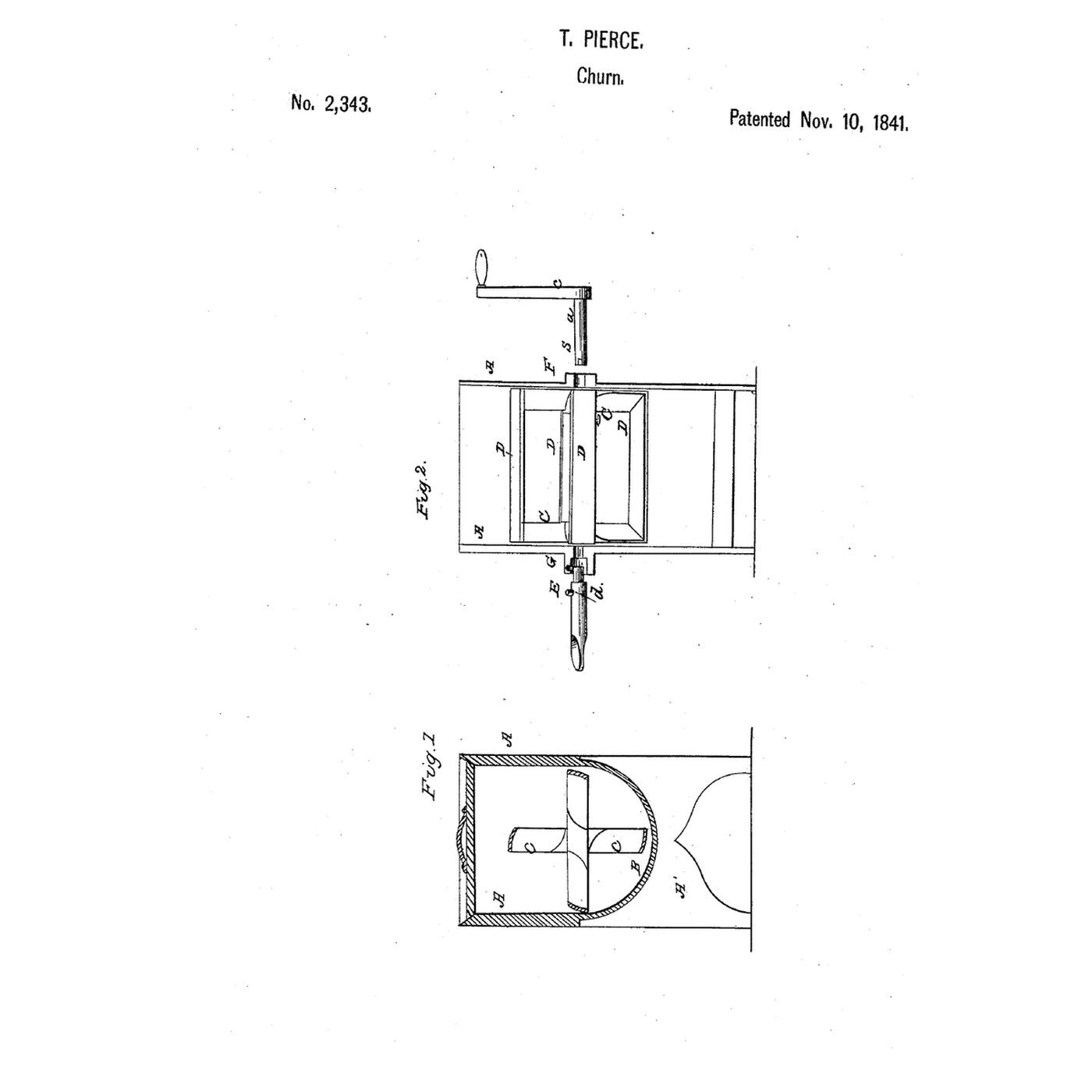
Thomas Pierce of Hartwick, New York, received US 2,343, dated 10 November 1841, for a churn whose "dasher wheel has no center shaft, but is sustained by axes which are passed through the sides of the box." Two crosses are joined by four buckets, all bevelled so that turning the wheel "shall conduct the cream from the ends and sides of the box toward the center." The winch's axle catches a pin in the cross by a notch; the box's bottom is semicircular and its end planks run down as legs.
This rung works out the bevels' push, then prints the wheel and grooved ends, bends a stainless half cylinder, and makes butter.
Avançado
About 5 hours, plus printing
Instruções
1
1
Bevel push and box size
Bevel push and box size
A carregar o notebook Jupyter…
2
2
A dash turning in a half cylinder before it
A dash turning in a half cylinder before it
The embedded blueprint turns a dash of two crosses and slats on a spindle in a half cylinder. Pierce drops the spindle and bevels the parts.
3
3
Read US 2,343
Read US 2,343
"The dasher consists of four arms at each end, formed by crossing two pieces of wood purposely shaped for that purpose; and of four buckets, which connect the four arms at each end, extend the length of the box; the arms and the buckets are each made beveling, or slanting on the inside from the forward edge to the hind part of the arms and buckets in such manner as that when the dasher wheel is made to revolve, they shall conduct the cream from the ends and sides of the box toward the center."
4
4
Print the parts
Print the parts
Print the dasher wheel standing on one cross (/uploads/blueprints/shaftless-dasher-wheel-churn-wheel.stl), with supports under the upper cross. Its hubs have sockets for the gudgeons, and one has the notch. Print two end pieces (/uploads/blueprints/shaftless-dasher-wheel-churn-end.stl) and the crank arm (/uploads/blueprints/shaftless-dasher-wheel-churn-crank-arm.stl). Print in PETG at 0.2 mm layers, 30 % infill, 4 walls; wash before first use.
Materiais para este passo:
 Filamento PETG1 peça
Ferramentas necessárias:
 Impressora 3D de filamento (FDM)
5
5
Bend the bottom
Bend the bottom
Cut a 0.5 mm stainless sheet 160 mm wide and about 305 mm long, deburr it, and bend it round a 130 mm form into a U: a 65 mm radius half circle with 50 mm straight sides. Seat it in the curved grooves of both end pieces in silicone, and let it cure.
Materiais para este passo:
 Chapa de aço inoxidável - 3041 peça
 Vedante de silicone1 peça
Ferramentas necessárias:
 Tesoura de chapa
 Rebarbador manual
 Maço de borracha
 Grampos
 Fita métrica
6
6
Gudgeons and winch
Gudgeons and winch
Cut two 30 mm stubs of 12 mm hardwood dowel as gudgeons. Drive a nail across one, near its inner end, to catch the wheel's notch. Set the wheel between the ends and push a gudgeon through each end into its hub, with a leather washer under each so the cream does not leak. Glue the crank arm and a dowel handle on the notched gudgeon.
Materiais para este passo:
 Cavilhas de madeira dura1 peça
 Pregos1 peça
 Tira de couro1 peça
 Cola de madeira1 peça
Ferramentas necessárias:
 Serrote
 Martelo
 Lixa
Lixa7
7
The patent drawing
The patent drawing
US 2,343 drawing sheet, public domain (expired patent).
8
8
Crank and make butter
Crank and make butter
Let the heavy cream stand until it reaches about 15 °C, checked with the thermometer. Pour in 500 ml. Turn the crank steadily and time until the butter comes; the bevels gather it in the middle. Pour off the buttermilk, add cold water, churn a little and pour off again until it runs clear; work in a pinch of salt and weigh the butter.
Materiais para este passo:
 Natas para bater500 ml
 Sal marinho grosso1 peça
 Água1 peça
Ferramentas necessárias:
 Termómetro de sonda permanente
 Cronómetro
 Balança digital de cozinha
 Taça grande de aço inoxidável
9
9
A wheel that will not turn, ends that leak
A wheel that will not turn, ends that leak
Shaftless dasher-wheel churn troubleshooting.
Flow
Loading...
10
10
History and honest limits
History and honest limits
**Thomas Pierce** of Hartwick, Otsego County, New York, received US 2,343, dated 10 November 1841. The hole for the winch's axle "is boxed or leathered so that the cream should not leak through"; a pin turned on an inclined recess in a cleat keeps the churn tight at both axes. "The dasher wheel may be made of wood, the axes, boxing, &c., may also be made of wood, bone, or any suitable material; the machine may be operated by any propelling power now in use." He claimed the bevel of the arms in combination with the bevel form of the buckets, to give the centripetal operation upon the cream.
**Honest limits.** Stainless sheet and printed parts stand in for his box and wooden wheel. FDM prints hold food in their layer lines, so wash well and replace when worn. Your times and weights are the result.
Materiais
10- 1 peçaReferência
- Referência
- 1 peçaReferência
- 1 peçaReferência
- 1 peçaReferência
- 1 peçaReferência
- 1 peçaReferência
- 500 mlReferência
- 1 peçaReferência
- 1 peçaReferência
Ferramentas necessárias
13- Referência
- Referência
- Referência
- Referência
- Referência
- 1 vendor sell this, none ship to you yetReferência
- Referência
- Referência
- Referência
- Referência
- Referência
- Referência
- Referência
Blueprints relacionados
Estes blueprints compartilham conhecimento — técnicas, materiais ou princípios
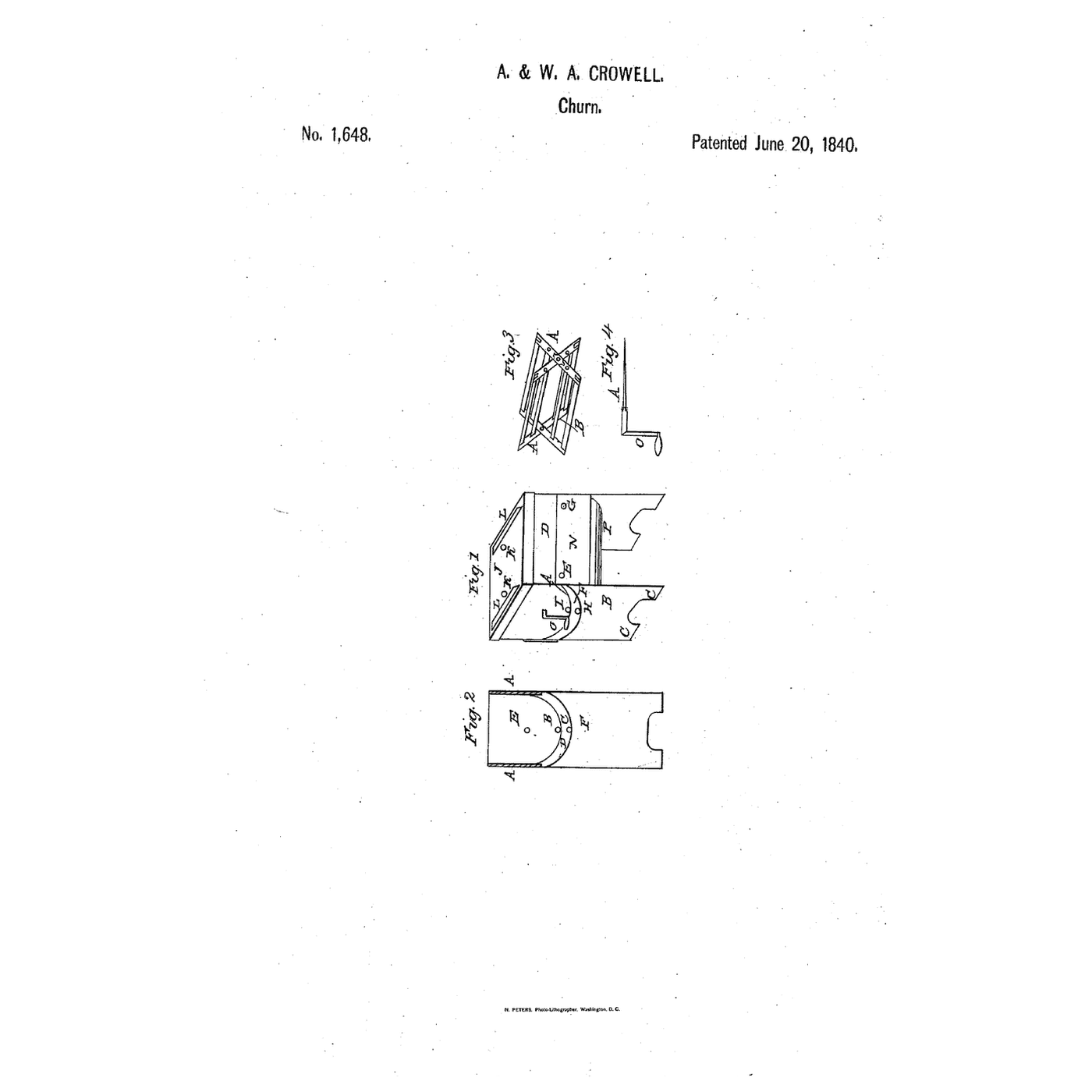
Water-Jacketed Churn: Hot or Cold Water Under a Metal Plate Tempers the Cream
por Karen
COMIDA E BEBIDAS
1
0
0
0
0
0
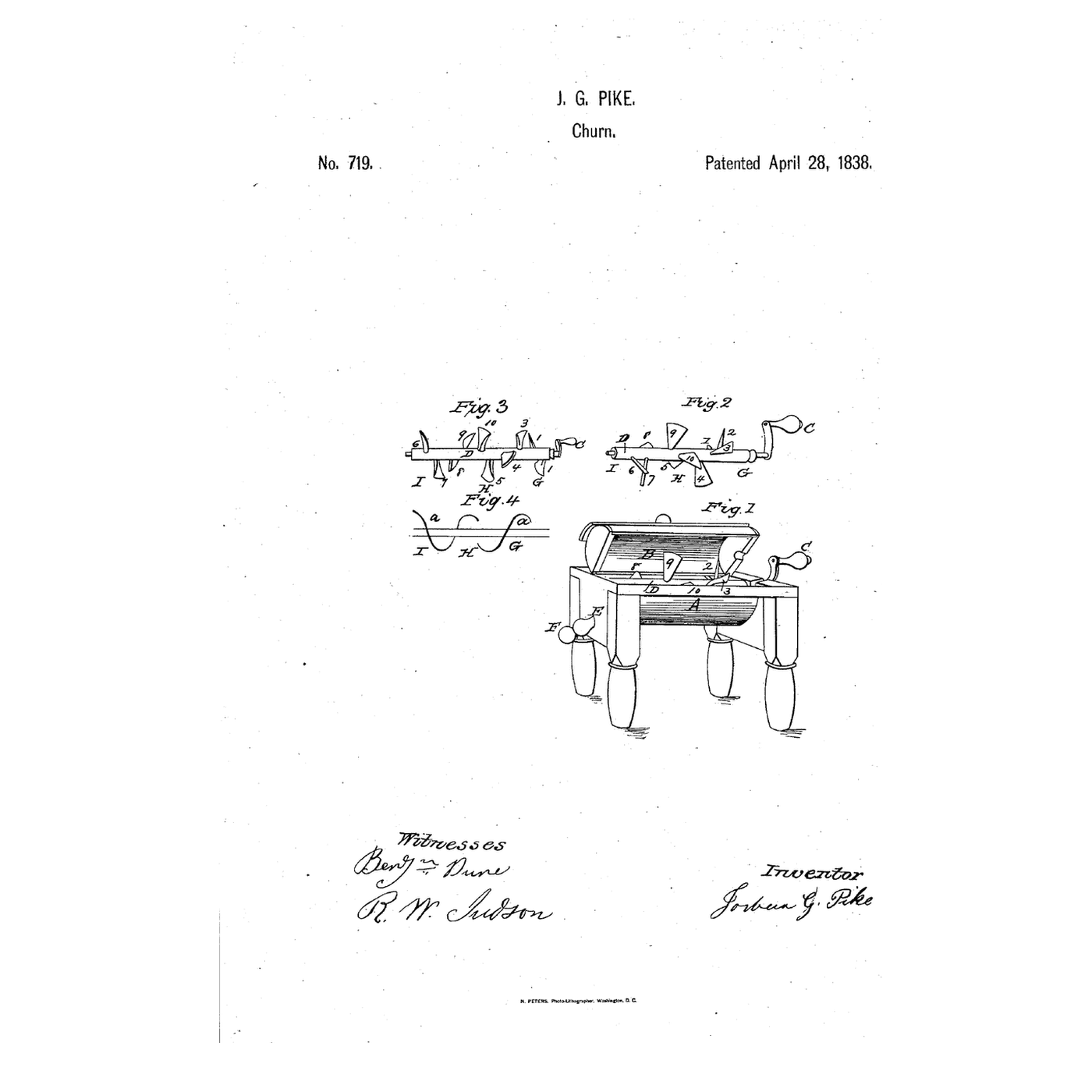
Oblique-Paddle Churn: Turn One Way to Gather the Butter, Back to Spread It
por TheChef
COMIDA E BEBIDAS
1
0
0
0
0
0
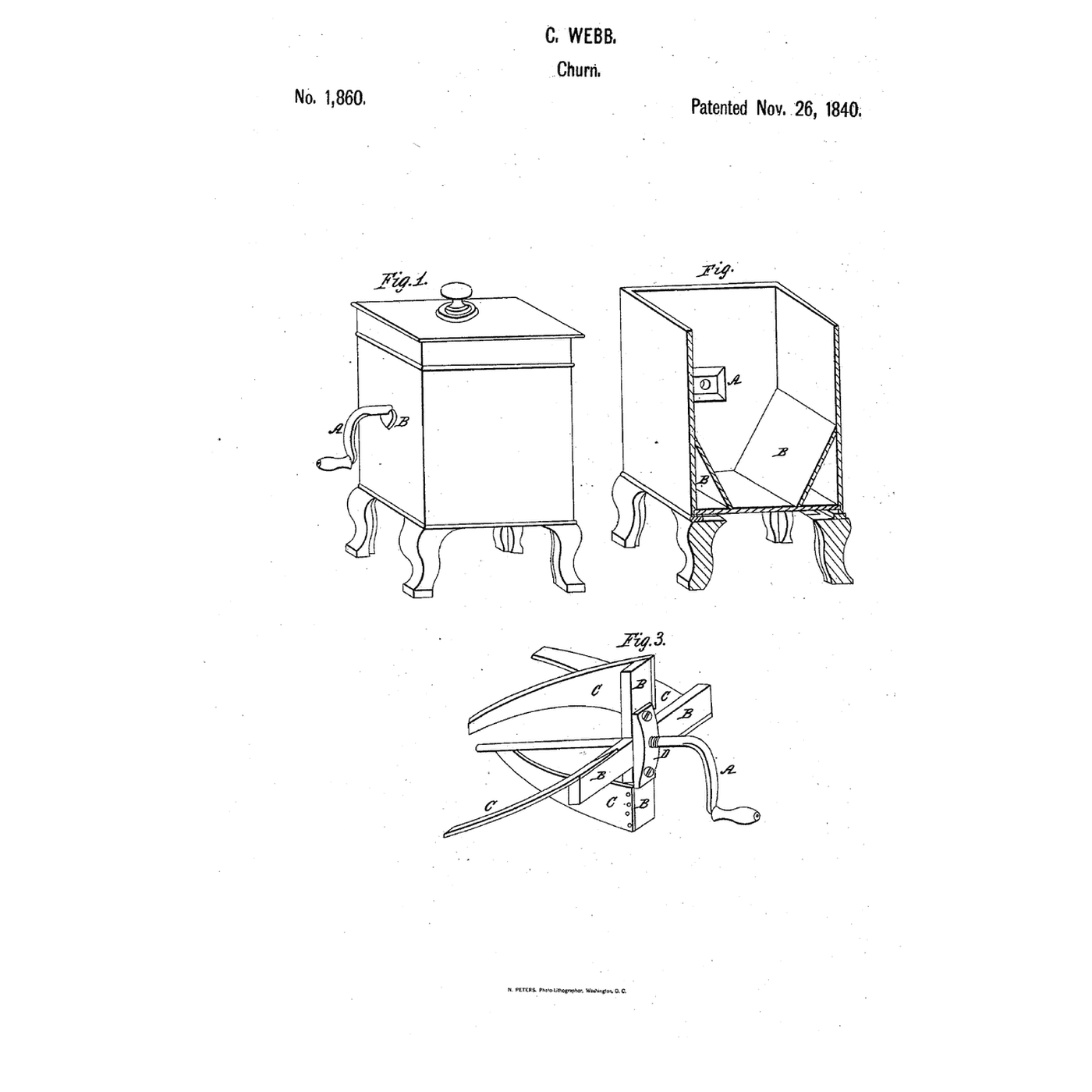
Oblique-Wing Reel Churn: Four Wings Across the Line of the Axle
por YourGrandma
COMIDA E BEBIDAS
2
0
0
0
0
0
CC0 Domínio Público
Este blueprint é liberado sob CC0. Você é livre para copiar, modificar, distribuir e usar este trabalho para qualquer finalidade, sem pedir permissão.
Apoie o Maker comprando produtos através do Blueprint, onde ele ganha uma Comissão Maker definida pelos vendedores, ou crie uma nova versão deste Blueprint e inclua-o como conexão no seu próprio Blueprint para compartilhar receita.