ARTE
BELEZA E BEM-ESTAR
ARTESANATO
CULTURA E HISTÓRIA
ENTRETENIMENTO
MEIO AMBIENTE
COMIDA E BEBIDAS
ENGENHARIA REVERSA
CIÊNCIAS
ESPORTES
TECNOLOGIA
TECNOLOGIA VESTÍVEL


The Adjustable Buttonhole Cutter: A Turning Anvil of Many Lengths
Every buttonhole must be the right length for its button: too short and the button will not pass, too long and it slips out. Cutting each one by eye with scissors is slow and uneven.
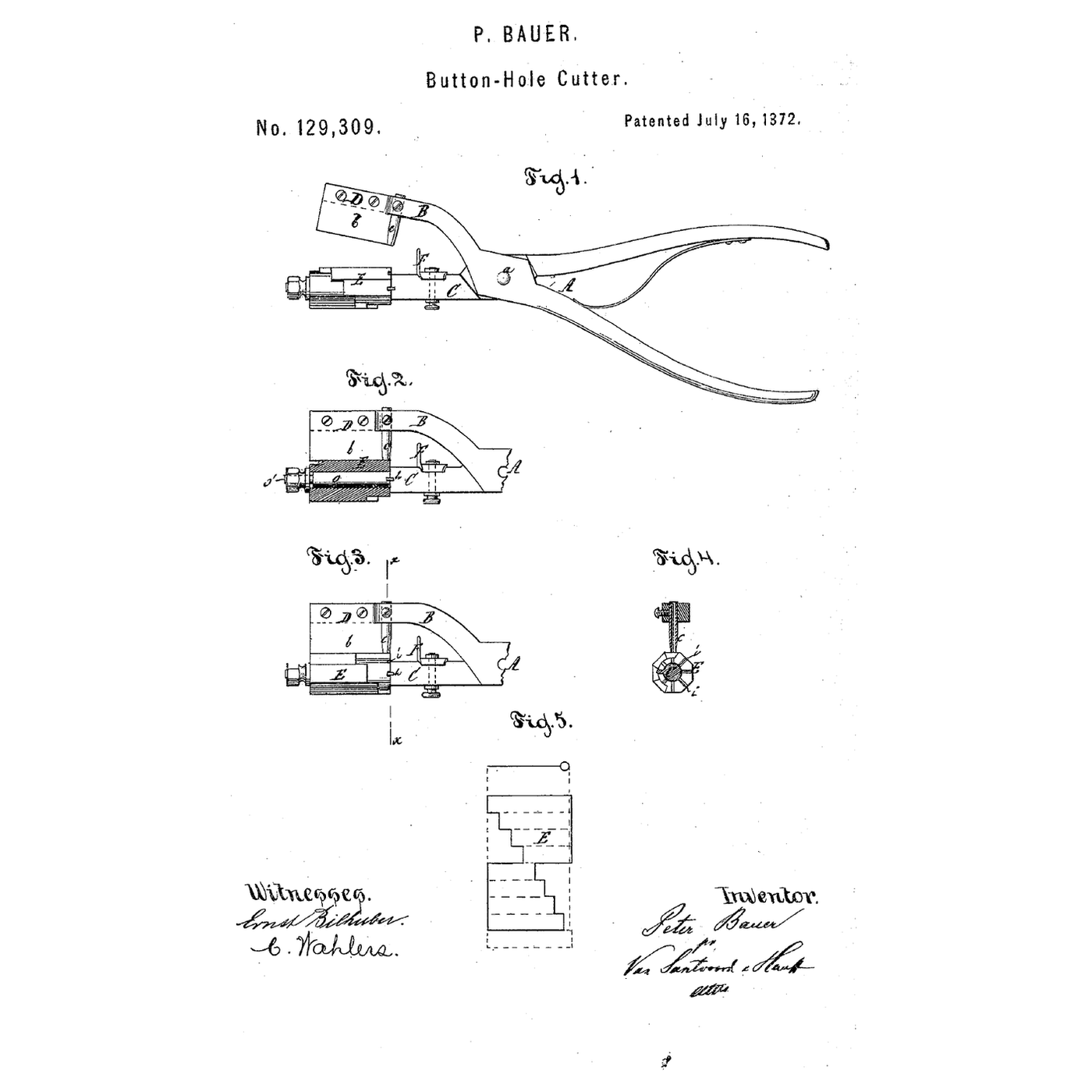
Peter Bauer of Newark, New Jersey, received US 129,309, dated 16 July 1872, for a cutter with "a hollow anvil or barrel provided with a series of faces of unequal length", turned on the lower jaw so that "button-holes of different lengths, with or without an eye, can be cut with facility".
This rung works out how long a slit a button needs, then cuts test buttonholes on scrap cloth and checks them against the buttons.
Iniciante
About 2 hours
Instruções
1
1
Slit length for a button
Slit length for a button
A carregar o notebook Jupyter…
2
2
The other half of the fastening
The other half of the fastening
The embedded blueprint sews a button on. The buttonhole has to be cut to fit it.
3
3
Read US 129,309
Read US 129,309
"The faces of the anvil are of different length, as shown in Fig. 5, and by turning the same round to the position shown in Fig. 2 a long button-hole can be cut with an eye corresponding to the punch c".
"If desired, however, the anvil can be turned to the position shown in Fig. 3, and in this case the punch does not come into action and the button-hole produced is without an eye."
"A gauge, F, is applied on the jaw C to determine the distance of the button-hole from the edge of the material."
4
4
Cut test buttonholes and fit the buttons
Cut test buttonholes and fit the buttons
Measure each button's diameter and thickness with the ruler, and work out its slit length with the notebook.
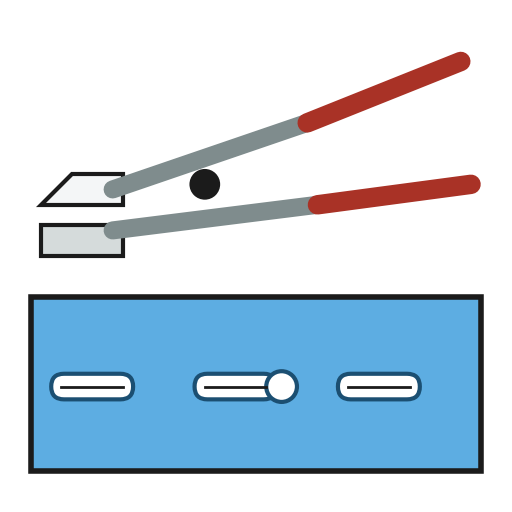
On a doubled strip of scrap cloth, mark each slit with tailor's chalk, the same distance in from the edge, as Bauer's gauge does. Work a line of small stitches round each mark so the cut edge cannot fray. Lay the cloth on the cutting mat and cut the slit with the craft knife, or with the buttonhole cutter set to that length. For a shank button, punch a small eye at one end.
Push each button through its hole. Note which pass easily, which stick and which slip out.
Materiais para este passo:
 Tecido de algodão (leve)1 peça
 Linha de costura1 peça
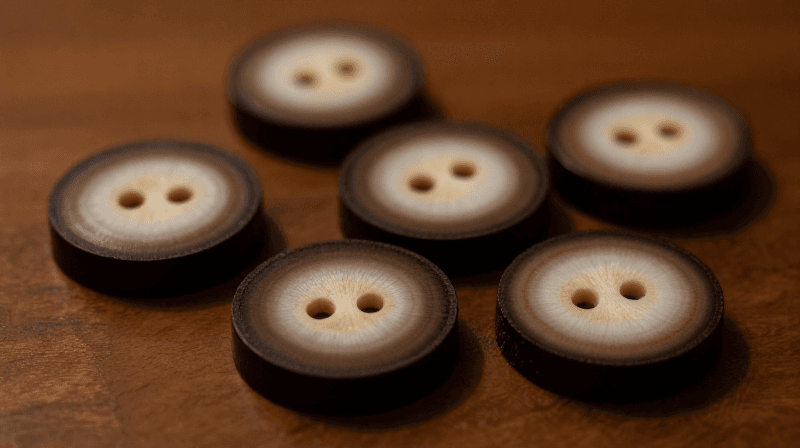
 Conjunto de botões de camisa1 peça
Ferramentas necessárias:
 Cortador de casas de botão
 X-ato (faca de precisão)
 Base de corte autocicatrizante
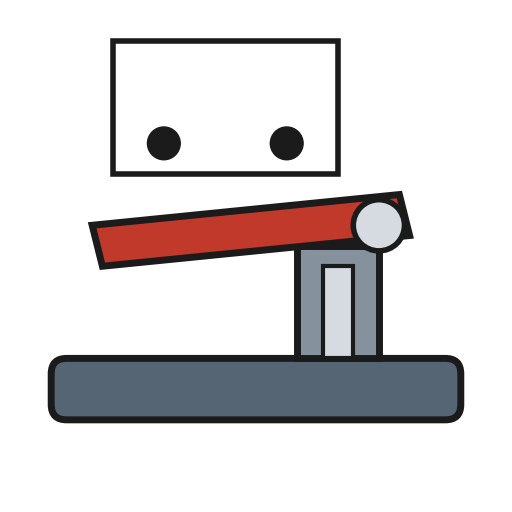 Furador de papel
 Giz de alfaiate
 Agulhas de costura à mão
 Régua
Régua5
5
A buttonhole that frays, sticks or gapes
A buttonhole that frays, sticks or gapes
Buttonhole troubleshooting.
Flow
Loading...
6
6
History and honest limits
History and honest limits
**Peter Bauer** of Newark, Essex County, New Jersey, received US 129,309, dated 16 July 1872. The patent prints no filing date. He disclaims a solid spiral-grooved cylinder already known for the same purpose.
**Honest limits.** Diameter plus thickness is a rule of thumb, not a standard; stiff or stretchy cloth and the stitching round the hole change the fit. The button sizes and anvil lengths are examples. Your test holes are the measurement.
Materiais
3- 1 peçaReferência
- 1 peçaReferência
- Referência
Ferramentas necessárias
7- Referência
- Referência
- Referência
- Referência
- Referência
- Referência
- Referência
Blueprints relacionados
Estes blueprints compartilham conhecimento — técnicas, materiais ou princípios



CC0 Domínio Público
Este blueprint é liberado sob CC0. Você é livre para copiar, modificar, distribuir e usar este trabalho para qualquer finalidade, sem pedir permissão.
Apoie o Maker comprando produtos através do Blueprint, onde ele ganha uma Comissão Maker definida pelos vendedores, ou crie uma nova versão deste Blueprint e inclua-o como conexão no seu próprio Blueprint para compartilhar receita.