ARTE
BELEZA E BEM-ESTAR
ARTESANATO
CULTURA E HISTÓRIA
ENTRETENIMENTO
MEIO AMBIENTE
COMIDA E BEBIDAS
ENGENHARIA REVERSA
CIÊNCIAS
ESPORTES
TECNOLOGIA
TECNOLOGIA VESTÍVEL
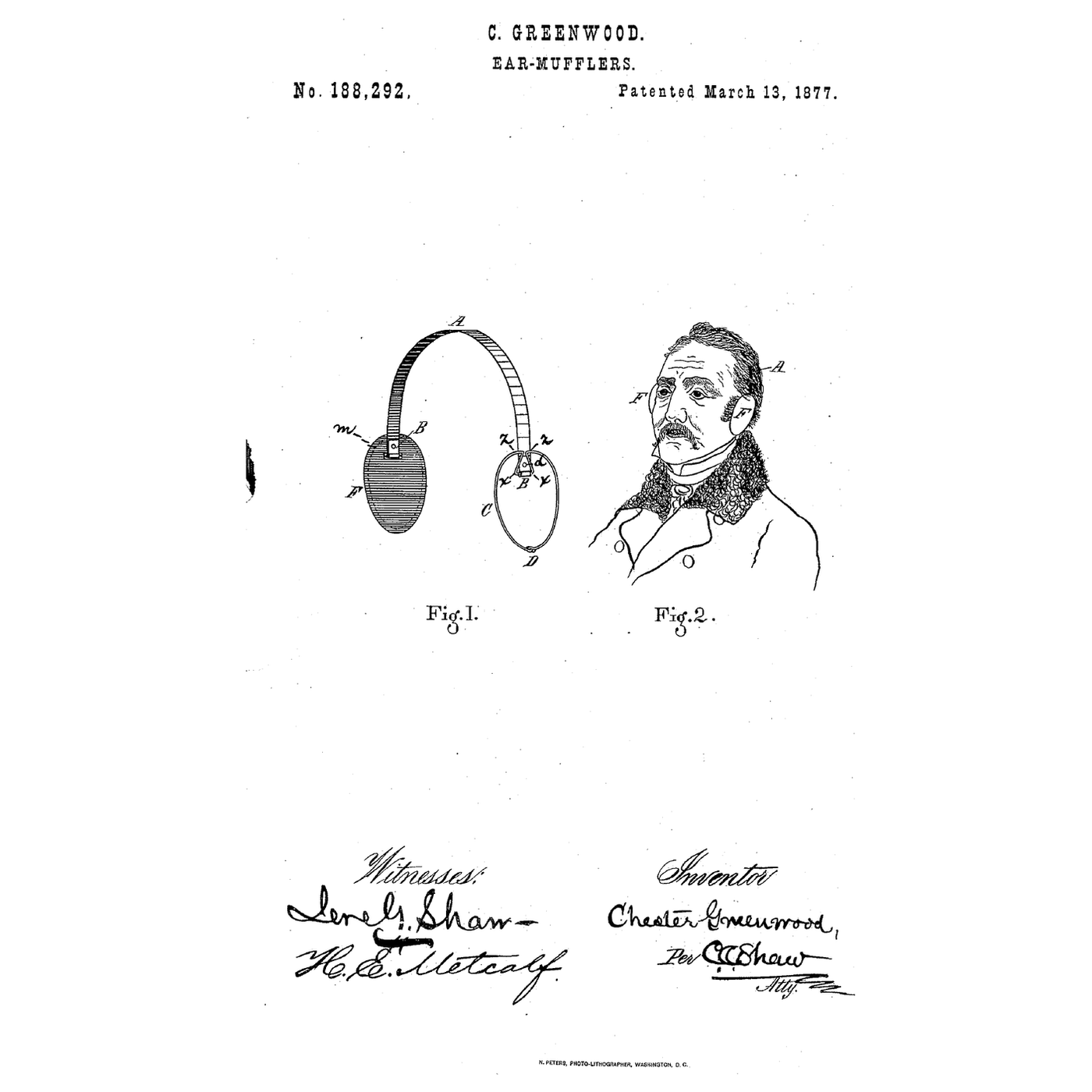


The Ear-Mufflers: A Steel Spring Over the Head and a Pad on Each Ear
Ears are thin and stick out into the wind, so they chill first. A muffler keeps a warm pad on each ear with a spring band over the head, and leaves the head free.
Chester Greenwood of Farmington, Maine, received US 188,292, dated 13 March 1877 (filed 8 February 1877), for ear-mufflers "kept in contact with the ears by means of a spring, which forms the body, and also connects the pads". The body is "a flattened metallic spring, semicircular in shape"; each pad is an oval wire frame covered with cloth and lined with "fur, wool, skin, or any other fibrous non-conductor of heat".
This rung works out the pad force and the heat an ear loses bare and covered. Then it makes a pair and tests a pad on a warm bottle in front of a fan.
Iniciante
About 2 hours
Instruções
1
1
Spring force and heat loss
Spring force and heat loss
A carregar o notebook Jupyter…
2
2
The pad: a fibrous non-conductor
The pad: a fibrous non-conductor
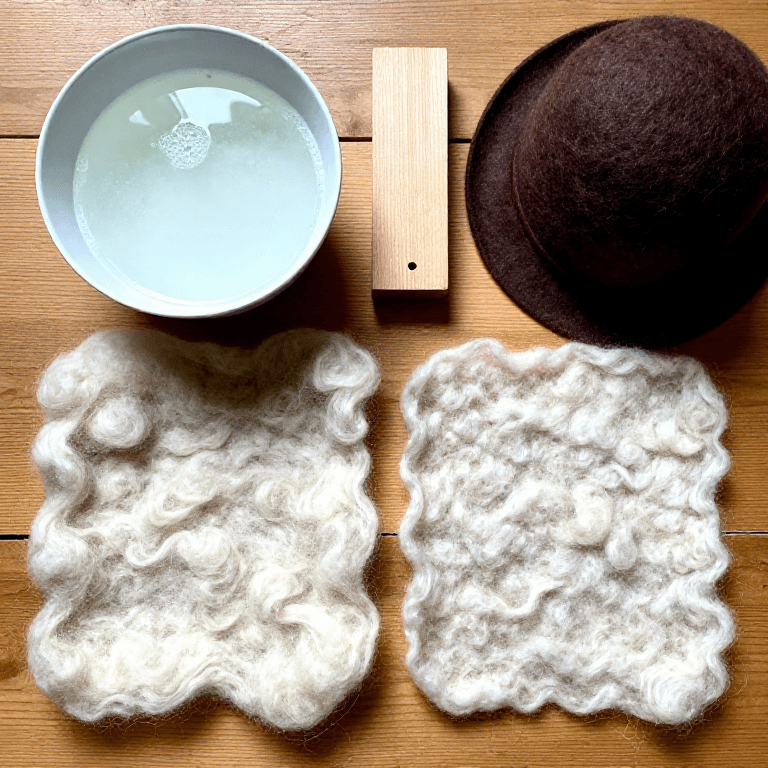
Felt traps still air between wool fibres. The embedded blueprint fulls wool into felt.
3
3
Read US 188,292
Read US 188,292
"My invention relates to that class of ear-mufflers which are kept in contact with the ears by means of a spring, which forms the body, and also connects the pads of the muffler".
"A represents the body of the muffler, which consists of a flattened metallic spring, semicircular in shape, and having its ends bent or overlapped, and riveted down, as seen at d, to form portions of the joints B. The frame of the pad F consists of a single piece of wire, C, having its ends joined at D and bent into an oval shape". "The frame C is covered with cloth, and may be also lined or covered with fur, wool, skin, or any other fibrous non-conductor of heat, as desired."
"In the use of my improvement the body A is passed over the top of the head of the wearer, as seen in Fig. 2, its contractile action causing the pads F to press firmly against the ears, and protect them from cold".
4
4
Make a pair and test a pad
Make a pair and test a pad
Bend a spring steel strip into a half circle that fits over your head with the ends about 3 cm closer together than your head is wide. Wear gloves and eye protection; file the ends smooth. Bend two ovals of stiff wire to cover an ear, cover them in wool felt and stitch them on, and fix one to each end of the band.
To test a pad without a head: fill two identical glass bottles with water at 40 C. Wrap one in a single layer of the felt. Stand both 1 m in front of a fan and read their temperatures with a kitchen thermometer every two minutes for twenty minutes. Plot both; the bare bottle is the bare ear.
Materiais para este passo:
 Fita de aço-mola1 peça
 Folha de feltro de lã1 peça
 Água2 litros
Ferramentas necessárias:
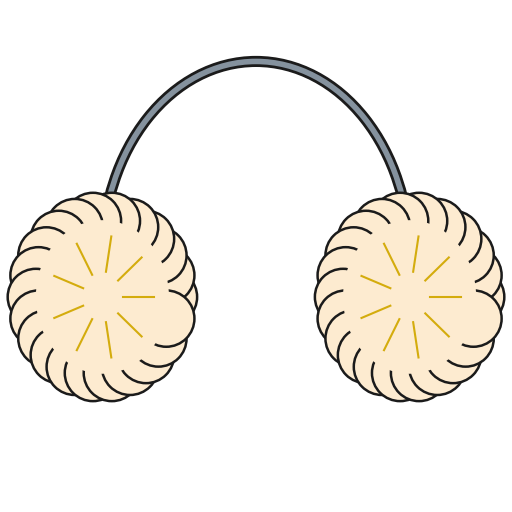 Protetores de orelhas
 Luvas de trabalho em couro
 Óculos de segurança transparentes
 Ventoinha de caixa (velocidade variável)
 Termómetro de cozinha
 Cronómetro
5
5
Mufflers that slip, pinch or let the cold in
Mufflers that slip, pinch or let the cold in
Ear-muffler troubleshooting.
Flow
Loading...
6
6
History and honest limits
History and honest limits
**Chester Greenwood** of Farmington, Maine, filed US 188,292 on 8 February 1877; it is dated 13 March 1877. His claim covers the elastic metallic body with pads whose wire frames have bends that stop them swinging too far.
**Honest limits.** The patent gives no sizes or spring strength. Ear area, air-film coefficients, pad conductivity and spring stiffness in the notebook are examples; the bottle test is the measurement.
Materiais
3- 1 peçaReferência
- 1 peçaReferência
- 2 litrosReferência
Ferramentas necessárias
6- Referência
- Referência
- Referência
- Referência
- Referência
- Referência
Blueprints relacionados
Estes blueprints compartilham conhecimento — técnicas, materiais ou princípios


CC0 Domínio Público
Este blueprint é liberado sob CC0. Você é livre para copiar, modificar, distribuir e usar este trabalho para qualquer finalidade, sem pedir permissão.
Apoie o Maker comprando produtos através do Blueprint, onde ele ganha uma Comissão Maker definida pelos vendedores, ou crie uma nova versão deste Blueprint e inclua-o como conexão no seu próprio Blueprint para compartilhar receita.