ARTE
BELEZA E BEM-ESTAR
ARTESANATO
CULTURA E HISTÓRIA
ENTRETENIMENTO
MEIO AMBIENTE
COMIDA E BEBIDAS
ENGENHARIA REVERSA
CIÊNCIAS
ESPORTES
TECNOLOGIA
TECNOLOGIA VESTÍVEL
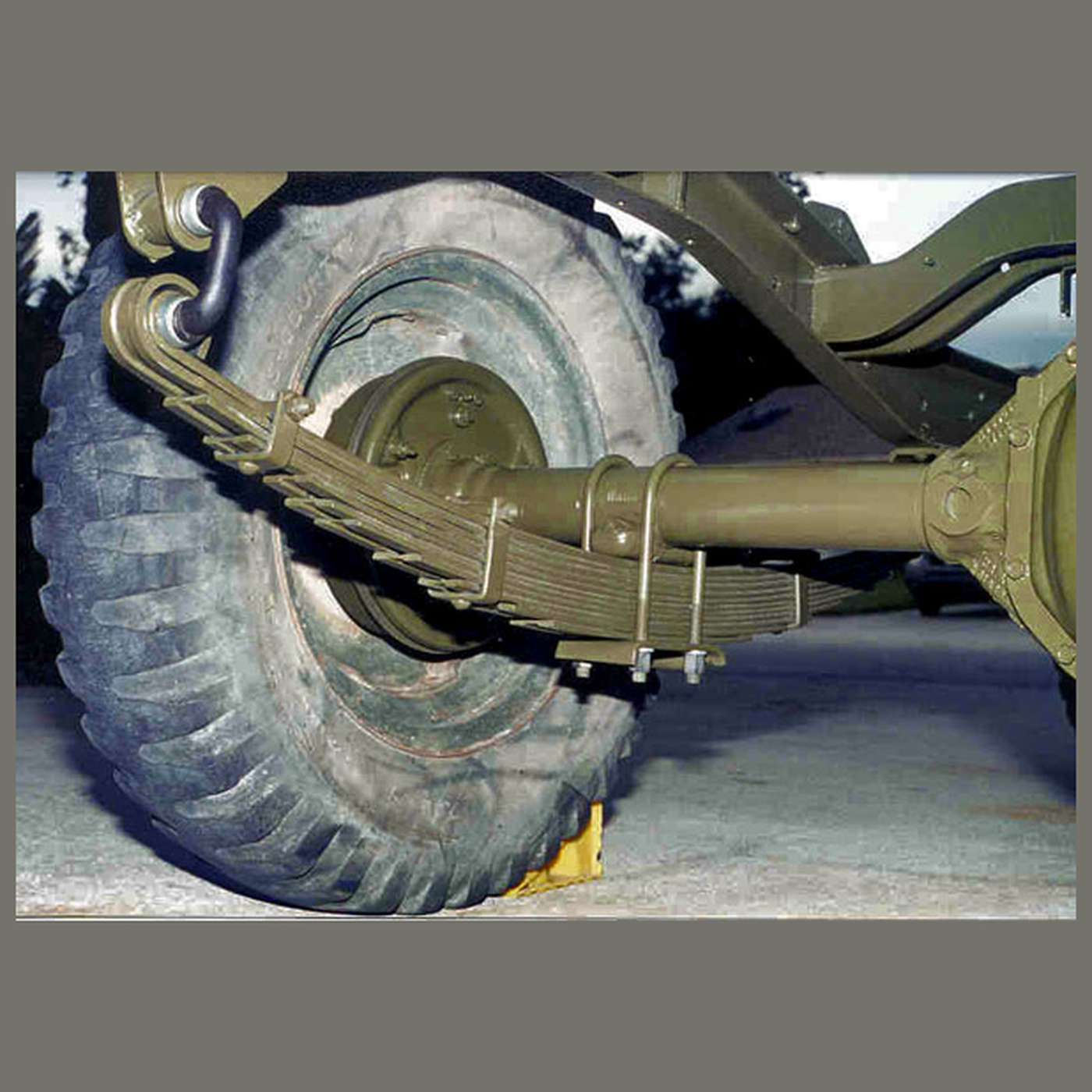

The Leaf Spring: A Beam That Carries the Load and Locates the Axle
Stack strips of spring steel, longest on top and each shorter one below, clamp them at the middle to an axle and hang the ends from the body: that is the leaf spring. It is the carriage spring of the early 1800s — Obadiah Elliott's elliptic spring of 1804 let coaches do away with the heavy perch that held the axles together — and it is still under most lorries and many pick-ups.
It does three jobs at once: it carries the load, it locates the axle so no other links are needed, and the leaves rubbing on each other damp the motion a little.
This rung works out a leaf spring's rate and the ride frequency it gives, and builds one from spring-steel strip to measure.
Iniciante
About 3 hours
Instruções
1
1
Rate and ride frequency
Rate and ride frequency
A carregar o notebook Jupyter…
2
2
Build a small leaf spring and measure it
Build a small leaf spring and measure it
Cut four strips of spring-steel strip: 300, 240, 180 and 120 mm long. Stack them centred, longest on top, and clamp them together at the middle with a bolt through a small hole (or a clamp). Bend a small eye at each end of the top leaf, or hook it over two dowels set 300 mm apart on a board.
Hang weights from the centre in steps and measure the sag with the steel rule. The slope of load against sag is the rate. Compare with the notebook's formula for your strip's width and thickness (measure them with calipers).
Now remove the two shortest leaves and repeat: the rate falls — and the top leaf now bends into a sharper curve at the centre, where it would crack first.
Materiais para este passo:
 Fita de aço-mola1 conjunto
 Parafusos de máquina2 peças
 Cavilhas de madeira dura1 conjunto
 Placa de contraplacado1 folha
Ferramentas necessárias:
 Torno de bancada
 Paquímetro digital de 6 polegadas
 Régua
Régua Dinamómetro (balança de mola)
 Luvas de trabalho em couro
3
3
History and context
History and context
Laminated carriage springs developed through the eighteenth century; **Obadiah Elliott's elliptic spring of 1804** (a British patent) let coaches be built without the perch, and the semi-elliptic form went on to railway wagons and motor vehicles. No patent number is asserted here.
**Honest limits.** A leaf spring is heavy for the energy it stores. The friction between leaves damps small bumps poorly and large ones harshly, and changes as the leaves rust. And because the spring also locates the axle, the axle can wind up under hard acceleration and braking.
Materiais
4- 1 conjuntoReferência
- 2 peçasReferência
- 1 conjuntoReferência
- 1 folhaReferência
Ferramentas necessárias
5- Referência
- Referência
- Referência
- Referência
- Referência
Blueprints relacionados
Estes blueprints compartilham conhecimento — técnicas, materiais ou princípios
Spring Rate: The One Number a Spring Is
por Emma
Mecânica
4
0
0
0
0
0

Spring Fatigue: It Is the Swing That Breaks It
por Emma
Trabalho em Metal
2
0
0
0
0
0
Balance: A Tiny Eccentricity Becomes an Enormous Force
por Martin
Engenharia
16
0
0
0
0
0
Building a Wooden Cart Wheel — Hub, Spokes, and Felloes
por Woody
Marcenaria
71
0
0
0
2
0
Ackermann Steering: The Inner Wheel Turns Further
por Martin
Mecânica
2
0
0
0
0
0
CC0 Domínio Público
Este blueprint é liberado sob CC0. Você é livre para copiar, modificar, distribuir e usar este trabalho para qualquer finalidade, sem pedir permissão.
Apoie o Maker comprando produtos através do Blueprint, onde ele ganha uma Comissão Maker definida pelos vendedores, ou crie uma nova versão deste Blueprint e inclua-o como conexão no seu próprio Blueprint para compartilhar receita.