ARTE
BELEZA E BEM-ESTAR
ARTESANATO
CULTURA E HISTÓRIA
ENTRETENIMENTO
MEIO AMBIENTE
COMIDA E BEBIDAS
ENGENHARIA REVERSA
CIÊNCIAS
ESPORTES
TECNOLOGIA
TECNOLOGIA VESTÍVEL


The Lifting-Cutter Can Opener: A Diagonal Blade Cuts Under and Holds the Disk
A can opener's knife can slip out of its cut, and the cut disk drops into the can.
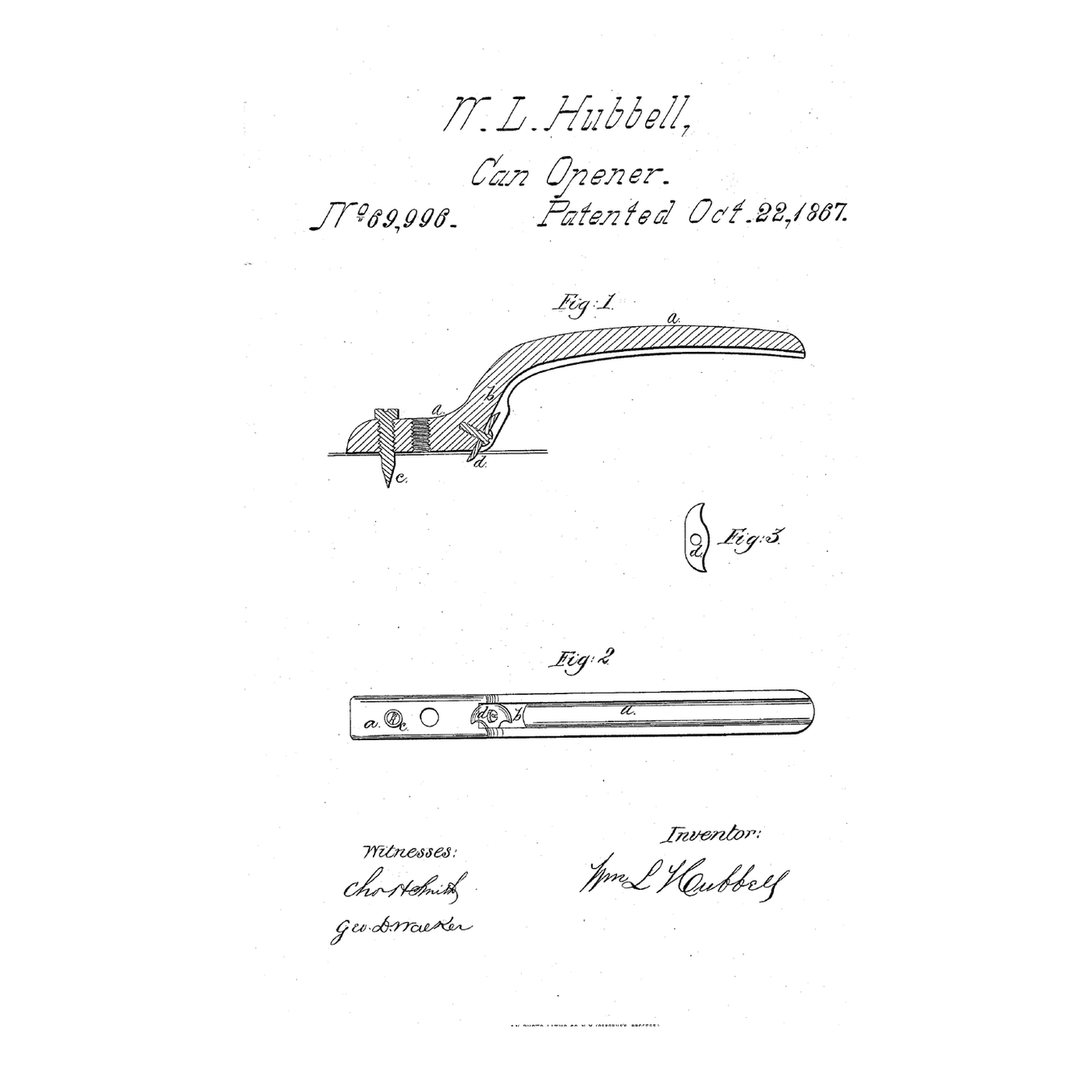
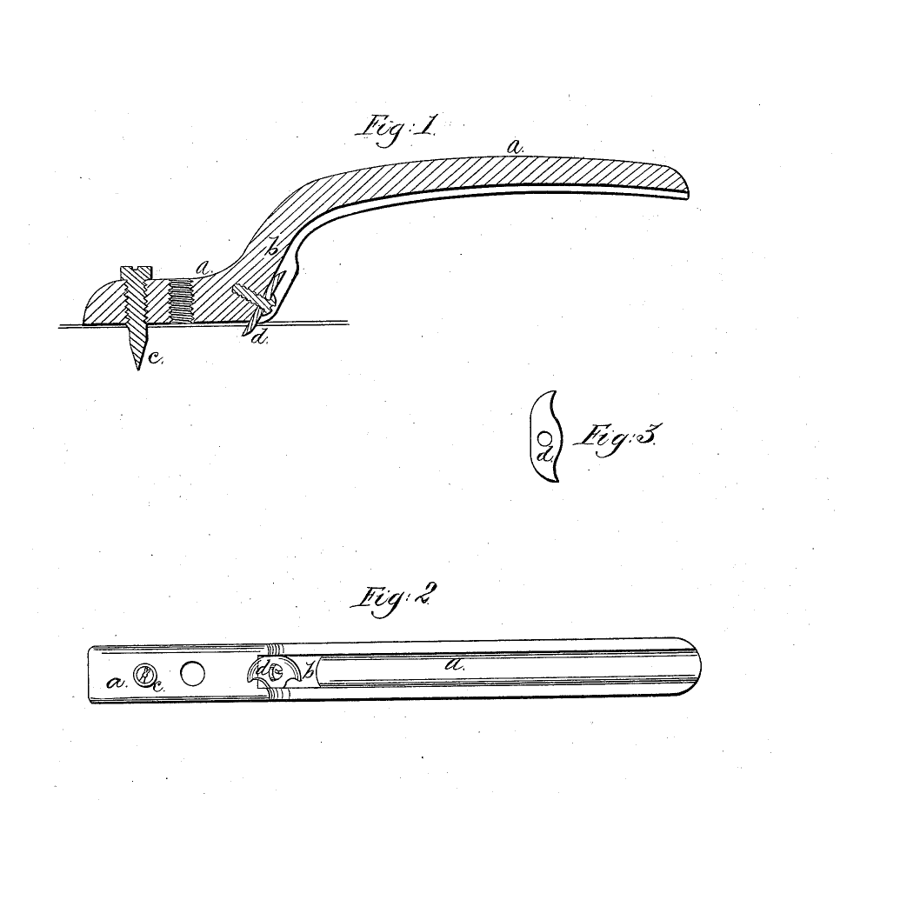
William L. Hubbell of Brooklyn, New York, received US 69,996, dated 22 October 1867, for a can opener made of a lever with a screw spike that fits any of several holes, to vary the size of the disk, and a cutter set diagonally "so as to cut under and lift up the said disk, and prevent the knife slipping out while in use," holding the disk until it is taken from the can.
This rung works out which hole suits which can, then builds the lever, spike and diagonal cutter and opens a can.
Intermediário
About 3 hours
Instruções
1
1
Spike hole against can size
Spike hole against can size
A carregar o notebook Jupyter…
2
2
A turning cutter before it
A turning cutter before it
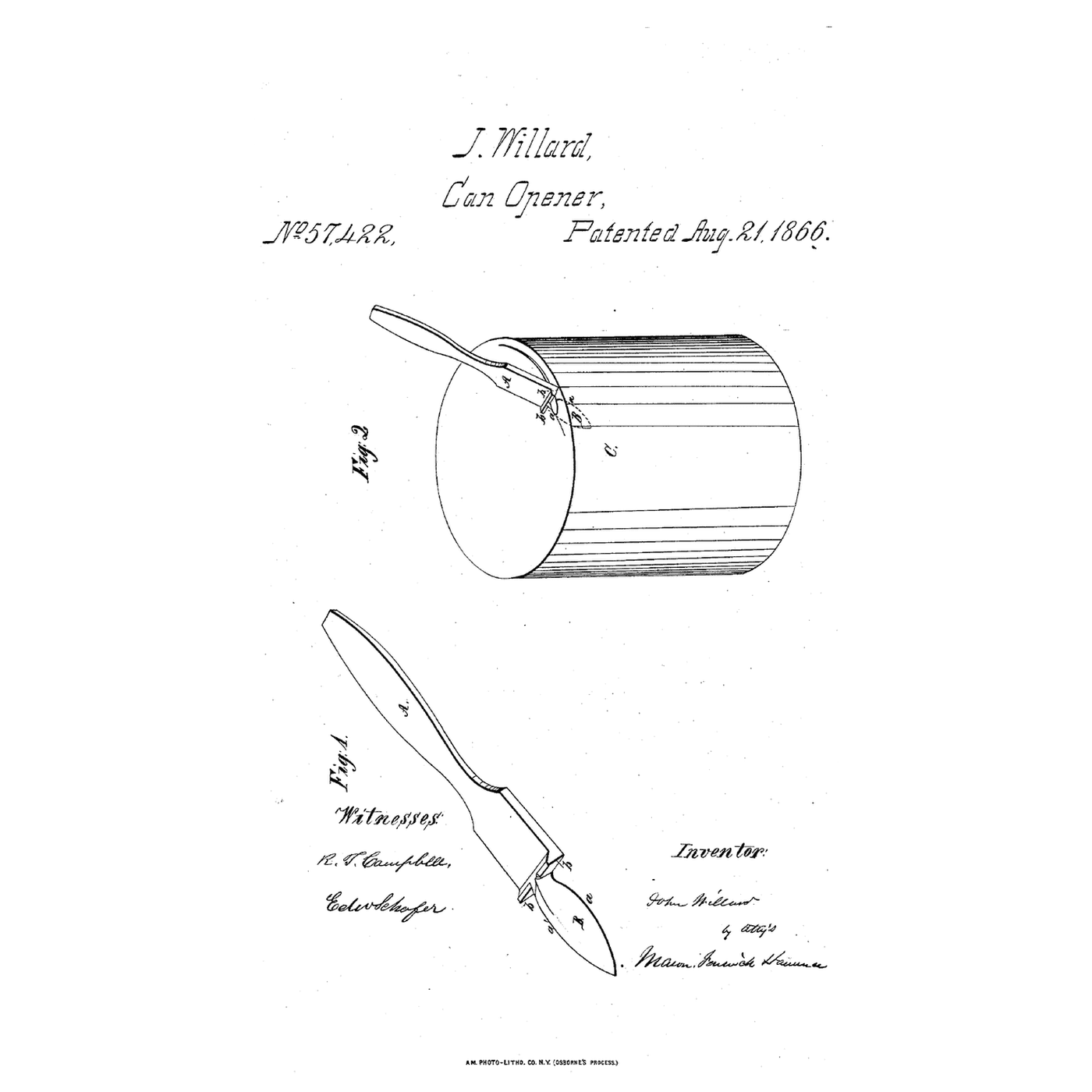
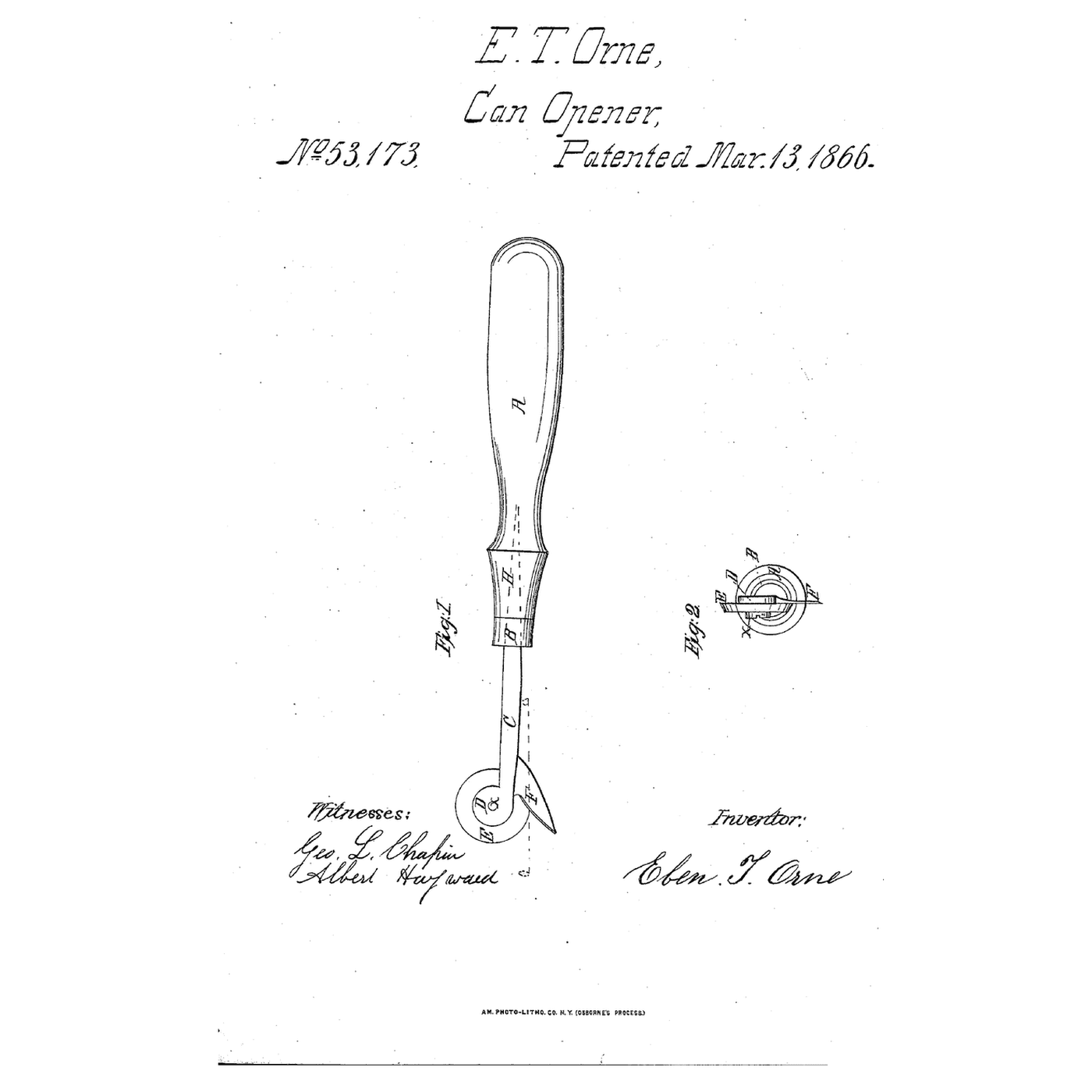
The embedded blueprint cuts round a can with a wheel and a fixed cutter. Hubbell turns a lever round a spike and inclines the cutter so it lifts what it cuts.
3
3
Read US 69,996
Read US 69,996
"The cutter d is set into a recess, formed by grooves, on the edges of the lever a, at the curved part b, so that one edge of the cutter projects below the under side of the lever at an inclination, as shown, so that the cutter is prevented from rising by its being below, and inclining inwards under the edge of the disk that is being cut out by revolving either the can or the opener."
4
4
Make the lever
Make the lever
Cut 180 mm of 25 × 3 mm flat bar and bend the last 20 mm down at about 40° in the vice. Drill and tap three M5 holes 25, 30 and 35 mm from the bend's foot.
Materiais para este passo:
 Barra chata de aço macio1 peça
Ferramentas necessárias:
 Serra de arco para metais
 Torno de bancada
 Martelo
 Punção de centro
 Berbequim sem fios
 Jogo de brocas
 Jogo de machos e cossinetes
 Régua
Régua5
5
Slot the bent end
Slot the bent end
Saw a slot 1 mm wide and 12 mm deep across the bent end at 25° to the bar with the hacksaw.
Ferramentas necessárias:
Serra de arco para metaisTorno de bancada Jogo de limas de agulha
6
6
Make and set the cutter
Make and set the cutter
Cut a 16 × 18 mm cutter from 1 mm steel sheet and file both short ends to rounded cutting edges. Set it in the slot with epoxy so one end projects 5 mm below the bar, inclined inward.
Materiais para este passo:
 Chapa de aço macio1 peça
 Epóxi de dois componentes1 peça
Ferramentas necessárias:
 Tesoura de chapa
 Limas (lima de mão)
 Pedra de amolar
 Óculos de segurança transparentes
7
7
Make the spike
Make the spike
File the end of an M5 screw to a long taper point. Screw it into the hole that suits the can.
Materiais para este passo:
 Parafusos de máquina1 peça
Ferramentas necessárias:
Torno de bancadaLimas (lima de mão)8
8
The patent drawing
The patent drawing
US 69,996 drawing sheet, public domain (expired patent).
9
9
Open a can and lift the disk
Open a can and lift the disk
Stand a sealed can on the kitchen scale. Thrust the spike into the top's centre, press the cutter through and turn the lever round; read the peak load and time it. Lift the opener and see whether the disk comes with it.
Materiais para este passo:
 Lata1 peça
Ferramentas necessárias:
 Balança digital de cozinha
 Cronómetro
 Paquímetro digital de 6 polegadas
 Luvas de trabalho em couro
10
10
A cutter that rides up, slips or drops the disk
A cutter that rides up, slips or drops the disk
Lifting-cutter can opener troubleshooting.
Flow
Loading...
11
11
History and honest limits
History and honest limits
**William L. Hubbell** of Brooklyn, New York, signed his specification on 16 August 1867; US 69,996 is dated 22 October 1867. He wrote that earlier openers with semicircular knives, or tools to perforate and raise the edges, were costly and some were liable to slip. The cutter's edge is rounded outwardly so as not to draw the spike out, and both ends are shaped alike so it can be changed end for end.
**Honest limits.** Epoxy in a sawn slot stands in for his grooved recess, and the cutter is unhardened. Your loads and times are the result.
Materiais
5- 1 peçaReferência
- 1 peçaReferência
- Referência
- 1 peçaReferência
- 1 peçaReferência
Ferramentas necessárias
17- Referência
- Referência
- Referência
- Referência
- 1 vendor sell this, none ship to you yetReferência
- Referência
- Referência
- Referência
- Referência
- Referência
- Referência
- Referência
- Referência
- Referência
- Referência
- Referência
- Referência
Blueprints relacionados
Estes blueprints compartilham conhecimento — técnicas, materiais ou princípios
CC0 Domínio Público
Este blueprint é liberado sob CC0. Você é livre para copiar, modificar, distribuir e usar este trabalho para qualquer finalidade, sem pedir permissão.
Apoie o Maker comprando produtos através do Blueprint, onde ele ganha uma Comissão Maker definida pelos vendedores, ou crie uma nova versão deste Blueprint e inclua-o como conexão no seu próprio Blueprint para compartilhar receita.