ARTE
BELEZA E BEM-ESTAR
ARTESANATO
CULTURA E HISTÓRIA
ENTRETENIMENTO
MEIO AMBIENTE
COMIDA E BEBIDAS
ENGENHARIA REVERSA
CIÊNCIAS
ESPORTES
TECNOLOGIA
TECNOLOGIA VESTÍVEL
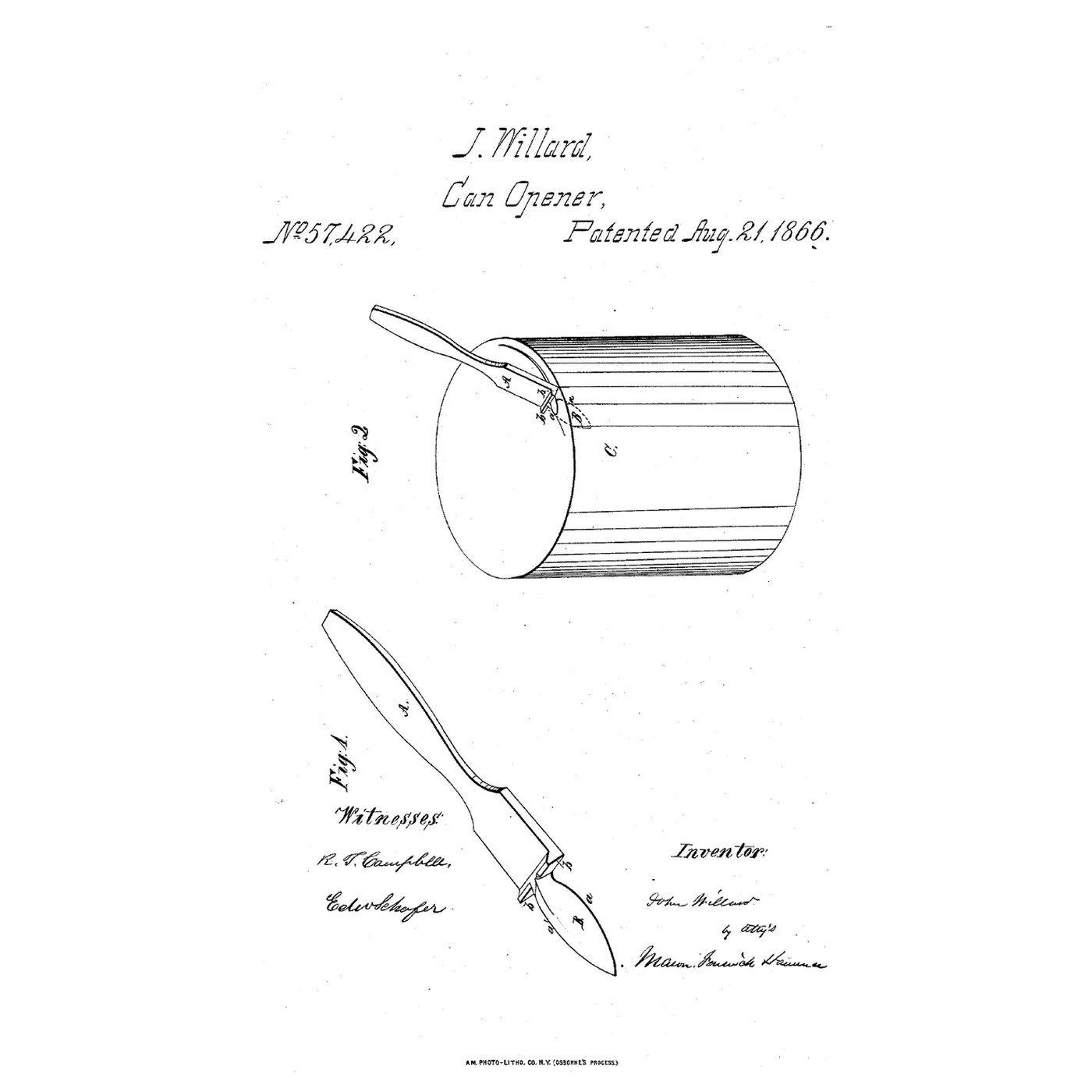


The Shouldered-Blade Can Opener: The Shoulders Are the Fulcrum
A hermetically sealed tin can was opened with a knife or a chisel, which slips and tears the metal.
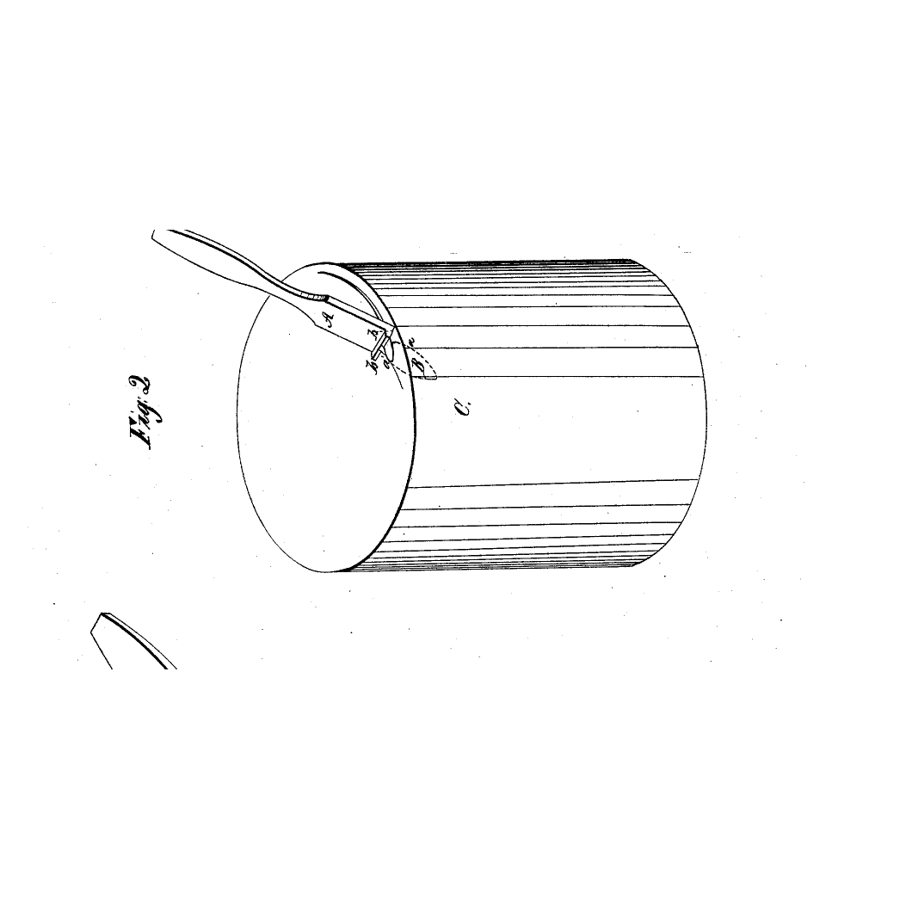
John Willard of Norwich, Connecticut, received US 57,422, dated 21 August 1866, for an instrument for opening tin cans made of one piece of metal: a pointed blade at right angles to the handle, ending in two right-angle shoulders that rest on the can top as the fulcrum and press the cut edges down as the blade advances.
This rung works out the force the lever saves, then forges the opener from flat bar and opens a can with it.
Intermediário
About 3 hours
Instruções
1
1
Cutting force and hand force
Cutting force and hand force
A carregar o notebook Jupyter…
2
2
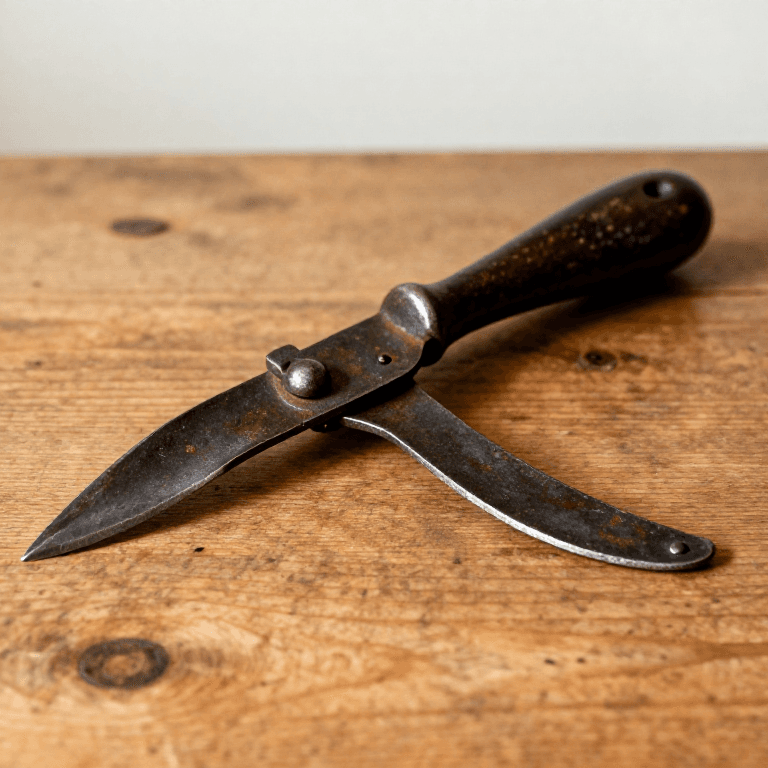
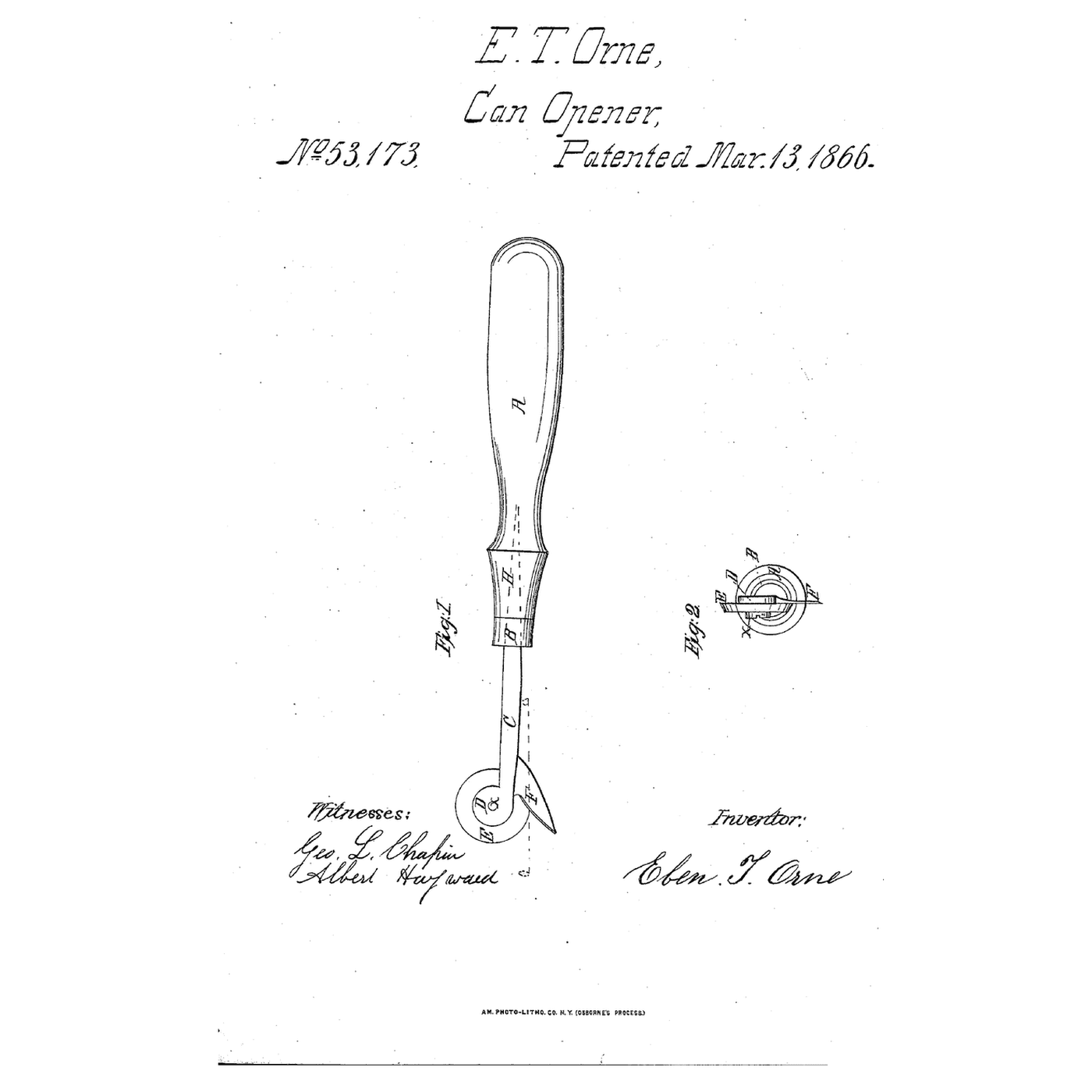
A lever-knife opener before it
A lever-knife opener before it
The embedded blueprint cuts a can with a lever and a guard. Willard makes blade, fulcrum and handle in one piece, the shoulders resting on the can.
3
3
Read US 57,422
Read US 57,422
"This will bring the shoulders b b upon the top surface of the can, so that these shoulders will serve as a fulcrum when the handle of the knife is depressed, and cause the cutting-edge a' of the blade B to make a slit through the can top."
"The shoulders b b not only serve as the support for the instrument upon the can, but these shoulders also press the edges of the metal down as the instrument is moved up to its work."
4
4
Mark and cut the blank
Mark and cut the blank
Cut 190 mm of 25 × 3 mm flat bar. At one end mark a 10 mm neck 12 mm long, then the 30 mm blade with its point; saw and file the neck, leaving the shoulders full width.
Materiais para este passo:
 Barra chata de aço macio1 peça
Ferramentas necessárias:
 Serra de arco para metais
 Torno de bancada
 Limas (lima de mão)
 Régua
Régua Marcador permanente
5
5
Twist the blade
Twist the blade
Grip the neck in the vice and twist the blade a quarter turn with the wrench, so it stands at right angles to the handle.
Ferramentas necessárias:
Torno de bancada Chave inglesa
 Luvas de trabalho em couro
6
6
Grind the edge and point
Grind the edge and point
File the blade's upper edge to a cutting bevel and its end to a sharp point. Finish on the whetstone.
Ferramentas necessárias:
Limas (lima de mão) Pedra de amolarTorno de bancada
 Óculos de segurança transparentes
7
7
The build in 3D
The build in 3D
FreeCAD model of this build, not of the patent: a 130 mm handle of 25 × 3 mm bar, the shoulders, the 10 mm neck, and the pointed 30 mm blade standing at right angles to the handle.
8
8
Open a can
Open a can
Stand a sealed can on the kitchen scale. Push the point through the top, rock the handle down on the shoulders and advance; read the peak load on the scale and time a full circle.
Materiais para este passo:
 Lata1 peça
Ferramentas necessárias:
 Balança digital de cozinha
 CronómetroLuvas de trabalho em couro
9
9
A blade that tears, skids or will not pierce
A blade that tears, skids or will not pierce
Shouldered-blade can opener troubleshooting.
Flow
Loading...
10
10
History and honest limits
History and honest limits
**John Willard** of Norwich, Connecticut, received US 57,422, dated 21 August 1866. His handle may be of any length and width; the blade's lower edge may curve upward, and its cutting edge may project above the handle's flat surface so it meets the metal at a steep angle. His claim covers the one-piece opener with blade, shoulders and handle.
**Honest limits.** Mild flat bar does not hold an edge like hardened steel; the notebook's shear strength is an estimate. Your loads and times are the result.
Ferramentas necessárias
11- Referência
- Referência
- Referência
- Referência
- Referência
- Referência
- Referência
- Referência
- Referência
- Referência
- Referência
Ficheiros de design
1Blueprints relacionados
Estes blueprints compartilham conhecimento — técnicas, materiais ou princípios


CC0 Domínio Público
Este blueprint é liberado sob CC0. Você é livre para copiar, modificar, distribuir e usar este trabalho para qualquer finalidade, sem pedir permissão.
Apoie o Maker comprando produtos através do Blueprint, onde ele ganha uma Comissão Maker definida pelos vendedores, ou crie uma nova versão deste Blueprint e inclua-o como conexão no seu próprio Blueprint para compartilhar receita.