ARTE
BELEZA E BEM-ESTAR
ARTESANATO
CULTURA E HISTÓRIA
ENTRETENIMENTO
MEIO AMBIENTE
COMIDA E BEBIDAS
ENGENHARIA REVERSA
CIÊNCIAS
ESPORTES
TECNOLOGIA
TECNOLOGIA VESTÍVEL
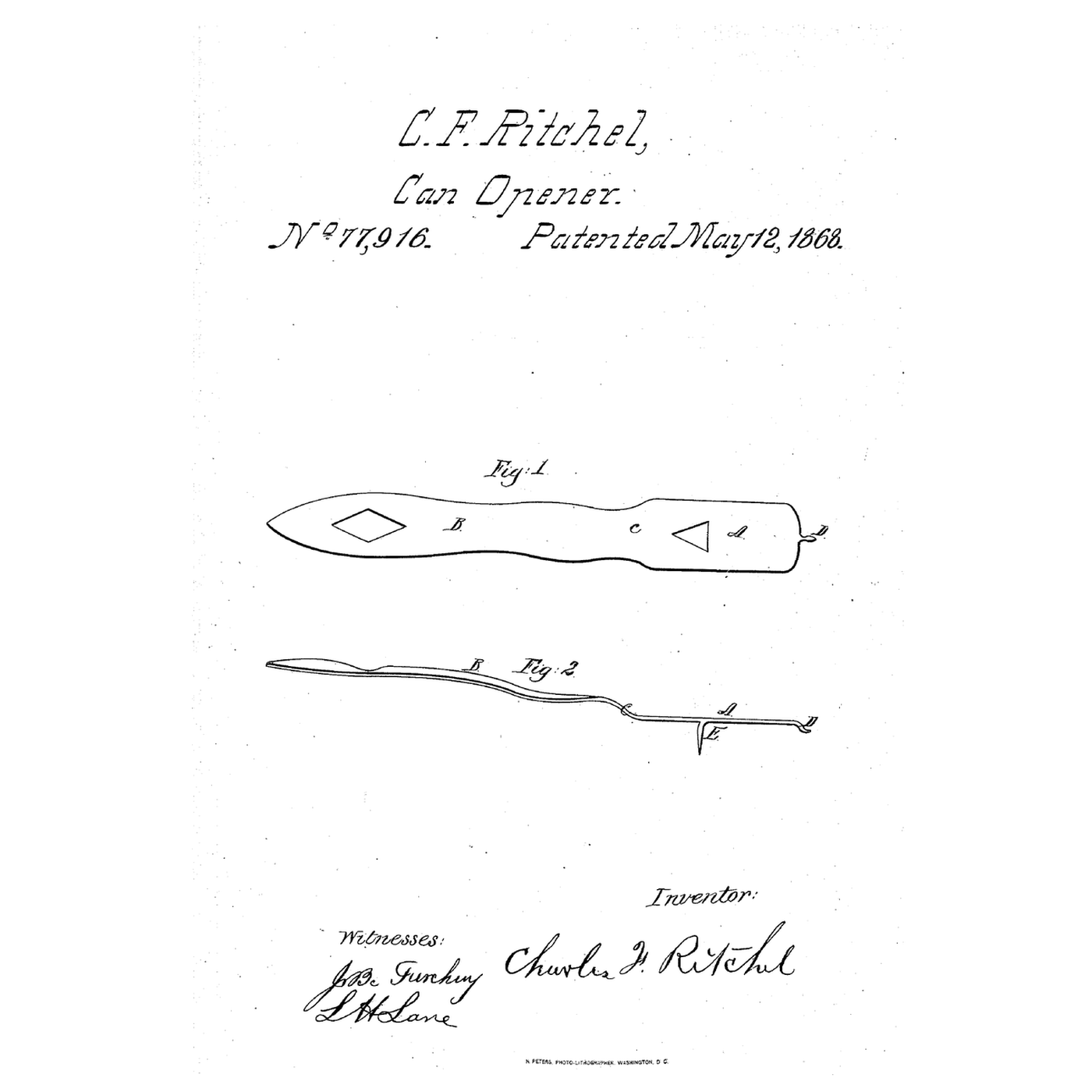


The One-Piece Sheet Can Opener: Point and Blade Struck From the Blank
Can openers with several parts cost more to make and can get out of order.
Charles F. Ritchel of Chicago received US 77,916, dated 12 May 1868, for "a cheap and substantial can-opener, not liable to get out of order": one piece of sheet metal, struck out by a die, with a point driven into the can as the fulcrum and a triangular blade, both turned off the blank, and the handle's edges bent down for grip and strength.
This rung works out how many come from one sheet, then cuts and bends one from mild steel sheet and opens a can with it.
Iniciante
About 2 hours
Instruções
1
1
Openers per sheet
Openers per sheet
A carregar o notebook Jupyter…
2
2
A one-piece opener before it
A one-piece opener before it
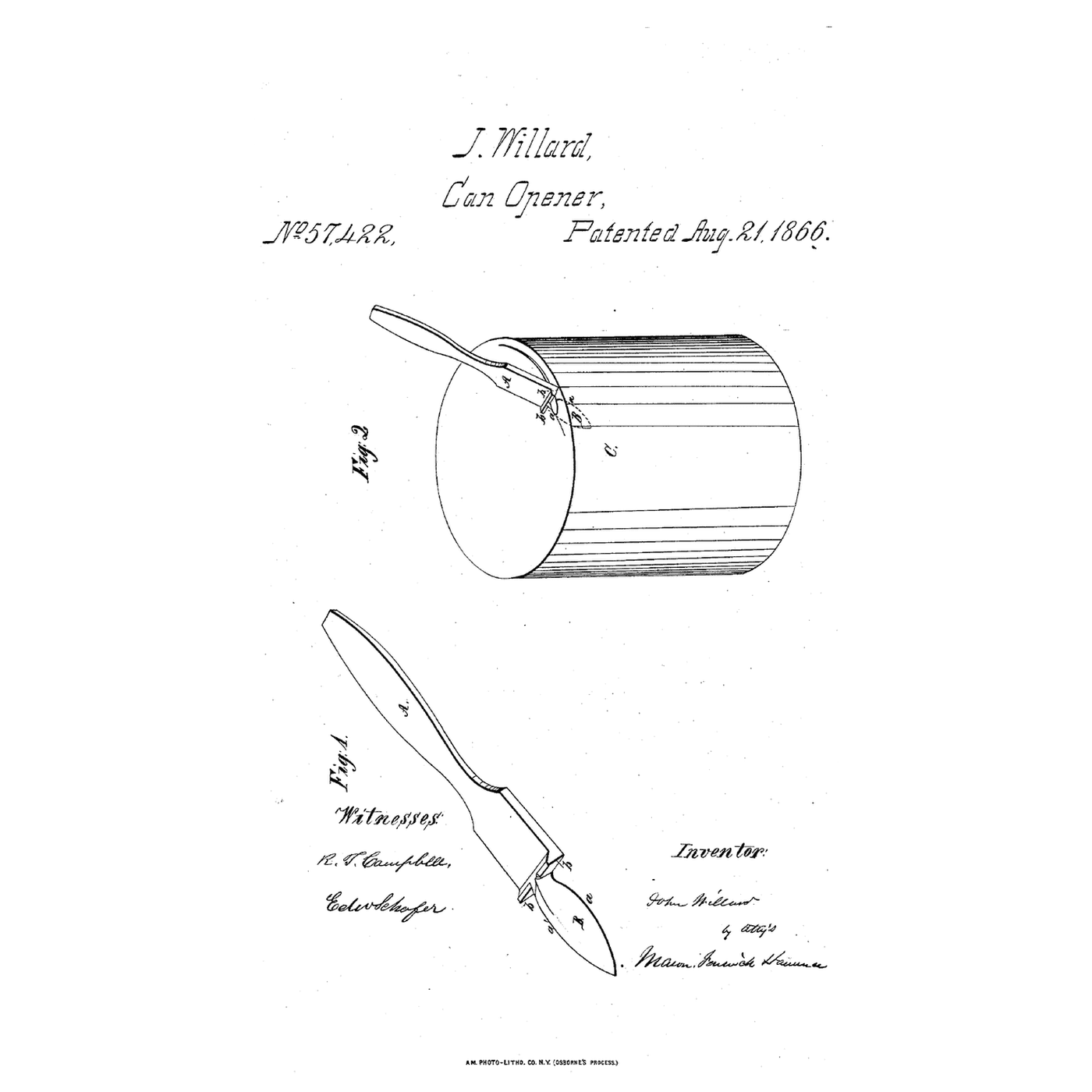
The embedded blueprint makes blade, fulcrum and handle in one piece of bar. Ritchel strikes a point and a blade out of one flat sheet blank.
3
3
Read US 77,916
Read US 77,916
"The operation of the opener consists in this, that the tool, being held in a vertical position, the point D is forced into the can, and the handle A is brought down, and the fulcrum for the operation of the handle being thus obtained, the blade E is forced into the can also, and the handle B is turned around with one hand, while the can is firmly held with the other hand, the blade E thus cutting a round opening in the can."
4
4
Cut the blank
Cut the blank
Mark a blank 160 mm long on 1 mm mild steel sheet: a 24 mm handle, narrowing to 16 mm for the head. Inside the head mark a 6 mm tab at the end for the point and a 14 mm triangle 20 mm behind it for the blade. Cut with snips.
Materiais para este passo:
 Chapa de aço macio1 peça
Ferramentas necessárias:
 Tesoura de chapa
 Marcador permanente
 Régua
Régua Luvas de trabalho em couro
5
5
Turn off the point and blade
Turn off the point and blade
Snip the triangle free on two sides. Bend the tab and the triangle down at right angles with the pliers.
Ferramentas necessárias:
Tesoura de chapa Alicate de bico chato
6
6
Edge and stiffen
Edge and stiffen
File the point sharp and the blade's leading edge to a bevel. Bend the handle's edges down 5 mm in the vice.
Ferramentas necessárias:
 Limas (lima de mão)
 Pedra de amolar
 Torno de bancada
 Martelo
 Óculos de segurança transparentes
7
7
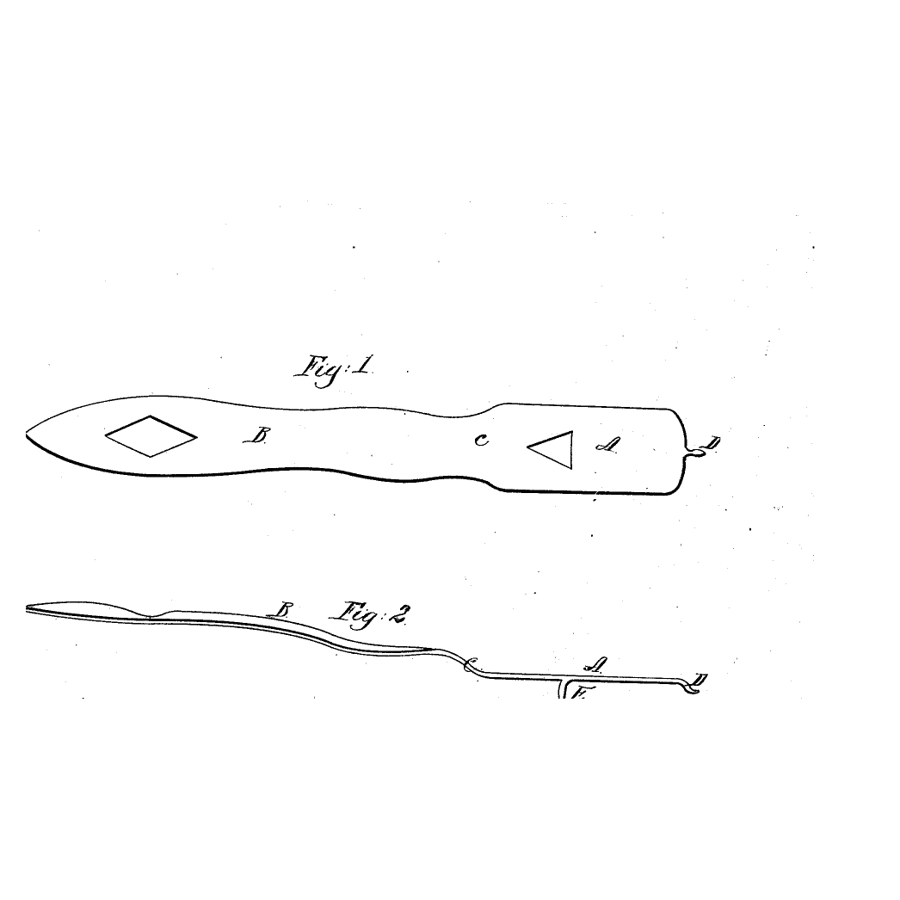
The patent drawing
The patent drawing
US 77,916 drawing sheet, public domain (expired patent).
8
8
Open a can
Open a can
Stand a sealed can on the kitchen scale. Drive the point in, bring the handle down so the blade enters, and turn it round; read the peak load and time a full circle.
Materiais para este passo:
 Lata1 peça
Ferramentas necessárias:
 Balança digital de cozinha
 CronómetroLuvas de trabalho em couro
9
9
An opener that folds, slips or tears
An opener that folds, slips or tears
One-piece sheet can opener troubleshooting.
Flow
Loading...
10
10
History and honest limits
History and honest limits
**Charles F. Ritchel** of Chicago received US 77,916, dated 12 May 1868. Opener and handle are joined by a slight curve for easier handling; the point is bent down or slightly curved to the front; point and blade are struck out by a die, turned off and trimmed, and steel-hardened if desirable, so the price becomes very low. His claim covers the one-piece opener with point and blade.
**Honest limits.** Snips and pliers stand in for his die, and the sheet is not hardened. Your loads and times are the result.
Ferramentas necessárias
12- Referência
- Referência
- Referência
- Referência
- Referência
- Referência
- Referência
- Referência
- Referência
- Referência
- Referência
- Referência
Blueprints relacionados
Estes blueprints compartilham conhecimento — técnicas, materiais ou princípios

CC0 Domínio Público
Este blueprint é liberado sob CC0. Você é livre para copiar, modificar, distribuir e usar este trabalho para qualquer finalidade, sem pedir permissão.
Apoie o Maker comprando produtos através do Blueprint, onde ele ganha uma Comissão Maker definida pelos vendedores, ou crie uma nova versão deste Blueprint e inclua-o como conexão no seu próprio Blueprint para compartilhar receita.