ARTE
BELEZA E BEM-ESTAR
ARTESANATO
CULTURA E HISTÓRIA
ENTRETENIMENTO
MEIO AMBIENTE
COMIDA E BEBIDAS
ENGENHARIA REVERSA
CIÊNCIAS
ESPORTES
TECNOLOGIA
TECNOLOGIA VESTÍVEL


The Pivot-Point Can Opener: A Spike at the Centre, a Blade Set to the Size
A knife driven round a can top wanders, and leaves a ragged hole of no particular size.
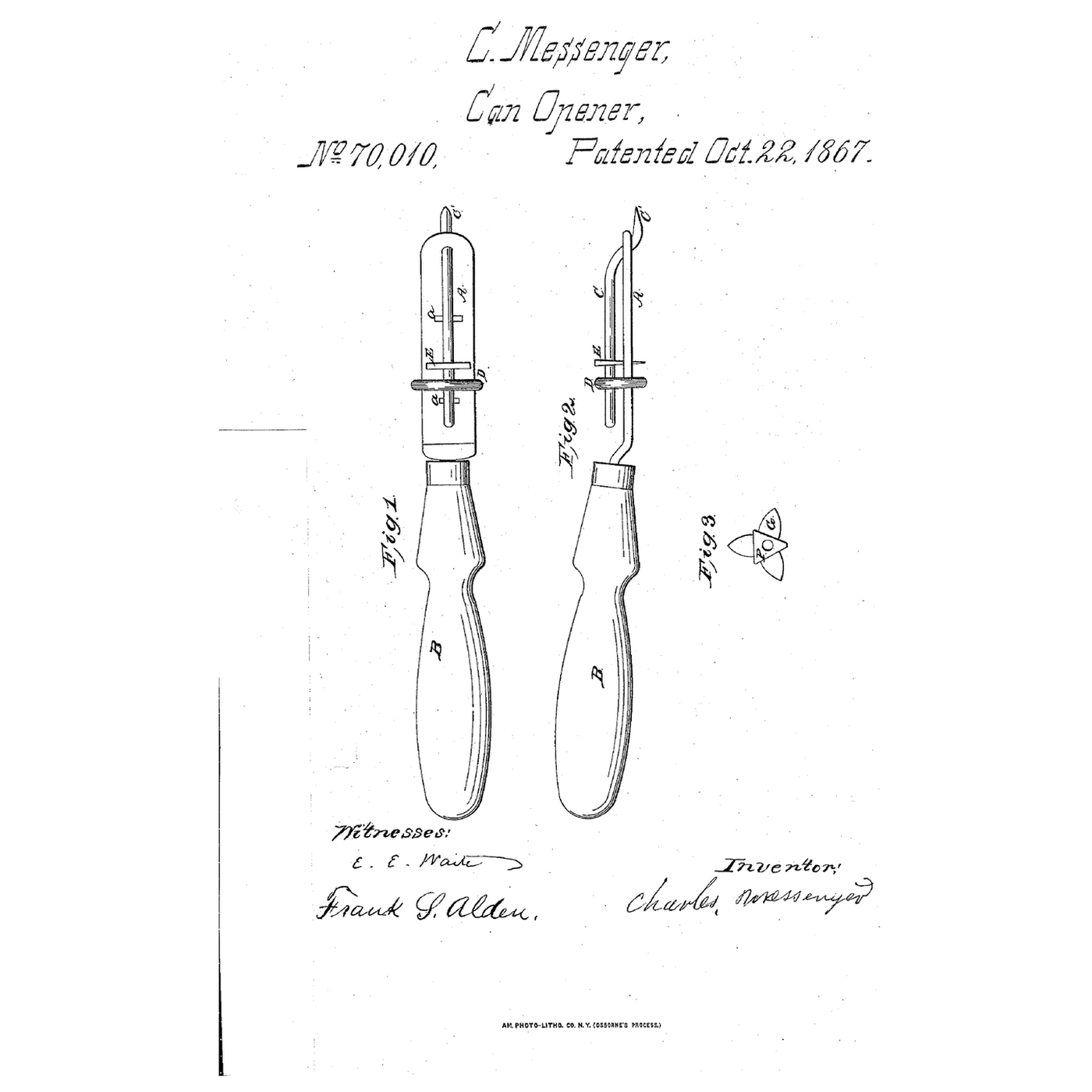
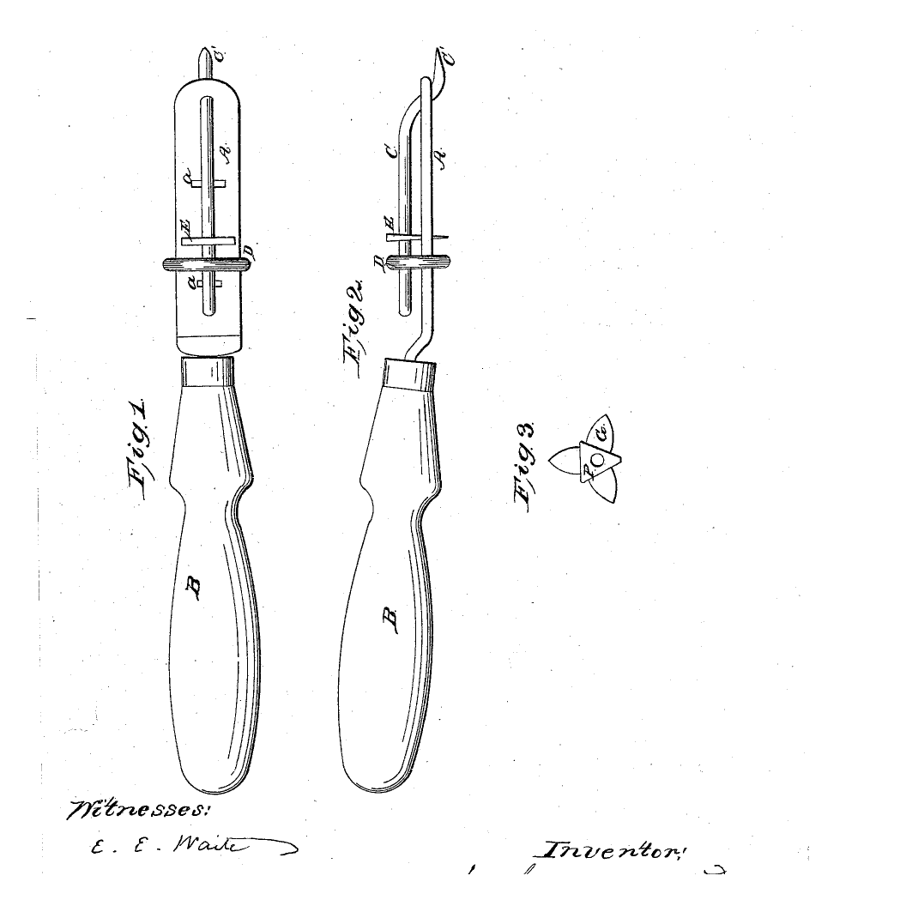
Charles Messenger of Cleveland, Ohio, received US 70,010, dated 22 October 1867, for a tool for opening sheet-metal cans: a plate fixed in a handle, a pointed rod at its end thrust through the centre of the top as a pivot, and a blade slipped on the rod through one of several holes in the plate, held by a ring; turning the handle round cuts a round hole, small or large.
This rung works out the hand force for each hole size, then builds the plate, pivot and blade from steel and opens a can.
Intermediário
About 3 hours
Instruções
1
1
Hole size and hand force
Hole size and hand force
A carregar o notebook Jupyter…
2
2
A turning cutter before it
A turning cutter before it
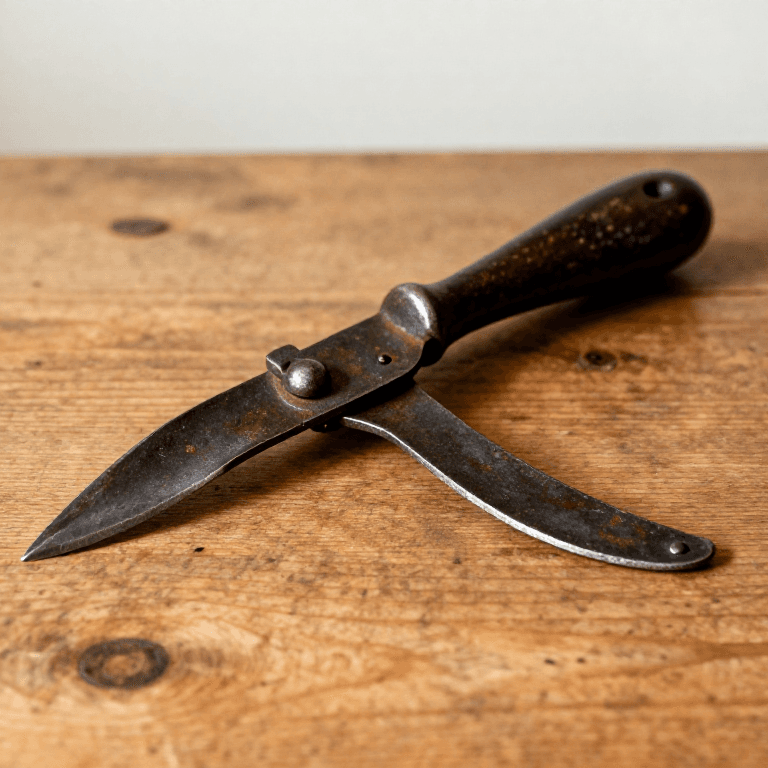
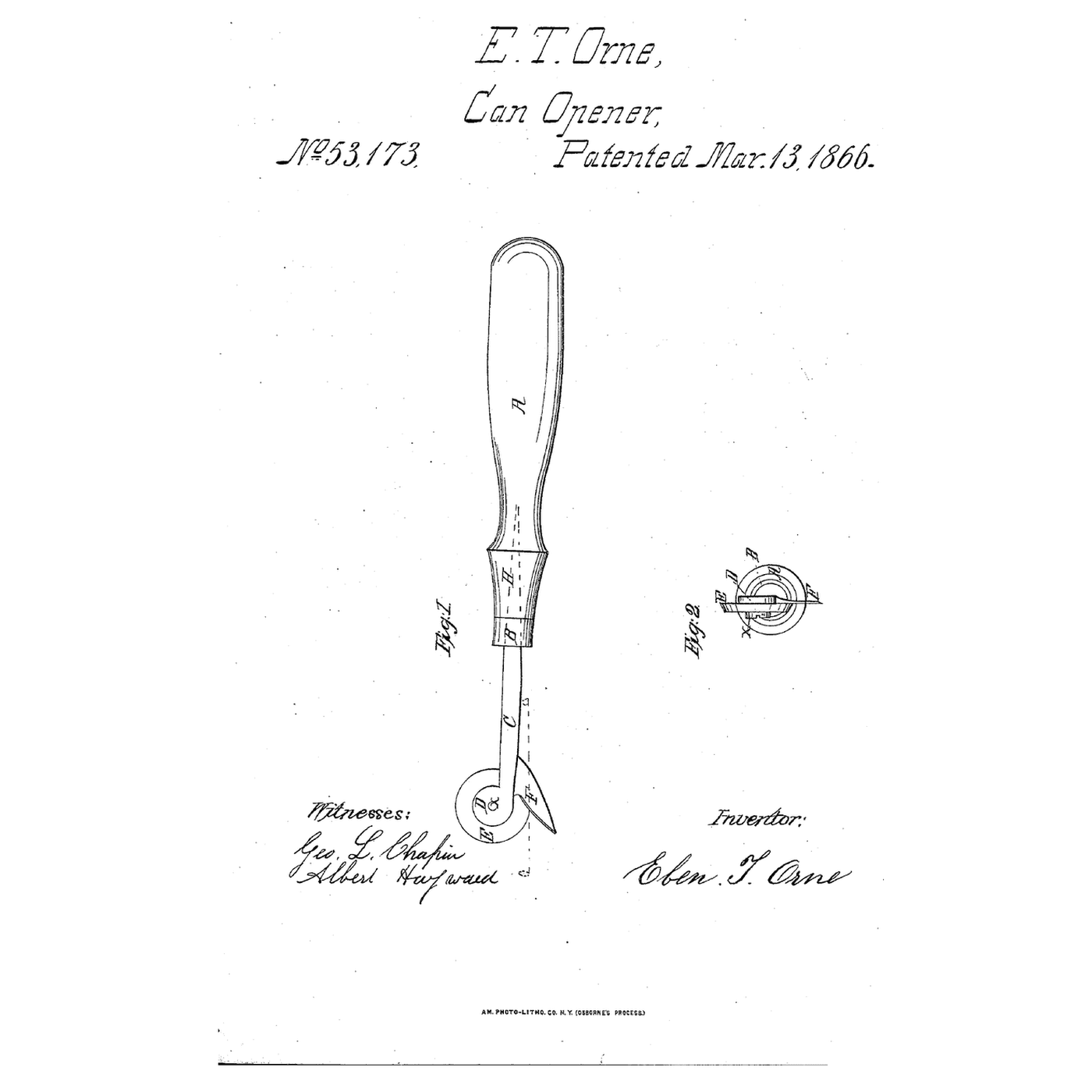
The embedded blueprint cuts tin with a turning wheel against a fixed cutter. Messenger turns the whole tool round a centre spike.
3
3
Read US 70,010
Read US 70,010
"The apparatus is held in the right hand, and the point C' thrust through the centre of the top of the can. The handle is then brought down so as to cause the blade to penetrate the cover; the instrument is turned around the circumference of the top, the point acting as a pivot, and the handle as a lever; the blade, as the instrument turns, will cut out a round hole through which the contents of the can may be emptied."
4
4
Make the plate
Make the plate
Cut 90 mm of 25 × 3 mm flat bar. Drill a 5 mm hole 6 mm from one end for the rod, and three 4 × 8 mm slots at 30, 45 and 60 mm from it for the blade. File the slots square.
Materiais para este passo:
 Barra chata de aço macio1 peça
Ferramentas necessárias:
 Serra de arco para metais
 Torno de bancada
 Punção de centro
 Berbequim sem fios
 Jogo de brocas
 Jogo de limas de agulha
5
5
Make the rod and blade
Make the rod and blade
Cut 100 mm of 5 mm steel rod, file one end to a sharp point, and thread the other M5. Cut the blade from flat bar, drill it for the rod, and file its lower end to a cutting edge.
Materiais para este passo:
 Varão de aço macio1 peçaBarra chata de aço macio1 peça
Ferramentas necessárias:
Serra de arco para metais Limas (lima de mão)
 Jogo de machos e cossinetesBerbequim sem fiosJogo de brocas
 Pedra de amolar
6
6
Assemble
Assemble
Push the rod through the plate's end hole so the point stands 12 mm below. Slip the blade on the rod and down through a slot; hold both with a nut on the rod's thread. Fit the plate into a hardwood handle with epoxy.
Materiais para este passo:
 Porca sextavada1 peça
 Cavilhas de madeira dura1 peça
 Epóxi de dois componentes1 peça
Ferramentas necessárias:
Berbequim sem fiosJogo de brocas Alicate de bico chato
7
7
The patent drawing
The patent drawing
US 70,010 drawing sheet, public domain (expired patent).
8
8
Open a can at two sizes
Open a can at two sizes
Stand a sealed can on the kitchen scale. Thrust the point into the centre, bring the handle down and turn it round; read the peak load and time a full circle. Move the blade to another slot and repeat.
Materiais para este passo:
 Lata1 peça
Ferramentas necessárias:
 Balança digital de cozinha
 Cronómetro
 Luvas de trabalho em couro
9
9
A cutter that wanders, tears or slips
A cutter that wanders, tears or slips
Pivot-point can opener troubleshooting.
Flow
Loading...
10
10
History and honest limits
History and honest limits
**Charles Messenger** of Cleveland, Ohio, received US 70,010, dated 22 October 1867, for opening oyster, paint and fruit cans. The ring slides on the rod and can be removed to change the blade; a knife with radial arms, each with two sharp edges, gives a spare edge when one is dull. His claim covers the rod, blade and ring in combination with the plate.
**Honest limits.** A nut stands in for his sliding ring, and an unhardened blade for a steel one. Your loads and times are the result.
Materiais
6- 1 peçaReferência
- 1 peçaReferência
- 1 peçaReferência
- 1 peçaReferência
- Referência
- 1 peçaReferência
Ferramentas necessárias
13- Referência
- Referência
- Referência
- 1 vendor sell this, none ship to you yetReferência
- Referência
- Referência
- Referência
- Referência
- Referência
- Referência
- Referência
- Referência
- Referência
Blueprints relacionados
Estes blueprints compartilham conhecimento — técnicas, materiais ou princípios
CC0 Domínio Público
Este blueprint é liberado sob CC0. Você é livre para copiar, modificar, distribuir e usar este trabalho para qualquer finalidade, sem pedir permissão.
Apoie o Maker comprando produtos através do Blueprint, onde ele ganha uma Comissão Maker definida pelos vendedores, ou crie uma nova versão deste Blueprint e inclua-o como conexão no seu próprio Blueprint para compartilhar receita.