ARTE
BELEZA E BEM-ESTAR
ARTESANATO
CULTURA E HISTÓRIA
ENTRETENIMENTO
MEIO AMBIENTE
COMIDA E BEBIDAS
ENGENHARIA REVERSA
CIÊNCIAS
ESPORTES
TECNOLOGIA
TECNOLOGIA VESTÍVEL
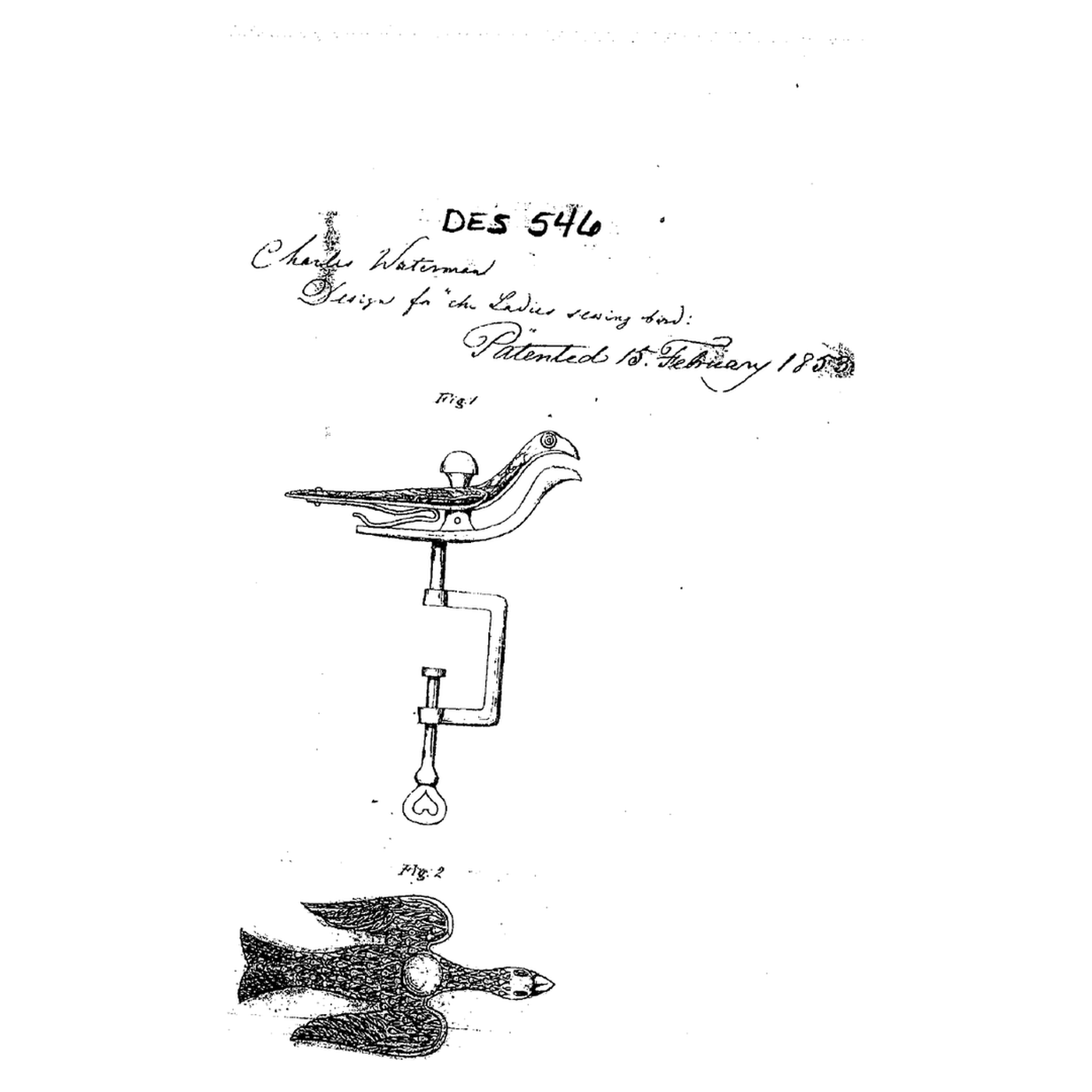


The Sewing Bird: A Spring-Beaked Clamp as a Third Hand
Hand-sewing a long hem needs the cloth held taut, and two hands are not enough to hold it and sew.
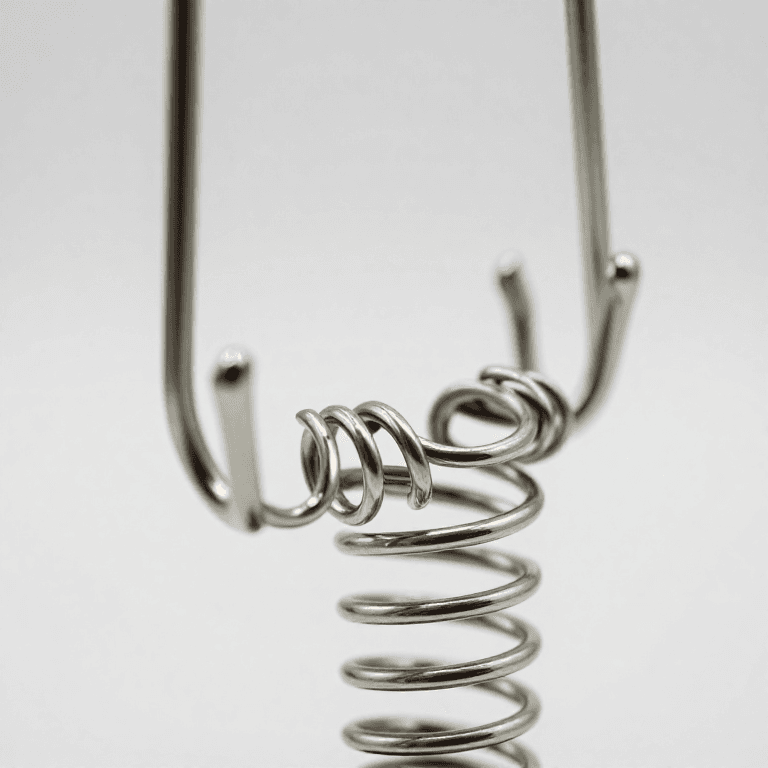
Charles Waterman of Meriden, Connecticut, received design patent D546, dated 15 February 1853, for "the instrument known as the 'Sewing bird'": a table clamp topped by "a bird on the wing bearing a burden upon its back". The burden is "in fact the emery ball" for cleaning needles. A spring in the tail holds the beak shut on the cloth.
This rung works out how hard a spring beak must grip to hold cloth under a sewing pull, then makes a spring-jaw sewing clamp and measures its hold.
Iniciante
About 2 hours
Instruções
1
1
The grip a beak needs
The grip a beak needs
A carregar o notebook Jupyter…
2
2
Sewing that needs the cloth held
Sewing that needs the cloth held
The embedded blueprint darns and patches by hand. A sewing bird holds the work while you do.
3
3
Read D546
Read D546
"It is a settled principle of taste in all works of Design that the highest degree of beauty is attained where the useful and ornamental are properly blended or combined."
"The burden borne upon the back of the bird is in fact the emery ball and while it is an indispensable accompaniment of the sewing bird its position is here appropriate in every respect."
"What I claim is the design herein represented by the feathered bird upon the wing, bearing a burden upon its back."
4
4
Make a spring-jaw clamp and measure its hold
Make a spring-jaw clamp and measure its hold
Screw a C-clamp to the table edge as the base. On it, fix a pair of short hardwood jaws hinged together at one end, like a clothespin, with a spring from the assortment pushing the other ends apart so the front ends close. Glue a strip of emery cloth inside the jaws for grip.
Clamp one end of a strip of cloth in the jaws. Hook the force meter to the other end and pull slowly until it slips; read the force. Compare with the notebook. Then hem the strip by hand with the end held in the clamp.
Materiais para este passo:
 Tábua de madeira de lei1 peça
 Sortido de molas de compressão1 peça
 Pano de esmeril1 peça
 Cola de madeira1 peça
 Tecido de algodão (leve)1 peça
 Linha de costura1 peça
Ferramentas necessárias:
 Grampo de costura
 Grampo em C
 Serrote
 Berbequim sem fios
 Dinamómetro (balança de mola)
 Agulhas de costura à mão
5
5
A sewing clamp that slips, marks or wobbles
A sewing clamp that slips, marks or wobbles
Sewing clamp troubleshooting.
Flow
Loading...
6
6
History and honest limits
History and honest limits
**Charles Waterman** of Meriden, New Haven County, Connecticut, received design patent D546, dated 15 February 1853. A design patent protects the look of an object, not its mechanism: the claim is the feathered bird bearing its burden, and the spring clamp itself is not claimed.
**Honest limits.** The notebook treats the grip as simple friction on two faces. Soft or slippery cloth changes the result. The spring forces and friction values are examples. Your force-meter reading is the measurement.
Materiais
6- 1 peçaReferência
- Referência
- 1 peçaReferência
- 1 peçaReferência
- 1 peçaReferência
- 1 peçaReferência
Ferramentas necessárias
6- Referência
- Referência
- Referência
- 1 vendor sell this, none ship to you yetReferência
- Referência
- Referência
Blueprints relacionados
Estes blueprints compartilham conhecimento — técnicas, materiais ou princípios

CC0 Domínio Público
Este blueprint é liberado sob CC0. Você é livre para copiar, modificar, distribuir e usar este trabalho para qualquer finalidade, sem pedir permissão.
Apoie o Maker comprando produtos através do Blueprint, onde ele ganha uma Comissão Maker definida pelos vendedores, ou crie uma nova versão deste Blueprint e inclua-o como conexão no seu próprio Blueprint para compartilhar receita.