ARTE
BELEZA E BEM-ESTAR
ARTESANATO
CULTURA E HISTÓRIA
ENTRETENIMENTO
MEIO AMBIENTE
COMIDA E BEBIDAS
ENGENHARIA REVERSA
CIÊNCIAS
ESPORTES
TECNOLOGIA
TECNOLOGIA VESTÍVEL
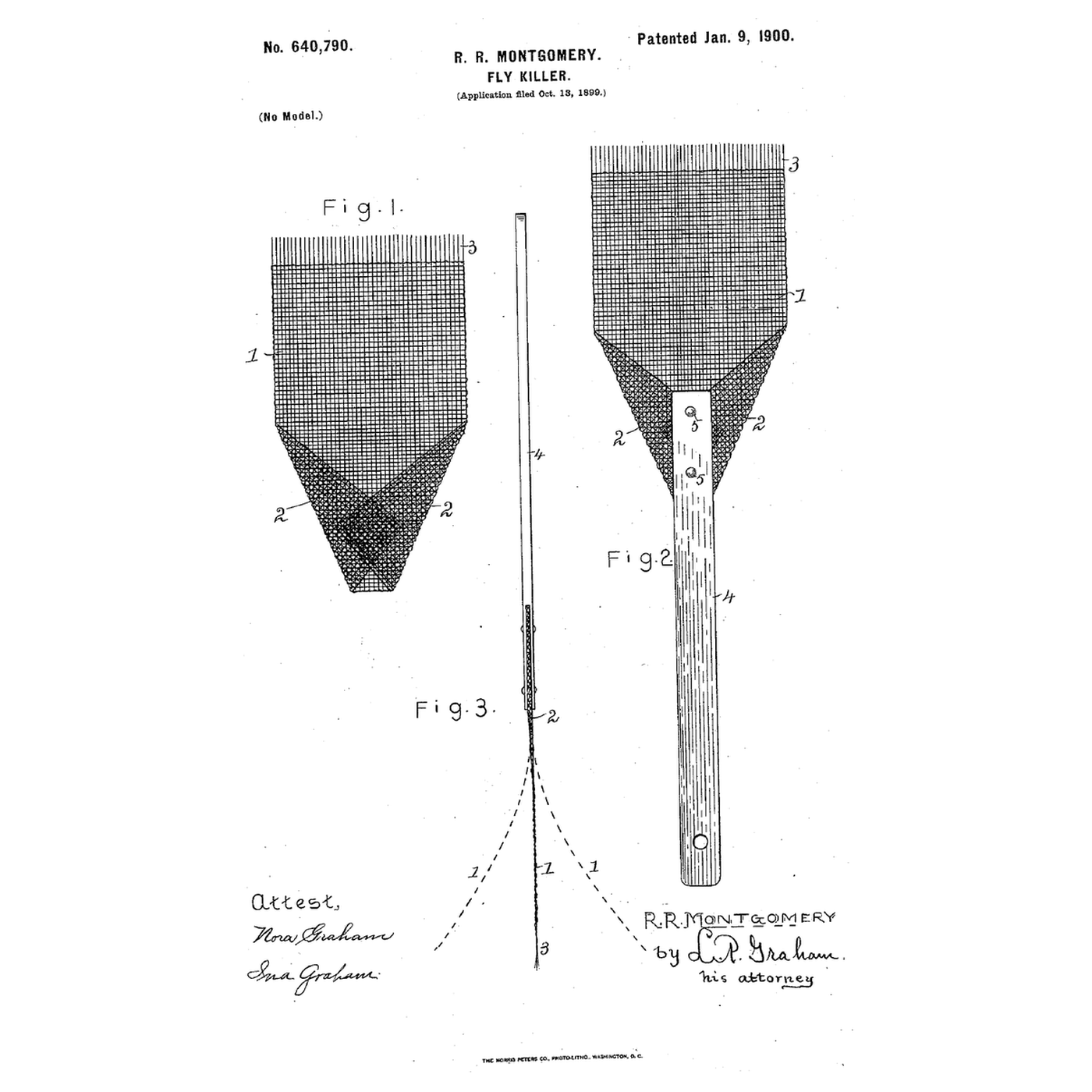


The Wire-Netting Fly-Killer: A Flap With Folded Corners
A solid paddle pushes air ahead of it. A flap of netting on a handle lets most of that air through.
Robert R. Montgomery of Decatur, Illinois, received US 640,790, dated 9 January 1900, for a fly-killer made of wire-netting: "a cheap device of unusual elasticity and durability". The corners at one end are folded over the body of the flap and the handle is fixed to the folds, so the netting is doubled where it must bend and trebled where it is held.
This rung works out how much air a netting flap lets through, then folds one from window screen and compares it with a solid card.
Iniciante
About 1 hour
Instruções
1
1
Air through the netting
Air through the netting
A carregar o notebook Jupyter…
2
2
Netting
Netting
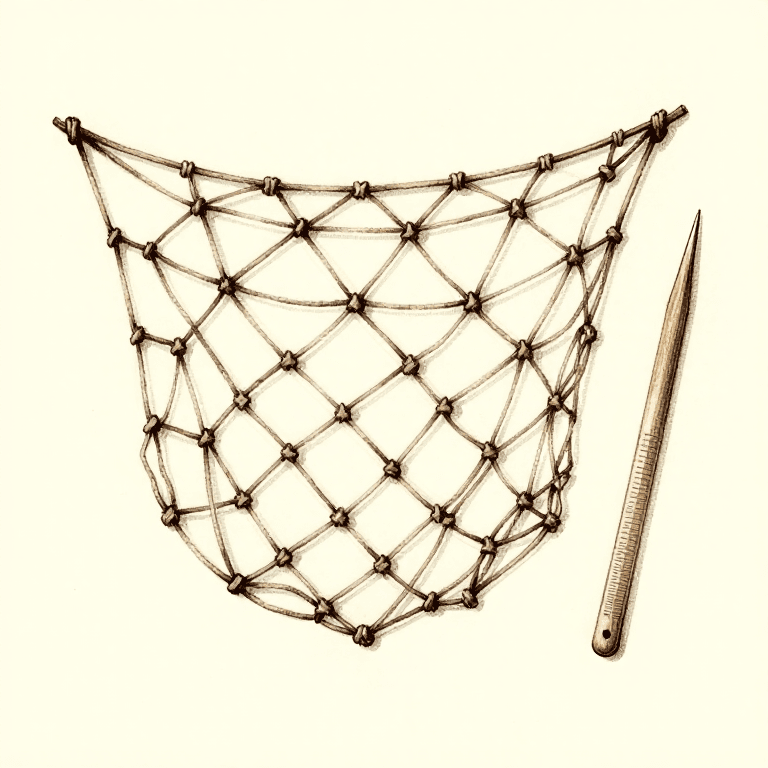
The embedded blueprint knots a net that lets water through and holds fish. Montgomery's netting lets air through and stops flies.
3
3
Read US 640,790
Read US 640,790
"This invention relates to fly-killers made of wire-netting. Its object is to provide a cheap device of unusual elasticity and durability".
"The fringe is useful in providing a softer end to the flap, whereby injury to articles subjected to sharp blows of the killer is reduced to a minimum; but it is not indispensable."
"The device is used to strike flies or other insects, and its utility is increased by its elasticity, while its strength and durability are augmented by doubling the thickness where elasticity is required and trebling it at the handle end."
4
4
Fold a fly-killer and test it against a card
Fold a fly-killer and test it against a card
Cut a rectangle of window screen about 12 cm by 22 cm. Fold the two corners of one short end over onto the body along slanting lines, so they cross each other and make a point, as in the patent drawing. Fold a narrow hem along the two long sides and tape it. At the other short end, pull out two or three cross threads so the long threads stick out as a fringe.
Saw a slot 5 cm deep into one end of the dowel. Slide it over the folded point and fix it with two tacks through the netting.
Hang a strip of tissue from a thread. Swing the fly-killer past it at a hand's width, then a card of the same size, and watch which one moves the tissue.
Materiais para este passo:
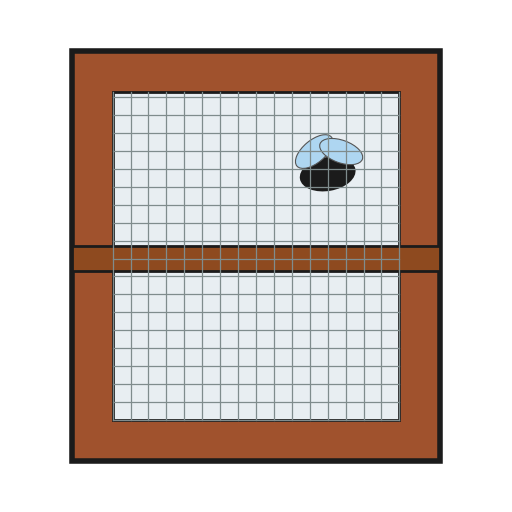 Rede mosquiteira de janela1 peça
 Cavilha de madeira1 peça
 Sortido de tachas de estofador2 peças
 Fita adesiva transparente1 peça
Ferramentas necessárias:
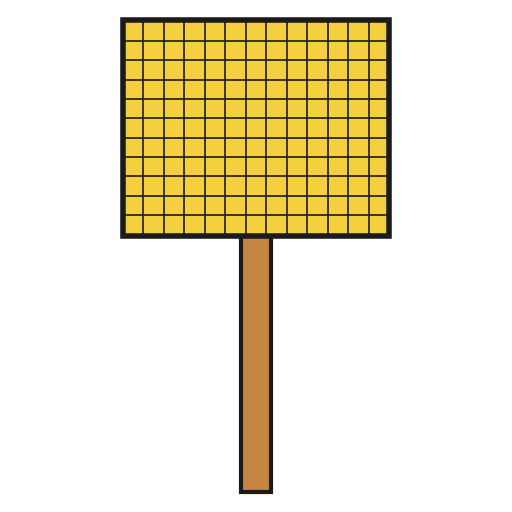 Mata-moscas
 Tesoura
 Serra de recortes
 Martelo
 Régua
5
5
A fly-killer that flops, splits or misses
A fly-killer that flops, splits or misses
Fly-killer troubleshooting.
Flow
Loading...
6
6
History and honest limits
History and honest limits
**Robert R. Montgomery** of Decatur, Illinois, filed US 640,790 on 13 October 1899; it is dated 9 January 1900. His claims cover the folded corners, the handle fixed to the folds, and the fringed striking end.
**Honest limits.** The notebook counts only the area of the holes; real air flow through netting also depends on speed and on the wire's shape. Mesh sizes are examples. Your tissue test is the measurement.
Materiais
4- Referência
- 1 peçaReferência
- Referência
- Referência
Blueprints relacionados
Estes blueprints compartilham conhecimento — técnicas, materiais ou princípios



CC0 Domínio Público
Este blueprint é liberado sob CC0. Você é livre para copiar, modificar, distribuir e usar este trabalho para qualquer finalidade, sem pedir permissão.
Apoie o Maker comprando produtos através do Blueprint, onde ele ganha uma Comissão Maker definida pelos vendedores, ou crie uma nova versão deste Blueprint e inclua-o como conexão no seu próprio Blueprint para compartilhar receita.