ARTE
BELEZA E BEM-ESTAR
ARTESANATO
CULTURA E HISTÓRIA
ENTRETENIMENTO
MEIO AMBIENTE
COMIDA E BEBIDAS
ENGENHARIA REVERSA
CIÊNCIAS
ESPORTES
TECNOLOGIA
TECNOLOGIA VESTÍVEL


Twisted-Strip Egg Beater: Faces Beat and Edges Cut
A wire beater passes through the egg and leaves a wake without much froth.
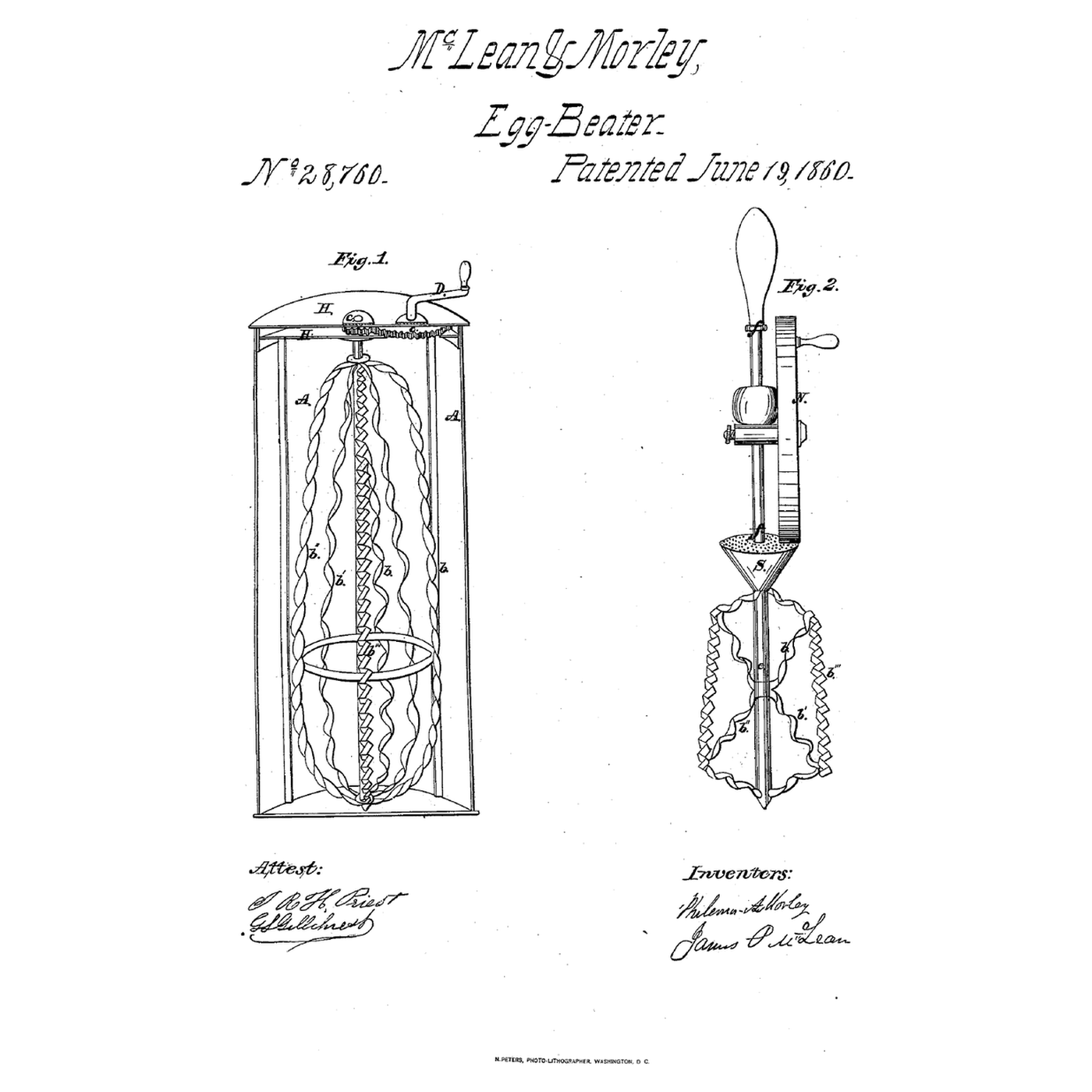
James P. McLean and Philemon A. Morley of Brooklyn received US 28,760, dated 19 June 1860, for an egg beater of corrugated or twisted strips of tin turned inside a can by a large and a small cog gear set between the double heads of its lid: "by means of twisted or corrugated strips of metal the gelatin mass is beaten by the flat surfaces as well as being broken or cut by the sharp edges thereof."
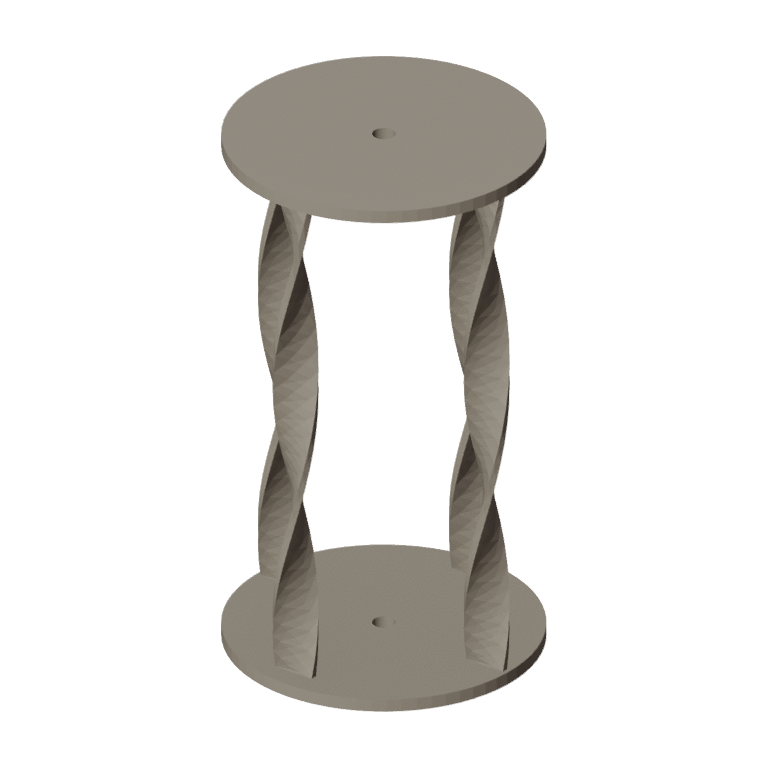
This rung works out how much of a twisted face pushes, then prints the gears and a cage of twisted strips, builds the lid drive on a can, and times a beating.
Intermediário
About 4 hours, plus printing
Instruções
1
1
How a twisted face beats
How a twisted face beats
A carregar o notebook Jupyter…
2
2
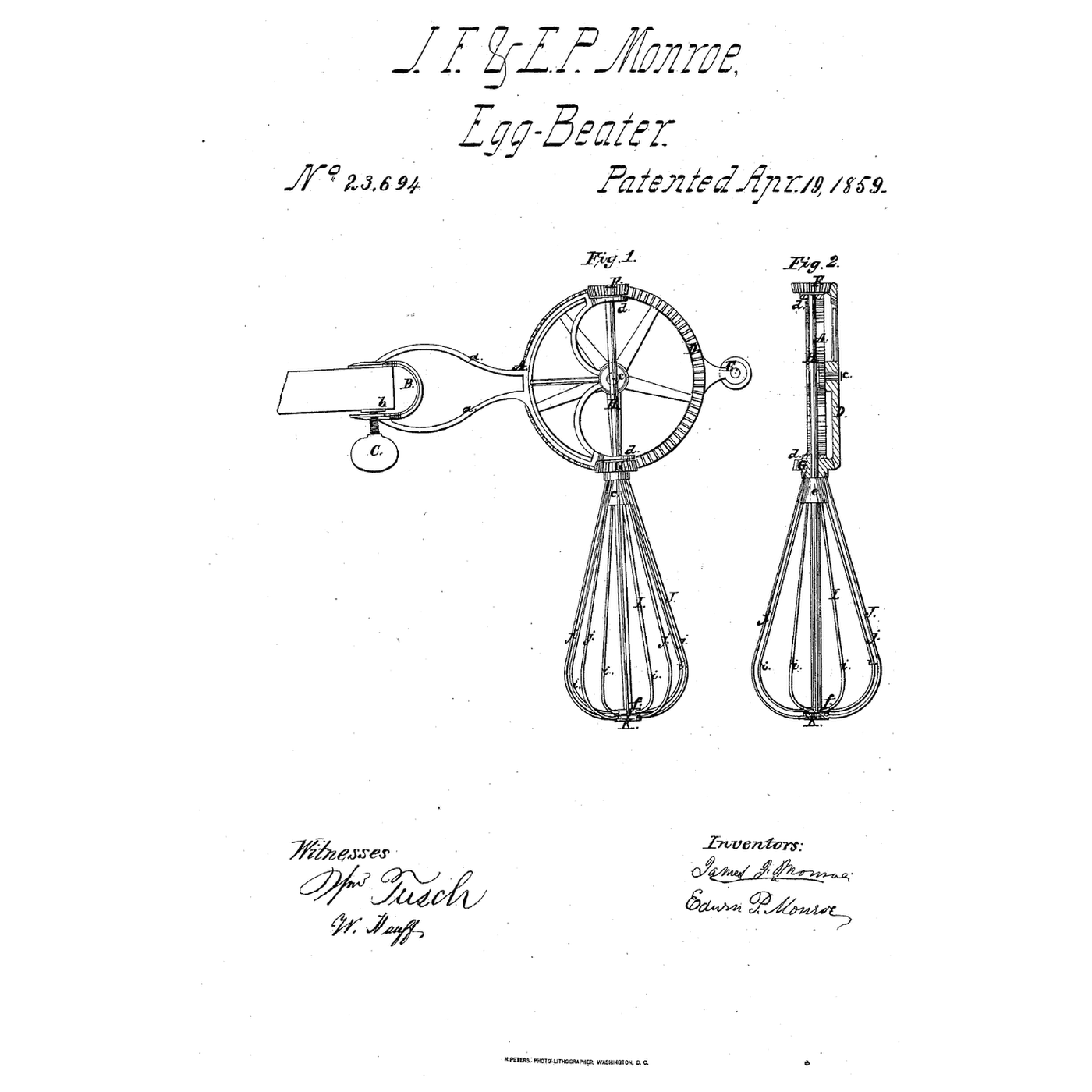
A geared wire beater before it
A geared wire beater before it
The embedded blueprint beats with bent wires. McLean and Morley use twisted strips with faces and edges.
3
3
Read US 28,760
Read US 28,760
"The superiority of our arrangement of egg beaters over those that are in common use, is that by means of twisted or corrugated strips of metal the gelatin mass is beaten by the flat surfaces as well as being broken or cut by the sharp edges thereof, hence the action is analogous to the motion produced by the hand and spoon, whereas an ordinary wire beater simply passes through the egg like the rudder of a boat, leaving a simple wake behind it without producing an immediate fomentation as is the case with our beater."
4
4
Print the gears and cage
Print the gears and cage
Print the 36-tooth gear (/uploads/blueprints/twisted-strip-egg-beater-gear-36.stl), the 12-tooth gear (/uploads/blueprints/twisted-strip-egg-beater-gear-12.stl) and the cage of four twisted strips (/uploads/blueprints/twisted-strip-egg-beater-cage.stl). Print in PETG at 0.2 mm layers, 30 % infill, 4 walls.
Materiais para este passo:
 Filamento PETG1 peça
Ferramentas necessárias:
 Impressora 3D de filamento (FDM)
5
5
Make the double lid
Make the double lid
Cut two plywood disks to the can's mouth. Space them 20 mm apart on three M5 screws with nuts, and drill both for the crank shaft and the cage shaft 48 mm apart.
Materiais para este passo:
 Placa de contraplacado1 peça
 Parafusos de máquina1 peça
 Porca sextavada1 peça
 Anilha plana1 peça
Ferramentas necessárias:
 Serra de recortes
 Berbequim sem fios
 Jogo de brocas
 Chave inglesa ajustável
 Paquímetro digital de 6 polegadas
6
6
Fit the shafts and gears
Fit the shafts and gears
Epoxy the large gear on a crank shaft of 5 mm rod with a bent handle, and the small gear on the cage shaft, both between the heads. Epoxy the cage on the cage shaft's lower end.
Materiais para este passo:
 Varão de aço macio1 peça
 Epóxi de dois componentes1 peça
Ferramentas necessárias:
 Serra de arco para metais
 Torno de bancada
 Alicate de bico chato
7
7
The patent drawing
The patent drawing
US 28,760 drawing sheet, public domain (expired patent).
8
8
Beat egg whites
Beat egg whites
Put two egg whites in the can, fit the lid, and crank about once a second; time to stiff peaks.
Materiais para este passo:
 Lata1 peça
 Ovo2 peças
Ferramentas necessárias:
 Cronómetro
9
9
Gears that skip, a cage that scrapes
Gears that skip, a cage that scrapes
Twisted-strip egg beater troubleshooting.
Flow
Loading...
10
10
History and honest limits
History and honest limits
**James P. McLean** and **Philemon A. Morley** of Brooklyn, assignors to P. A. Morley, received US 28,760, dated 19 June 1860. Their Fig. 2, for bakers, puts the strips on a vertical water-tight cylinder turning round a stationary handle, driven by a hand wheel whose rubber band grips the cylinder's grater-like funnel top instead of cog wheels. They claimed the twisted beaters in combination with the cylinder.
**Honest limits.** FDM prints hold food in their layer lines, so wash well and replace when worn. Printed strips and plywood heads stand in for tin. Your times are the result.
Materiais
9- 1 peçaReferência
- 1 peçaReferência
- 1 peçaReferência
- 1 peçaReferência
- 1 peçaReferência
- 1 peçaReferência
- Referência
- 1 peçaReferência
- 2 peçasReferência
Ferramentas necessárias
10- Referência
- Referência
- 1 vendor sell this, none ship to you yetReferência
- Referência
- Referência
- Referência
- Referência
- Referência
- Referência
- Referência
Blueprints relacionados
Estes blueprints compartilham conhecimento — técnicas, materiais ou princípios
CC0 Domínio Público
Este blueprint é liberado sob CC0. Você é livre para copiar, modificar, distribuir e usar este trabalho para qualquer finalidade, sem pedir permissão.
Apoie o Maker comprando produtos através do Blueprint, onde ele ganha uma Comissão Maker definida pelos vendedores, ou crie uma nova versão deste Blueprint e inclua-o como conexão no seu próprio Blueprint para compartilhar receita.