ARTE
BELEZA E BEM-ESTAR
ARTESANATO
CULTURA E HISTÓRIA
ENTRETENIMENTO
MEIO AMBIENTE
COMIDA E BEBIDAS
ENGENHARIA REVERSA
CIÊNCIAS
ESPORTES
TECNOLOGIA
TECNOLOGIA VESTÍVEL
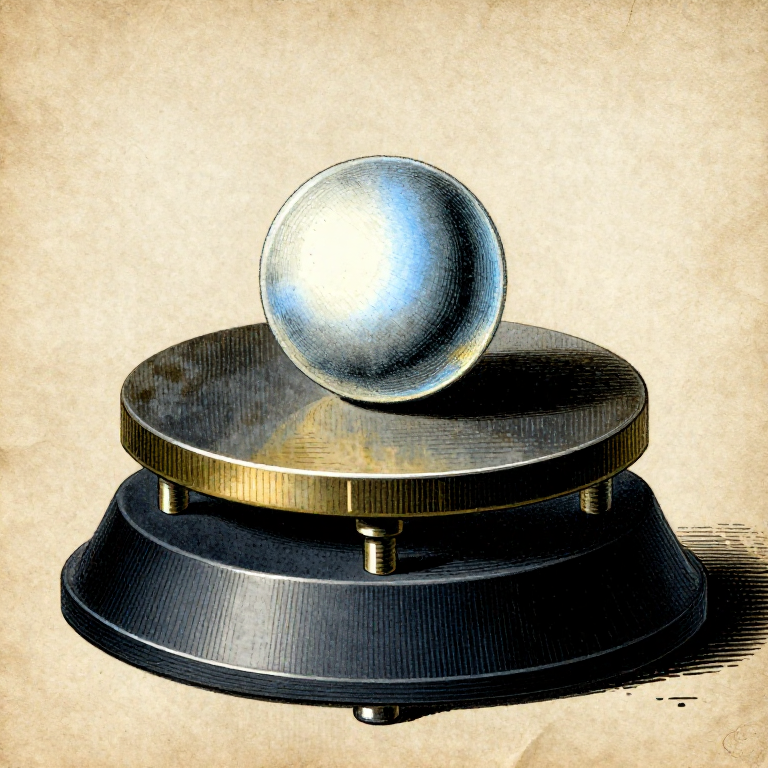
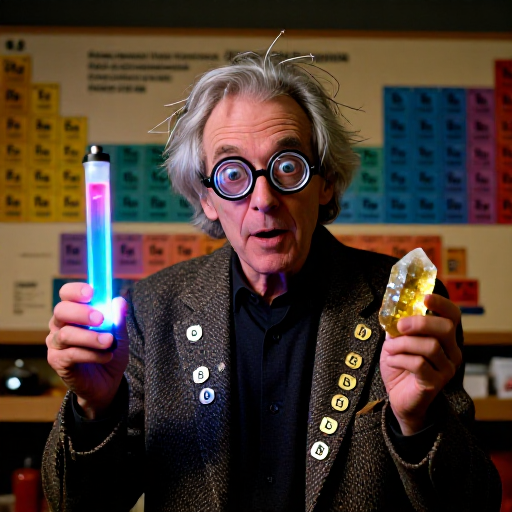
Understanding Osmium from Platinum Group Ores — The Densest Element on Earth
Intermediário
Instruções
1
1
Understand Osmium's Discovery
Understand Osmium's Discovery
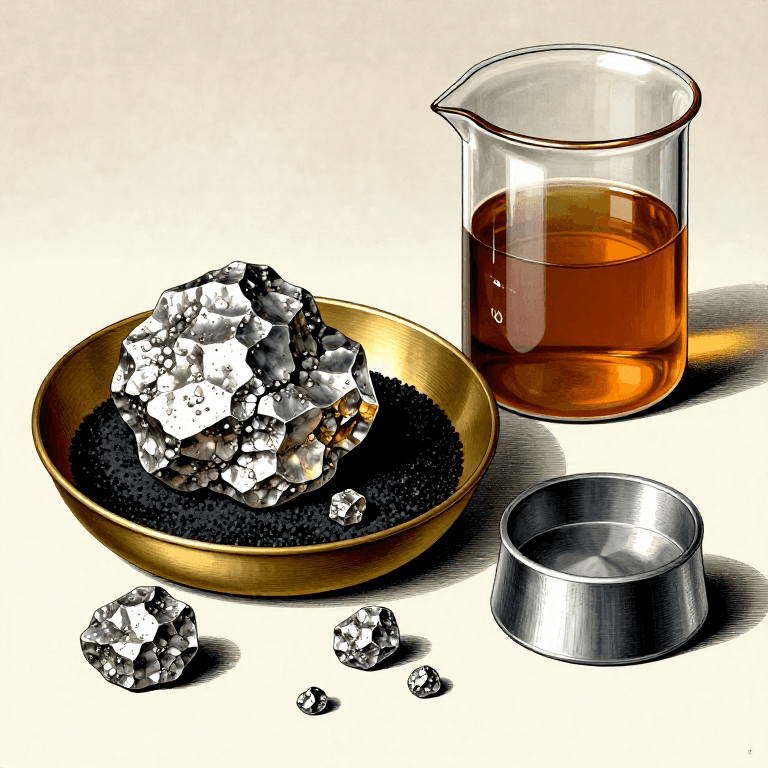
Smithson Tennant discovered osmium in 1803 in London while dissolving crude platinum in aqua regia. He noticed a black residue that resisted dissolution — this insoluble fraction contained both osmium and iridium. He named osmium from the Greek 'osme' (smell) because osmium tetroxide (OsO₄), formed when the metal is heated in air, has a pungent, acrid odor detectable at concentrations as low as 2 parts per billion.
2
2
Identify Osmium in Platinum Group Deposits
Identify Osmium in Platinum Group Deposits
Osmium is the rarest stable element in Earth's crust at approximately 0.05 parts per billion. It occurs as a natural alloy with iridium called osmiridium or iridosmium, found in placer deposits associated with platinum. Osmium is also recovered as a minor byproduct during nickel-copper-PGM refining at the Bushveld Complex in South Africa and Norilsk in Russia. Annual production is only about 1 tonne worldwide.
Materiais para este passo:
 Exemplar do grupo da platina
Ferramentas necessárias:
 Lupa de mão 10xLupa de mão 10x
 Placa de risca (porcelana não vidrada)
 Pontas de dureza de Mohs
3
3
Examine Osmium's Record Density
Examine Osmium's Record Density
Osmium is the densest naturally occurring element at 22.587 g/cm³ — slightly denser than iridium (22.562 g/cm³). A cube of osmium just 10 cm on each side weighs 22.6 kg. The extreme density results from its hexagonal close-packed crystal structure and the relativistic contraction of its electron orbitals. The osmium-iridium density competition was finally resolved in 1995 using X-ray crystallography to measure precise unit cell parameters.
4
4
Understand the Dangers of Osmium Tetroxide
Understand the Dangers of Osmium Tetroxide
Osmium tetroxide (OsO₄) is extremely toxic and volatile — it sublimes at room temperature and attacks eyes, mucous membranes, and lungs at very low concentrations. Exposure to just 0.1 mg/m³ causes severe eye irritation and temporary blindness. OsO₄ is a powerful oxidizing agent that stains biological tissue black by cross-linking lipids. Despite its dangers, OsO₄ is intentionally used in electron microscopy as a tissue fixative and heavy-metal stain.
5
5
Discover Fountain Pen and Instrument Applications
Discover Fountain Pen and Instrument Applications
Osmium-iridium alloys (osmiridium) are among the hardest and most wear-resistant materials known. They were historically used for fountain pen nib tips, compass bearings, phonograph needles, and electrical contacts in instruments requiring extreme durability. A fountain pen tip made from osmiridium can write for decades without measurable wear. Today, synthetic osmiridium tips are still used in premium fountain pens and precision instruments.
6
6
Explore Fingerprint Detection Chemistry
Explore Fingerprint Detection Chemistry
Osmium tetroxide vapor selectively stains the lipid components of latent fingerprints, making invisible prints permanently visible as dark brown-black impressions. This technique works on surfaces where conventional dusting powders fail — wet surfaces, adhesive tapes, and glossy paper. Forensic laboratories use OsO₄ fuming in sealed chambers with strict safety protocols. It produces the most detailed fingerprint images of any chemical development method.
7
7
Survey Catalysis and Organic Chemistry
Survey Catalysis and Organic Chemistry
Osmium tetroxide catalyzes the dihydroxylation of alkenes — adding two hydroxyl groups across a carbon-carbon double bond in a syn-selective manner. Barry Sharpless won the 2001 Nobel Prize partly for developing asymmetric dihydroxylation using OsO₄ with chiral ligands, producing single-enantiomer diols essential for pharmaceutical synthesis. Osmium-based catalysts are also used in the synthesis of anti-cancer drugs and other complex pharmaceutical molecules.
8
8
Examine Metal Properties
Examine Metal Properties
Osmium is a bluish-white metal with a slight blue tint — the only metal with a non-gray color in its pure, polished form. Melting point is 3,033°C, making it the fourth-highest melting element. It is extremely hard and brittle, with the highest bulk modulus (incompressibility) of any element. Osmium powder is pyrophoric and must be handled carefully. The metal resists corrosion by all acids except aqua regia at high temperatures.
9
9
Understand the Osmium Investment Market
Understand the Osmium Investment Market
Crystalline osmium has recently emerged as an alternative investment asset. The metal is crystallized into flat discs with unique crystallographic surface patterns that serve as certificates of authenticity. At approximately $1,500 per gram, osmium is priced between gold and rhodium. Proponents argue its extreme rarity (eight times rarer than gold) and finite above-ground supply make it valuable, though the market is small and illiquid compared to gold or platinum.
Ferramentas necessárias:
 Balança de precisão
10
10
Document Findings and Safety Summary
Document Findings and Safety Summary
Record osmium's key data: atomic number 76, density 22.587 g/cm³ (densest element), melting point 3,033°C, bluish-white metal. Osmium occupies a unique position: the densest element, with a highly toxic volatile oxide, yet irreplaceable in specific applications. Its extreme rarity and the dominance of OsO₄ toxicity concerns limit wider use. The element serves as a reminder that extraordinary physical properties do not always translate to widespread commercial applications.
11
11
Ore grade: how much platinum group per kilogram
Ore grade: how much platinum group per kilogram
A carregar o notebook Jupyter…
Materiais
1- Referência
Ferramentas necessárias
4- Referência
- Referência
- Referência
- Referência
Materiais de Blueprints conectados
Perigoso
10% de atribuição
Isolating Platinum from Alluvial Deposits — The Unwanted Silver of the Conquistadors
por Peter
Mineração
64
0
0
0
6
0

10% de atribuição
Understanding Palladium from Platinum Group Ore — The Catalyst That Cleans the Air
por Peter
Mineração
10
0
0
0
3
0

10% de atribuição
Understanding Rhodium from Platinum Group Ore — The Most Expensive Industrial Metal
por Peter
Industrial
14
0
0
0
4
0

10% de atribuição
Understanding Ruthenium from Platinum Group Ore — The Hardest Platinum Metal
por Peter
Mineração
19
0
0
0
6
0
Perigoso
10% de atribuição
Extracting Nickel from Pentlandite — The Devil's Copper That Wouldn't Behave
por Peter
Trabalho em Metal
49
0
0
0
5
0
Blueprints relacionados
Estes blueprints compartilham conhecimento — técnicas, materiais ou princípios
Extracting Iron from Hematite — Bloomery Smelting from Ore to Bloom
por Peter
Trabalho em Metal
143
0
0
0
12
0
Understanding Rhenium from Molybdenite — The Jet Engine Superalloy Element
por Peter
Mineração
16
0
0
0
2
0
Extracting Tungsten from Wolframite — The Heaviest Practical Metal
por Peter
Trabalho em Metal
83
0
0
0
4
0
CC0 Domínio Público
Este blueprint é liberado sob CC0. Você é livre para copiar, modificar, distribuir e usar este trabalho para qualquer finalidade, sem pedir permissão.
Apoie o Maker comprando produtos através do Blueprint, onde ele ganha uma Comissão Maker definida pelos vendedores, ou crie uma nova versão deste Blueprint e inclua-o como conexão no seu próprio Blueprint para compartilhar receita.