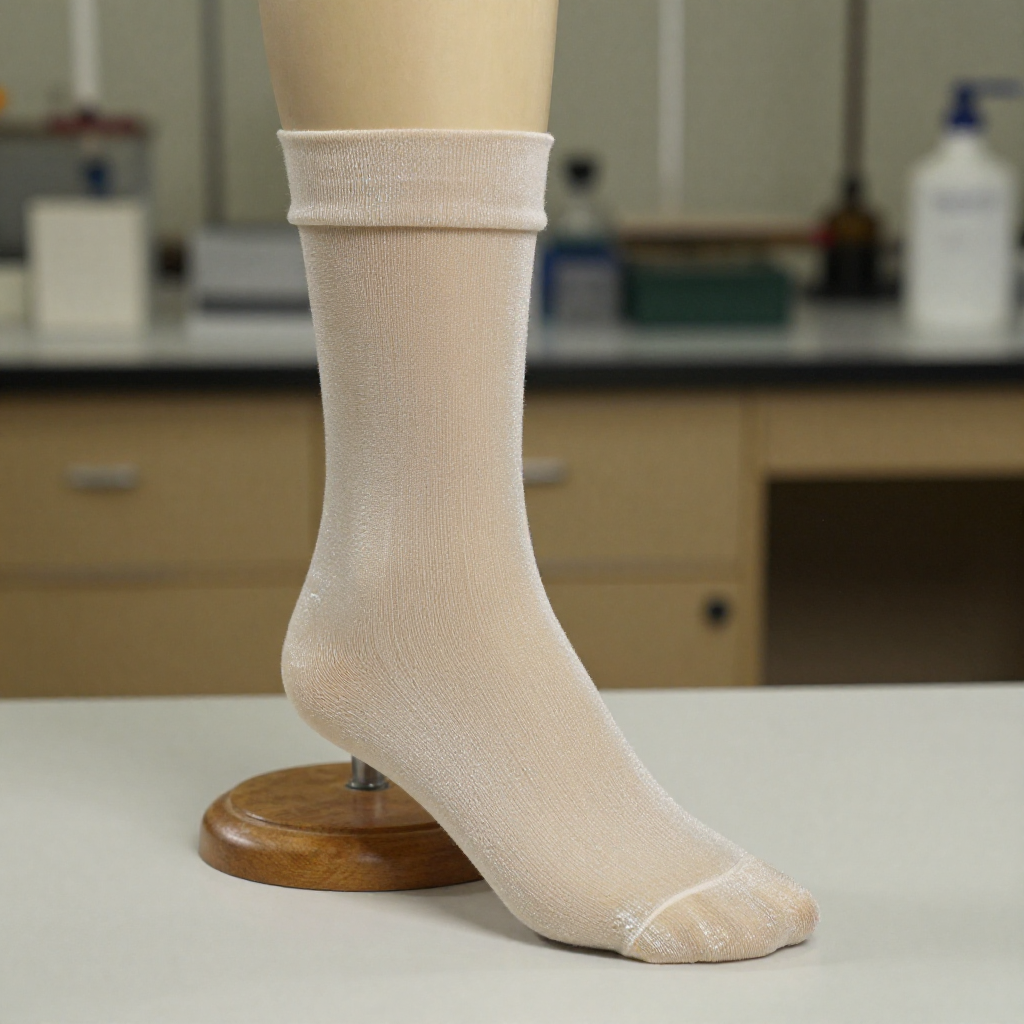


Nylon — The First Fully Synthetic Fiber from Coal, Air, and Water
On February 28, 1935, Wallace Hume Carothers at DuPont's research laboratory in Wilmington, Delaware, synthesized nylon 6,6 — the first fiber made entirely from petrochemical building blocks with no natural polymer precursor. Unlike viscose rayon (which dissolves and regenerates natural cellulose), nylon is built from scratch: two small molecules — hexamethylenediamine and adipic acid — are reacted together, and the resulting polymer is melt-spun into filaments. The raw materials ultimately derive from coal, air (nitrogen), and water.
Nylon is a polyamide — a polymer whose repeating units are linked by amide bonds (-CO-NH-), the same bond that connects amino acids in proteins like silk fibroin and wool keratin. This is not coincidence: Carothers deliberately set out to create a synthetic analog of silk by mimicking nature's chemistry with industrial feedstocks. The '6,6' designation means both monomers contribute six carbon atoms each to the repeating unit.
DuPont introduced nylon commercially in 1938 (toothbrush bristles) and 1940 (women's stockings). On 'Nylon Day' — May 15, 1940 — four million pairs of nylon stockings sold in four days. During World War II, nylon was diverted entirely to military production: parachutes, tire cord, ropes, and tent fabric. Carothers himself did not live to see nylon's triumph — suffering from severe depression, he died by suicide on April 29, 1937, at age 41. Nylon proved that useful materials could be designed at the molecular level, launching the age of synthetic polymers that now produce over 70 million tonnes of fiber annually.
Instructions
Understand the two monomers
Understand the two monomers
Nylon 6,6 is made from two monomers. Hexamethylenediamine (HMD, H₂N-(CH₂)₆-NH₂) is a six-carbon chain with an amine group (-NH₂) at each end. Adipic acid (HOOC-(CH₂)₄-COOH) is a six-carbon chain with a carboxylic acid group (-COOH) at each end. When an amine meets a carboxylic acid, they react to form an amide bond (-CO-NH-) and release one molecule of water. This is condensation polymerization — building a long chain by repeatedly linking small molecules while expelling water.
Prepare nylon salt from the two monomers
Prepare nylon salt from the two monomers
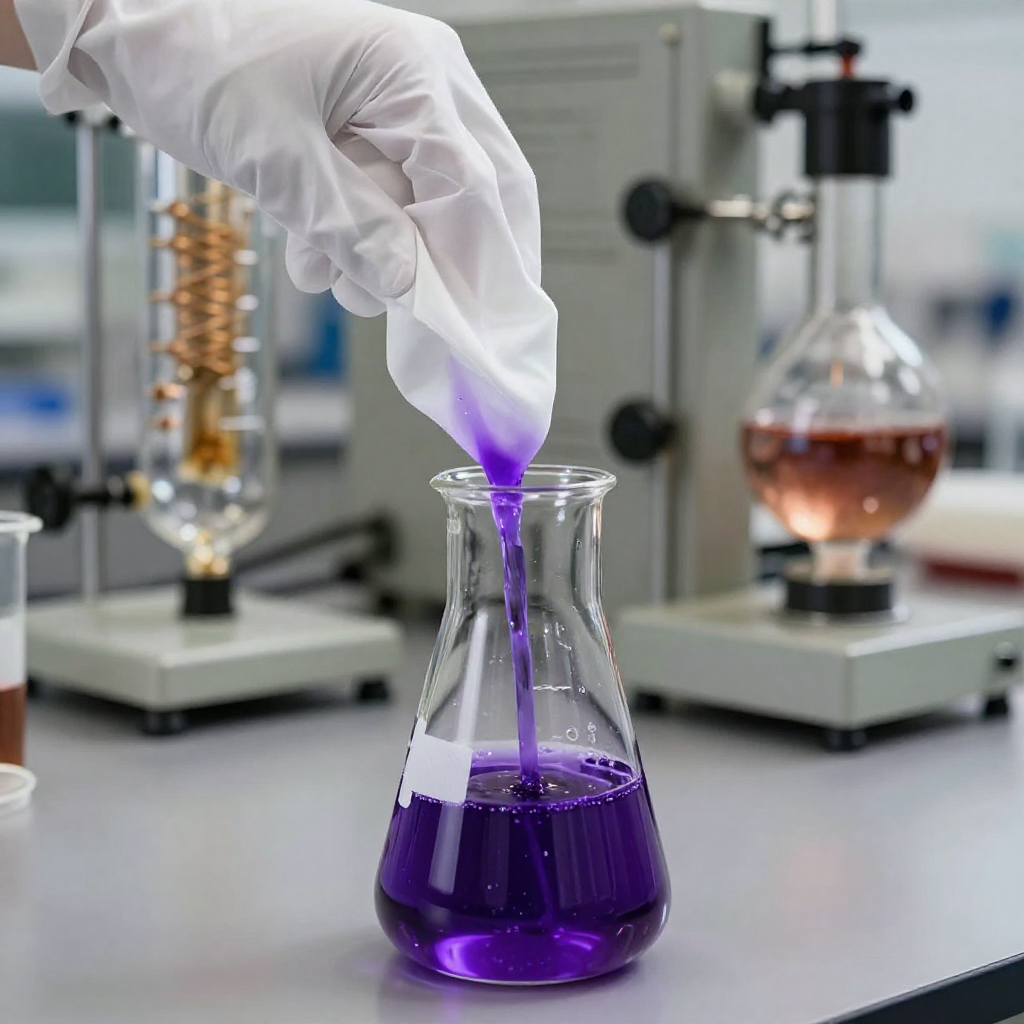
Dissolve equal molar quantities of hexamethylenediamine and adipic acid in methanol. When combined, the acid and base react instantly to form a white crystalline salt — 'nylon salt' (hexamethylenediammonium adipate). This salt ensures a perfect 1:1 ratio of the two monomers, which is critical: even a 1% imbalance limits the polymer chain length and produces weak fiber. The salt is filtered, dried, and stored as the polymerization feedstock.
Materials for this step:
 Nylon Salt500 g
Heat the salt under pressure to polymerize
Heat the salt under pressure to polymerize
Load the nylon salt into an autoclave (a sealed, pressurized reactor) with a small amount of water. Heat to 220°C under pressure (approximately 18 atmospheres). The elevated temperature drives the condensation reaction: amine groups react with acid groups to form amide bonds, linking monomers into increasingly long polymer chains. Water vapor — the byproduct — is trapped by the pressure. After 1–2 hours, the polymer has reached a molecular weight suitable for fiber formation.
Tools needed:
 Glass Distillation Flask
Release pressure to drive the reaction to completion
Release pressure to drive the reaction to completion
Slowly release the autoclave pressure over 1–2 hours while maintaining 270–280°C. As pressure drops, the trapped water vapor escapes, driving the equilibrium reaction further toward polymerization (Le Chatelier's principle). The molten polymer thickens steadily as chain lengths grow. A final vacuum stage removes the last traces of water, pushing chain lengths to 60–100 repeat units — the range that gives nylon its strength and melt-spinnability.
Extrude the molten polymer into chips
Extrude the molten polymer into chips
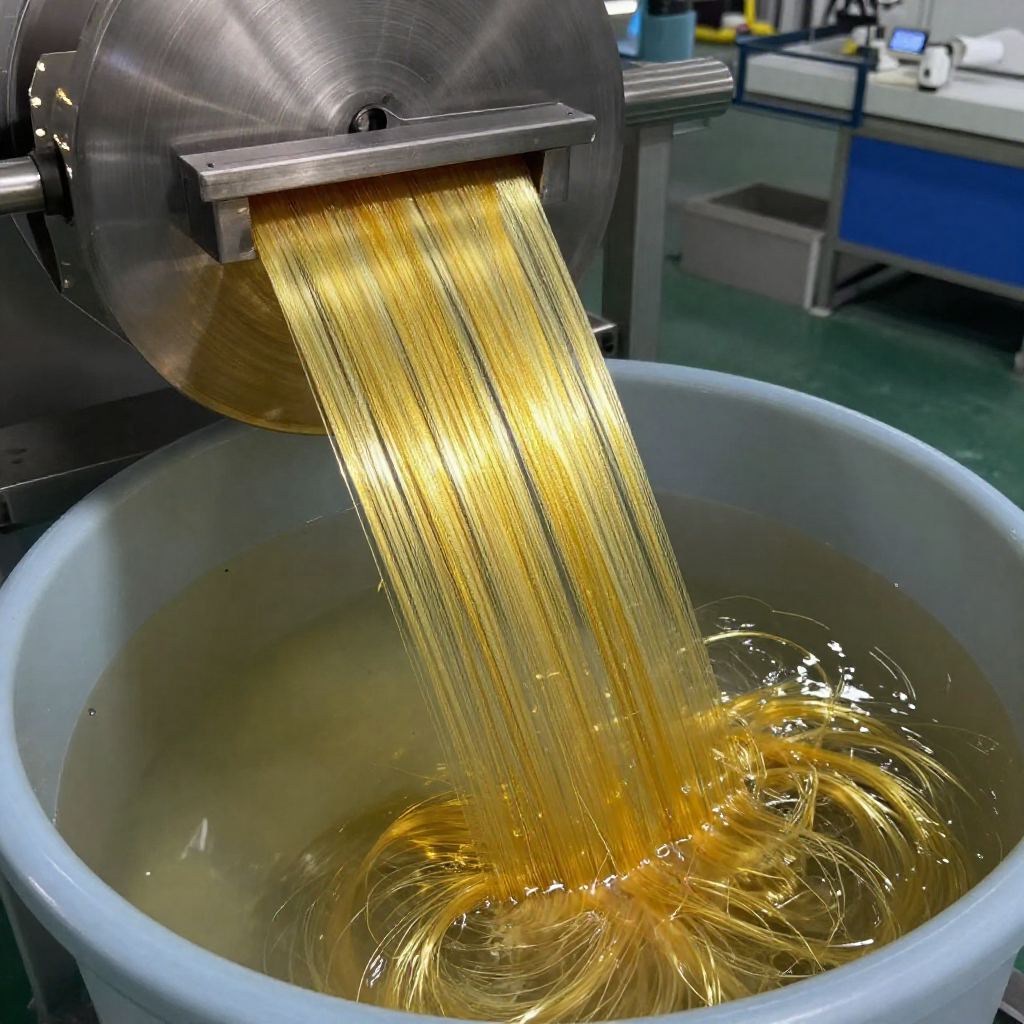
The finished polymer is a clear, viscous melt at 270°C. Force it through a die plate as thick strands, which are cooled in a water bath and chopped into small chips (pellets) approximately 3 mm in diameter. These nylon chips are the intermediate product — they can be stored, transported, and re-melted for fiber spinning. DuPont's nylon chips were the first industrial polymer pellets, a format that became universal for all thermoplastics.
Melt-spin the polymer through a spinneret
Melt-spin the polymer through a spinneret
Re-melt the nylon chips at 260–270°C and pump the molten polymer through a spinneret — a metal plate with dozens to hundreds of precision-drilled holes, each 0.2–0.3 mm in diameter. The molten polymer emerges as thin streams that solidify almost instantly in cool air. This is melt spinning — fundamentally different from the wet spinning used for viscose rayon. Melt spinning is faster, uses no solvents, and produces no chemical waste at the spinning stage.
Cool and collect the filaments
Cool and collect the filaments
A cross-flow of cold air solidifies the filaments within centimeters of leaving the spinneret. The solidified filaments converge into a single yarn bundle, are lubricated with a spin finish (a light oil that reduces static and friction), and wound onto a bobbin at speeds of 1,000–4,000 meters per minute. At this stage, the filaments are undrawn — relatively weak, opaque, and extensible. The molecular chains are randomly oriented, like uncooked spaghetti.
Draw the filaments to orient the molecules
Draw the filaments to orient the molecules
Pass the undrawn filaments over heated rollers or through a steam chamber while stretching them to 3–5 times their original length. This 'cold drawing' aligns the polymer chains parallel to the fiber axis, transforming random coils into ordered, crystalline regions. The fiber becomes thinner, stronger, more transparent, and less extensible. This is the same principle as stretching viscose rayon — molecular orientation determines mechanical properties — but nylon's chains pack more efficiently, producing higher strength.
Heat-set the fiber to stabilize its structure
Heat-set the fiber to stabilize its structure
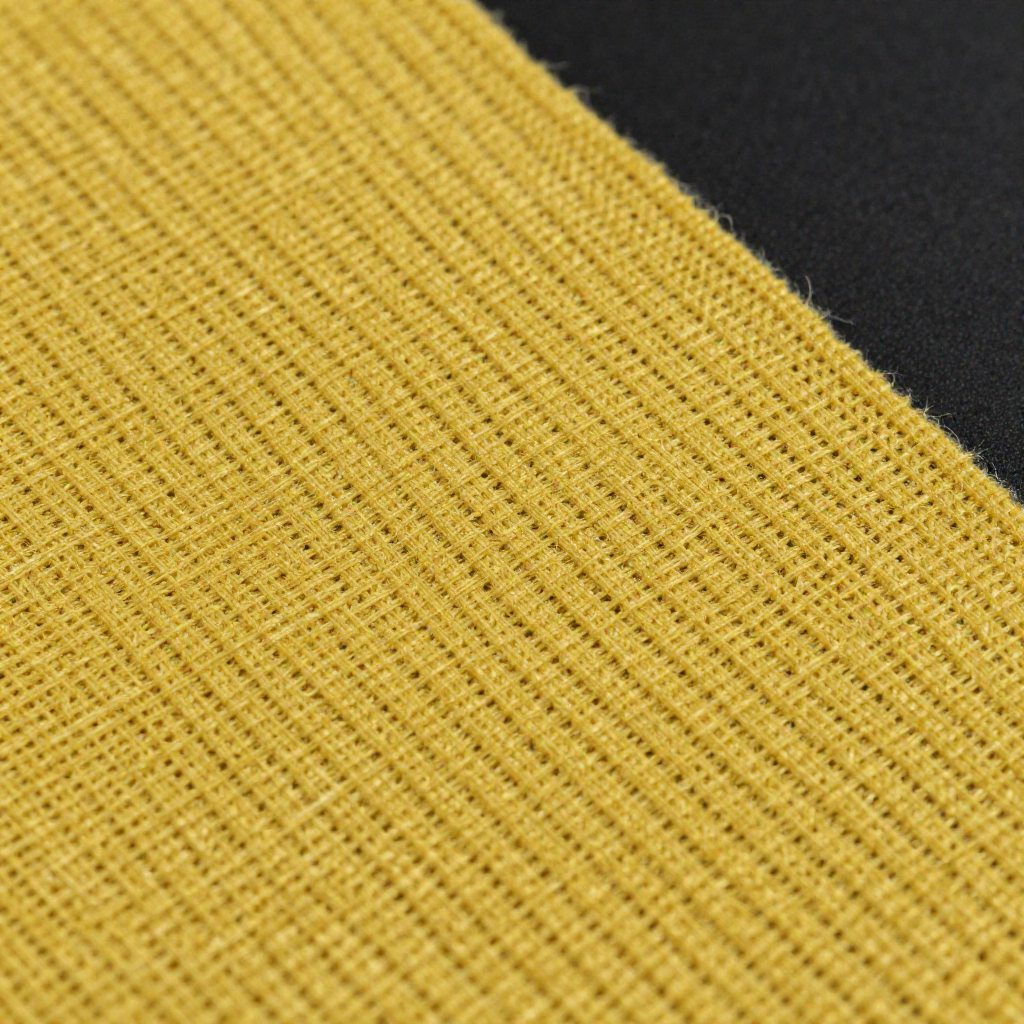
Pass the drawn filaments through a heated zone at 180–200°C under controlled tension. This heat-setting step relaxes internal stresses and stabilizes the crystalline structure, preventing the fiber from shrinking or distorting during later processing or garment use. Heat-set nylon retains its shape through washing, drying, and wearing — a property that made nylon stockings revolutionary: they kept their shape far longer than silk stockings.
Wind, texturize, or cut the finished fiber
Wind, texturize, or cut the finished fiber
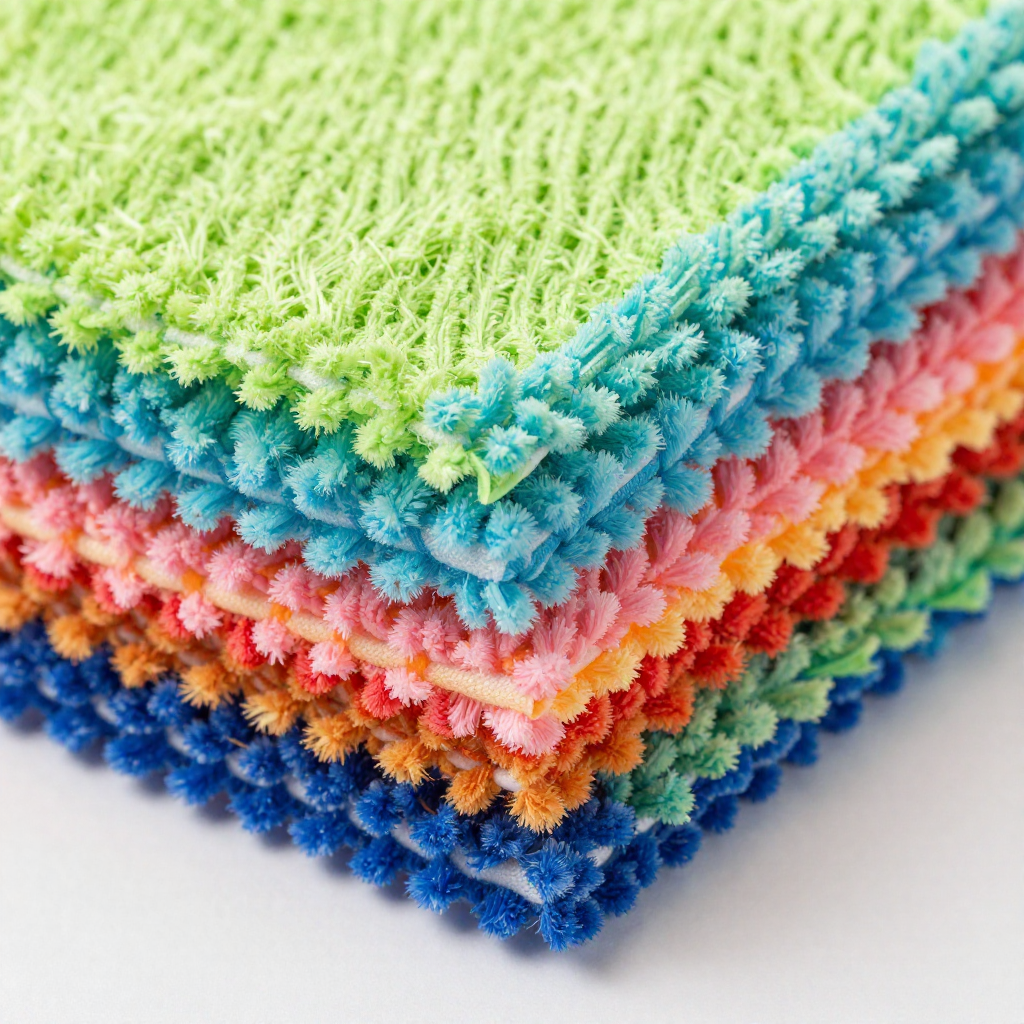
The drawn, heat-set filaments are wound onto large packages for use as continuous filament yarn (stockings, parachute fabric, fishing line). Alternatively, the filament tow can be crimped and cut into staple lengths for blending with cotton or wool on conventional spinning machinery. Texturizing — heating and twisting the filaments to add bulk and stretch — produces the stretchy, soft yarns used in activewear, socks, and knitted fabrics.
Compare nylon's properties to silk
Compare nylon's properties to silk
Nylon was designed to mimic silk, and it succeeded remarkably. Both are polyamides — silk's amide bonds come from amino acids, nylon's from synthetic monomers. Nylon matches silk's tensile strength (4–5 grams per denier), exceeds its abrasion resistance by a factor of ten, and surpasses its elasticity (nylon stretches 15–20% before breaking). It resists mildew, moths, and most chemicals. Where silk costs $30–60 per kilogram, nylon costs $2–4. The one property nylon cannot match is silk's moisture absorption — nylon absorbs only 4% of its weight in water versus silk's 11%, making nylon feel clammy against skin in warm weather.
Recognize the safety considerations
Recognize the safety considerations
The monomers are hazardous: hexamethylenediamine is corrosive and toxic by inhalation; adipic acid is a mild irritant. Polymerization occurs at 270°C under 18 atmospheres of pressure — autoclave failure risks a molten polymer explosion. Melt spinning releases trace fumes. Nylon itself is safe in finished form but melts at 260°C and drips flaming droplets — a fire hazard that led to strict regulations on nylon use in children's sleepwear and building furnishings.
Understand nylon's legacy in materials science
Understand nylon's legacy in materials science
Nylon proved that humans could design materials from first principles — choosing monomers to achieve desired properties, then manufacturing them at industrial scale. This was a conceptual revolution as profound as synthetic dyes sixty years earlier. Within fifteen years of nylon, chemists created polyester (1941), acrylic (1950), and polypropylene (1954). Today, synthetic fibers account for over 60% of global textile production — roughly 80 million tonnes per year. Every one of these fibers descends from the research program Carothers directed at DuPont, and from his insight that polymer chemistry could be systematic, predictable, and industrially useful.
Materials
1- 500 gPlaceholder
Tools Required
1- Placeholder
Connected Blueprint Materials
Related Blueprints
These blueprints share knowledge with this one — techniques, materials, or principles that connect them in the learning graph.
Related blueprints
Other builds that share materials, tools, or techniques with this one.

CC0 Public Domain
This blueprint is released under CC0. You are free to copy, modify, distribute, and use this work for any purpose, without asking permission.
Support the Maker by purchasing products through their Blueprint where they earn a Maker Commission set by Vendors, or create a new iteration of this Blueprint and include it as a connection in your own Blueprint to share revenue.