


Hammering Bronze Sheet from a Cast Ingot — Raising and Planishing
Sheet bronze was the material behind Bronze Age armour, vessels, mirrors, and decorative work. Unlike casting which produces a fixed shape, sheet-working starts with a flat ingot and transforms it through repeated cycles of hammering and annealing into sheets as thin as 0.5 mm — thinner than modern cardboard.
The process exploits a fundamental property of bronze: cold-hammering compresses the crystal grains, making the metal harder and thinner with each blow. But this work-hardening also makes the bronze brittle. Before it cracks, the smith heats it to dull red (annealing), which recrystallises the grain structure and restores ductility. A single ingot may go through 10-15 anneal-hammer cycles to reach usable sheet thickness.
The finished sheet can then be cut, bent, raised into vessels, riveted, engraved, or embossed — opening the full range of Bronze Age metalcraft.
ལམ་སྟོན
Cast a flat ingot
Cast a flat ingot
གོམ་པ་འདིའི་རྫས་རིགས:
 ཟངས་ཀྱི་ལེབ་ཤོག500 g
Set up the anvil stone
Set up the anvil stone
ལག་ཆས་དགོས་མཁོ:
 རྡོ་ལེབ་ཏོག་ཏོ།
First hammering pass — rough thinning
First hammering pass — rough thinning
ལག་ཆས་དགོས་མཁོ:
 རྡུང་རྡོ།
First anneal
First anneal
གོམ་པ་འདིའི་རྫས་རིགས:
 སོལ་བ།2 kg
ལག་ཆས་དགོས་མཁོ:
 ཡུ་བ་རིངམ་གི་ལྕགས་ཀྱིབ།
Continue hammer-anneal cycles
Continue hammer-anneal cycles
Detect and prevent edge cracking
Detect and prevent edge cracking
Final thinning to usable sheet
Final thinning to usable sheet
Planish the surface
Planish the surface
ལག་ཆས་དགོས་མཁོ:
 རྡོ་འཇམ་ཏོང་ཏོ།
Polish (optional)
Polish (optional)
གོམ་པ་འདིའི་རྫས་རིགས:
 བྱེ་མ་ཞིབ་མོ།100 g
རྫས་རིགས
5- 500 gས་ཆ་འཛིན
- 2 kgས་ཆ་འཛིན
- 100 gས་ཆ་འཛིན
- 1 དུམ་བུ།ས་ཆ་འཛིན
- 1 དུམ་བུ།ས་ཆ་འཛིན
ལག་ཆས་དགོས་མཁོ
4- ས་ཆ་འཛིན
- ས་ཆ་འཛིན
- ས་ཆ་འཛིན
- ས་ཆ་འཛིན
མཐུད་སྦྲེལ་བིལུ་པིརིན་ཊི་རྫས་རིགས
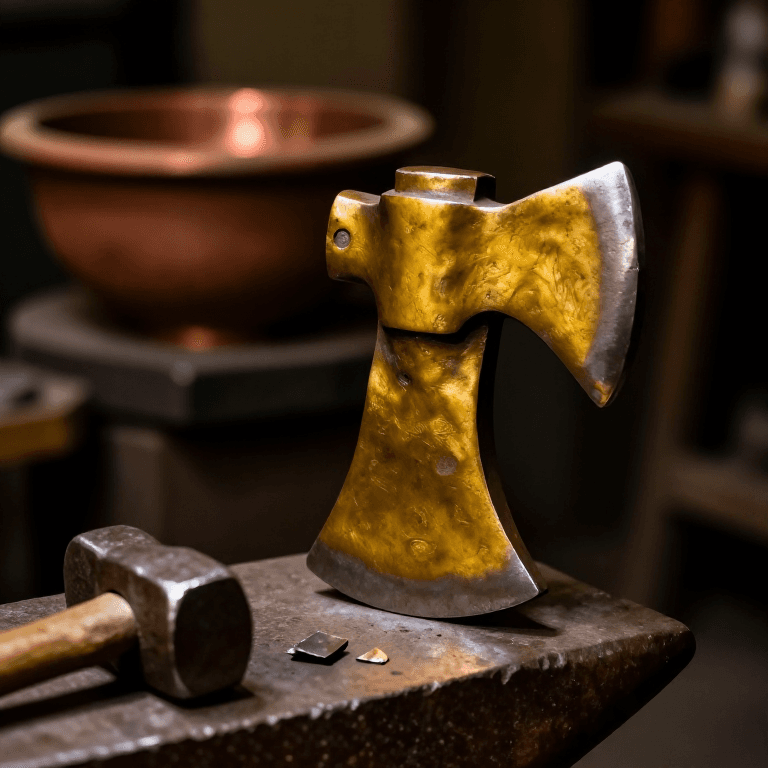
བིལུ་པིརིན་ཊི་འདི་གིས་བཟོ་མི

འབྲེལ་ཡོད་བིལུ་པིརིན་ཊི
བིལུ་པིརིན་ཊི་འདི་ཚུ་ཐབས་ལམ་དང་རྫས་རིགས། སྤྱི་ཆོས་བགོ་བཤའ་བྱེད
CC0 སྤྱི་དབང
བིལུ་པིརིན་ཊི་འདི་CC0 འོག་བཀྲམས་ཡོད། ཁྱེད་རང་གིས་ཆོག་མཆན་མ་བཞེས་པར་ཕབ་ལེན་དང་བཟོ་བཅོས། བགོ་བཤའ། དགོས་མཁོ་གང་ལའང་བཀོལ་སྤྱོད་བྱས་ཆོག
བཟོ་མཁན་ལ་རྒྱབ་སྐྱོར་བྱེད་པའི་ཆེད་ཁོང་ཚོའི་བིལུ་པིརིན་ཊི་བརྒྱུད་ཐོན་སྐྱེད་ཉོ། བཟོ་མཁན་གྱིས བཟོ་མཁན་གྱི་ཁེ་ཕོགས ཚོང་པས་གཏན་འཁེལ་བྱས་པ། ཡང་ན་བིལུ་པིརིན་ཊི་འདིའི་པར་གསར་བཟོས་ཏེ་ཁྱེད་རང་གི་བིལུ་པིརིན་ཊི་ནང་མཐུད་སྦྲེལ་བྱས་ཏེ་ཡོང་སྒོ་བགོ་བཤའ་བྱེད།