སྒྱུ་རྩལ
མཛེས་སྡུག་དང་བདེ་ཐང
བཟོ་རིག
རིག་གནས་དང་ལོ་རྒྱུས
དགའ་སྟོན
ཁོར་ཡུག
ཟས་དང་བཏུང་རྫས
ཕྱིར་འཕྲུལ་རིག
ཚན་རིག
རྩེད་འགྲན
རིག་རྩལ
གྱོན་རུང
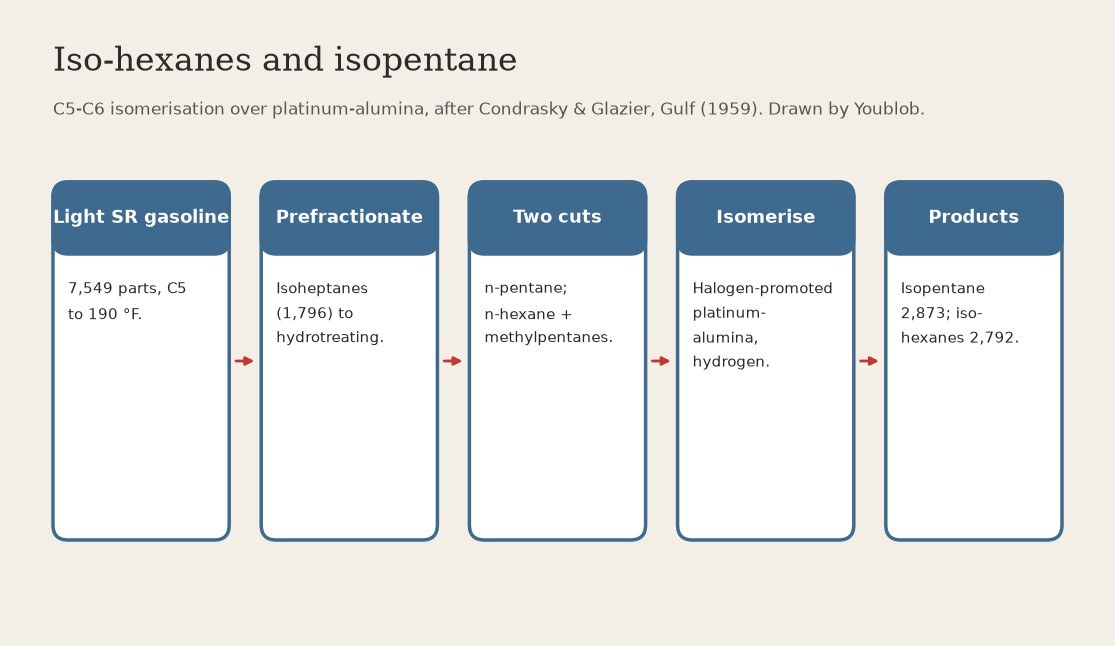

Iso-hexanes and Isopentane: Light Straight-Run Gasoline Isomerised over Platinum-Alumina with Hydrogen (Gulf, US 3,071,535)
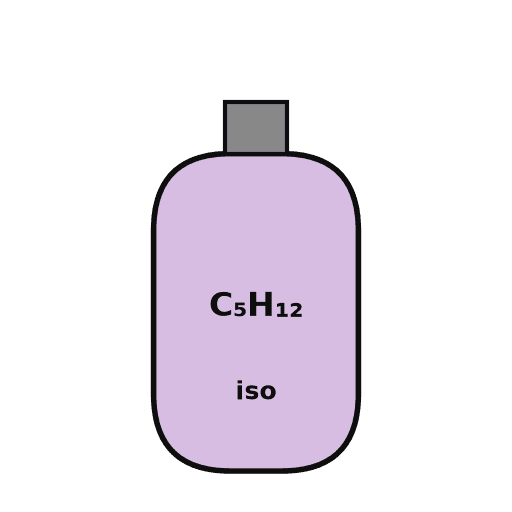
The lightest straight-run gasoline is mostly straight-chain pentane and hexane, of low octane. Rearranged into their branched forms over a platinum catalyst with hydrogen, they become isopentane and iso-hexanes, high in both research and motor octane.
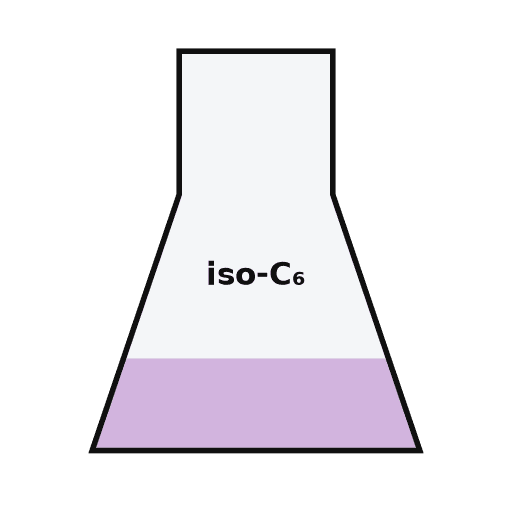
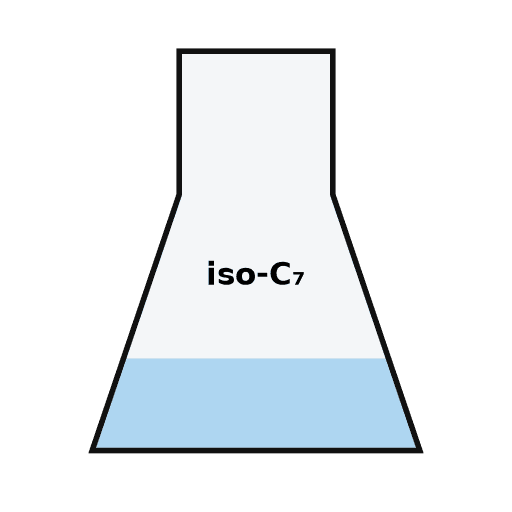
Result (Gulf's example, barrels per day): from 7,549 of light straight-run gasoline, 2,873 of isopentane and 2,792 of iso-hexanes, plus 1,796 of isoheptanes split off beforehand.
Source: Condrasky & Glazier, US 3,071,535 (Gulf, filed 1959). Not given: temperature, pressure, space velocity. Hydrogen and light hydrocarbons: fire risk. Picture drawn by Youblob.
ཆེས་མཁས་པ
1 day
ལམ་སྟོན
1
1
Split off the isoheptanes
Split off the isoheptanes
Prefractionate the light straight-run gasoline (C5-190 °F, 7,549 barrels a day) to separate isoheptanes and heavier, 1,796, which go to hydrogen treating, from the C5-C6 paraffins.
གོམ་པ་འདིའི་རྫས་རིགས:
 ཐད་ཀར་བཙག་པའི་སྣུམ་ཁུ་ཡང་ཤོས།7549 parts by volume
ལག་ཆས་དགོས་མཁོ:
 ཆ་ཤས་བཙག་བཏོན་ཆས
 སྣུམ་བསག་སྣོད།
2
2
Split the C5-C6 into pentane and hexane cuts
Split the C5-C6 into pentane and hexane cuts
Distil the C5-C6 fraction into a concentrated normal-pentane cut and a cut concentrated in normal hexane and methylpentanes.
ལག་ཆས་དགོས་མཁོ:
ཆ་ཤས་བཙག་བཏོན་ཆས3
3
Isomerise each cut over platinum-alumina with hydrogen
Isomerise each cut over platinum-alumina with hydrogen
Isomerise the two cuts separately over a halogen-promoted platinum-alumina catalyst with hydrogen. Gulf uses off-gas from its platinum reformer, 360,000 cubic feet a day. Gulf gives no temperature or pressure.
ལག་ཆས་དགོས་མཁོ:
 པ་ལེ་ཊི་ནམ་རི་ཕོར་མིང་ཀེ་ཊ་ལིསཊ
 རྒྱུ་ལམ་མང་པོ་ཅན་གྱི་གཏན་སྒྲིག་རྫས་འགྱུར་སྣོད།
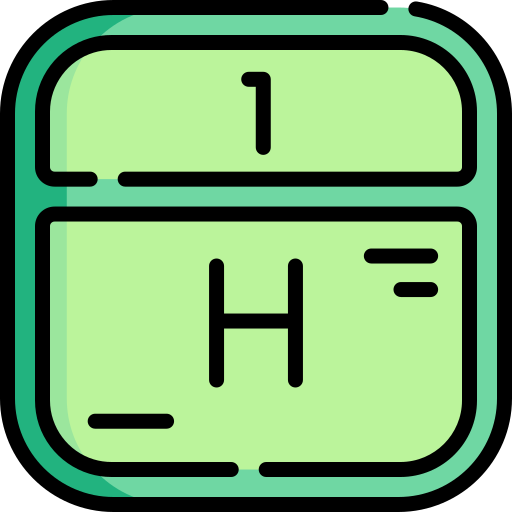 ཧའི་ཌུརོ་ཇཱན།
 གནོན་ཤུགས་འཇལ་ཆས།
 པཱའི་རོ་མི་ཊར
4
4
Fractionate and recycle the unconverted
Fractionate and recycle the unconverted
Fractionate the reactor effluent. Send unconverted normal pentane, normal hexane and methylpentanes back to the reactors. Keep the isopentane (2,873) and iso-hexanes (2,792) for blending; 156 goes to fuel gas.
ལག་ཆས་དགོས་མཁོ:
ཆ་ཤས་བཙག་བཏོན་ཆསསྣུམ་བསག་སྣོད།རྫས་རིགས
1- 7549 parts by volumeས་ཆ་འཛིན
ལག་ཆས་དགོས་མཁོ
7- ས་ཆ་འཛིན
- ས་ཆ་འཛིན
- ས་ཆ་འཛིན
- ས་ཆ་འཛིན
- ས་ཆ་འཛིན
- ས་ཆ་འཛིན
བིལུ་པིརིན་ཊི་འདི་གིས་བཟོ་མི
འབྲེལ་ཡོད་བིལུ་པིརིན་ཊི
བིལུ་པིརིན་ཊི་འདི་ཚུ་ཐབས་ལམ་དང་རྫས་རིགས། སྤྱི་ཆོས་བགོ་བཤའ་བྱེད
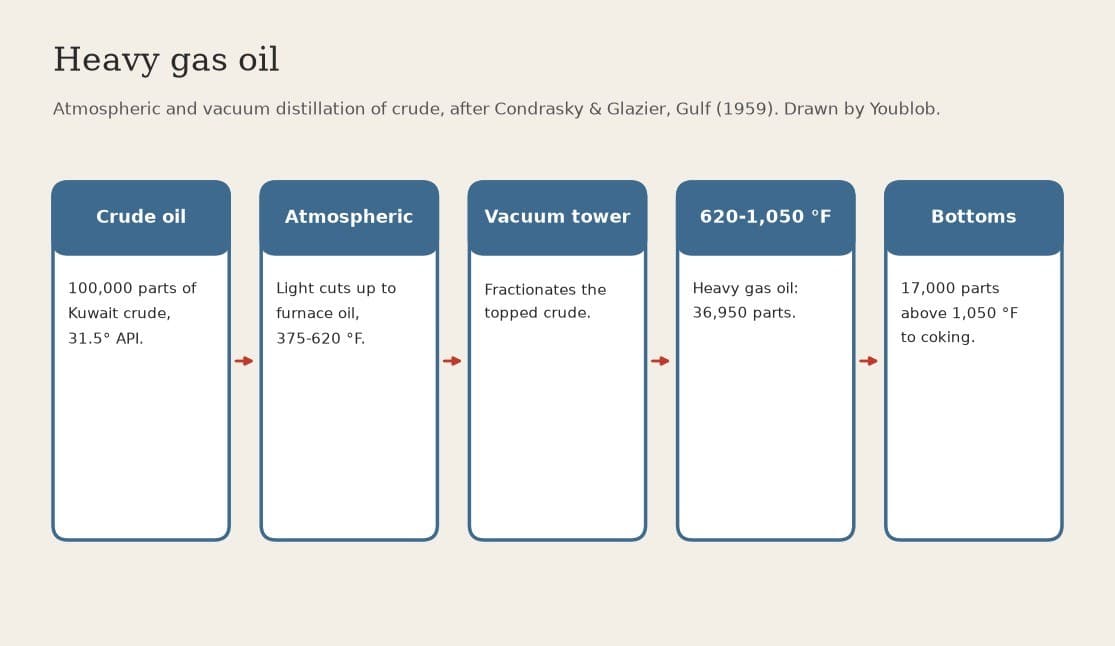
Heavy Gas Oil: the 620-1,050 °F Cut from Atmospheric and Vacuum Distillation of Crude Oil (Gulf, US 3,071,535)
Charlie གྱིས
བཟོ་གྲྭ
༡
༠
༠
༠
༠
༠
ཉེན་ཁ་ཅན།
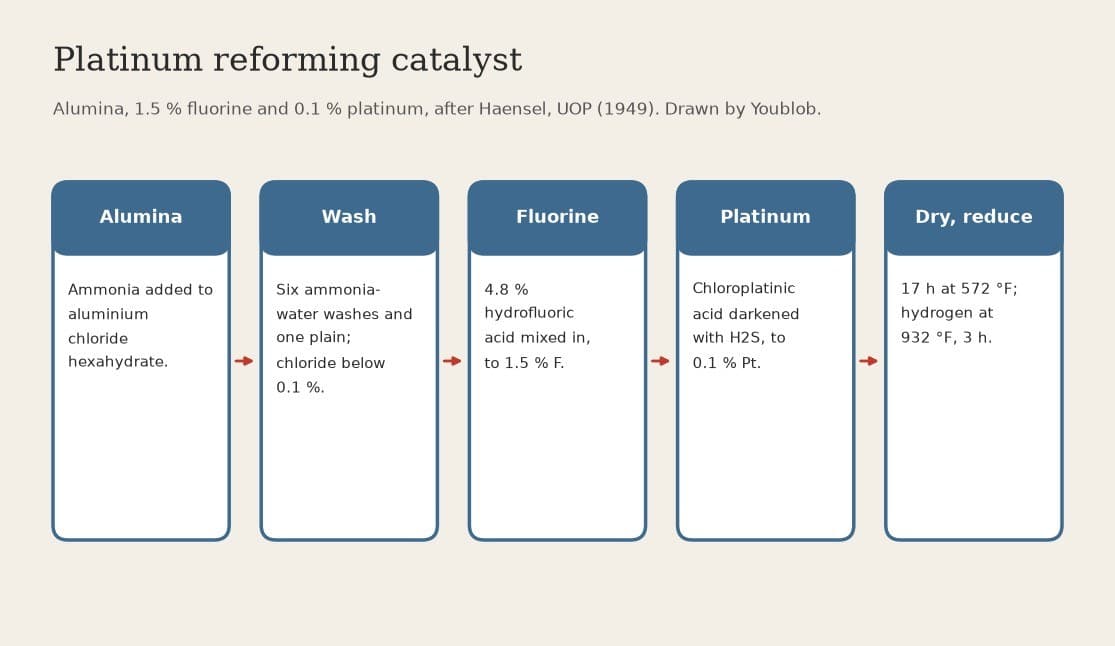
Platinum Reforming Catalyst: 0.1 % Platinum and 1.5 % Fluorine on Alumina (Haensel, UOP, US 2,479,110)
Charlie གྱིས
བཟོ་གྲྭ
༤
༠
༠
༠
༠
༠
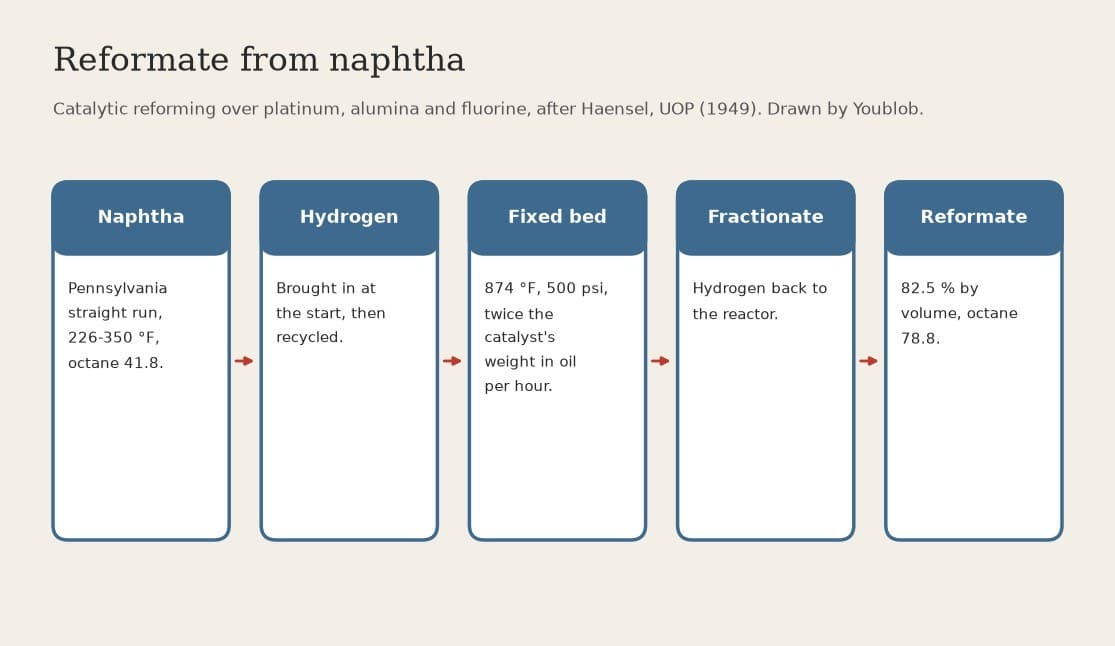
Reformate: Straight-Run Naphtha over Platinum-Alumina-Fluorine Catalyst at 874 °F and 500 psi (Haensel, UOP, US 2,479,110)
Charlie གྱིས
བཟོ་གྲྭ
༣
༠
༠
༠
༠
༠
CC0 སྤྱི་དབང
བིལུ་པིརིན་ཊི་འདི་CC0 འོག་བཀྲམས་ཡོད། ཁྱེད་རང་གིས་ཆོག་མཆན་མ་བཞེས་པར་ཕབ་ལེན་དང་བཟོ་བཅོས། བགོ་བཤའ། དགོས་མཁོ་གང་ལའང་བཀོལ་སྤྱོད་བྱས་ཆོག
བཟོ་མཁན་ལ་རྒྱབ་སྐྱོར་བྱེད་པའི་ཆེད་ཁོང་ཚོའི་བིལུ་པིརིན་ཊི་བརྒྱུད་ཐོན་སྐྱེད་ཉོ། བཟོ་མཁན་གྱིས བཟོ་མཁན་གྱི་ཁེ་ཕོགས ཚོང་པས་གཏན་འཁེལ་བྱས་པ། ཡང་ན་བིལུ་པིརིན་ཊི་འདིའི་པར་གསར་བཟོས་ཏེ་ཁྱེད་རང་གི་བིལུ་པིརིན་ཊི་ནང་མཐུད་སྦྲེལ་བྱས་ཏེ་ཡོང་སྒོ་བགོ་བཤའ་བྱེད།