སྒྱུ་རྩལ
མཛེས་སྡུག་དང་བདེ་ཐང
བཟོ་རིག
རིག་གནས་དང་ལོ་རྒྱུས
དགའ་སྟོན
ཁོར་ཡུག
ཟས་དང་བཏུང་རྫས
ཕྱིར་འཕྲུལ་རིག
ཚན་རིག
རྩེད་འགྲན
རིག་རྩལ
གྱོན་རུང
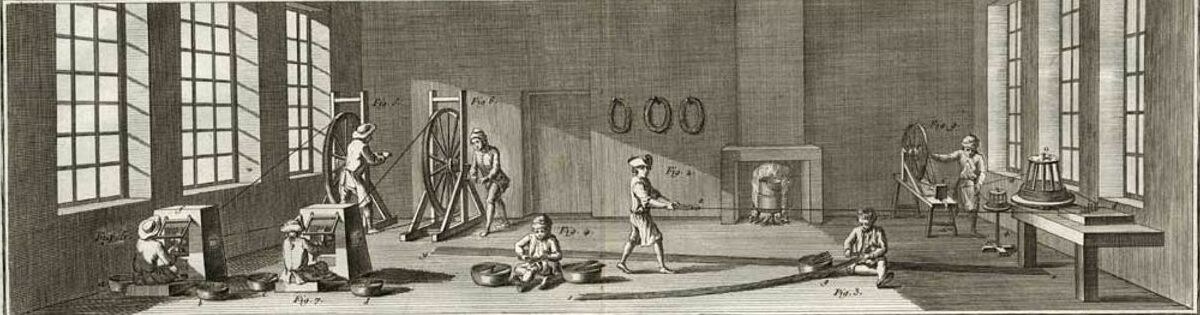


Pins in Eighteen Operations: Adam Smith's Pin Factory
In 1776 Adam Smith opened The Wealth of Nations with a pin workshop. One untrained worker, he wrote, "could scarce, perhaps, with his utmost industry, make one pin in a day, and certainly could not make twenty". Split into about eighteen distinct operations, ten men in a poorly equipped workshop made about twelve pounds of pins a day, at upwards of four thousand middling pins to the pound: over 48,000 pins, or 4,800 per worker. The operations are the blueprint: draw the wire, straighten, cut, point, grind the top, make and fix the head, whiten, and paper. Pins were long made of brass before steel took over, so here the wire is drawn from brass.
བར་མ
Workshop process
ལམ་སྟོན
1
1
Draw out the wire
Draw out the wire
Draw the brass down through the holes of the drawplate to pin thickness.
གོམ་པ་འདིའི་རྫས་རིགས:
 རག་གི་དབྱུག་པ།1 as required
ལག་ཆས་དགོས་མཁོ:
 ལྕགས་སྐུད་འཐེན་ནིའི་ལྕགས་ལེབ།
2
2
Straighten and cut
Straighten and cut
Straighten the wire, then cut it into pin lengths.
ལག་ཆས་དགོས་མཁོ:
 ལྕགས་སྐུད་གཅད་ནིའི་ཀམ་ཅུང་།
3
3
Point
Point
Point one end of each length.
4
4
Prepare the top and head it
Prepare the top and head it
Grind the other end to receive the head. Making the head takes two or three separate operations, and putting it on is a trade of its own.
ལག་ཆས་དགོས་མཁོ:
 འཁོར་བའི་གཏར་རྡོ
5
5
Whiten and paper
Whiten and paper
Whiten the pins, then put them into the paper, which Smith calls "a trade by itself".
རྫས་རིགས
1- 1 as requiredས་ཆ་འཛིན
ལག་ཆས་དགོས་མཁོ
3- ས་ཆ་འཛིན
- ས་ཆ་འཛིན
- ས་ཆ་འཛིན
བིལུ་པིརིན་ཊི་འདི་གིས་བཟོ་མི

འབྲེལ་ཡོད་བིལུ་པིརིན་ཊི
བིལུ་པིརིན་ཊི་འདི་ཚུ་ཐབས་ལམ་དང་རྫས་རིགས། སྤྱི་ཆོས་བགོ་བཤའ་བྱེད

CC0 སྤྱི་དབང
བིལུ་པིརིན་ཊི་འདི་CC0 འོག་བཀྲམས་ཡོད། ཁྱེད་རང་གིས་ཆོག་མཆན་མ་བཞེས་པར་ཕབ་ལེན་དང་བཟོ་བཅོས། བགོ་བཤའ། དགོས་མཁོ་གང་ལའང་བཀོལ་སྤྱོད་བྱས་ཆོག
བཟོ་མཁན་ལ་རྒྱབ་སྐྱོར་བྱེད་པའི་ཆེད་ཁོང་ཚོའི་བིལུ་པིརིན་ཊི་བརྒྱུད་ཐོན་སྐྱེད་ཉོ། བཟོ་མཁན་གྱིས བཟོ་མཁན་གྱི་ཁེ་ཕོགས ཚོང་པས་གཏན་འཁེལ་བྱས་པ། ཡང་ན་བིལུ་པིརིན་ཊི་འདིའི་པར་གསར་བཟོས་ཏེ་ཁྱེད་རང་གི་བིལུ་པིརིན་ཊི་ནང་མཐུད་སྦྲེལ་བྱས་ཏེ་ཡོང་སྒོ་བགོ་བཤའ་བྱེད།