སྒྱུ་རྩལ
མཛེས་སྡུག་དང་བདེ་ཐང
བཟོ་རིག
རིག་གནས་དང་ལོ་རྒྱུས
དགའ་སྟོན
ཁོར་ཡུག
ཟས་དང་བཏུང་རྫས
ཕྱིར་འཕྲུལ་རིག
ཚན་རིག
རྩེད་འགྲན
རིག་རྩལ
གྱོན་རུང
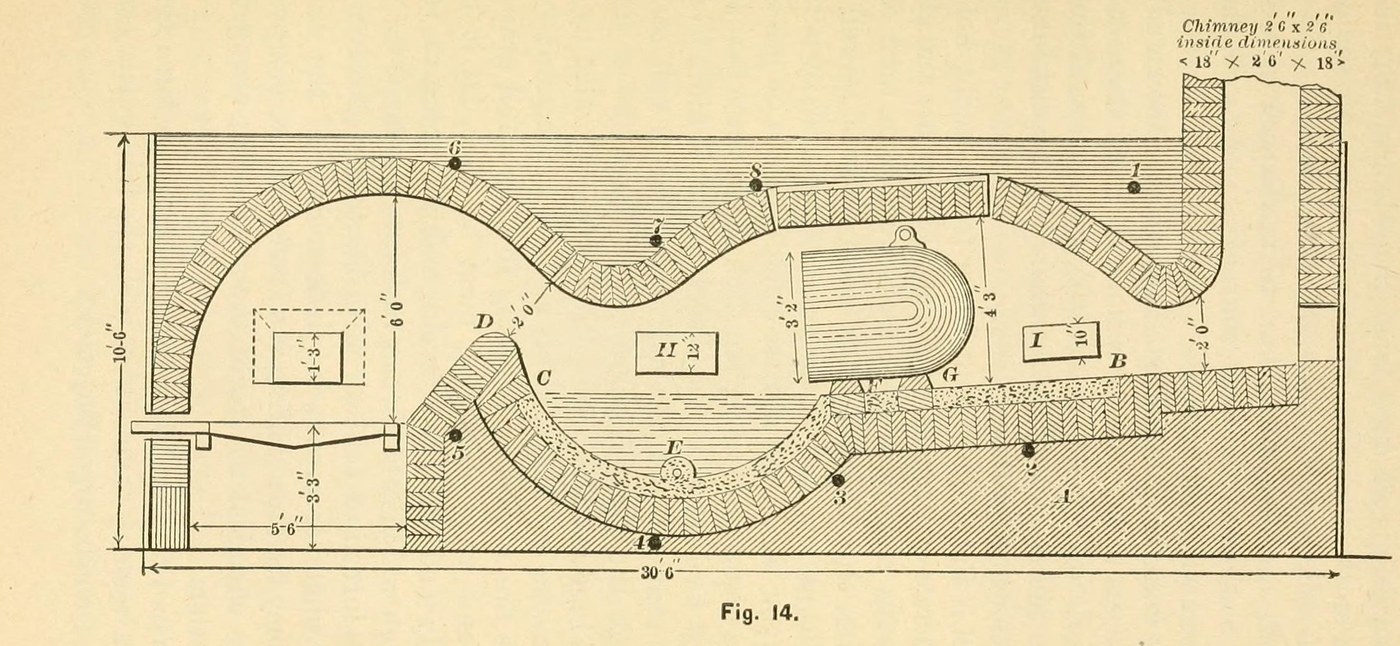


Reverberatory Furnace: the Air Furnace for Melting Cast Iron (Bolland, 1893)
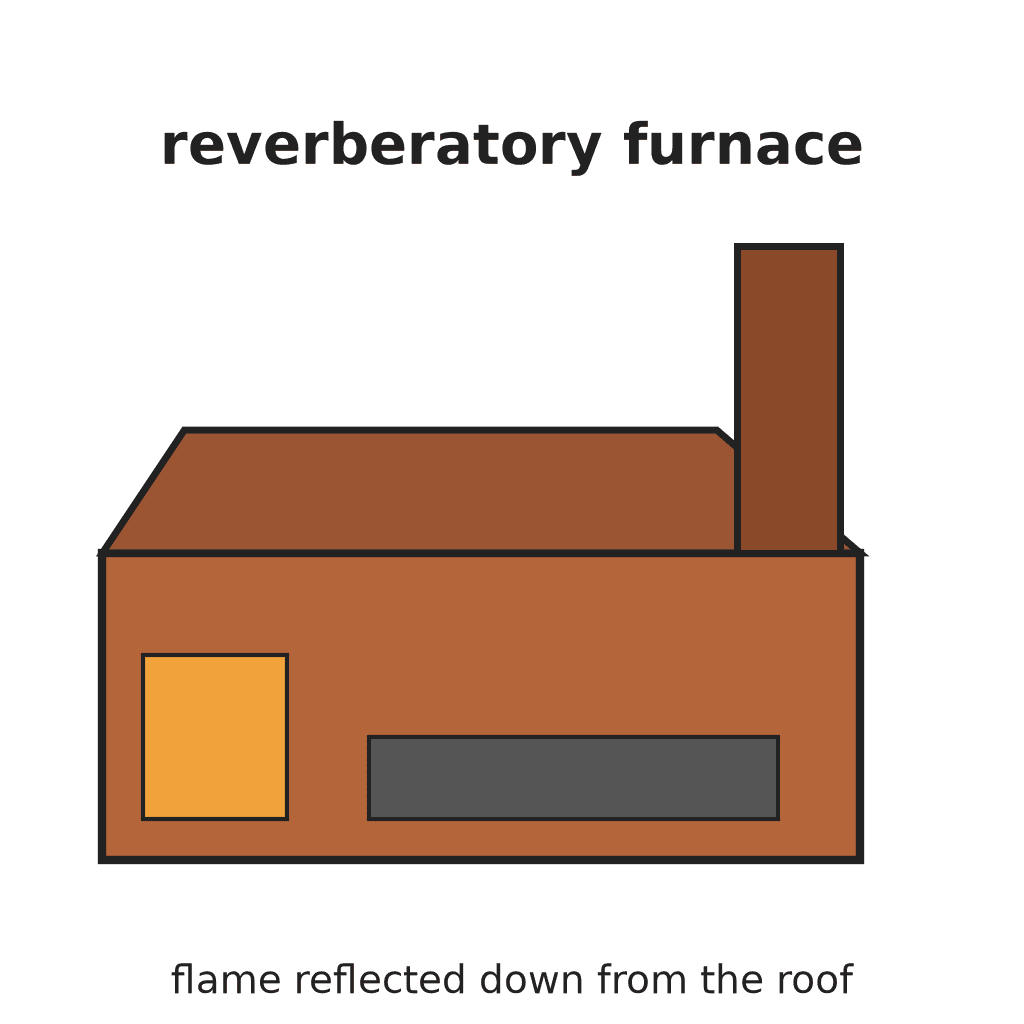
An air furnace melts iron apart from the fuel: coal burns on a grate at one end, and the flame is thrown down from a low arched roof onto the iron on the bed, then leaves by a tall chimney. The iron stays cleaner than in a cupola, so founders used it for guns, rolls, heavy scrap and lumps too big for the cupola.
This furnace is 30 ft 6 in long and 7 ft wide outside, 5 ft wide inside, cased in bolted wrought-iron plates.
Source: S. Bolland, The Iron Founder Supplement (1893), pp. 55-67. Unknown: brick sizes, plate thickness. Picture: Fig. 14 of the book.
ཆེས་མཁས་པ
Unknown
ལམ་སྟོན
1
1
Lay the foundation
Lay the foundation
Build the foundation solid of common material up to the firebrick, shaped so the firebrick bed slopes down from the chimney end to the reservoir. Keep the bricks from B to C 6 in below the finished bottom, to leave room for the sand bed.
གོམ་པ་འདིའི་རྫས་རིགས:
 སོ་ཕག1 foundation
ལག་ཆས་དགོས་མཁོ:
 རྡོ་བཟོ་བའི་སྐྱོགས།
 མ་ཤེས་པའི་ཚད།
2
2
Build the fireplace, bridge and roof
Build the fireplace, bridge and roof
Build the fireplace the full width of the furnace (5 ft inside, grate 5 ft long). Set the bridge wall at least 2 ft 3 in from the face of the grate bars. Build bridge, sides, roof and fireplace of the most refractory firebrick. Arch the roof the whole length, low, so it throws the flame down onto the bed; fill above the arches with common material. Leave the side charging hole (5 x 4 ft), the top hole (furnace width x 6 ft), the puddling hole over the reservoir, a sight hole and the tap hole.
གོམ་པ་འདིའི་རྫས་རིགས:
 མེ་ཐེག་འཇིམ་པའི་ས་ཕག1 lining, bridge, roof
 མེ་བཟོད་འཇིམ་གྱི་ཨར་གཅལ1 settingསོ་ཕག1 filling above the arch
 མ་ཤེས་པའི་ལྕགས་རིགས།1 grate bars
ལག་ཆས་དགོས་མཁོ:
རྡོ་བཟོ་བའི་སྐྱོགས།3
3
Case it in plates and bolt it
Case it in plates and bolt it
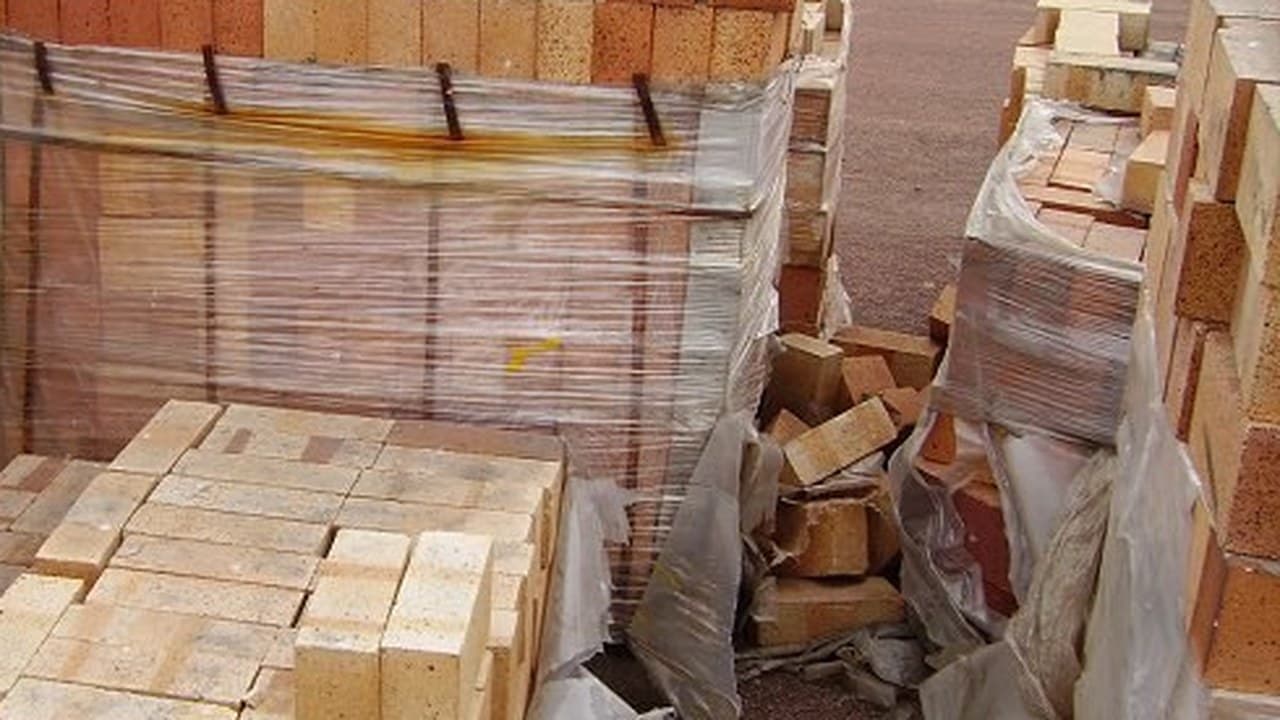
Case the whole structure in wrought-iron plates, held at the corners with angle-irons. Run eight chief anchor bolts from side to side, clear of all working parts. Join everything with bolts, not rivets, so any plate can come off for repairs. Line the charging doors with firebrick.
གོམ་པ་འདིའི་རྫས་རིགས:
 ལྕགས་ལེབ1 casing, doors
 བརྡུངས་ལྕགས་ཀྱི་དབྱུག་པ8 anchor boltsམ་ཤེས་པའི་ལྕགས་རིགས།1 angle-irons, door framesམེ་ཐེག་འཇིམ་པའི་ས་ཕག1 door linings
ལག་ཆས་དགོས་མཁོ:
མ་ཤེས་པའི་ཚད།4
4
Build the chimney
Build the chimney
Build the chimney square, 30 to 40 ft high, with an inside course of firebrick (Fig. 14: 2 ft 6 in square inside). Make its area a little larger than the fireplace. Put a damper on top that can be worked from the bottom: it alone sets the draught. It can stand apart on a sole plate on four columns.
གོམ་པ་འདིའི་རྫས་རིགས:
མེ་ཐེག་འཇིམ་པའི་ས་ཕག1 inside courseསོ་ཕག1 chimneyམ་ཤེས་པའི་ལྕགས་རིགས།1 damperལག་ཆས་དགོས་མཁོ:
རྡོ་བཟོ་བའི་སྐྱོགས།5
5
Make the sand bottom
Make the sand bottom
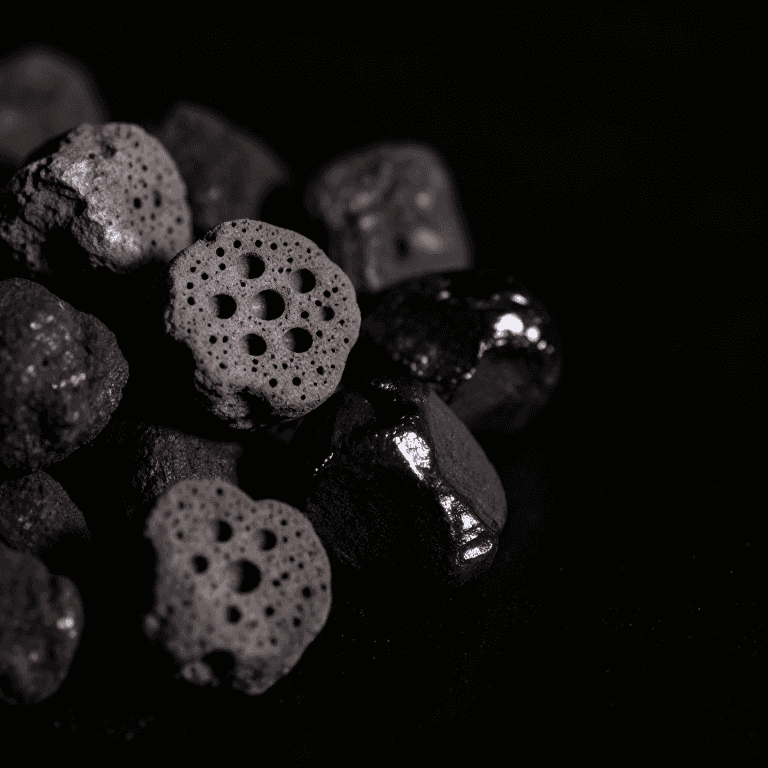
Make the bottom from B round the reservoir to C with 8 parts fire-sand to 1 of clay and 1 of ground coke. Fire it well for one to two hours before the first charge; it should last ten heats. Fill the tap hole with fire-sand and a little coal dust, which will not cake when hot.
གོམ་པ་འདིའི་རྫས་རིགས:
 བྱེ་མ།8 parts
 འདམ།1 part
 ལྕགས་བཟོའི་སོལ་བ།1 part, ground
ལག་ཆས་དགོས་མཁོ:
 བི་ཊུ་མིན་གྱི་རྡོ་སོལ།
6
6
Charge and melt
Charge and melt
Fire with soft, non-caking bituminous coal and keep a full grate; clinker quickly and leave no holes for cold air. Charge all the iron at the start: first layer of pigs lengthwise and a little apart, next layers across, open so the flame passes. Set heavy pieces on firebricks so the flame plays all round them. Through the puddling hole, dip test pieces and skim the iron clean. To blend two grades, thrust green saplings into the melt. Close the damper before tapping. Look the furnace over after every heat.
ལག་ཆས་དགོས་མཁོ:
བི་ཊུ་མིན་གྱི་རྡོ་སོལ། ལྕགས་རྒྱུ་གོང་བུ།
 སྲ་བའི་ཤིང་གི་མྱུ་གུའི་དབྱུག་པ།
 བུ་ག་ཡོད་པའི་སྐྱོགས
རྫས་རིགས
9- 1 chimneyས་ཆ་འཛིན
- 1 inside courseས་ཆ་འཛིན
- 1 settingས་ཆ་འཛིན
- 1 damperས་ཆ་འཛིན
- 1 casing, doorsས་ཆ་འཛིན
- 8 anchor boltsས་ཆ་འཛིན
- 8 partsས་ཆ་འཛིན
- 1 partས་ཆ་འཛིན
- 1 part, groundས་ཆ་འཛིན
ལག་ཆས་དགོས་མཁོ
6- ས་ཆ་འཛིན
- ས་ཆ་འཛིན
- ས་ཆ་འཛིན
- ས་ཆ་འཛིན
- ས་ཆ་འཛིན
- ས་ཆ་འཛིན
མཐུད་སྦྲེལ་བིལུ་པིརིན་ཊི་རྫས་རིགས



བིལུ་པིརིན་ཊི་འདི་གིས་བཟོ་མི
CC0 སྤྱི་དབང
བིལུ་པིརིན་ཊི་འདི་CC0 འོག་བཀྲམས་ཡོད། ཁྱེད་རང་གིས་ཆོག་མཆན་མ་བཞེས་པར་ཕབ་ལེན་དང་བཟོ་བཅོས། བགོ་བཤའ། དགོས་མཁོ་གང་ལའང་བཀོལ་སྤྱོད་བྱས་ཆོག
བཟོ་མཁན་ལ་རྒྱབ་སྐྱོར་བྱེད་པའི་ཆེད་ཁོང་ཚོའི་བིལུ་པིརིན་ཊི་བརྒྱུད་ཐོན་སྐྱེད་ཉོ། བཟོ་མཁན་གྱིས བཟོ་མཁན་གྱི་ཁེ་ཕོགས ཚོང་པས་གཏན་འཁེལ་བྱས་པ། ཡང་ན་བིལུ་པིརིན་ཊི་འདིའི་པར་གསར་བཟོས་ཏེ་ཁྱེད་རང་གི་བིལུ་པིརིན་ཊི་ནང་མཐུད་སྦྲེལ་བྱས་ཏེ་ཡོང་སྒོ་བགོ་བཤའ་བྱེད།