艺术
美容与健康
工艺
文化与历史
娱乐
环境
食品与饮料
绿色未来
逆向工程
学校项目
科学
体育
技术
可穿戴设备
Making a Bronze Torc — Twisting and Bending a Neck Ring
Forge

创建者

Forge

26. 五月 2026NO
25
0
0
0
0

Making a Bronze Torc — Twisting and Bending a Neck Ring

The torc (torque) was the defining ornament of Bronze Age and Celtic cultures — a rigid open-ended neck ring worn by warriors, chieftains, and gods in the art of the period. From Ireland to Persia, gold and bronze torcs symbolised status, wealth, and divine favour. Some of the most famous examples, like the Snettisham Great Torc, are among the finest metalwork ever produced.

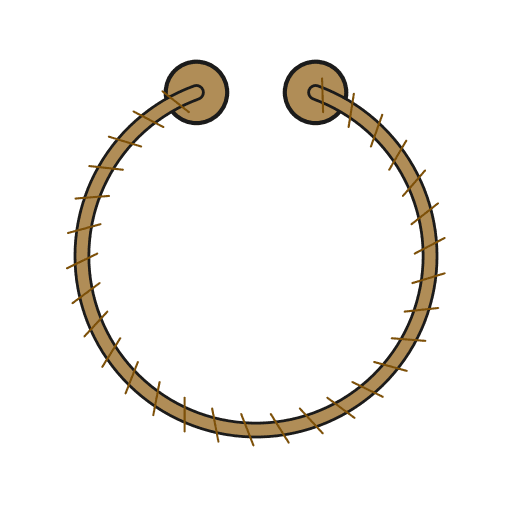
A bronze torc is made by casting a long rod, twisting it while hot to create the characteristic spiral pattern, then bending the twisted rod into a C-shape that fits around the neck. The terminals (ends) are hammered flat and curled into decorative finials, or cast separately and soldered on.

The twist is both decorative and structural — the spiral cross-section is stiffer than a plain round rod of the same weight, allowing the torc to spring open slightly when placed over the head and then grip the neck firmly.

中级
2-3 hours

说明

1

Cast a long bronze rod

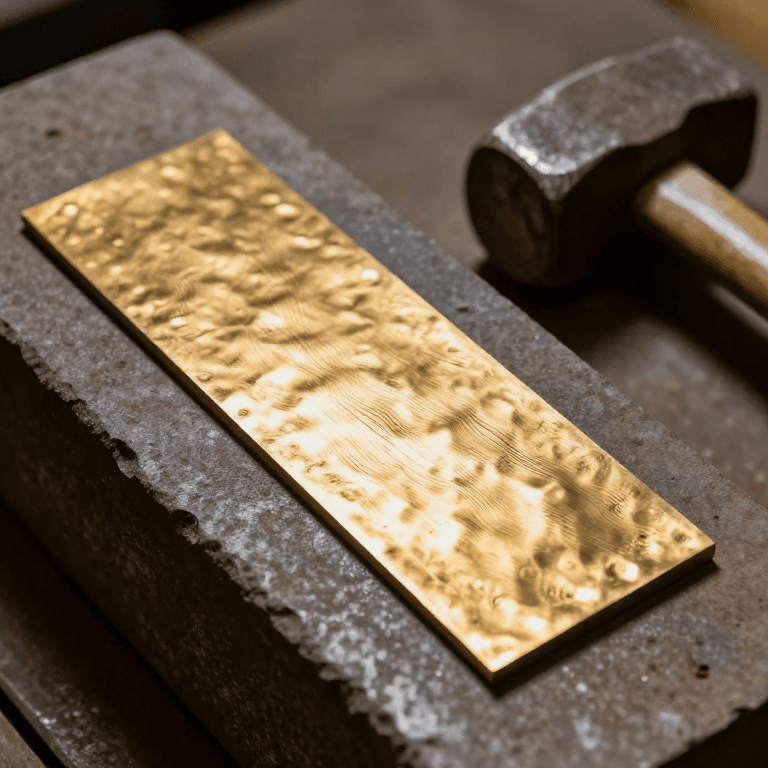
Carve a straight groove about 40 cm long and 8 mm wide in a flat stone slab. Pour molten bronze to fill the groove — about 200 g of metal. A square-section groove produces a rod that twists more visibly than a round one. Allow to cool completely and demould.

此步骤所需材料:

Copper Sheet (0.5-1mm)Copper Sheet (0.5-1mm)180
2

Hammer the rod to uniform cross-section

The cast rod will have slight irregularities from the mould surface. Hammer the entire length on a flat stone anvil, rotating 90 degrees between passes, to produce a uniform square cross-section about 6-7 mm per side. Anneal whenever the rod resists hammering.

所需工具:

HammerstoneHammerstone
Flat Stone SlabFlat Stone Slab
3

Anneal the rod for twisting

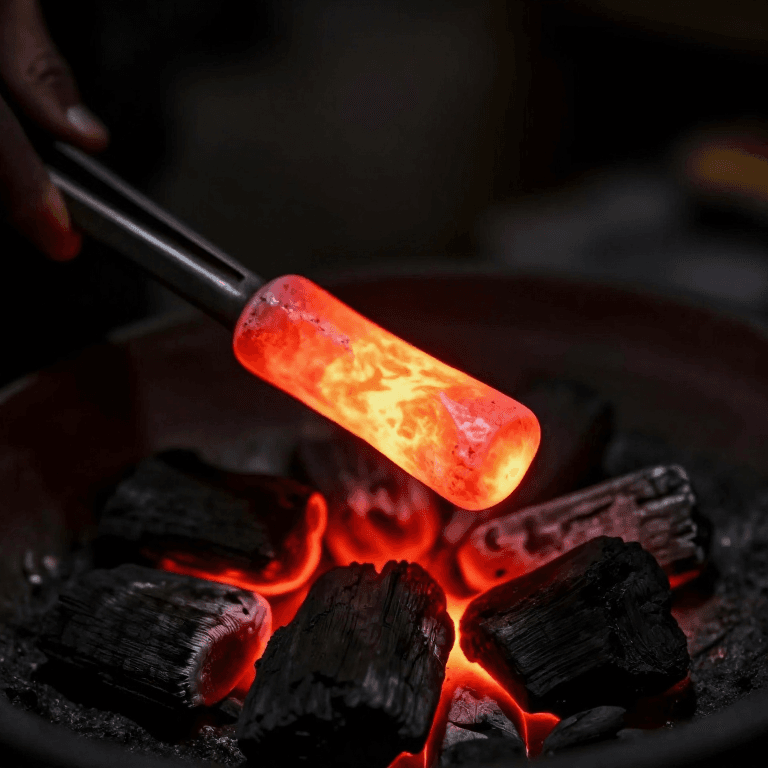
Heat the entire rod in a charcoal fire until it glows dull cherry red along its full length. The rod must be uniformly soft for the twist — a cold spot creates an uneven twist or a kink. Use a long fire bed and rotate the rod to heat evenly.

此步骤所需材料:

CharcoalCharcoal2 公斤

所需工具:

Long-Handled TongsLong-Handled Tongs
4

Twist the rod

While the rod is still hot and soft, clamp one end firmly (in a forked stick driven into the ground, or between two heavy stones). Grip the other end with tongs and twist slowly and evenly. Aim for about 1 full turn per 3 cm of length — tight enough to show a clear spiral pattern but not so tight that the rod kinks. Work quickly before the bronze cools and work-hardens. If it stiffens mid-twist, stop, re-anneal, and continue.
5

Straighten the twisted rod

Twisting often introduces slight bends and warps. While still warm, or after annealing again, lay the twisted rod on a flat surface and gently tap out any curves with a wooden mallet. The rod should lie flat and straight before bending into the torc shape. Rolling it under a flat board also helps straighten it.

所需工具:

Wooden MalletWooden Mallet
6

Bend into a neck ring

Anneal the straightened twisted rod. Bend it gradually around a log or large stone of roughly head diameter (about 15-18 cm across) to form a C-shape. The opening should be about 3-4 cm — wide enough to slip over the neck from the front. Bend slowly and evenly to avoid kinking. The twist pattern should remain uniform around the curve.
7

Form the terminals

The two ends of the torc are the terminals — the most visible part when worn. For a simple torc, hammer each end flat and curl it outward into a small spiral using pliers or by bending around a narrow rod. For a more elaborate torc, hammer the ends into flat discs, or cast separate decorative knobs and attach them by wrapping with fine bronze wire.
8

Polish and finish

Rub the entire torc with fine sand on a leather pad to remove scale and oxidation from the annealing steps. Polish the twisted body to a bright golden sheen. Pay extra attention to the terminals. A final rub with animal fat protects the surface and gives it the warm glow seen in museum examples. The finished torc should spring slightly when the opening is pulled apart, then grip the neck when released.

此步骤所需材料:

Fine SandFine Sand50
Animal Fat (Tallow)Animal Fat (Tallow)20

材料

4

所需工具

4

已连接蓝图材料

You can swap these in

Can't get one of the materials? Swap it for an equivalent — these work just as well.

CC0 公共领域

此蓝图以 CC0 协议发布。你可以自由复制、修改、分发和使用此作品,无需征得许可。

通过购买蓝图中的产品支持创客,他们将获得 创客佣金 (由供应商设定),或创建此蓝图的新版本并将其作为连接包含在你自己的蓝图中以分享收入。

讨论

(0)

登录 加入讨论

加载评论中...