艺术
美容与健康
工艺
文化与历史
娱乐
环境
食品与饮料
逆向工程
科学
体育
技术
可穿戴设备
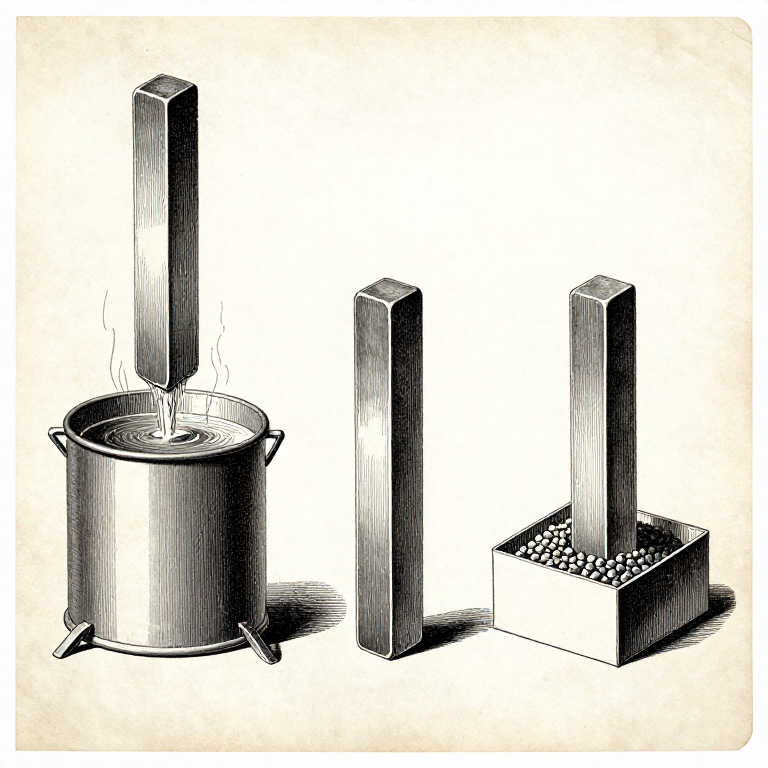


Cooling Is a Process Too: Still Air, Insulated, or Quenched
How something cools decides as much about its final state as how it was heated. The same steel, at the same temperature, becomes glass-hard, tough, or dead soft depending entirely on the rate it comes down.
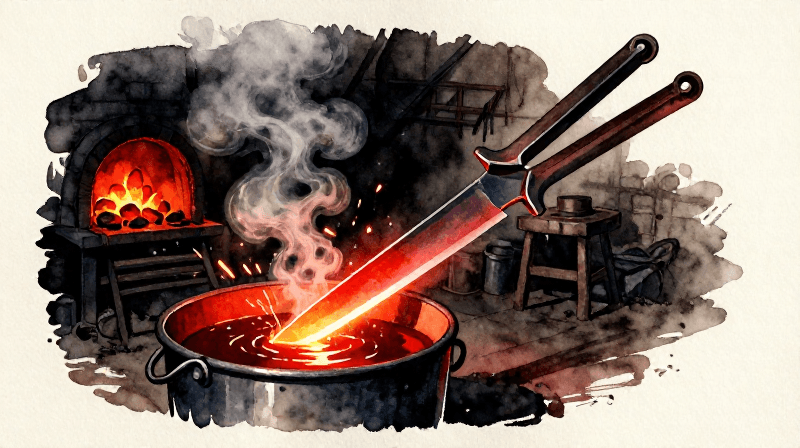
There are three speeds a workshop uses deliberately. QUENCHING is as fast as possible. NORMALISING is still air. ANNEALING is as slow as you can contrive, usually by burying the work in something insulating and leaving it overnight.
Choosing one is choosing the properties of the finished piece, and doing it by accident is how a part ends up too hard to file or too soft to hold an edge.
中级
3 hours
说明
1
1
The three rates and what each produces
The three rates and what each produces
QUENCH into water, brine or oil and the steel has no time to transform gradually — it traps into a hard, brittle structure that then must be tempered. The published heat-treatment blueprint is this sequence in full.
NORMALISE by standing the work in still air and it cools at a moderate rate, giving a fine even grain and a predictable, machinable state. This is the default after forging and the reset button for a piece with a confused history.
ANNEAL by burying it in ash, vermiculite or dry lime, or by switching off the furnace and letting it cool with the work inside. That gives the softest, most workable condition — which is what you want before machining, filing or cold bending, and what the steel supplier delivers bar stock in.
此步骤所需材料:
 低碳钢条2 个
 水1 个
水1 个所需工具:
 铁匠炉
铁匠炉 铁匠钳
铁匠钳 长袖皮手套
长袖皮手套2
2
Thin cools faster than thick, in the same piece
Thin cools faster than thick, in the same piece
The surface-to-volume argument from the heating rung runs unchanged in reverse. A thin edge in a quench cools far faster than a thick spine a centimetre away.
That is exploited deliberately: a blade hardens at the edge and stays tougher in the spine because of this alone, and clay-coating the spine — as Japanese swordmaking does — exaggerates the effect on purpose.
It is also a hazard. Sharp changes of section cool at very different rates, so they contract at different rates, and the stress from that is what cracks a piece in the quench. A generous radius at every corner is the fix, and it is designed in rather than added later.
此步骤所需材料:
低碳钢条1 个水1 个所需工具:
铁匠钳 放大目镜长袖皮手套
3
3
Slow cooling for ceramics and glass, and why
Slow cooling for ceramics and glass, and why
Glass and glazed ceramics must be cooled slowly through a particular range or they crack — sometimes on the way down, sometimes days later on the shelf.
The reason is the same temperature difference across the wall that the soak rung described, acting in reverse: the outside contracts while the inside is still hot and large, and the resulting tension exceeds what a brittle material can take. Metal yields and survives; ceramic and glass do not yield, so they break.
Annealing glass means holding it at a temperature where stress can relax, then cooling slowly enough that none builds again. It is the single most common reason an otherwise good piece fails, and the failure often happens long after the kiln is cold — which makes it hard to connect to its cause.
所需工具:
 窑炉
窑炉 高温窑
高温窑 带读数的热电偶
4
4
Never guess with something hot, and never put it down carelessly
Never guess with something hot, and never put it down carelessly
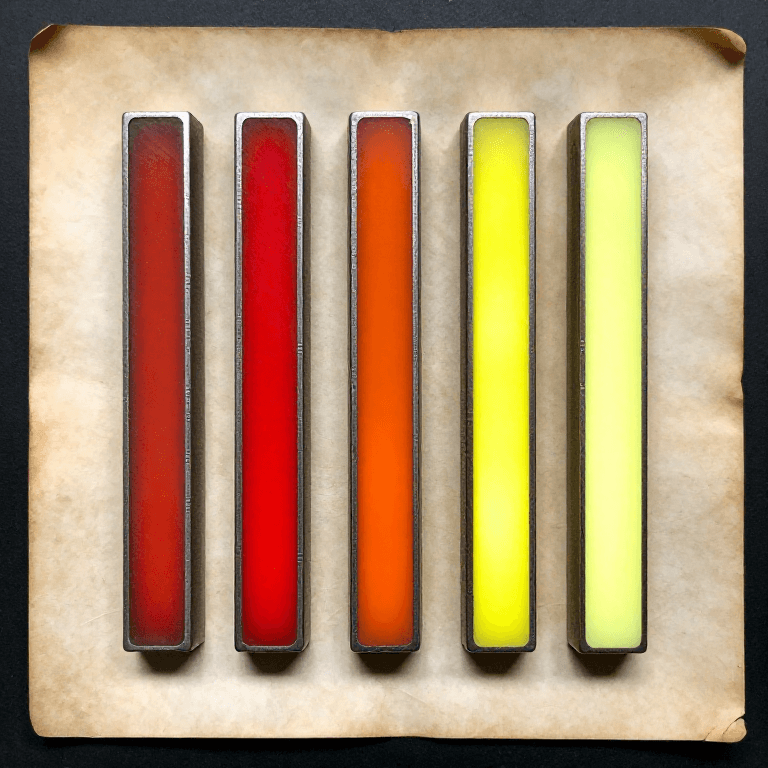
Hot steel looks identical to cold steel below about 500 °C, and it stays hot enough to cause a serious burn for a long time after it stops glowing.
Adopt one habit and keep it absolutely: anything that has been in the fire is hot until you have proved otherwise. Test by bringing a hand near it rather than touching, or by touching a scrap of paper to it and seeing whether it scorches. Put hot work in one designated place, always the same place, and tell anyone else in the shop where that is.
The same applies to quench tanks — water thrown out of one by a large hot piece is scalding — and to fire itself: a banked fire looks dead and is not. None of this is a reason not to do the work; it is the small set of habits that make it ordinary rather than risky.
此步骤所需材料:
水1 个所需工具:
长袖皮手套铁匠钳 锻造遮光护目镜
相关蓝图
这些蓝图共享知识——技术、材料或原理

CC0 公共领域
此蓝图以 CC0 协议发布。你可以自由复制、修改、分发和使用此作品,无需征得许可。
通过购买蓝图中的产品支持创客,他们将获得 创客佣金 (由供应商设定),或创建此蓝图的新版本并将其作为连接包含在你自己的蓝图中以分享收入。