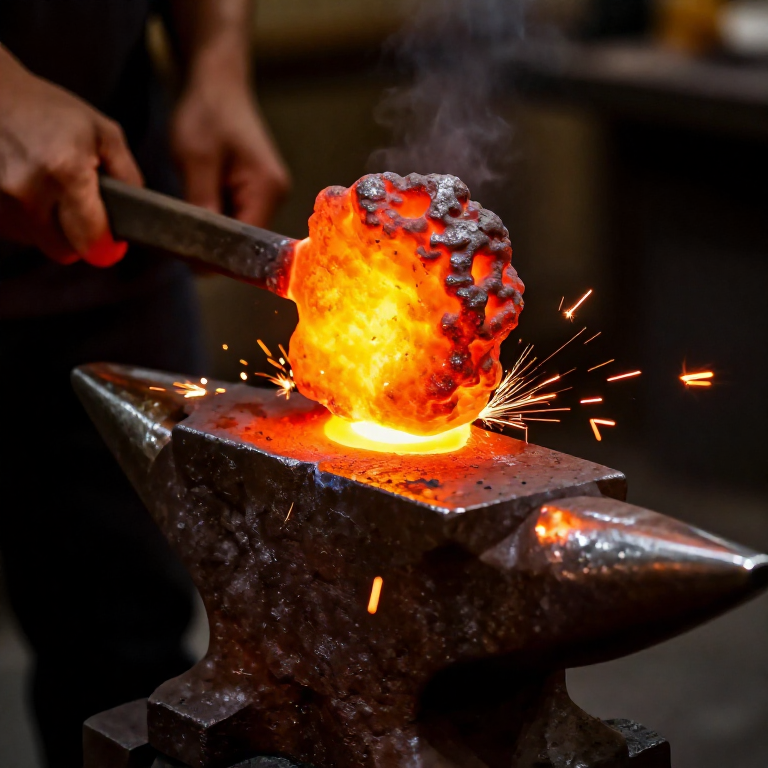


Consolidating an Iron Bloom — Hammering Sponge Iron into Wrought Iron
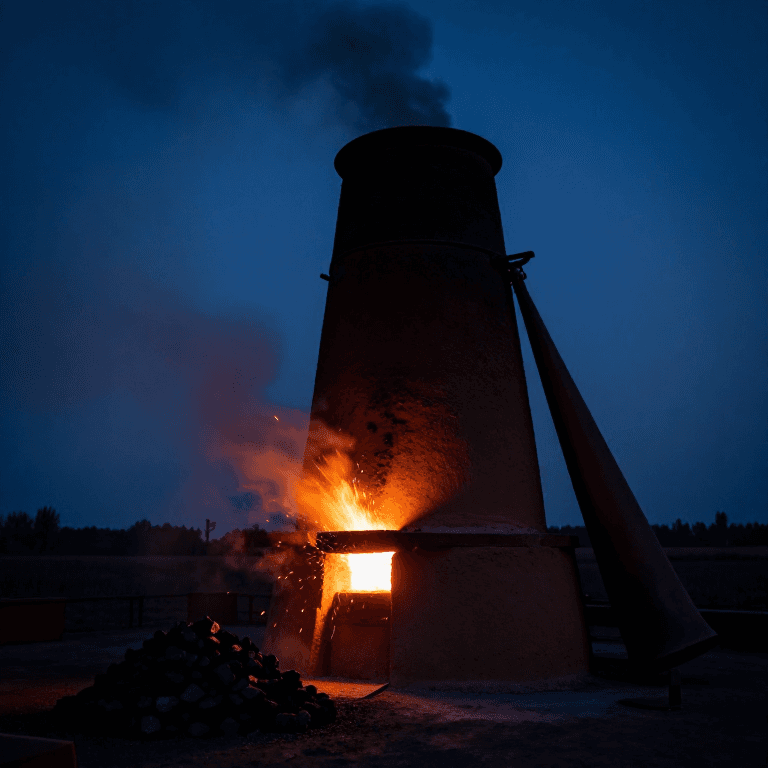
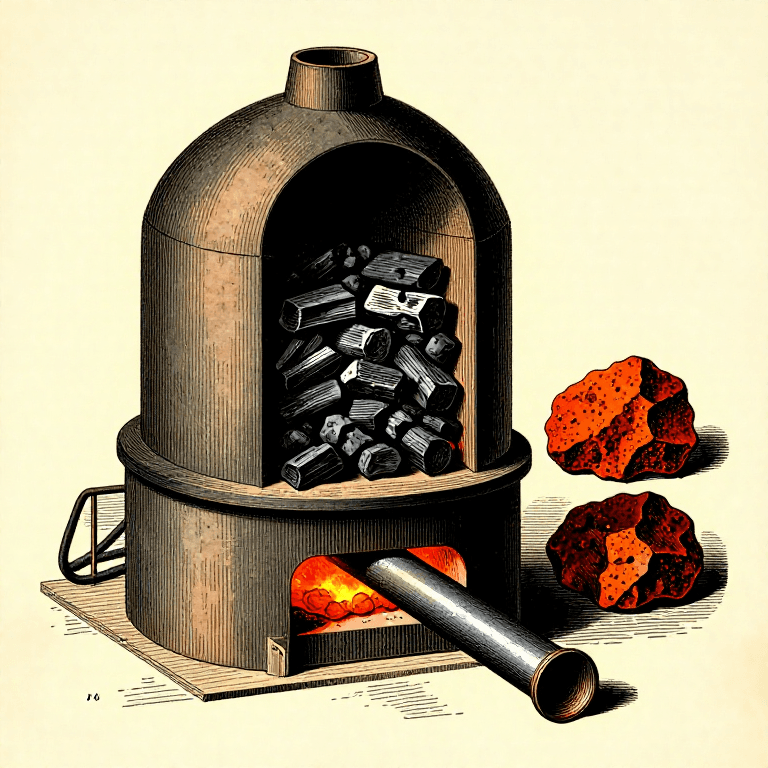
The bloomery furnace does not produce liquid iron — it produces a bloom: a spongy, porous mass of iron mixed with slag, charcoal fragments, and voids. This raw bloom is useless as a material until it is consolidated — repeatedly heated to welding temperature and hammered to squeeze out the slag and compact the iron into a dense, workable billet.
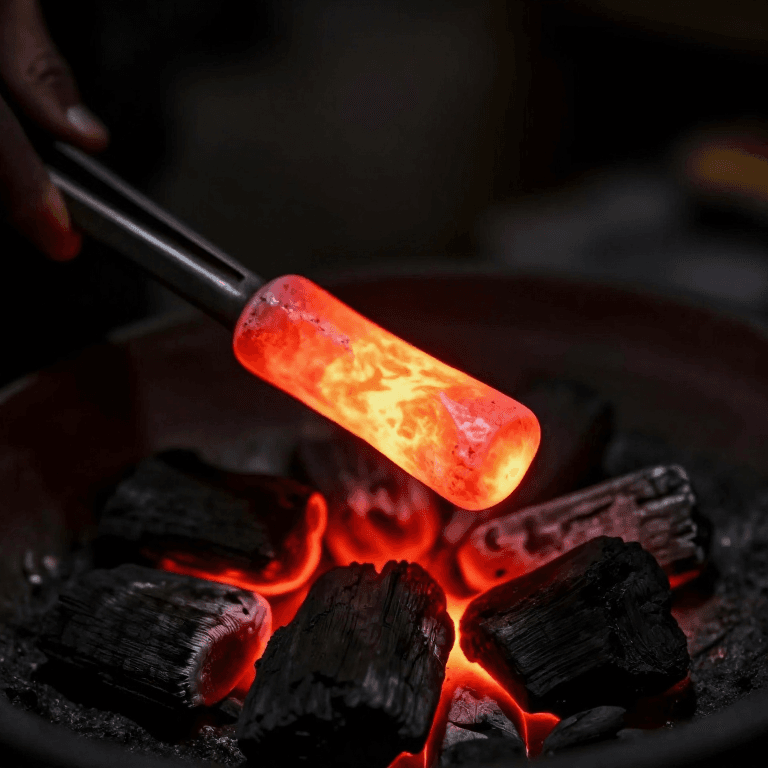
This is the critical step between smelting and smithing. Without consolidation, there are no iron tools. The process requires intense physical effort — the bloom must be worked at bright yellow heat (over 1,100 °C) while the slag is still liquid enough to be expelled by hammer blows. Each fold and weld refines the iron further, aligning the grain and removing impurities.
A single bloom from a small bloomery yields about 1-2 kg of consolidated wrought iron after losing 30-50% of its mass to expelled slag. This billet is the raw stock for every iron tool, weapon, and fastener.
说明
Extract the bloom from the furnace
Extract the bloom from the furnace
所需工具:
 长柄夹钳
长柄夹钳First compaction while still hot
First compaction while still hot
所需工具:
 石锤(打制石器)
 平整石板
平整石板Reheat in the forge
Reheat in the forge
此步骤所需材料:
 木炭5 公斤
Hammer at welding heat
Hammer at welding heat
Cut, fold, and re-weld
Cut, fold, and re-weld
Draw out into a billet
Draw out into a billet
Test the wrought iron quality
Test the wrought iron quality

相关蓝图
这些蓝图共享知识——技术、材料或原理

CC0 公共领域
此蓝图以 CC0 协议发布。你可以自由复制、修改、分发和使用此作品,无需征得许可。
通过购买蓝图中的产品支持创客,他们将获得 创客佣金 (由供应商设定),或创建此蓝图的新版本并将其作为连接包含在你自己的蓝图中以分享收入。