


Making a Bronze Torc — Twisting and Bending a Neck Ring
The torc (torque) was the defining ornament of Bronze Age and Celtic cultures — a rigid open-ended neck ring worn by warriors, chieftains, and gods in the art of the period. From Ireland to Persia, gold and bronze torcs symbolised status, wealth, and divine favour. Some of the most famous examples, like the Snettisham Great Torc, are among the finest metalwork ever produced.
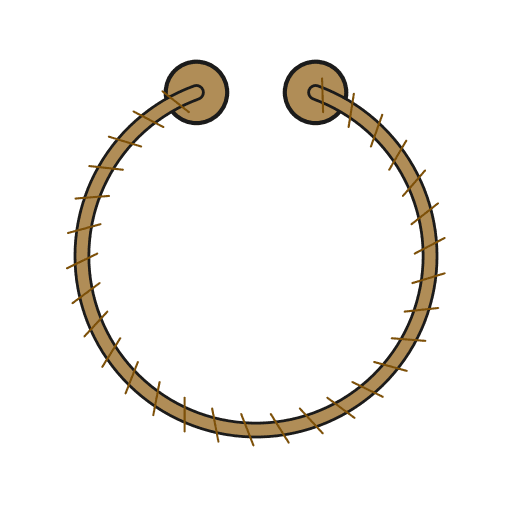
A bronze torc is made by casting a long rod, twisting it while hot to create the characteristic spiral pattern, then bending the twisted rod into a C-shape that fits around the neck. The terminals (ends) are hammered flat and curled into decorative finials, or cast separately and soldered on.
The twist is both decorative and structural — the spiral cross-section is stiffer than a plain round rod of the same weight, allowing the torc to spring open slightly when placed over the head and then grip the neck firmly.
Anweisungen
Cast a long bronze rod
Cast a long bronze rod
Materialien für diesen Schritt:
 Kupferblech180 g
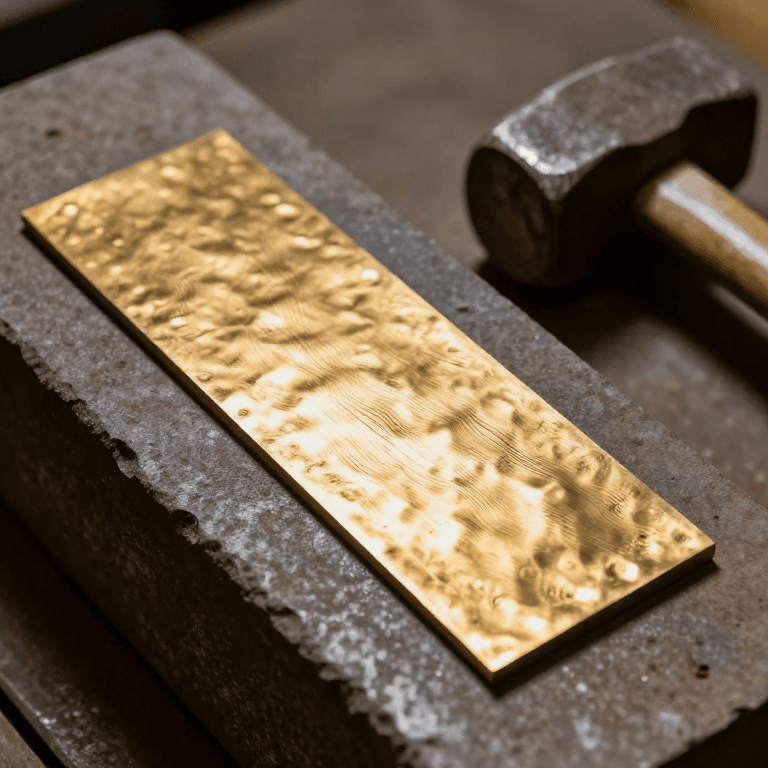
Hammer the rod to uniform cross-section
Hammer the rod to uniform cross-section
Benötigte Werkzeuge:
 Schlagstein
 Flache Steinplatte
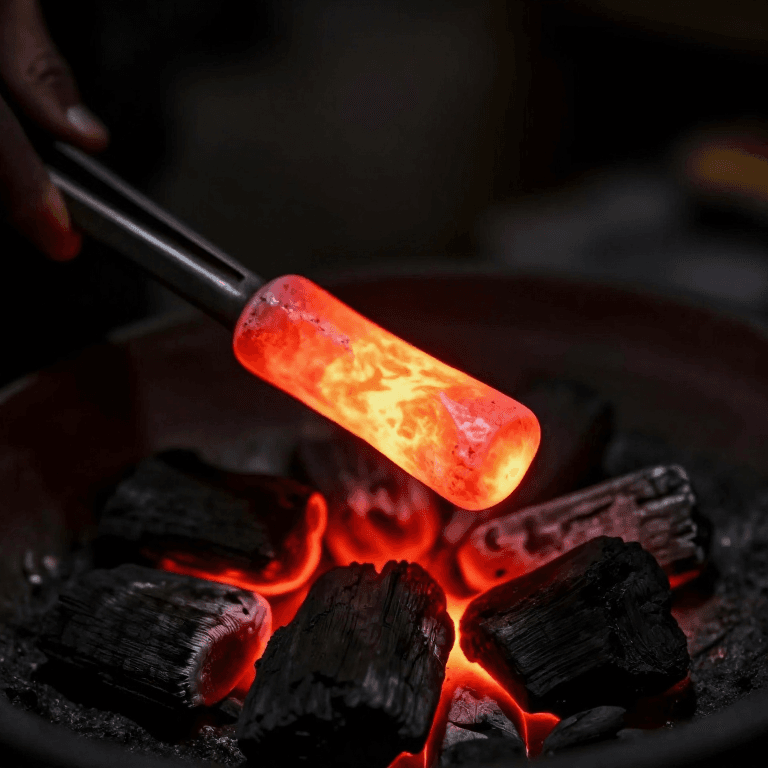
Anneal the rod for twisting
Anneal the rod for twisting
Materialien für diesen Schritt:
 Holzkohle2 kg
Benötigte Werkzeuge:
 Zange mit langem Griff
Twist the rod
Twist the rod
Straighten the twisted rod
Straighten the twisted rod
Benötigte Werkzeuge:
 Holzhammer (Klüpfel)
Bend into a neck ring
Bend into a neck ring
Form the terminals
Form the terminals
Polish and finish
Polish and finish
Materialien für diesen Schritt:
 Feiner Sand50 g
 Tierisches Fett (Talg)20 g
Materialien
4- 180 gPlatzhalter
- 2 kgPlatzhalter
- 50 gPlatzhalter
- Platzhalter
Benötigte Werkzeuge
4- Platzhalter
- Platzhalter
- Platzhalter
- Platzhalter
Materialien verbundener Blueprints
Dieser Bauplan stellt her
Verwandte Blueprints
Diese Blueprints teilen Wissen — Techniken, Materialien oder Prinzipien
CC0 Gemeinfrei
Dieser Blueprint ist unter CC0 veröffentlicht. Sie dürfen dieses Werk für jeden Zweck frei kopieren, ändern, verbreiten und verwenden, ohne um Erlaubnis zu fragen.
Unterstützen Sie den Maker, indem Sie Produkte über seinen Blueprint kaufen, wo er eine Maker-Provision von Anbietern festgelegt, verdient. Oder erstellen Sie eine neue Iteration dieses Blueprints und verbinden Sie ihn in Ihrem eigenen Blueprint, um Einnahmen zu teilen.