KUNST
SCHÖNHEIT & WELLNESS
HANDWERK
KULTUR & GESCHICHTE
UNTERHALTUNG
UMFELD
ESSEN & GETRÄNKE
REVERSE ENGINEERING
WISSENSCHAFTEN
SPORT
TECHNOLOGIE
WEARABLES
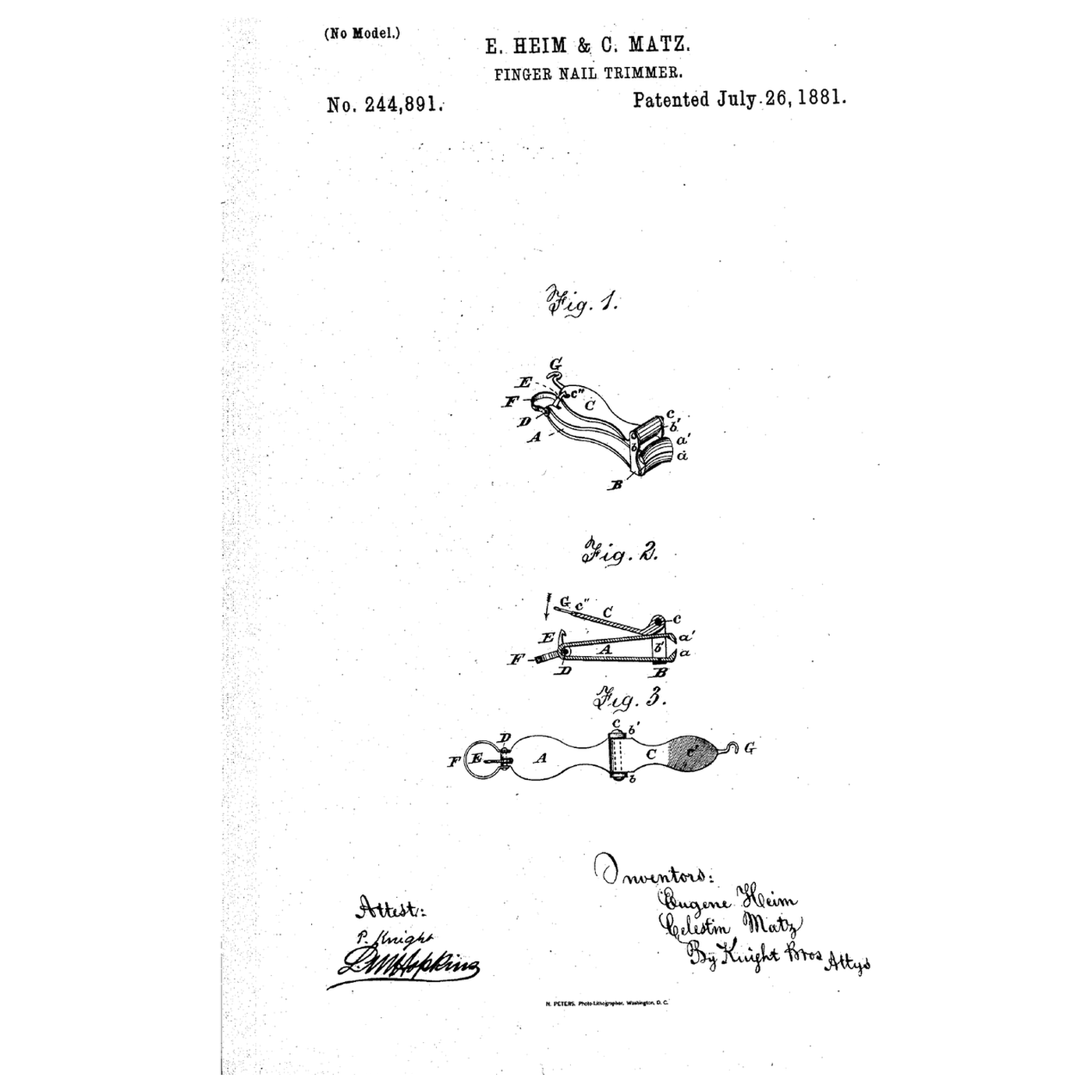


The Nail Clipper: Spring Jaws and a Cam Lever
Fingernails used to be pared with a knife or small scissors. A clipper nips the nail between two edges that meet, driven by a lever that multiplies the thumb's force.
Eugene Heim and Celestin Matz of Cincinnati filed US 244,891 on 9 June 1881; it is dated 26 July 1881. Their finger-nail trimmer is a single plate of spring steel bent into a U so its two in-turned cutting edges stand apart; a yoke on one jaw carries a lever with a cam-shaped head that forces them together. The lever's back is roughened as a file, its end is a hook for buttoning gloves, and a catch and a bow let it fold for a watch-chain.
This rung works out the lever's advantage and the cost of spring jaws, and takes a modern clipper apart to find the same parts.
Anfänger
About 2 hours
Anweisungen
1
1
Cam ratio and spring jaws
Cam ratio and spring jaws
Jupyter-Notebook wird geladen …
2
2
A strip of steel that springs back
A strip of steel that springs back
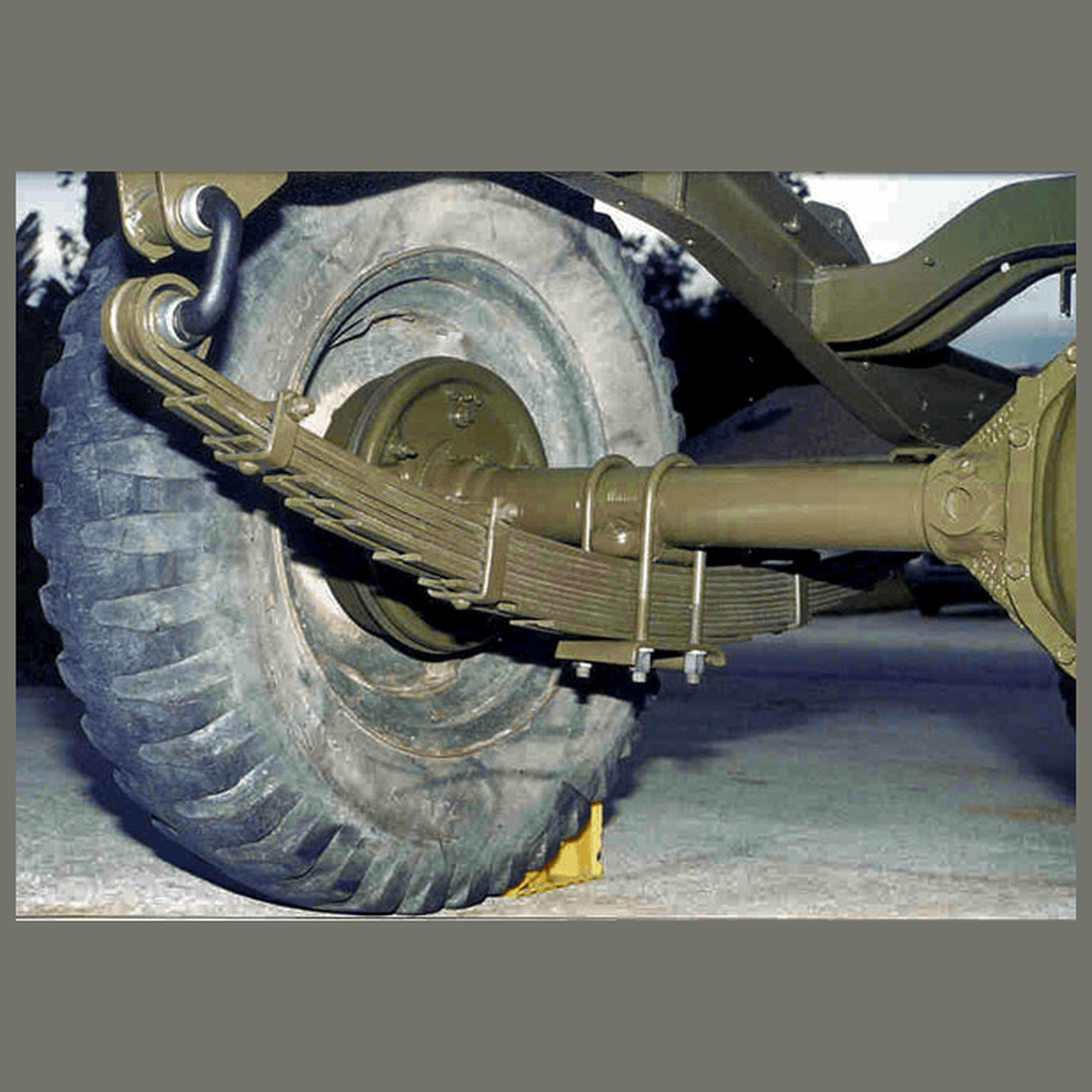
The U of spring steel is a leaf spring bent back on itself. The embedded blueprint explains how such a spring stores and returns force.
3
3
Read US 244,891
Read US 244,891
Their device "consists, essentially, of a pair of nipping-jaws composed of a single plate of spring-steel so formed and bent as to bring its cutting-edges in opposition and nearly in contact", with "a yoke secured to one jaw" giving a pivot to "a cam-headed lever, whose operation presses the jaws forcibly together."
Plate A is bent to a U so the jaws "stand normally some distance asunder". On the yoke B pivots the lever C, whose depression forces the jaws together until they meet; on release, "the resilience of the jaws causes their automatic separation". Part of the lever's back is grooved or roughened "to constitute a file or rasp"; its end G is a hook "suitable for buttoning gloves"; a clasp E holds the lever closed and a bail F hangs it from a watch-chain.
They note earlier trimmers with two hinged jaws held open by a spring and closed by the thumb and finger, "and we therefore disclaim invention, broadly"; they claim the one-piece jaws closed by a cam-headed lever.
4
4
Take a clipper apart and measure it
Take a clipper apart and measure it
Take a lever-type nail clipper apart by pulling out its pin. Identify the U-shaped jaws, the lever and the part of it that acts as a cam, and the pin that is the pivot. Measure with the caliper the lever length from the pivot, how far the jaws close, and how far the lever's end travels, and work out the ratio.
Reassemble it. Hang weights from the lever's end over a strip of card in the jaws until it cuts, and compare the force with the notebook. Check the jaw edges under a hand lens: they must meet along their whole length.
Materialien für diesen Schritt:
 Karton1 Stück
Benötigte Werkzeuge:
 Digitaler Messschieber 6 Zoll
 Handlupe 10-fach
 Federkraftmesser
 Flachzange
 Nagelknipser (Probenentnahme)
5
5
A nail clipper that tears
A nail clipper that tears
Nail clipper troubleshooting.
Flow
Loading...
6
6
History and honest limits
History and honest limits
**Eugene Heim and Celestin Matz** of Cincinnati filed US 244,891 on 9 June 1881; it is dated 26 July 1881. They claim jaws of a single integral piece of steel, held open by their resilience and closed by a cam-headed lever.
**Honest limits.** The nail-cutting force, jaw stiffness and friction efficiency in the notebook are assumptions; the patent gives no dimensions.
Benötigte Werkzeuge
5- Platzhalter
- Platzhalter
- Platzhalter
- Platzhalter
- Platzhalter
Verwandte Blueprints
Diese Blueprints teilen Wissen — Techniken, Materialien oder Prinzipien


CC0 Gemeinfrei
Dieser Blueprint ist unter CC0 veröffentlicht. Sie dürfen dieses Werk für jeden Zweck frei kopieren, ändern, verbreiten und verwenden, ohne um Erlaubnis zu fragen.
Unterstützen Sie den Maker, indem Sie Produkte über seinen Blueprint kaufen, wo er eine Maker-Provision von Anbietern festgelegt, verdient. Oder erstellen Sie eine neue Iteration dieses Blueprints und verbinden Sie ihn in Ihrem eigenen Blueprint, um Einnahmen zu teilen.