ART
BEAUTY & WELLNESS
CRAFT
CULTURE & HISTORY
ENTERTAINMENT
ENVIRONMENT
FOOD & DRINKS
REVERSE ENGINEERING
SCIENCES
SPORTS
TECHNOLOGY
WEARABLES
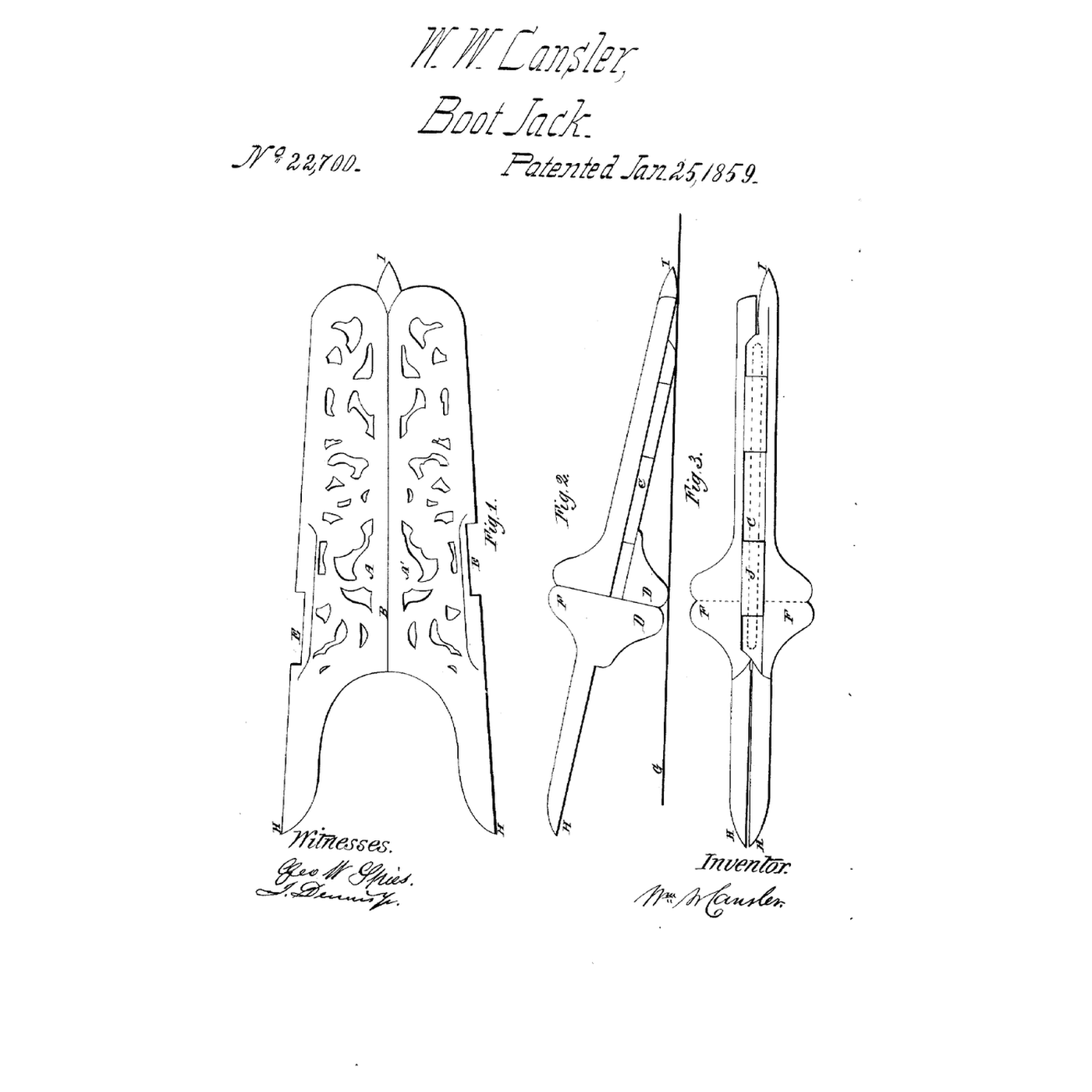


The Folding Door-Stop Bootjack: Pointed Prongs That Also Bar the Door
A bootjack is bulky to pack, and a traveller would like the door of a room to stay shut at night.
William W. Cansler of Baltimore received US 22,700, dated 25 January 1859, for a metallic bootjack "with pointed prongs at one end and a point at the other, so as to serve as a brace to fasten the door of a room. It is also provided with a hinge to fold it lengthwise when packed for traveling." Set with the prongs on the floor and the point against a door, it serves "to prevent the door from being opened, thus making it serve two purposes—to draw boots and fasten doors".
This rung works out why the prongs must bite, then makes a folding jack from hardwood with a hinge, flange legs and nail prongs, and pushes on a door with it set.
Beginner
About 3 hours
Instructions
1
1
Strut angle and grip on the floor
Strut angle and grip on the floor
Loading Jupyter Notebook...
2
2
The jack before it
The jack before it
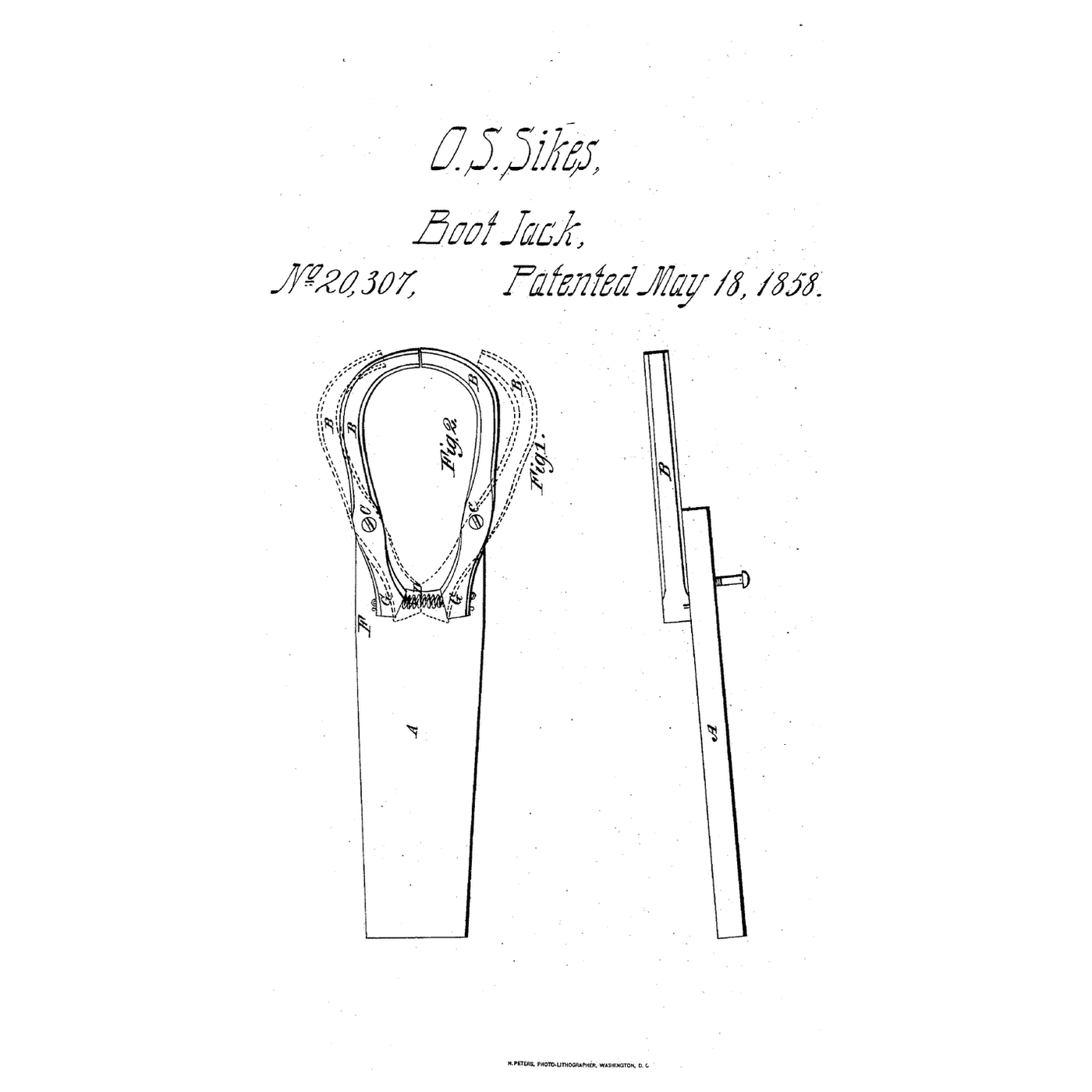
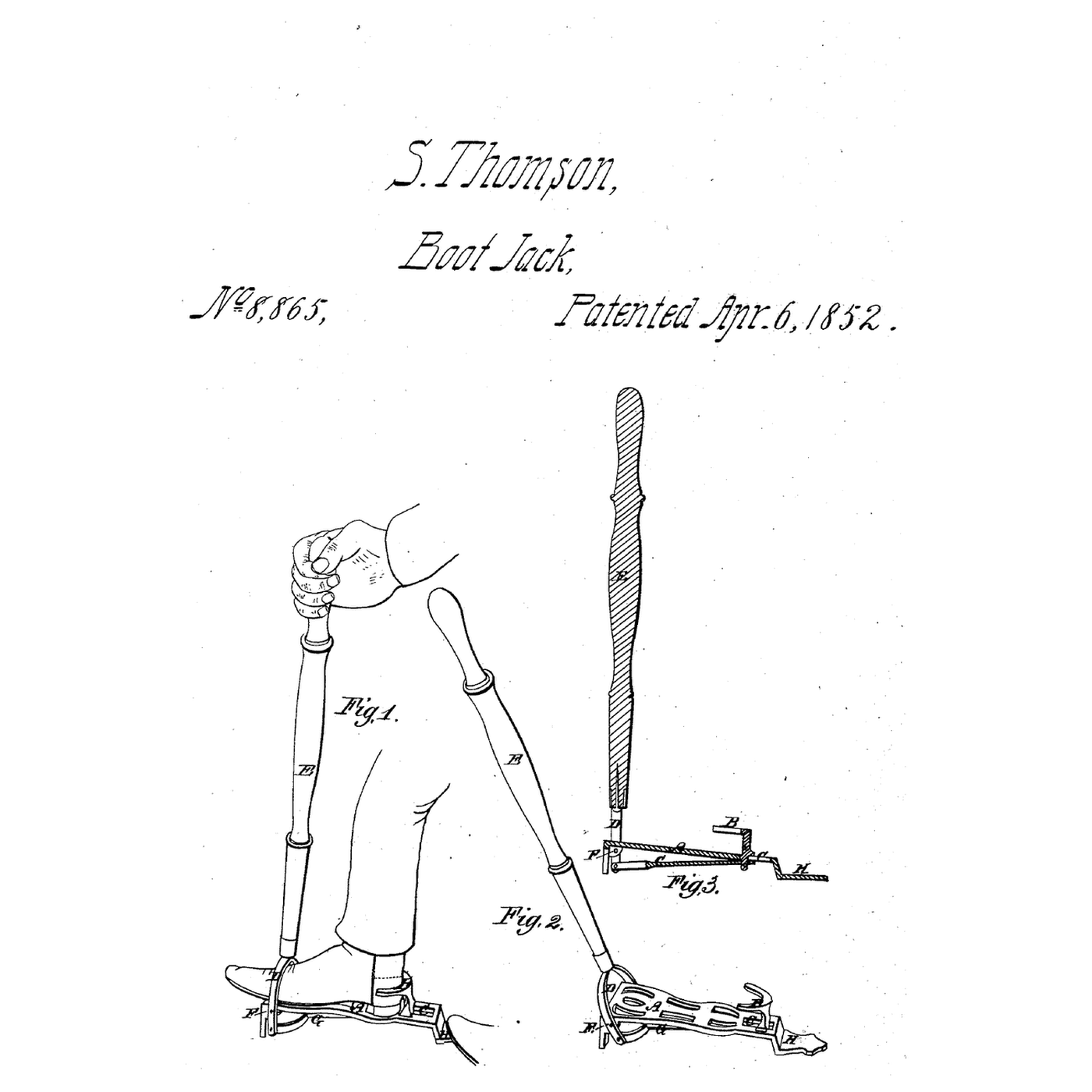
The embedded blueprint builds a wooden jack with a toe bar. Cansler's is two metal halves that fold, and its ends are pointed for a second job.
3
3
Read US 22,700
Read US 22,700
"In the accompanying drawings, A A′ represent the two parts of my metal boot-jack, made in the form shown in Fig. 1 and connected in the center under the line B by the hinge C. (Shown in Figs. 2 and 3.) Each part is provided with a flange D D, Fig. 2, which serve as legs to hold up the crotched-end when the boot-jack is used."
"This boot-jack may be cast of brass or some other compositions of metals, or of iron and converted into malleable iron by the mode usually practiced."
4
4
Build the jack and bar a door
Build the jack and bar a door
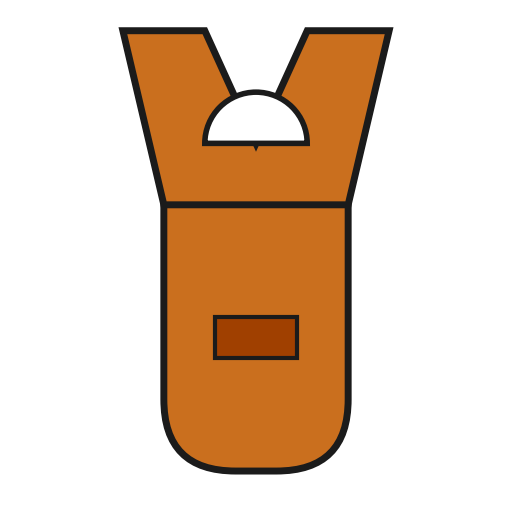
**Halves.** Saw two halves 35 × 6 cm from hardwood board, each with half of a heel notch at one end, and join them along their long edge with a butt hinge underneath so they fold together.
**Legs.** Screw a block under each half near the notch end so that when unfolded the notch end stands up; folded, the blocks lie side by side.
**Points.** Drive two nails part way into the notch ends of the prongs, cut their heads off and file them to points. Drive one into the other end, cut and file it to a conical point.
**Test.** Take a boot off with it. Then set it at about 45° with the prongs on the floor and the point against a door that opens towards it, checking the angle with the protractor. Push the door with the spring scale and note the force it holds; do it on a smooth floor with the prongs taped over, and with them bare.
Materials for this step:
 Hardwood Board1 piece
 Butt Hinge1 piece
 Hardwood Block1 piece
 Wood Screws8 pieces
 Nails3 pieces
Tools needed:
 Hand Saw
 Coping Saw
 Cordless Drill
 Drill Bit Set
 Screwdriver Set
 Hammer
 Diagonal Cutting Pliers
 Files (Hand File)
 Protractor
 Force Meter (Spring Scale)
 Masking Tape
 Rubber Boots
 Boot Jack
 Clear Safety Glasses
5
5
A jack that slides, folds under load or will not open
A jack that slides, folds under load or will not open
Folding door-stop bootjack troubleshooting.
Flow
Loading...
6
6
History and honest limits
History and honest limits
**William W. Cansler** of Baltimore received US 22,700, dated 25 January 1859. His pin could be cast in place as common butt hinges were, the area between the sides could carry scroll work, and a leather or paper case made it easy to carry. His claim is the metal folding bootjack with pointed prongs and a pointed end.
**Honest limits.** Hardwood, a butt hinge and filed nails stand in for his cast brass or malleable iron. The notebook treats the jack as a straight strut and the floor as rigid; its force and angles are examples. Your door test is the result.
Materials
5- 1 piecePlaceholder
- 1 piecePlaceholder
- 1 piecePlaceholder
- 8 piecesPlaceholder
- 3 piecesPlaceholder
Tools Required
14- Placeholder
- Placeholder
- Cordless Drill3% commissionMagento Legacy Storeships internationallyPlaceholder
- Placeholder
- Placeholder
- Placeholder
- Placeholder
- Placeholder
- Placeholder
- Placeholder
- Placeholder
- Placeholder
- Placeholder
- Placeholder
This blueprint makes
Related Blueprints
These blueprints share knowledge with this one — techniques, materials, or principles that connect them in the learning graph.

CC0 Public Domain
This blueprint is released under CC0. You are free to copy, modify, distribute, and use this work for any purpose, without asking permission.
Support the Maker by purchasing products through their Blueprint where they earn a Maker Commission set by Vendors, or create a new iteration of this Blueprint and include it as a connection in your own Blueprint to share revenue.