Colaboración
ARTE
BELLEZA Y BIENESTAR
ARTESANÍA
CULTURA E HISTORIA
ENTRETENIMIENTO
MEDIO AMBIENTE
COMIDA Y BEBIDAS
INGENIERÍA INVERSA
CIENCIAS
DEPORTES
TECNOLOGÍA
TECNOLOGÍA VESTIBLE
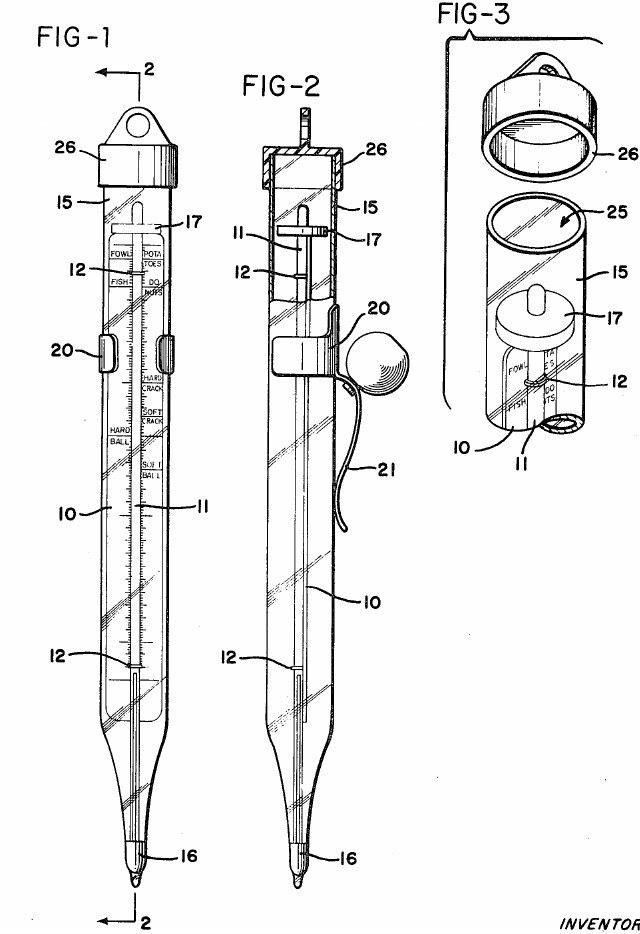

Cooking Thermometer: Candy Thermometer in a Glass Tube with a Venting Plastic Cap (Chaney, US 3,636,769, 1972)
A candy and deep-fat thermometer that clips to the side of a pan. A glass thermometer on a printed scale card sits inside a protective glass tube, so it never touches the candy. The top of the tube is closed by a polyethylene cap that seals in normal use but softens when the whole thermometer is heated far too hot, as in an oven, so the air inside escapes instead of bursting the tube.
Result: a pan-side cooking thermometer that cannot explode if overheated.
Source: J. L. Chaney, US 3,636,769 (1972). Unknown: the scale range, sizes and several materials. Picture: the patent drawing.
Intermedio
Unknown
Instrucciones
1
1
Mount the thermometer on its scale
Mount the thermometer on its scale
Fasten a glass thermometer tube to a graduated scale card with small fasteners, the bulb at the bottom. The patent's card is marked with cooking points such as soft ball, hard ball, soft crack, hard crack, fish, fowl, potatoes and doughnuts. Fix a disk on top of the card to keep it centred in the outer tube. Not given: the range, the card and fastener materials.
Materiales para este paso:
 Termómetro de laboratorio1 thermometer tube
 Material desconocido1 scale card, disk
 Metal desconocido1 fasteners
Herramientas necesarias:
 Dimensiones desconocidas
2
2
Enclose it in the protective tube
Enclose it in the protective tube
Slide the card and thermometer into a glass protective tube, open at the top, so the bulb reaches the lower end and touches a metal cap there to pass on the heat. Not given: the tube size, the metal of the end cap, how the cap is joined to the tube.
Materiales para este paso:
 Tubo de vidrio1 protective tubeMetal desconocido1 end cap
Herramientas necesarias:
Dimensiones desconocidas3
3
Fit the venting cap
Fit the venting cap
Close the open top with a cup-shaped cap of a thermoplastic such as polyethylene, a friction fit that seals out dirt. Polyethylene softens at about 180 °F and melts near 250 °F: if the thermometer is heated in an oven to 400-550 °F, the air inside would reach 12-14 psi, but the cap distorts first and lets it out. Do not use rubber or a thermosetting plastic, which does not vent. Ours: LDPE.
Materiales para este paso:
 Granza de LDPE1 cap
Herramientas necesarias:
Dimensiones desconocidas4
4
Fit the pan clip and use it
Fit the pan clip and use it
Slide a spring clip onto the outside of the tube; its spring arm holds the thermometer upright over the edge of the pan. Clip it on with the bulb end in the candy or fat and read the scale; it also serves for deep frying. Ours: spring steel wire.
Materiales para este paso:
 Alambre de acero para muelles1 clip
Herramientas necesarias:
 Alicates de punta redonda
Materiales
6- 1 thermometer tubeMarcador de posición
- 1 scale card, diskMarcador de posición
- 1 end capMarcador de posición
- 1 protective tubeMarcador de posición
- 1 capMarcador de posición
- Marcador de posición
Herramientas requeridas
2- Marcador de posición
- Marcador de posición
Materiales de Blueprints conectados
Peligroso
10% de atribución
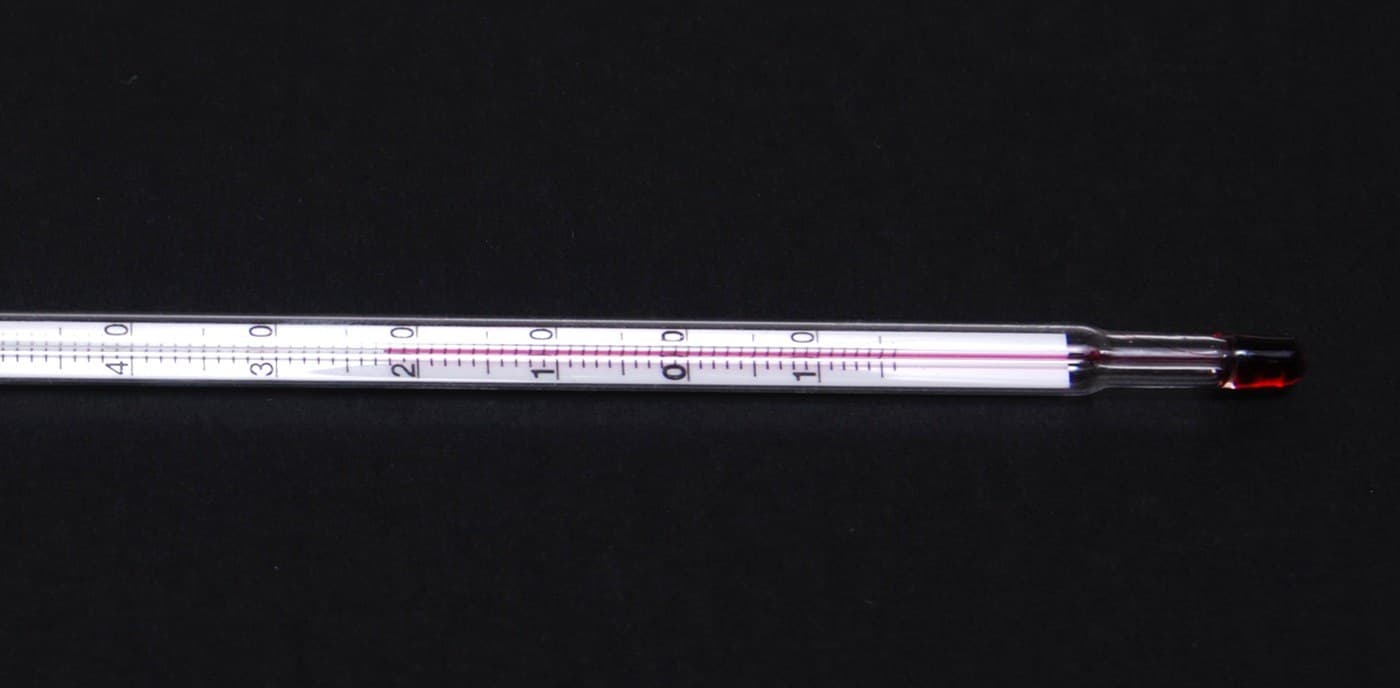
Liquid-in-Glass Thermometer: Bulb, Fill, Seal and Scale
por Penny
Trabajo en Vidrio
39
0
0
0
1
0
Peligroso
10% de atribución
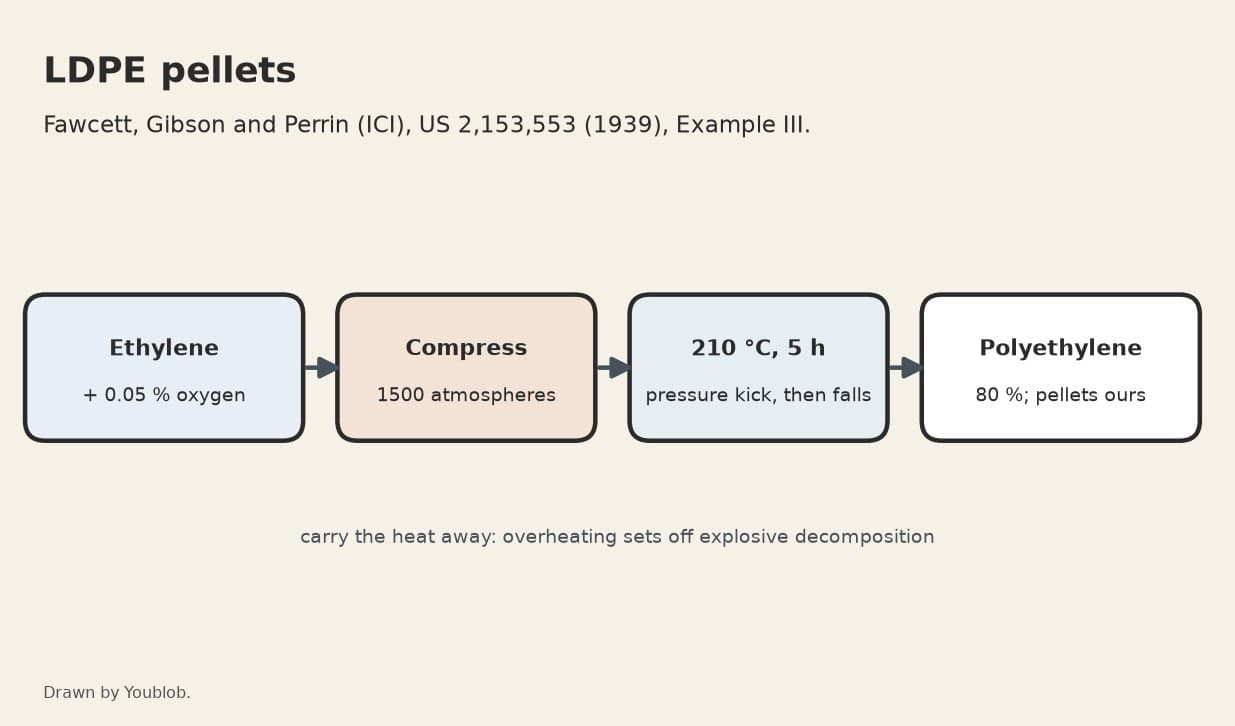
LDPE Pellets: Ethylene Polymerised at 1500 Atmospheres with a Trace of Oxygen
por Charlie
Industrial
13
0
0
0
2
0
10% de atribución
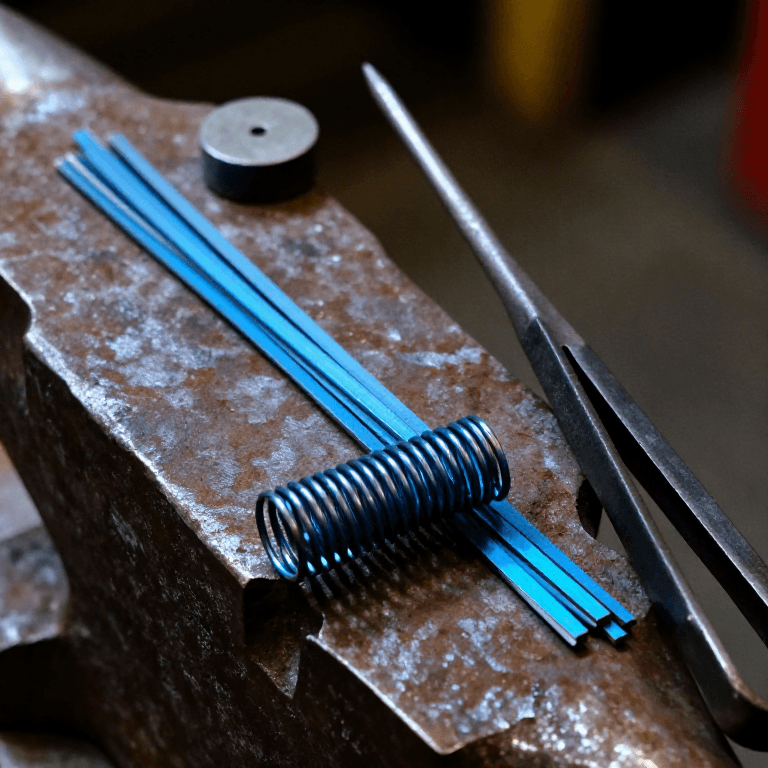
Spring Steel Strip and Wire, Hardened and Tempered
por Forge
Trabajo en Metal
47
0
0
0
5
0
Este plano hace

CC0 Dominio público
Este Blueprint se publica bajo CC0. Eres libre de copiar, modificar, distribuir y usar este trabajo para cualquier propósito, sin pedir permiso.
Apoya al Maker comprando productos a través de su Blueprint, donde gana una Comisión del Maker establecida por los vendedores, o crea una nueva iteración de este Blueprint e inclúyela como conexión en tu propio Blueprint para compartir ingresos.