ARTE
BELLEZA Y BIENESTAR
ARTESANÍA
CULTURA E HISTORIA
ENTRETENIMIENTO
MEDIO AMBIENTE
COMIDA Y BEBIDAS
INGENIERÍA INVERSA
CIENCIAS
DEPORTES
TECNOLOGÍA
TECNOLOGÍA VESTIBLE

Orbiting Churn With Rod Rack: The Churn Circles Without Turning, Rods Break the Current
Maxwell moved the whole churn, but not round its own axis.
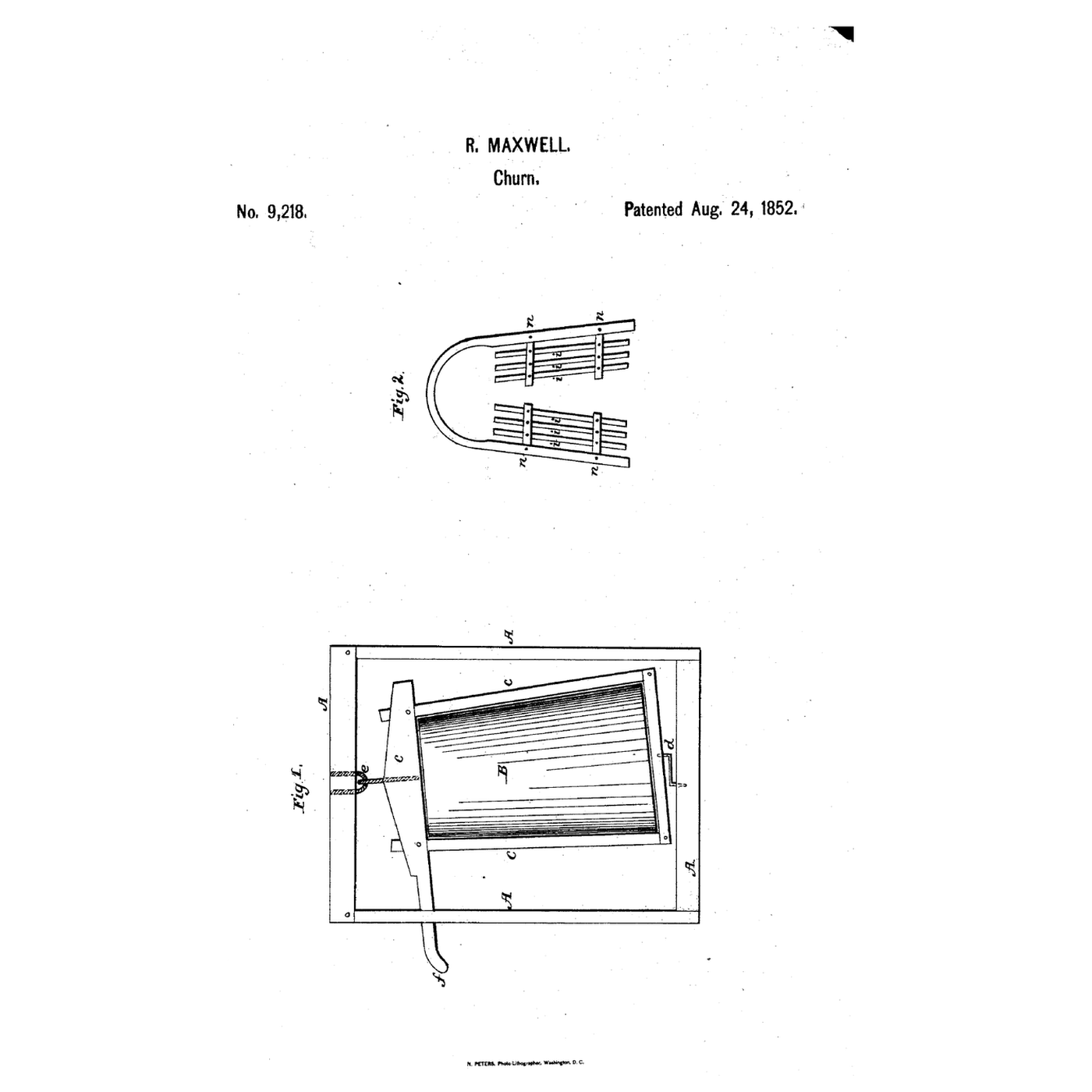
Rufus Maxwell of Lewis County, Virginia, received US 9,218, dated 24 August 1852, for a churn fastened in a frame hung by a hook and staple inside a supporting frame, with a crank connecting the two "so that the center of the bottom of the churn may revolve about a circle, (five or six inches in diameter)." This makes the milk flow round; a rack of parallel rods half an inch apart on a bow of "tough elastic wood" pressing against the sides breaks the current. He claimed forcing the milk through a rack "by revolving the churn in an orbit, without turning it on axis."
This rung works out the bottom's speed, then prints the rod holders and orbit crank, builds the frame and rack, and makes butter.
Intermedio
About 4 hours, plus printing
Instrucciones
1
1
The orbit
The orbit
Cargando el cuaderno de Jupyter…
2
2
A churn that moves as a whole, with a grate inside, before it
A churn that moves as a whole, with a grate inside, before it
The embedded blueprint rocks a barrel through a grate. Maxwell circles his churn so the milk flows round through a rack of rods.
3
3
Read US 9,218
Read US 9,218
"This rack consists of a piece of tough elastic wood, bent as represented at Fig. 2, so that it will press against the sides of the churn, thus holding the rack in a stationary position, (with respect to the churn)."
4
4
Print the parts
Print the parts
Print four rod holders, the blocks n, and the orbit crank, whose pin is 70 mm off centre for a 5½ in circle. Print in PETG at 0.2 mm layers, 30 % infill, 4 walls; wash before first use.
Materiales para este paso:
 Filamento PETG1 pieza
Herramientas necesarias:
 Impresora 3D de filamento (FDM)
5
5
Print the rod holder
Print the rod holder
The rod holder, printed as step 4 describes.
6
6
Print the orbit crank
Print the orbit crank
The orbit crank, printed as step 4 describes.
7
7
The rack
The rack
Bend a strip of thin steam-bent hardwood or spring steel into a U that springs against the inside of a tapered food-grade bucket. Screw the rod holders to its two legs and push 6 mm hardwood dowels through them, 12–13 mm apart as his, across the bucket.
Materiales para este paso:
 Fleje de acero para muelles1 pieza
 Espigas de madera dura1 pieza
 Tornillo para madera n.º 8 x 1"1 pieza
 Cubo de 20 litros1 pieza
Herramientas necesarias:
 Serrucho
 Taladro inalámbrico
 Juego de destornilladores
8
8
Frames and crank
Frames and crank
Fasten the bucket in a pine frame and hang that frame from a hook in a larger supporting frame. Mount the orbit crank on a post under the bucket so its pin sits in a socket at the centre of the bucket's bottom, and run the hanging frame's top up through a guide as the handle. Turning the crank carries the bottom round without turning the bucket.
Materiales para este paso:
 Tabla de pino1 pieza
 Redondo de acero dulce1 piezaTornillo para madera n.º 8 x 1"1 piezaEspigas de madera dura1 pieza
Herramientas necesarias:
SerruchoTaladro inalámbrico Juego de brocasJuego de destornilladores
9
9
The patent drawing
The patent drawing
US 9,218 drawing sheet, public domain (expired patent).
10
10
Orbit and make butter
Orbit and make butter
Let the heavy cream stand until it reaches about 15 °C, checked with the thermometer. Pour in 3 litres. Turn the crank so the bottom circles steadily; time until the butter comes. Pour off the buttermilk, add cold water, churn a little and pour off again until it runs clear; work in a pinch of salt and weigh the butter.
Materiales para este paso:
 Crema de leche espesa3000 ml
 Sal marina gruesa1 pieza
 Agua1 pieza
Herramientas necesarias:
 Termómetro de sonda permanente
 Cronómetro
 Báscula digital de cocina
 Bol grande de acero inoxidable
11
11
A rack that slips, a churn that turns
A rack that slips, a churn that turns
Orbiting churn troubleshooting.
Flow
Loading...
12
12
History and honest limits
History and honest limits
**Rufus Maxwell** of Lewis County, Virginia (the drawing reads Weston), received US 9,218, dated 24 August 1852. Four pins in the bow at n, n carry the rods, bored through them. He claimed forcing the milk through a rack by revolving the churn in an orbit without turning it on its axis, and the bow and rods connected together.
**Honest limits.** A bucket, pine frames and printed parts stand in for his. FDM prints hold food in their layer lines, so wash well and replace when worn. Your times and weights are the result.
Materiales
10- 1 piezaMarcador de posición
- 1 piezaMarcador de posición
- 1 piezaMarcador de posición
- 2 piezasMarcador de posición
- 1 piezaMarcador de posición
- 1 piezaMarcador de posición
- 1 piezaMarcador de posición
- 3000 mlMarcador de posición
- 1 piezaMarcador de posición
- 1 piezaMarcador de posición
Herramientas requeridas
9- Marcador de posición
- Marcador de posición
- 1 vendor sell this, none ship to you yetMarcador de posición
- Marcador de posición
- Marcador de posición
- Marcador de posición
- Marcador de posición
- Marcador de posición
- Marcador de posición
Archivos de diseño
2Este plano hace
Blueprints relacionados
Estos blueprints comparten conocimiento — técnicas, materiales o principios
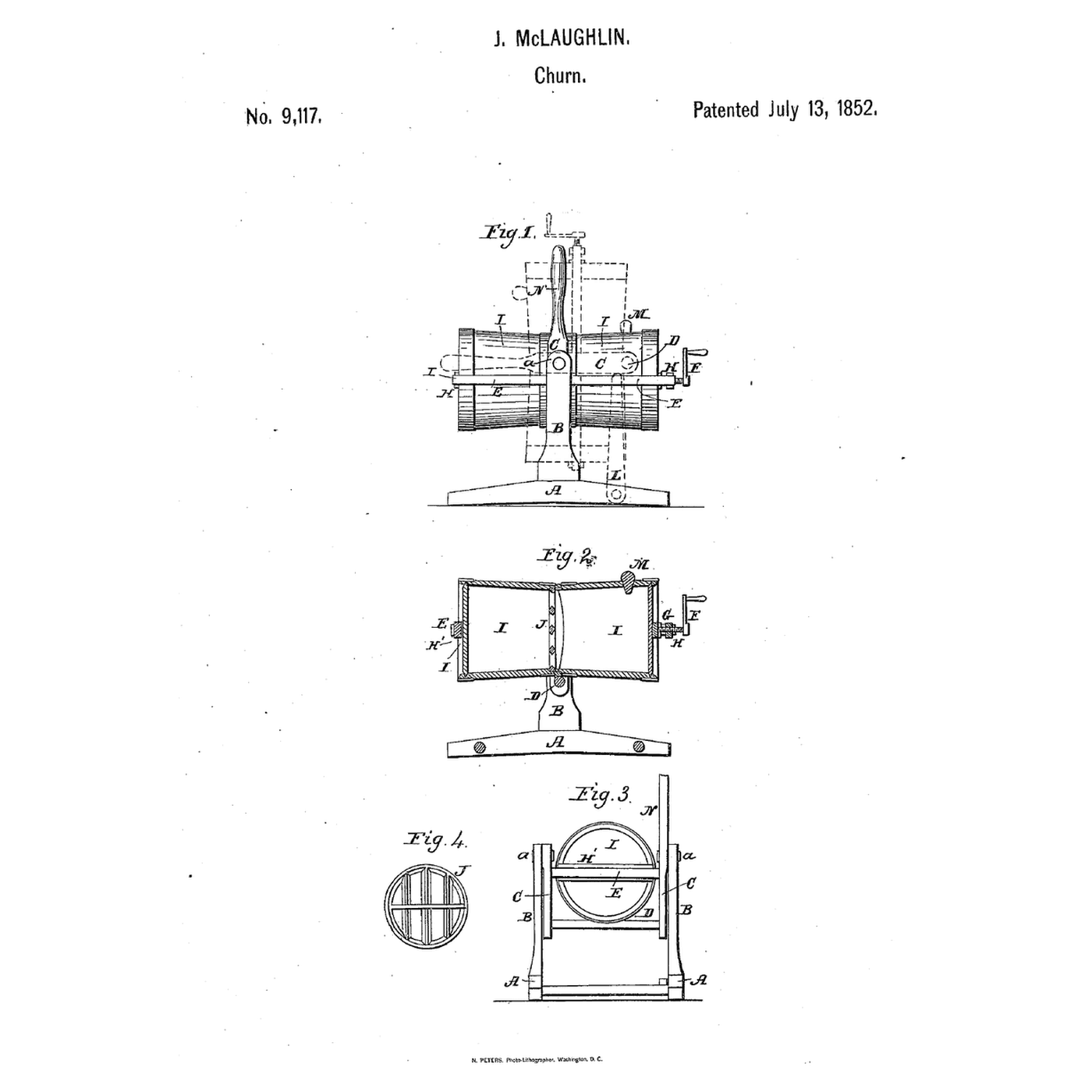
Rocking Two-Section Barrel Churn: Cream Falls Through a Grate as the Barrel Tips End Over End
por Karen
COMIDA Y BEBIDAS
35
0
0
0
0
0
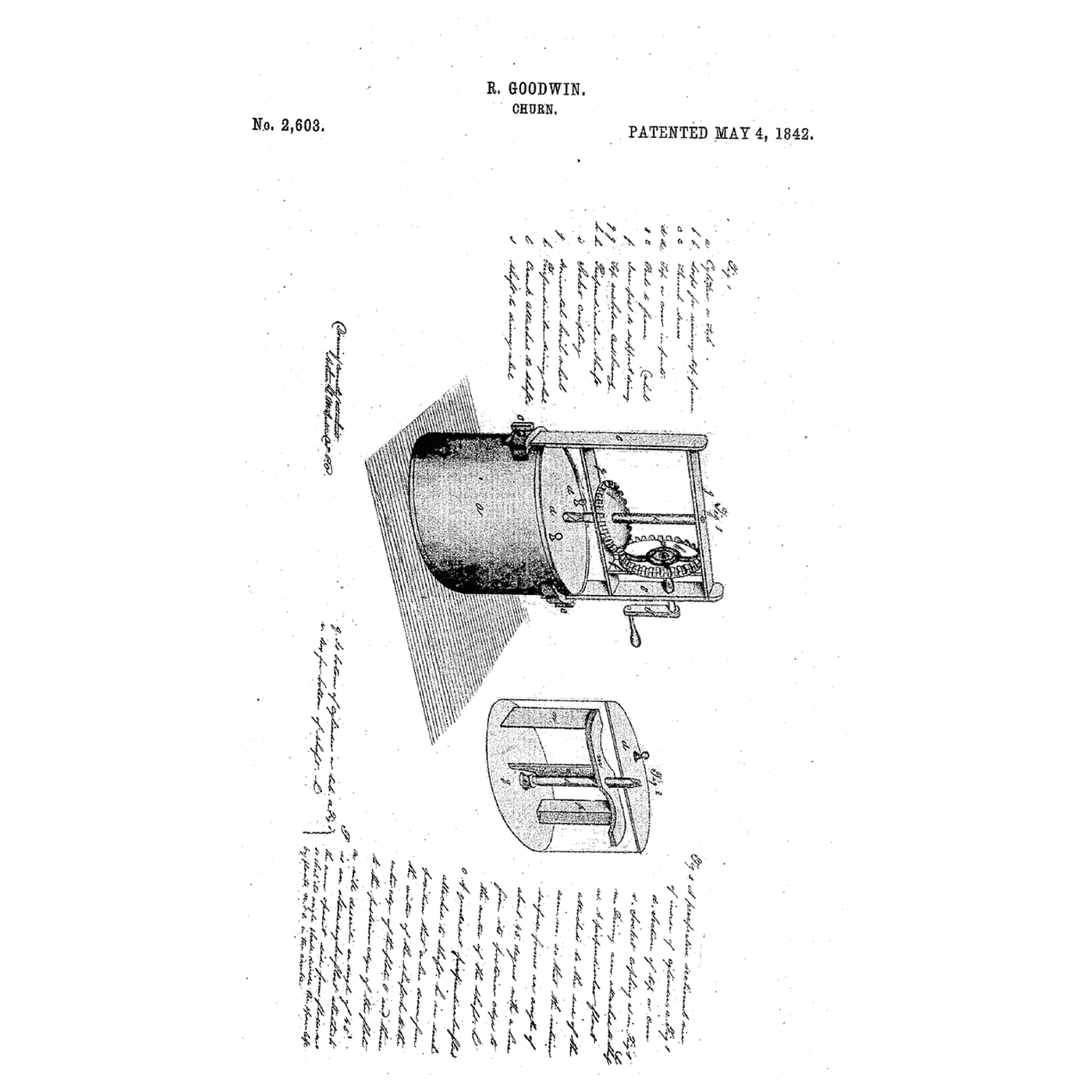
Rotary Stirring Churn: Three Floats That Stop the Cream Merely Going Round
por YourGrandma
COMIDA Y BEBIDAS
32
0
0
0
0
0

Churning Butter from Cream — The 5,000-Year-Old Fat Separation
por TheChef
ARTESANÍA
54
0
0
0
0
0
CC0 Dominio público
Este Blueprint se publica bajo CC0. Eres libre de copiar, modificar, distribuir y usar este trabajo para cualquier propósito, sin pedir permiso.
Apoya al Maker comprando productos a través de su Blueprint, donde gana una Comisión del Maker establecida por los vendedores, o crea una nueva iteración de este Blueprint e inclúyela como conexión en tu propio Blueprint para compartir ingresos.