
Collaboration
ART
BEAUTÉ ET BIEN-ÊTRE
ARTISANAT
CULTURE ET HISTOIRE
DIVERTISSEMENT
ENVIRONNEMENT
NOURRITURE ET BOISSONS
INGÉNIERIE INVERSE
SCIENCES
SPORTS
TECHNOLOGIE
TECHNOLOGIE PORTABLE
Breaking Cavesson: Leather-Covered Cavesson Iron With Padded Noseband and Double Throat Lash (Hasluck, Saddlery, 1904)
Tex

Créé par

Tex

13. novembre 2026FO
7
0
0
0
0

Breaking Cavesson: Leather-Covered Cavesson Iron With Padded Noseband and Double Throat Lash (Hasluck, Saddlery, 1904)

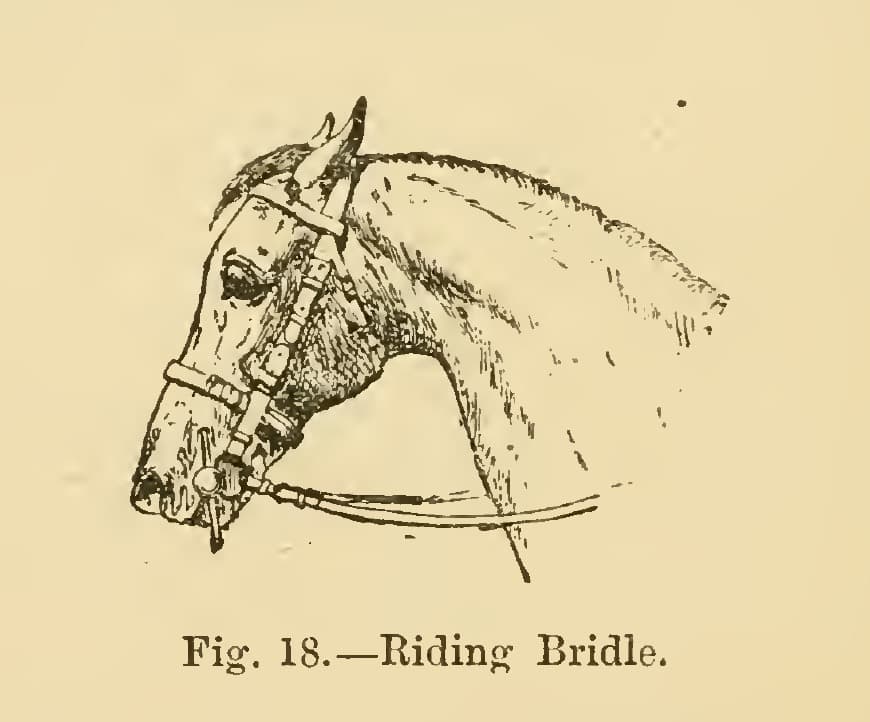
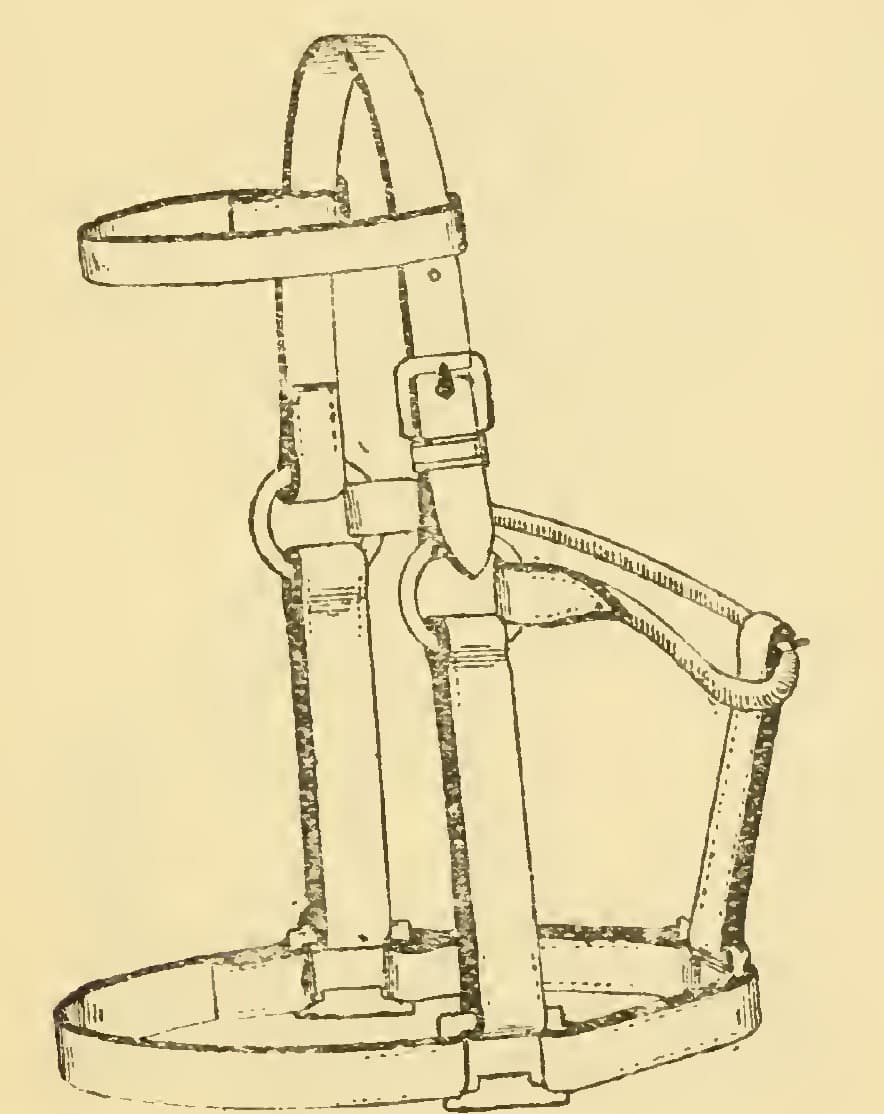
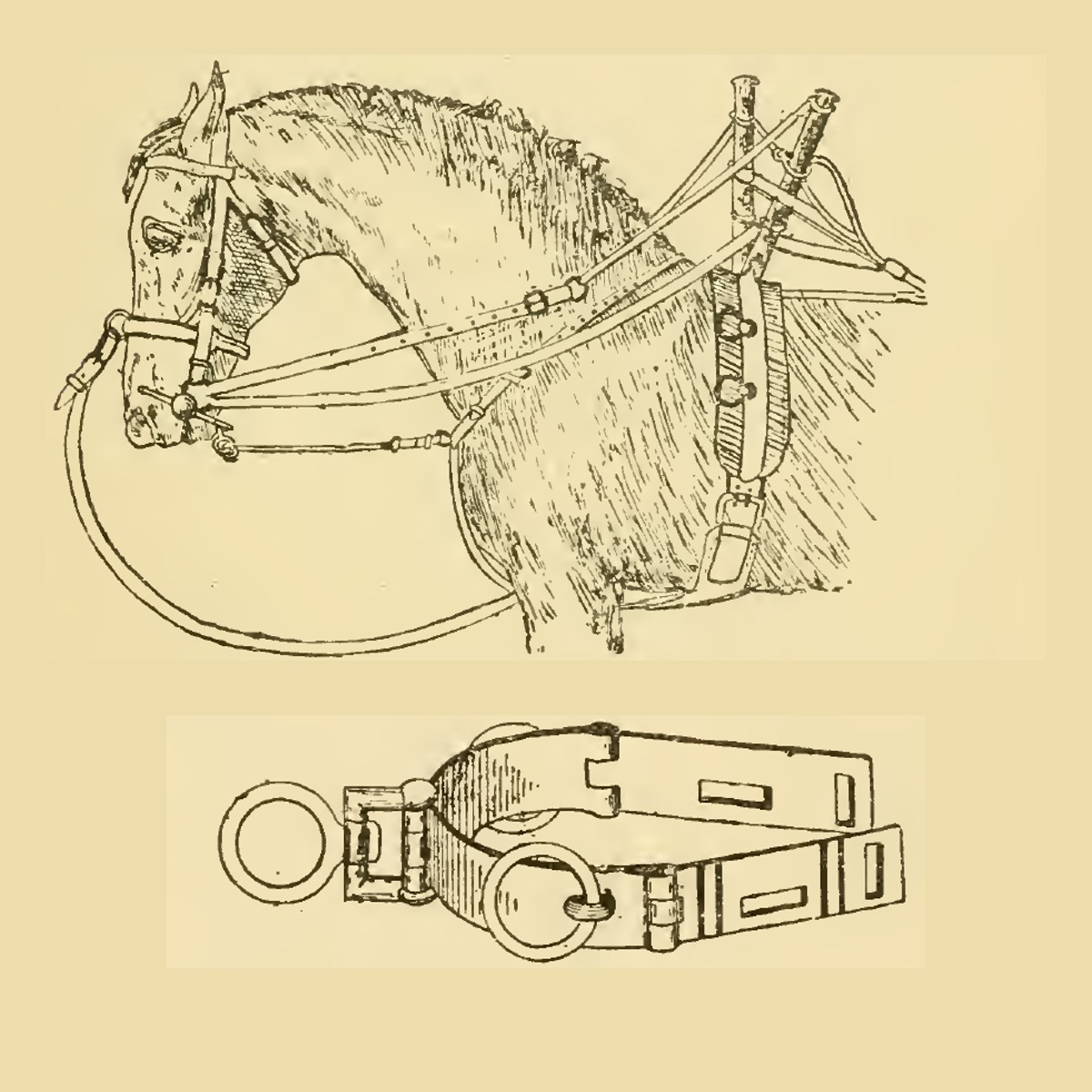
A cavesson holds a young horse's head steady while it is broken in; it is used without a bit, and the leading rein goes on its rings. This is the cavesson from the breaking-down tackle in Paul N. Hasluck's Saddlery (1904): a bought cavesson iron covered in leather and padded inside, a strap up the face, cheeks, jaw straps, a headpiece and one or two throat lashes. Every size is his.
Avancé
About 1 day

Consignes

1

His sizes in centimetres

Chargement du notebook Jupyter…
2

Read Saddlery, ch. VII

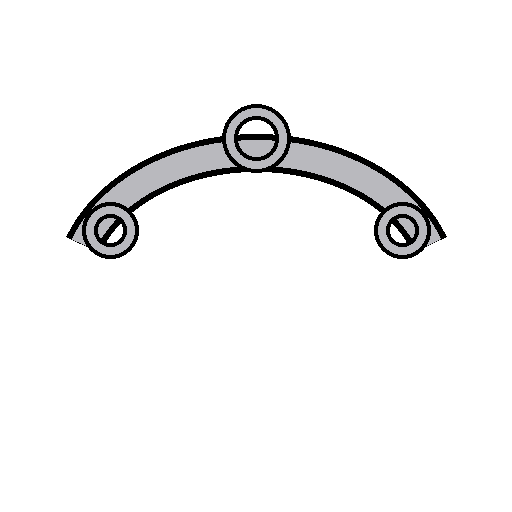
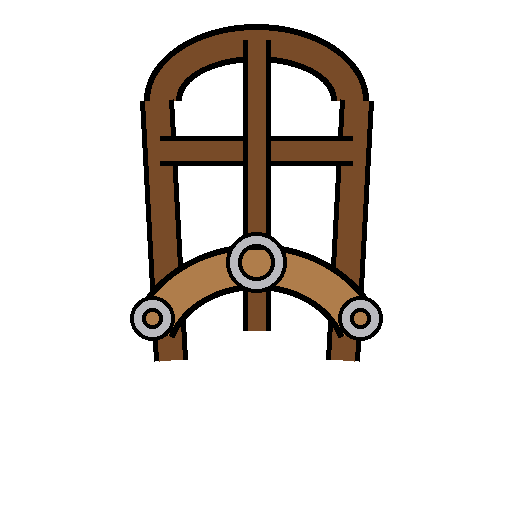
"The cavison iron (Fig. 22) can be purchased ready-made; it acts as a noseband, being strong to hold the horse's head steady. In the centre is a ring, which turns like a swivel, and another ring is placed on each side." It has openings at the sides for the cheeks and one at each end for the straps below the jaw.
3

Cover the iron

Cover the cavesson iron with thin brown leather and herringbone-stitch it underneath, out of sight. Make holes in the leather opposite the openings in the iron.

Matériaux pour cette étape :

Fer de caveçonFer de caveçon1 pièce
BasaneBasane1 pièce
Fil de linFil de lin1 pièce
Cire d'abeilleCire d'abeille1 pièce

Outils nécessaires :
Couteau à cuirCouteau à cuir
AlêneAlêne
Deux aiguilles de sellierDeux aiguilles de sellier
Pince de sellierPince de sellier
4

Fit the cheeks

Fit two cheeks 7 in by 1 in in the side openings, each with a runner and buckle and a loop at the top.

Matériaux pour cette étape :

Cuir de harnaisCuir de harnais1 pièce
Boucle en fer à ardillonBoucle en fer à ardillon2 pièces
Fil de linFil de lin1 pièce
Cire d'abeilleCire d'abeille1 pièce

Outils nécessaires :

Couteau à cuirCouteau à cuir
Abat-carreAbat-carre
Lissoir à arêtes de cuirLissoir à arêtes de cuir
PlioirPlioir
Chalumeau à propaneChalumeau à propane
Mandrin à passantsMandrin à passants
AlêneAlêne
Deux aiguilles de sellierDeux aiguilles de sellier
5

Fit the face strap

Cut a 1 in strap 20 in long to pass round the centre of the iron, go up the face and buckle in the centre of the headpiece. Turn one end in enough to go round the iron and leave enough to stitch it together on the upper side. Slit it in half far enough to go over the centre ring, put it round with half the slit on each side of the ring, and stitch it above the iron, with a hoop under the forehead (his word) for it to pass through.

Matériaux pour cette étape :

Cuir de harnaisCuir de harnais1 pièce
Fil de linFil de lin1 pièce
Cire d'abeilleCire d'abeille1 pièce

Outils nécessaires :

Couteau à cuirCouteau à cuir
Emporte-pièce pour cuirEmporte-pièce pour cuir
AlêneAlêne
Deux aiguilles de sellierDeux aiguilles de sellier
Pince de sellierPince de sellier
6

Fit the jaw straps

Put a strap 9 in long in the off-side opening at the end of the iron, and another 5 in long, with a buckle, loop and runner, on the near side.

Matériaux pour cette étape :

Cuir de harnaisCuir de harnais1 pièce
Boucle en fer à ardillonBoucle en fer à ardillon1 pièce
Fil de linFil de lin1 pièce
Cire d'abeilleCire d'abeille1 pièce

Outils nécessaires :

Couteau à cuirCouteau à cuir
Mandrin à passantsMandrin à passants
Emporte-pièce pour cuirEmporte-pièce pour cuir
AlêneAlêne
Deux aiguilles de sellierDeux aiguilles de sellier
7

Make and strap on the pad

Make a stuffed leather pad, as for a cart winker cheek but longer, to run all along the inside of the iron and reach about 1 in beyond it at each end; it is slightly wider when stuffed and flattened. Do not make it clumsy and thick with stuffing. Make four 1/2 in straps long enough to pass round the iron, with a few holes punched in them; stitch one across the pad at each end and one on each side of the central ring, to fasten the pad on.

Matériaux pour cette étape :

Cuir de harnaisCuir de harnais1 pièce
Bourre de laineBourre de laine1 pièce
Fil de linFil de lin1 pièce
Cire d'abeilleCire d'abeille1 pièce

Outils nécessaires :

Couteau à cuirCouteau à cuir
Emporte-pièce pour cuirEmporte-pièce pour cuir
AlêneAlêne
Deux aiguilles de sellierDeux aiguilles de sellier
Pince de sellierPince de sellier
8

Make the headpiece and throat lash

Make the headpiece of good leather 2 ft 4 in long, so that it fits a horse of any size, and slit it 8 in or 9 in at each side so that, when cut, it is 1-3/4 in wide; it can be narrowed in the centre between the slits. Put a chape and buckle in the centre to take the face strap. Make the foreband as for a stallion bridle (the same length as an ordinary bridle front, or a little longer). Make the throat lash 1 ft 8 in long when turned in and 3/4 in wide, with a buckle, a loop and a runner at each end.

Matériaux pour cette étape :

Cuir de harnaisCuir de harnais1 pièce
Boucle en fer à ardillonBoucle en fer à ardillon3 pièces
Fil de linFil de lin1 pièce
Cire d'abeilleCire d'abeille1 pièce

Outils nécessaires :

Couteau à cuirCouteau à cuir
Abat-carreAbat-carre
Lissoir à arêtes de cuirLissoir à arêtes de cuir
PlioirPlioir
Chalumeau à propaneChalumeau à propane
Mandrin à passantsMandrin à passants
Emporte-pièce pour cuirEmporte-pièce pour cuir
AlêneAlêne
Deux aiguilles de sellierDeux aiguilles de sellier
9

Add a second throat lash for safety

If you want extra safety, put a 5/8 in strap 6 in long on each side of the cheek, stitched in with the chape at the top and slanting slightly downwards, and make an extra throat lash 5/8 in by 1 ft 4 in to buckle to them. "With two throat lashes the bridle will be firm and safe on the horse's head."

Matériaux pour cette étape :

Cuir de harnaisCuir de harnais1 pièce
Fil de linFil de lin1 pièce
Cire d'abeilleCire d'abeille1 pièce

Outils nécessaires :

Couteau à cuirCouteau à cuir
Emporte-pièce pour cuirEmporte-pièce pour cuir
AlêneAlêne
Deux aiguilles de sellierDeux aiguilles de sellier
10

Troubleshooting

Cavesson troubleshooting.

Flow

Loading...
11

History and honest limits

From **Saddlery**, edited by Paul N. Hasluck, David McKay, 1904 (archive.org saddlery00hasl), chapter VII, "Breaking-down Tackle", pp. 59-61, Figs. 21-22; every fraction was read on the scan. He sends the reader to the stallion bridle for the foreband and to a cart winker cheek for the pad, without sizes here. The leading rein (9 ft by 1-1/8 in), side reins, dumb jockey, Corbett martingale, crupper and girth of the full tackle are not made here. Basil for the "thin brown leather", the buckle count in the list, the thread, tools and metric figures are ours.

Matériaux

7

Outils requis

10

CC0 Domaine public

Ce blueprint est publié sous CC0. Vous êtes libre de copier, modifier, distribuer et utiliser ce travail pour tout usage, sans demander la permission.

Soutenez le Maker en achetant des produits via son Blueprint où il perçoit une Commission Maker définie par les Vendeurs, ou créez une nouvelle itération de ce Blueprint et incluez-le comme connexion dans votre propre Blueprint pour partager les revenus.

Commentaires

(0)

Se connecter pour participer à la discussion

Chargement des commentaires...