ART
BEAUTÉ ET BIEN-ÊTRE
ARTISANAT
CULTURE ET HISTOIRE
DIVERTISSEMENT
ENVIRONNEMENT
NOURRITURE ET BOISSONS
INGÉNIERIE INVERSE
SCIENCES
SPORTS
TECHNOLOGIE
TECHNOLOGIE PORTABLE
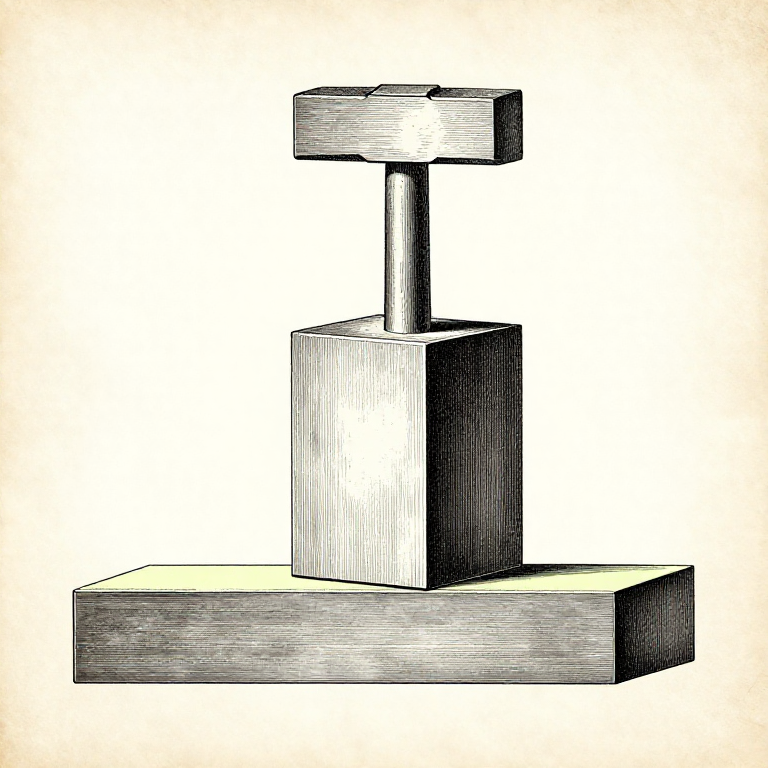


The Last Blows Decide the Surface: Planishing, Flatters and Faces
Every hammer mark you leave is either ground out afterwards or lives on the finished piece. Grinding costs time and removes the crisp forged surface, so the cheaper answer is to leave a good surface in the first place.
That is what PLANISHING is: light, fast, overlapping blows with a smooth hammer face at a low heat, which level the surface without moving the shape.
And it is why a hammer's face is a tool in its own right. A face with a nick in it prints that nick into every blow, so dressing your hammers is part of the job rather than maintenance for its own sake.
Intermédiaire
3 hours
Consignes
1
1
Planish at a LOW heat, with light fast blows
Planish at a LOW heat, with light fast blows
Let the work drop to a dull red and then go over the surface with rapid light blows, overlapping each one, using a smooth slightly crowned hammer face.
The low heat is the point. Hot steel moves under a blow, so planishing hot just changes the shape again; cooler steel takes a surface impression without flowing, which is what levels the marks.
Keep the blows light and even. A heavy planishing blow leaves a deeper mark than the one it was meant to remove, and the surface ends up worse than before — which is the commonest way this step goes wrong.
Matériaux pour cette étape :
 Barre d'acier doux1 pièce
Outils nécessaires :
 Marteau à arrondir
 Enclume
 Loupe de bijoutier
2
2
The flatter: a hammer face you can place exactly
The flatter: a hammer face you can place exactly
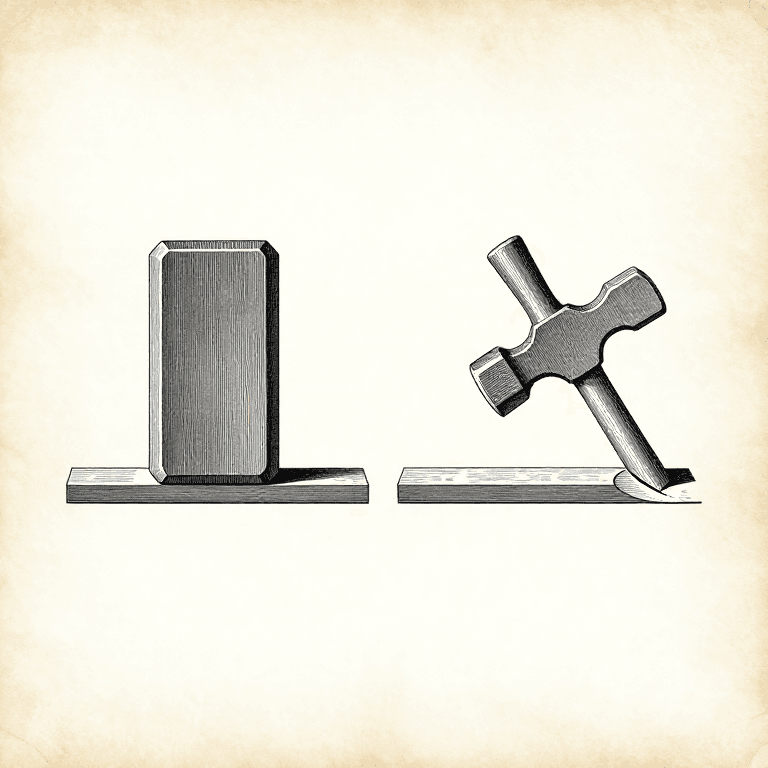
A FLATTER is a block with a broad flat bottom face and a struck face on top. Set it on the work, hit it with a second hammer, and it delivers a perfectly flat impression exactly where you placed it.
That removes the aiming problem entirely: you are not trying to land a moving hammer face flat, you are placing a flat surface and then hitting it. For a genuinely flat forged face it is far quicker than planishing and far better than grinding.
A SET HAMMER does the same in corners and against shoulders, where a flatter's wide face will not reach. Both are struck tools, so they want a striker or a second hand — which is one reason smiths traditionally worked in pairs.
Matériaux pour cette étape :
Barre d'acier doux1 pièceOutils nécessaires :
 Planoir de forge
 Marteau de forgeronEnclume
 Pinces de forgeron
3
3
Dress your hammer faces — they print
Dress your hammer faces — they print
Look at your hammer face under a light. Nicks, sharp edges and rust all print into the work, and a sharp face edge digs a crescent into the surface on every slightly-off blow.
Dress the face smooth and put a gentle crown and a radiused edge on it, then polish it. A crowned face is much more forgiving of a blow that is not perfectly flat, because the contact point moves rather than an edge digging in.
Keep one hammer dressed and polished purely for planishing and never use it for anything else. Using the drawing-out hammer to planish undoes the point, because it is the hammer that has been taking the abuse.
Outils nécessaires :
Marteau de forgeronMarteau à arrondirLoupe de bijoutier Jeu de brosses métalliques
4
4
Brush the scale off, and decide what finish you want
Brush the scale off, and decide what finish you want
Wire-brush the work while it is still warm, between heats. Scale brushed off warm comes away easily; scale hammered in is a pit that has to be ground out, as the batch-120 rung on what heat costs sets out.
Then choose the finish deliberately. A brushed-and-oiled forged surface keeps the hammer texture and the dark scale, which is what most people want from forged work. Grinding and polishing removes all of that and makes it look machined.
Whichever you choose, the piece needs protecting: bare steel rusts within days. Wax applied while the work is just too hot to touch soaks in and leaves a durable finish, and oil works too. The finishing batch covers the reasoning; this is the one case where the work is hot when you apply it.
Matériaux pour cette étape :
Barre d'acier doux1 pièceOutils nécessaires :
Jeu de brosses métalliquesPinces de forgeron Gants de cuir à crispinLoupe de bijoutier
Outils requis
8- Espace réservé
- Espace réservé
- Espace réservé
- Espace réservé
- Espace réservé
- Espace réservé
- Espace réservé
- Espace réservé
Blueprints liés
Ces blueprints partagent des connaissances — techniques, matériaux ou principes
CC0 Domaine public
Ce blueprint est publié sous CC0. Vous êtes libre de copier, modifier, distribuer et utiliser ce travail pour tout usage, sans demander la permission.
Soutenez le Maker en achetant des produits via son Blueprint où il perçoit une Commission Maker définie par les Vendeurs, ou créez une nouvelle itération de ce Blueprint et incluez-le comme connexion dans votre propre Blueprint pour partager les revenus.