ART
BEAUTÉ ET BIEN-ÊTRE
ARTISANAT
CULTURE ET HISTOIRE
DIVERTISSEMENT
ENVIRONNEMENT
NOURRITURE ET BOISSONS
INGÉNIERIE INVERSE
SCIENCES
SPORTS
TECHNOLOGIE
TECHNOLOGIE PORTABLE
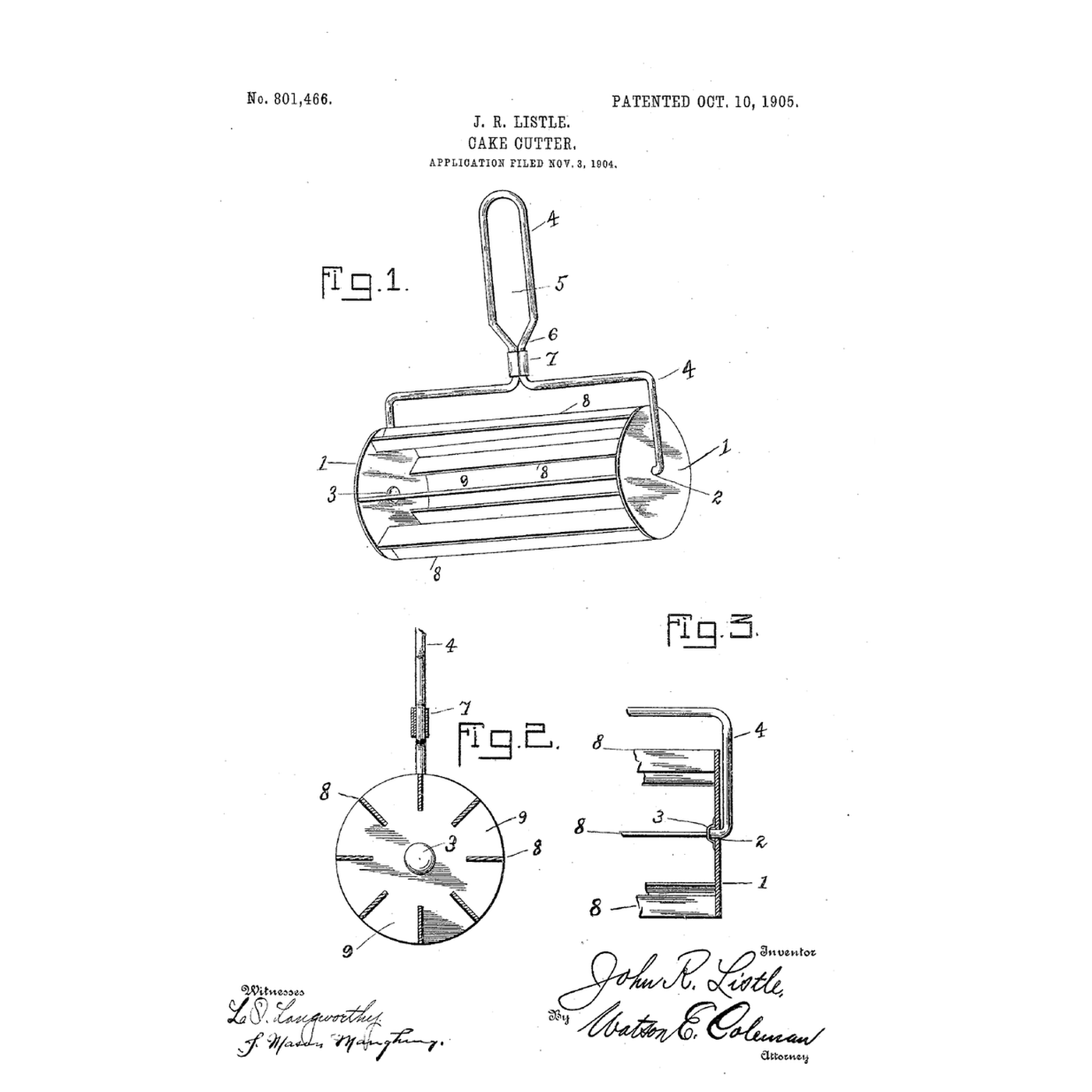


The Rolling Dough Cutter: Pieces That Share Their Edges
Round cutters leave scraps between them, and every scrap must be rolled out and cut again.
John R. Listle of Kalispell, Montana, received US 801,466, dated 10 October 1905, for a cake-cutter made of two tin disks joined by narrow tin blades set radially between them, rolled over the dough on a wire handle, "leaving a minimum amount of material to be worked over the second time".
This rung works out how much dough round cutters waste, then builds a rolling cutter from tin cans and compares its scraps with a round cutter's.
Intermédiaire
About 3 hours
Consignes
1
1
Scraps: round against rolling
Scraps: round against rolling
Chargement du notebook Jupyter…
2
2
A roller with still handles
A roller with still handles
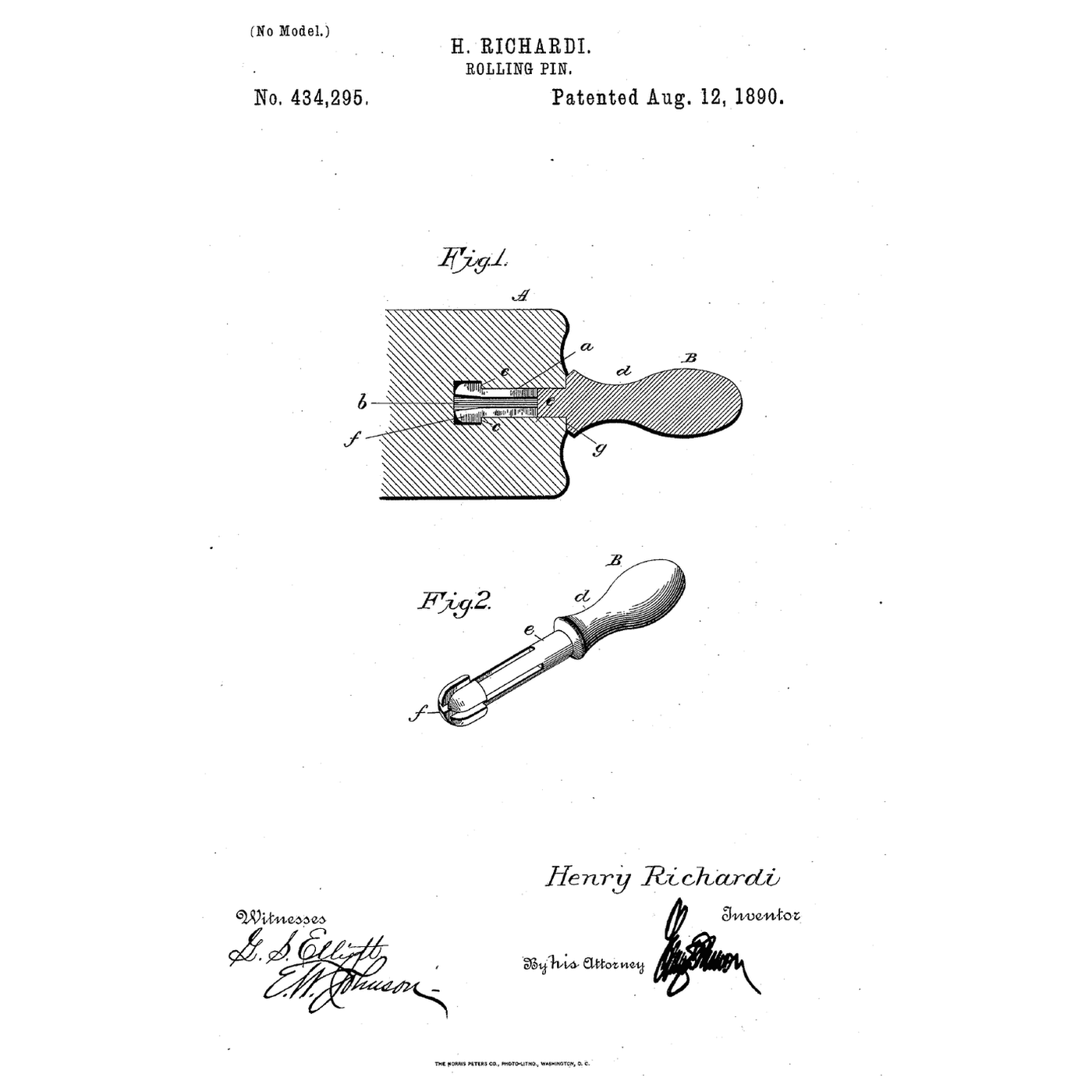
The embedded blueprint rolls dough flat with a pin that turns inside still handles. Listle's drum turns on a wire handle and cuts the sheet the pin has rolled.
3
3
Read US 801,466
Read US 801,466
"A further object is to provide a device by which cakes of a uniform size may be cut from the dough, leaving a minimum amount of material to be worked over the second time".
"The strips of tin being narrow, this arrangement of parts leaves a blank space back of the blades, which is adapted to receive the dough when cut, thus avoiding the difficulty heretofore experienced in cake-cutters of the dough sticking between the blades or in the pocket formed by the rear edges of the blades coming together."
4
4
Build a rolling cutter and cut a sheet
Build a rolling cutter and cut a sheet
Take the lids of two tin cans as the disks and punch a hole in the centre of each. Cut six strips of tin 8 cm long and 1.5 cm wide, with a tab 5 mm long at each end. Cut six short slots round the edge of each disk, evenly spaced and pointing at the centre. Push each strip's tabs through a slot in each disk, with its edge flush with the rims, and fold the tabs flat. File every edge smooth.
Bend steel wire into a long loop for a handle, with its two ends bent inward through the holes in the disks, so the drum turns freely.
Rub 200 g of butter into 300 g of flour with 100 g of sugar and press it into a dough. Roll half into a sheet 24 cm wide, three drum widths, roll the cutter over it and lift the pieces onto a baking sheet. Cut the other half with a round cutter and weigh the scraps from each. Bake at about 180 °C until pale golden.
Matériaux pour cette étape :
 Boîte de conserve2 pièces
 Fil d'acier1 pièce
 Farine tout usage300 g
 Beurre200 g
 Sucre cristallisé100 g
Outils nécessaires :
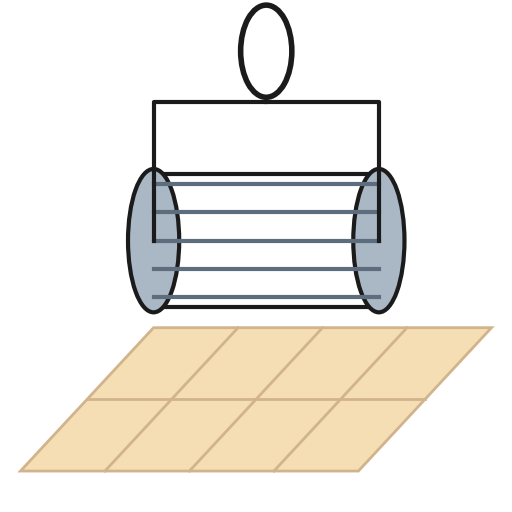 Rouleau découpe-pâte
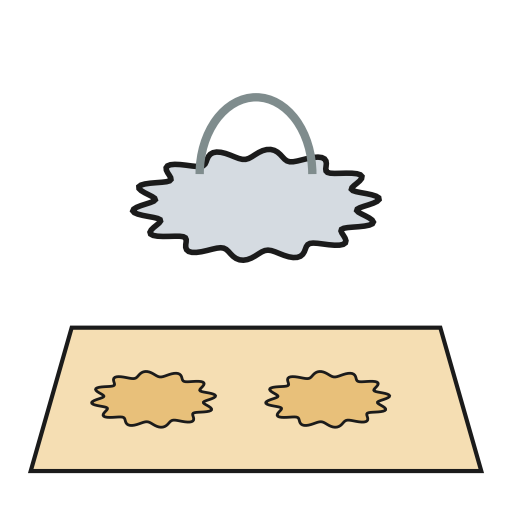 Emporte-pièce à biscuits
 Cisaille à tôle
 Pince à becs longs
 Alêne
Alêne Marteau
 Lime à métaux
 Rouleau à pâtisserie
 Plaque de cuisson
 Four
Four Balance de cuisine numérique
5
5
A rolling cutter that drags, sticks or cuts unevenly
A rolling cutter that drags, sticks or cuts unevenly
Rolling cutter troubleshooting.
Flow
Loading...
6
6
History and honest limits
History and honest limits
**John R. Listle** of Kalispell, Montana, filed US 801,466 on 3 November 1904; it was patented 10 October 1905. His blades were narrow strips of tin rigidly secured at each end to the disks, and his handle a single bent wire whose two strands were held together by a sleeve.
**Honest limits.** The notebook treats the sheet as a perfect rectangle; a rolled sheet has ragged edges, so both methods leave some edge scraps. Sizes are examples. Your two weighings of scraps are the measurement.
Matériaux
5- 2 piècesEspace réservé
- 1 pièceEspace réservé
- 300 gEspace réservé
- 200 gEspace réservé
- 100 gEspace réservé
Outils requis
11- Espace réservé
- Espace réservé
- Espace réservé
- Espace réservé
- Espace réservé
- Espace réservé
- Espace réservé
- Espace réservé
- Espace réservé
- Espace réservé
- Espace réservé
Blueprints liés
Ces blueprints partagent des connaissances — techniques, matériaux ou principes
CC0 Domaine public
Ce blueprint est publié sous CC0. Vous êtes libre de copier, modifier, distribuer et utiliser ce travail pour tout usage, sans demander la permission.
Soutenez le Maker en achetant des produits via son Blueprint où il perçoit une Commission Maker définie par les Vendeurs, ou créez une nouvelle itération de ce Blueprint et incluez-le comme connexion dans votre propre Blueprint pour partager les revenus.