Samvinna
LIST
FEGURÐ OG VELLÍÐAN
HANDVERK
MENNING OG SAGA
SKEMMTUN
UMHVERFI
MATUR OG DRYKKUR
ÖFUGVERKFRÆÐI
VÍSINDI
ÍÞRÓTTIR
TÆKNI
KLÆÐANLEG TÆKNI
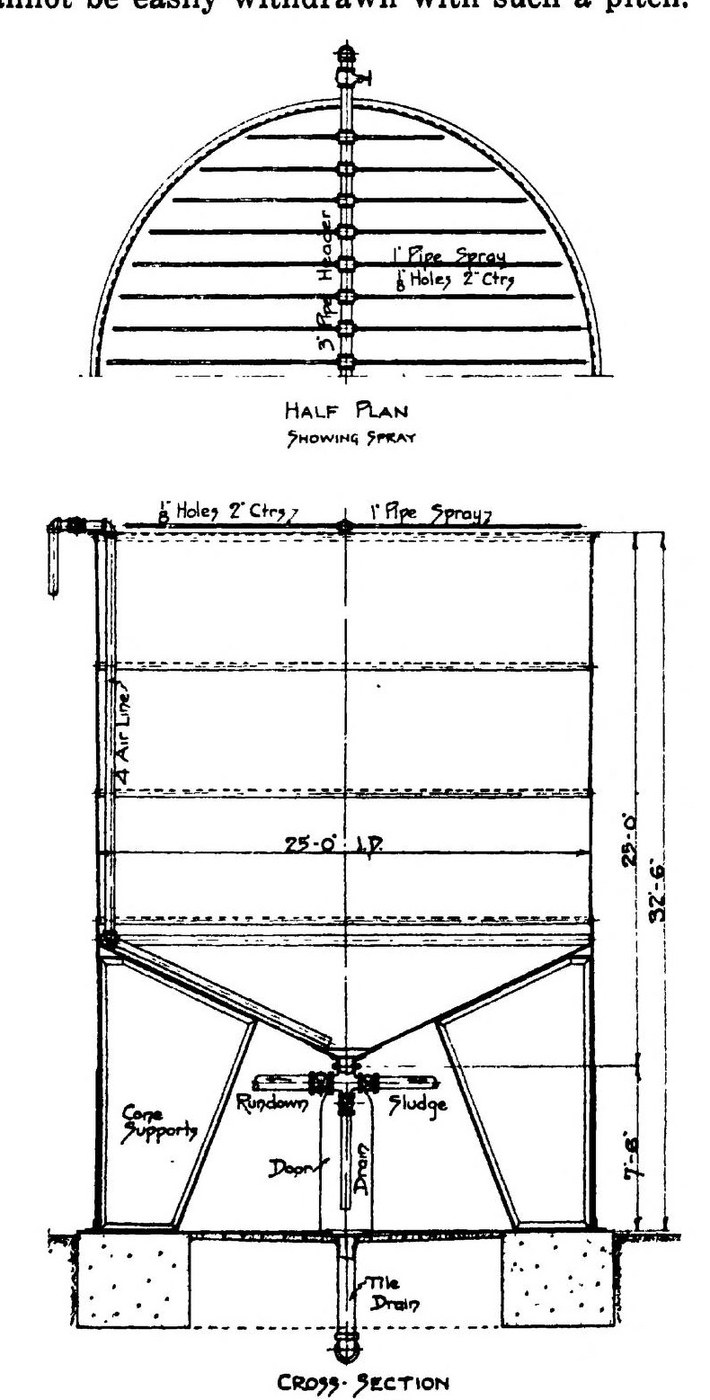


Agitated Mixing Tank: the Cone-Bottom Light-Oil Agitator (Bell, 1923)
The refinery agitator for washing oil with acid, soda and water: a lead-lined riveted steel tank with a cone bottom, an air line that blows up through the charge to mix it, a spray header for wash water, and draw-offs at the tip of the cone for sludge and finished oil.
Variable: capacity, 160 to 5,000 barrels. Bell's Fig. 87 is 1,000 barrels: 25 ft inside diameter, 25 ft shell, 7 ft 6 in cone, 32 ft 6 in overall.
Source: H. S. Bell, American Petroleum Refining (1923), pp. 195-200. Unknown: plate thickness. Picture: Fig. 87 of the book.
Sérfræðingur
Unknown
Leiðbeiningar
1
1
Set the foundation and columns
Set the foundation and columns
Choose the capacity (160 to 5,000 barrels). Rest the tank on lugs on steel or concrete columns, fireproofing steel ones; the older way of extending the shell down with gussets under the cone is heavy. Fig. 87 stands on concrete footings with a tile drain under the cone tip.
Efni fyrir þetta skref:
 Steinsteypa1 footings, columns
Nauðsynleg verkfæri:
 Óþekkt mál
2
2
Build the shell and cone
Build the shell and cone
Rivet a cylindrical shell (Fig. 87: 25 ft inside, 25 ft high) onto a cone bottom pitched no more than 4 in per foot from the horizontal for light oils; sludge still runs out at that slope. With a tight lead lining the shell need not be caulked; leave out an occasional rivet so lining leaks show. Not given: plate thickness.
Efni fyrir þetta skref:
 Plata úr mjúku stáli1 shell, cone
 Vinkiljárn úr mjúku stáli1 top and cone angles
 Stálhnoð1 stykki
Nauðsynleg verkfæri:
 Gatapressa
 Hnoðhamar
3
3
Fit a low roof with relief
Fit a low roof with relief
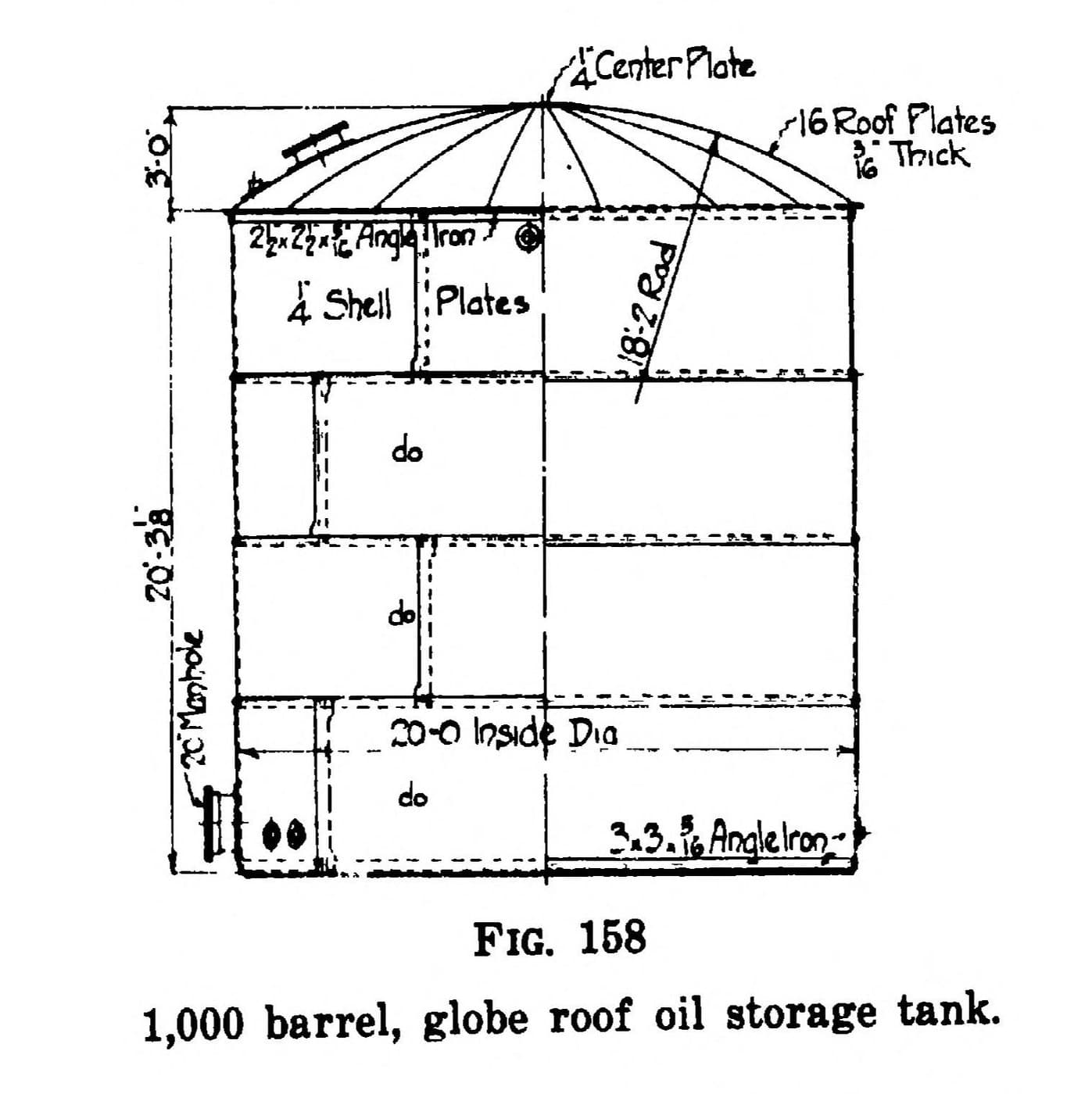
Use a low globe roof, not the old hemispherical 'gas bag', with plenty of explosion hatches; even 10 % relief area has not always saved a roof. Bell's preferred form (Fig. 89) has two roof segments that lift in an explosion and fall back to smother the fire.
Efni fyrir þetta skref:
Plata úr mjúku stáli1 roofStálhnoð1 stykkiNauðsynleg verkfæri:
Hnoðhamar4
4
Pipe the air, spray and draw-offs
Pipe the air, spray and draw-offs
Run a 4 in air line down to the cone tip; the blast needs at least 200 to 250 cu ft of free air per minute per 1,000 barrels, at just enough pressure to beat the oil head. Across the top fit a 3 in header with 1 in spray pipes drilled with 1/8 in holes at 2 in centres. At the cone tip fit valved rundown, sludge and drain lines.
Efni fyrir þetta skref:
 Stálpípa (þykkveggja, með skrúfgangi á endum)1 4 in air, 3 in header, 1 in sprays
 Skífuloki3 rundown, sludge, drain
Nauðsynleg verkfæri:
 Handbor
 Loftblásari
5
5
Line it with lead
Line it with lead
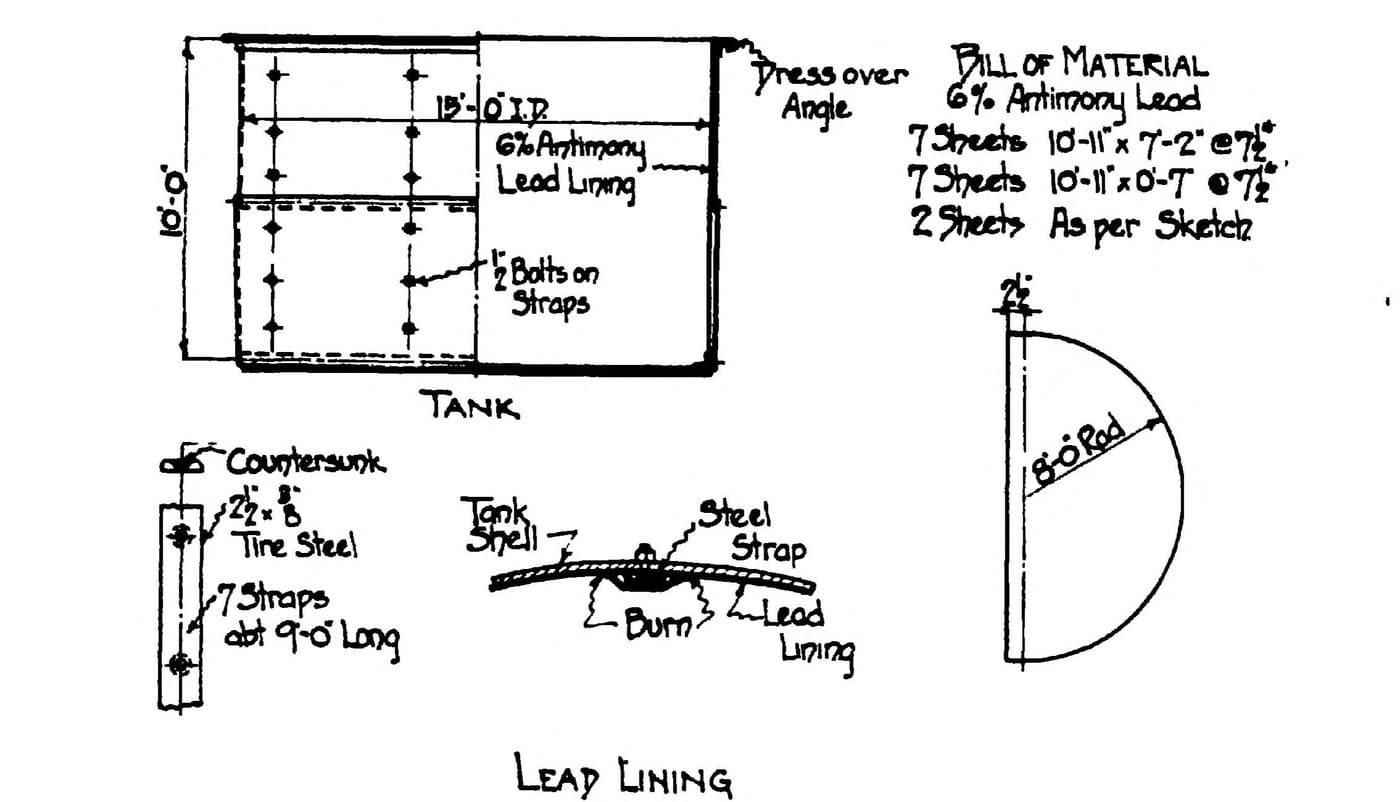
Weak acid from the washes eats steel, so line it with lead: 8 lb per sq ft on the shell, 10 lb on the cone, or 6 % antimony lead half a pound lighter. Don't just hang it from the top angle: agitation makes a loose lining creep and crack. Hold it with lead-covered steel straps about 8 ft apart, bolted through the shell, and bring the lining out through the draw-off neck.
Efni fyrir þetta skref:
 Blýþynna1 8 lb shell, 10 lb cone
 Flatstál úr mjúku stáli1 straps
 Sexkantbolti - flokkur 8.81 stykki
Nauðsynleg verkfæri:
 Trésleggja
 Blys
Efni
9- 1 footings, columnsStaðgengill
- 1 roofStaðgengill
- 1 top and cone anglesStaðgengill
- 1 stykkiStaðgengill
- 1 4 in air, 3 in header, 1 in spraysStaðgengill
- 3 rundown, sludge, drainStaðgengill
- 1 8 lb shell, 10 lb coneStaðgengill
- 1 strapsStaðgengill
- 1 stykkiStaðgengill
Efni úr tengdum teikningum
Þessi teikning býr til
CC0 opinbert ríki
Þessi teikning er gefin út undir CC0. Þér er frjálst að afrita, breyta, dreifa og nota þetta verk í hvaða tilgangi sem er, án þess að biðja um leyfi.
Studdu smiðinn með því að kaupa vörur í gegnum teikningu hans þar sem hann fær þóknun smiða sem seljendur ákvarða, eða búðu til nýja endurskoðun á þessari teikningu og tengdu hana sem tengingu í þinni eigin teikningu til að deila tekjum.