
Puddling Wrought Iron from Pig Iron — Burning Out the Carbon in a Reverberatory Furnace
Pig iron straight from the blast furnace is cheap and plentiful but nearly useless for anything that must bend or take a blow: its high carbon makes it brittle as glass. To turn it into the tough, malleable wrought iron that built the railways and bridges of the 1800s, the carbon has to be burned out. Henry Cort's puddling process, patented in 1784, did exactly that — at scale, with coal.
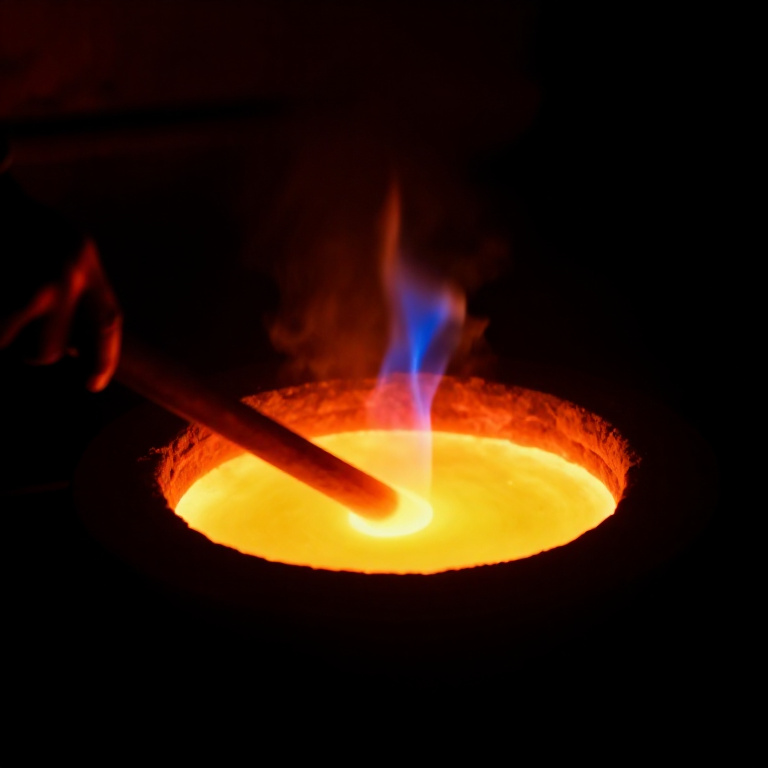
The trick is the reverberatory furnace, which keeps the fuel separate from the metal. Coal burns in a side firebox and the flame is drawn over a low bridge and reflected down off the furnace roof onto a hearth of pig iron, so the sulphurous coal smoke never touches the iron. A workman called a puddler stirs the molten bath through a small door with a long iron rabble, exposing every part of it to the air until the carbon oxidises away.
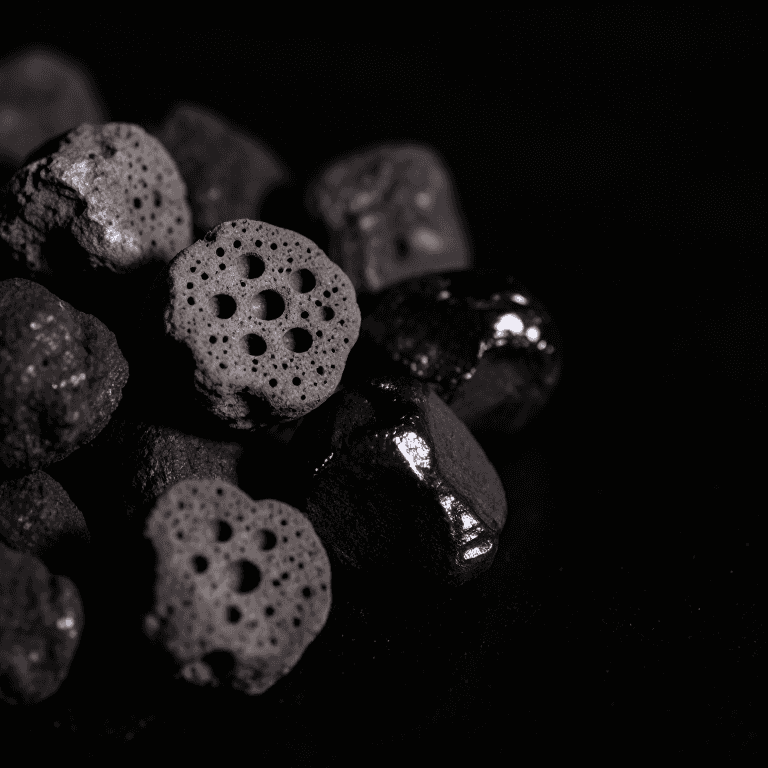
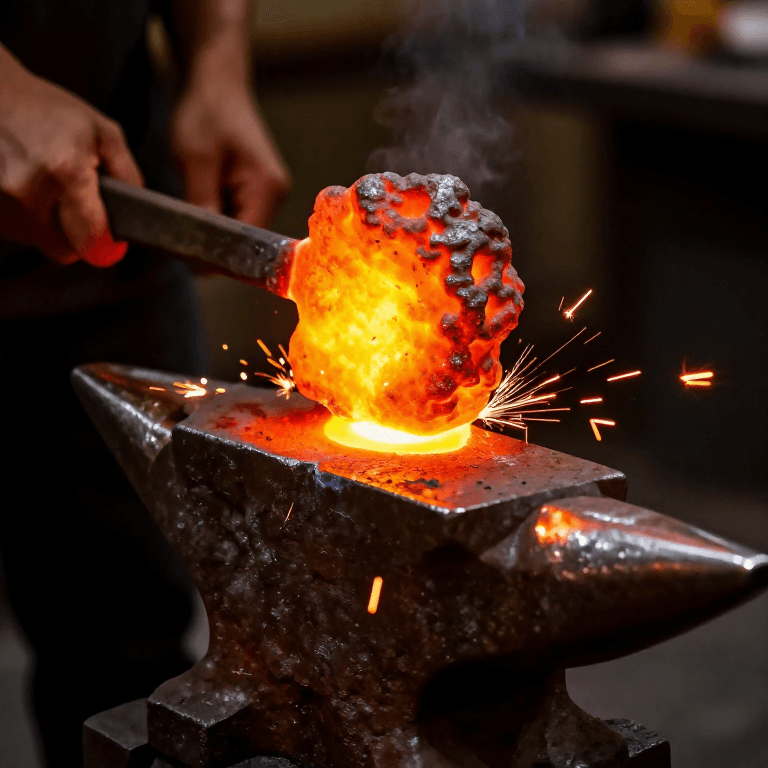
As the carbon leaves, something strange happens: the purer iron's melting point rises above the furnace temperature, so the metal grows stiff and pasty even in the heat. The puddler gathers it into spongy balls, which are then hammered and rolled to squeeze out the slag and consolidate the fibres into bars of wrought iron.
Leiðbeiningar
Understand the goal
Understand the goal
Build a reverberatory furnace
Build a reverberatory furnace
Efni fyrir þetta skref:
 Eldfastur steinn100 stykki
Nauðsynleg verkfæri:
 Handskófla
Fettle the hearth
Fettle the hearth
Efni fyrir þetta skref:
 Járnhamarshreistur5 kg
Fire the furnace with coal
Fire the furnace with coal
Efni fyrir þetta skref:
 Bikkol60 kg
Charge and melt the pig iron
Charge and melt the pig iron
Efni fyrir þetta skref:
 Hrájárnsstykki30 kg
Puddle the bath
Puddle the bath
Nauðsynleg verkfæri:
 Deigjárnsþvara
Bring on the boil
Bring on the boil
Let it come to nature
Let it come to nature
Nauðsynleg verkfæri:
DeigjárnsþvaraBall up the iron
Ball up the iron
Nauðsynleg verkfæri:
DeigjárnsþvaraShingle the ball
Shingle the ball
Nauðsynleg verkfæri:
 Sleggja
Roll into bars
Roll into bars
Nauðsynleg verkfæri:
 Valsavél
Identify wrought iron
Identify wrought iron
Nauðsynleg verkfæri:
 Hamar
HamarEfni
4- 100 stykkiStaðgengill
- Staðgengill
- 60 kgStaðgengill
- 30 kgStaðgengill
Efni úr tengdum teikningum

Þessi teikning býr til
Tengd Blueprint
Þessi blueprint deila þekkingu — tækni, efni eða meginreglur

CC0 opinbert ríki
Þessi teikning er gefin út undir CC0. Þér er frjálst að afrita, breyta, dreifa og nota þetta verk í hvaða tilgangi sem er, án þess að biðja um leyfi.
Studdu smiðinn með því að kaupa vörur í gegnum teikningu hans þar sem hann fær þóknun smiða sem seljendur ákvarða, eða búðu til nýja endurskoðun á þessari teikningu og tengdu hana sem tengingu í þinni eigin teikningu til að deila tekjum.