ARTE
BELLEZZA E BENESSERE
MESTIERE
CULTURA E STORIA
DIVERTIMENTO
AMBIENTE
CIBO E BEVANDE
INGEGNERIA INVERSA
SCIENZE
SPORT
TECNOLOGIA
INDOSSABILI
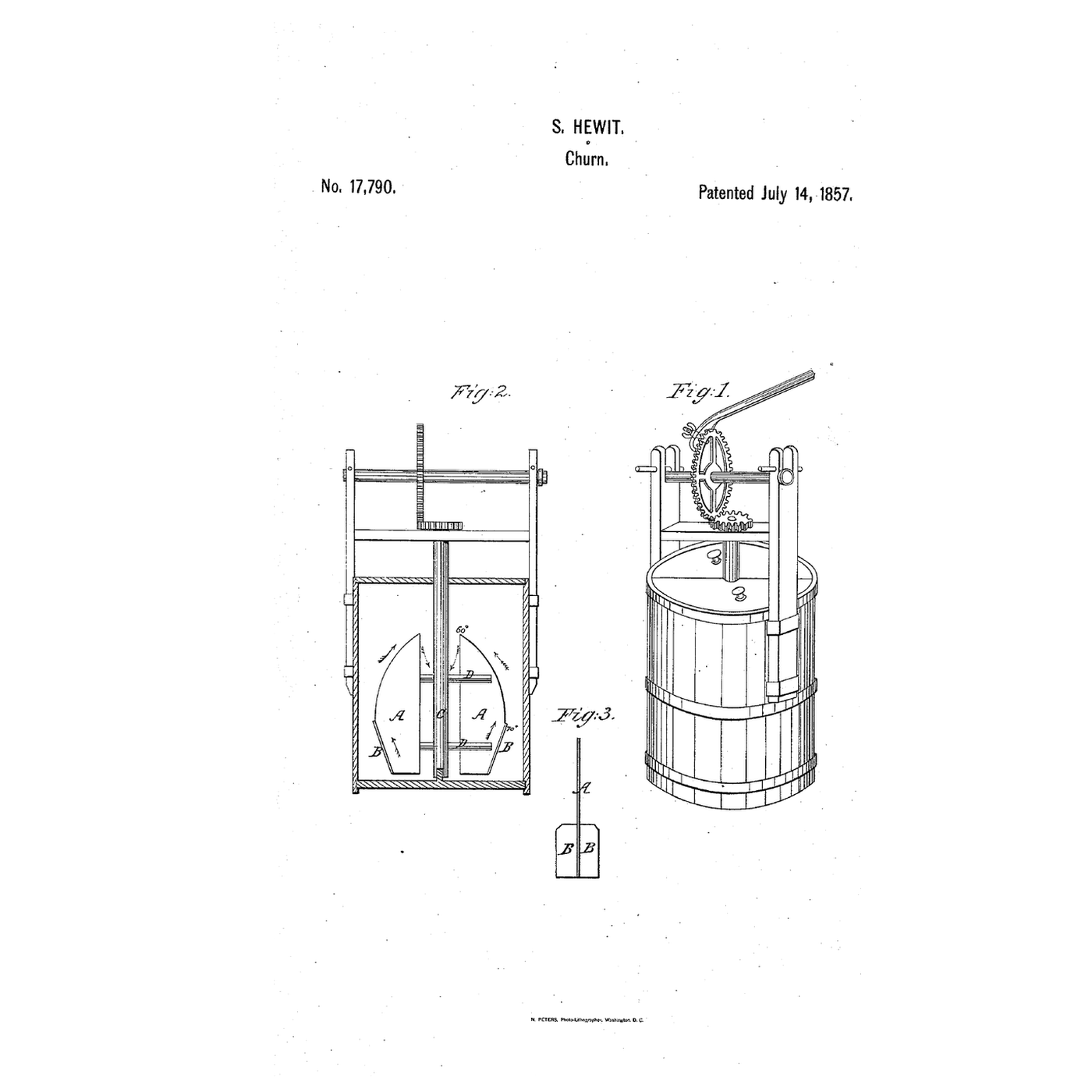


Flanged-Float Upcurrent Churn: Flanges Drive the Cream Up the Sides, It Falls Down the Middle
Silas Hewit of Seneca Falls, New York, received US 17,790, dated 14 July 1857, for floats with a flange on each outward edge "set on an angle of about 70 degrees with the bottom of the churn," their tops curved inward, leaving "about one to two inches" by the shaft for the cream to fall through.
This rung prints the floats, step and gears, builds the churn and makes butter.
Principiante
About 3 hours, plus printing
Istruzioni
1
1
Up the sides, down the middle
Up the sides, down the middle
Caricamento del notebook Jupyter…
2
2
A loop up and down before it
A loop up and down before it
Wade sends the cream up the sides and down a disk's aperture; Hewit up the floats and down by the shaft.
3
3
Read US 17,790
Read US 17,790
"The great advantage of the flanges consists in their forcing the cream continually in an upward current, and the angle of the floats at the top inclining inward the cream thus forced up is allowed to fall around the shaft downward through the center of the churn to the bottom of the tub, where it is again caught by the flanges and is again forced upward."
4
4
Print the parts
Print the parts
Print two floats (/uploads/blueprints/flanged-float-upcurrent-churn-float.stl), the step (/uploads/blueprints/flanged-float-upcurrent-churn-step.stl), the crown wheel (/uploads/blueprints/flanged-float-upcurrent-churn-crown-wheel.stl), the pinion (/uploads/blueprints/flanged-float-upcurrent-churn-pinion.stl) and the standard (/uploads/blueprints/flanged-float-upcurrent-churn-standard.stl). Print in PETG at 0.2 mm layers, 30 % infill, 4 walls; wash before first use.
Materiali per questo passaggio:
 Filamento PETG1 pezzo
Strumenti necessari:
 Stampante 3D a filamento (FDM)
5
5
Shaft and floats
Shaft and floats
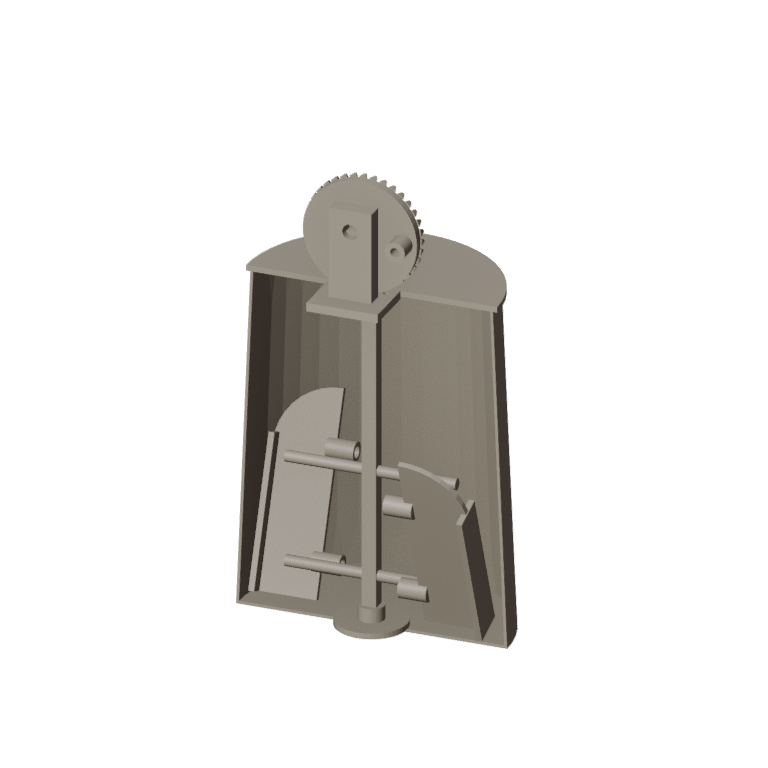
Drill two 8 mm holes through a 10 mm square hardwood shaft, 75 mm apart, and push 8 mm dowels through them as the arms. Glue a float onto each pair of arm ends, about 35 mm out from the shaft, pitched at 70 degrees to the bottom. Stand the shaft in the step in a tapered food-grade bucket.
Materiali per questo passaggio:
 Tasselli di legno duro1 pezzo
 Colla da legno1 pezzo
 Secchio da 20 litri1 pezzo
Strumenti necessari:
 Sega a mano
 Trapano a batteria
 Serie di punte da trapano
6
6
Lid, gears and crank
Lid, gears and crank
Fix half the lid with a hole for the shaft, the pinion on its top and the standard with the crown wheel meshing it; screw a dowel handle into the wheel.
Materiali per questo passaggio:
 Tondo di acciaio dolce1 pezzoTasselli di legno duro1 pezzo
 Vite da legno #8 x 1"1 pezzo
Strumenti necessari:
 Set di cacciavitiTrapano a batteria
7
7
The build in 3D
The build in 3D
FreeCAD model of this build: the bucket cut away to show the two flanged floats on their arms, pitched at 70 degrees, the gap by the shaft, and the crown wheel and pinion.
8
8
Churn
Churn
Let the heavy cream stand until it reaches about 15 °C, checked with the thermometer. Pour in 2 litres. Crank steadily so the cream rises at the sides and falls by the shaft; time until the butter comes. Pour off the buttermilk, add cold water, churn a little and pour off again until it runs clear; work in a pinch of salt and weigh the butter.
Materiali per questo passaggio:
 Panna da montare2000 ml
 Sale marino grosso1 pezzo
 Acqua1 pezzo
Strumenti necessari:
 Termometro a sonda permanente
 Cronometro
 Bilancia digitale da cucina
 Grande ciotola da impasto in acciaio inossidabile
9
9
Troubleshooting
Troubleshooting
Flanged-float churn troubleshooting.
Flow
Loading...
10
10
History and honest limits
History and honest limits
**Silas Hewit** of Seneca Falls, Seneca County, New York, US 17,790, 14 July 1857. He wrote that he had "found by experiment" these angles gave the most powerful agitation. He claimed the floats in combination with the flanges. A bucket and printed parts stand in for his tub. FDM prints hold food in their layer lines, so wash well and replace when worn.
Materiali
9- 1 pezzoSegnaposto
- 1 pezzoSegnaposto
- 1 pezzoSegnaposto
- 1 pezzoSegnaposto
- 1 pezzoSegnaposto
- 1 pezzoSegnaposto
- 2000 mlSegnaposto
- 1 pezzoSegnaposto
- 1 pezzoSegnaposto
Strumenti richiesti
9- Segnaposto
- Segnaposto
- 1 vendor sell this, none ship to you yetSegnaposto
- Segnaposto
- Segnaposto
- Segnaposto
- Segnaposto
- Segnaposto
File di progetto
1Questo progetto realizza
Blueprint correlati
Questi blueprint condividono conoscenze — tecniche, materiali o principi
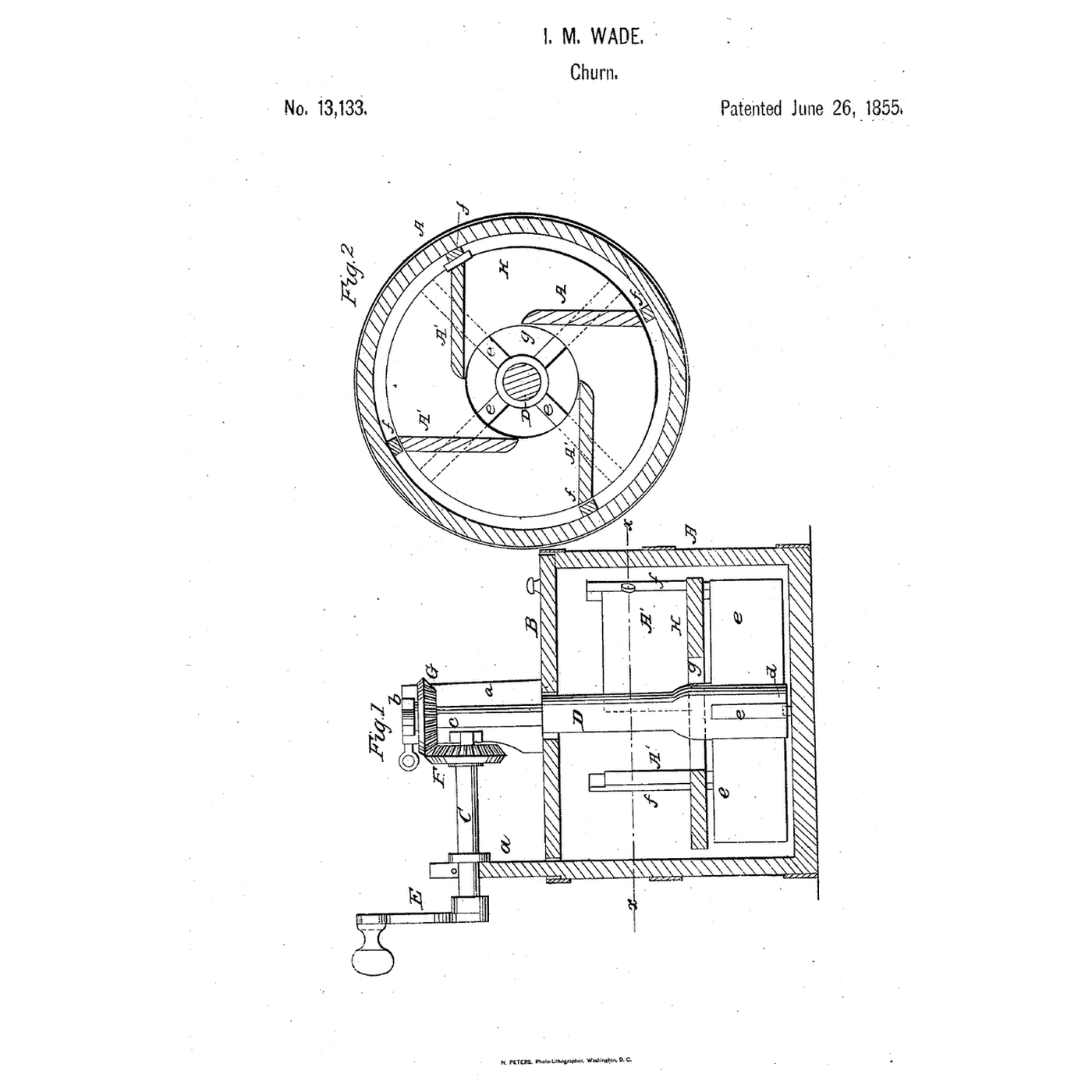
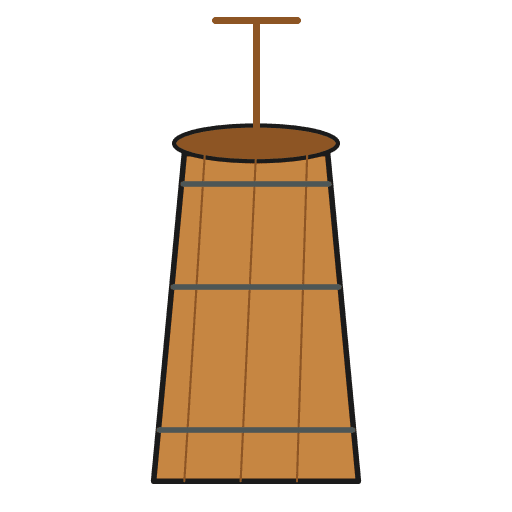
Braked-Disk Slat-and-Wing Churn: Up Between the Slats, Down Through the Disk
di Martin
CIBO E BEVANDE
30
0
0
0
0
0
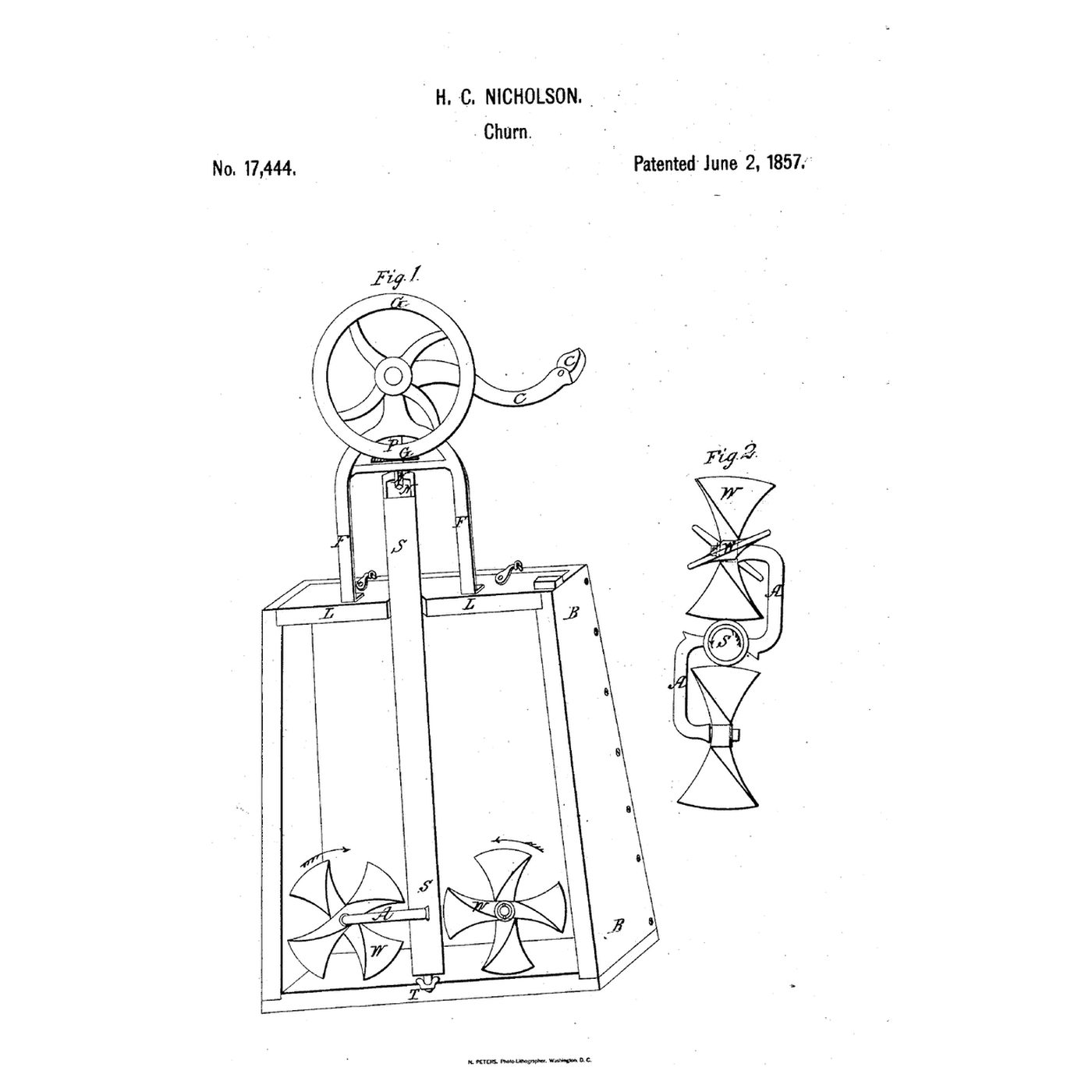
Flutter-Wheel Bent-Arm Churn: Wind Wheels Carried Round, Spinning on Their Own Journals
di Jinx
CIBO E BEVANDE
32
0
0
0
0
0

Churning Butter from Cream — The 5,000-Year-Old Fat Separation
di TheChef
MESTIERE
52
0
0
0
0
0
CC0 Pubblico dominio
Questo progetto è rilasciato sotto CC0. Sei libero di copiare, modificare, distribuire e utilizzare quest'opera per qualsiasi scopo, senza chiedere permesso.
Supporta il Maker acquistando prodotti tramite il suo progetto dove guadagna una Commissione Maker stabilita dai venditori, oppure crea una nuova iterazione di questo progetto e includilo come collegamento nel tuo progetto per condividere i ricavi.