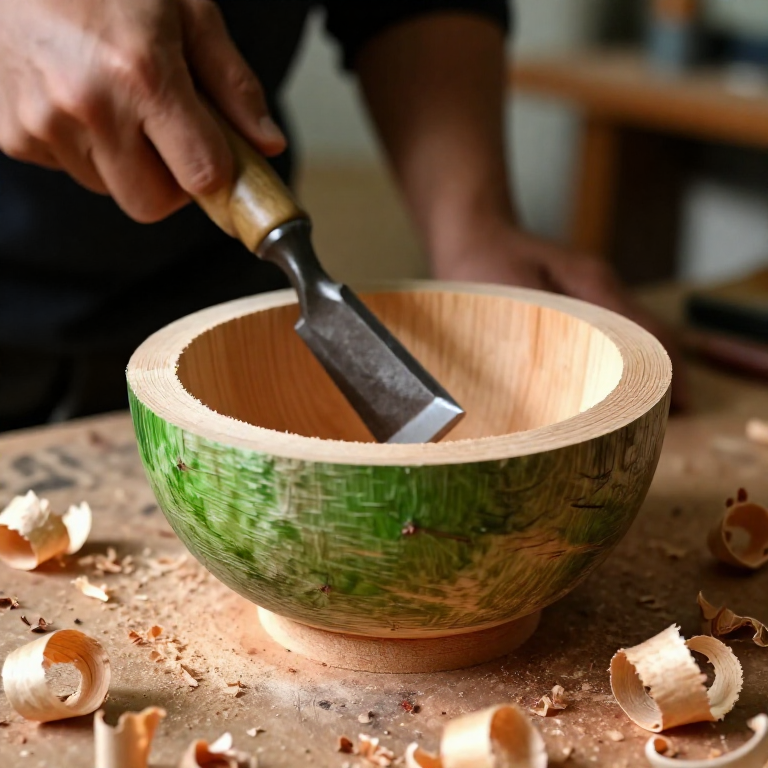


Carving a Wooden Bowl with an Adze — Hollowing from a Green Wood Blank
Before the lathe, every wooden bowl was carved by hand. The primary tool for hollowing was the adze — a blade set perpendicular to the handle, swung in short arcs to scoop out wood. A skilled worker can hollow a bowl from a green wood half-log in under an hour with nothing more than an adze and a gouge. The technique is ancient — wooden bowls carved with stone adzes have been found in Neolithic lake dwellings dating to 4000 BCE.
Green wood is essential. Freshly split wood is soft and forgiving — the adze bites cleanly and lifts chips without tearing. Seasoned wood is hard, punishes a slightly mis-angled blow, and tends to crack. The bowl is roughed out while green, then left to dry slowly. As it dries, a hand-carved bowl will move — the walls thin unevenly, and tension in the grain pulls the rim into a gentle oval. This is not a defect but a signature of hand work.
The combination of adze for roughing and gouge for finishing produces a bowl with visible tool marks that are both decorative and functional — the textured interior grips food better than a smooth turned surface, and the thick walls retain heat longer than thin-walled lathe work.
Istruzioni
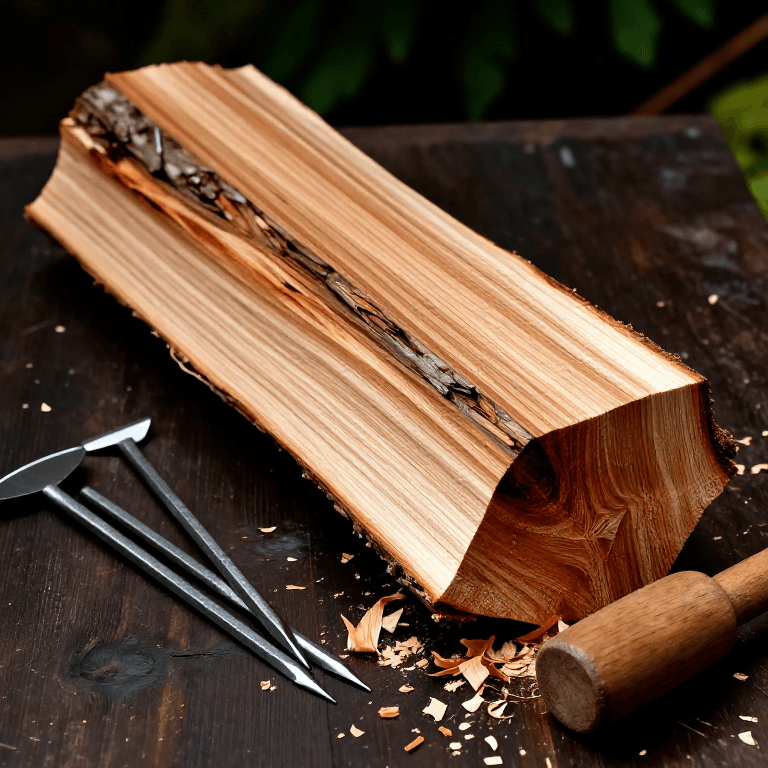
Split a bowl blank from a green log
Split a bowl blank from a green log
Materiali per questo passaggio:
 Tronco di betulla1 pezzo
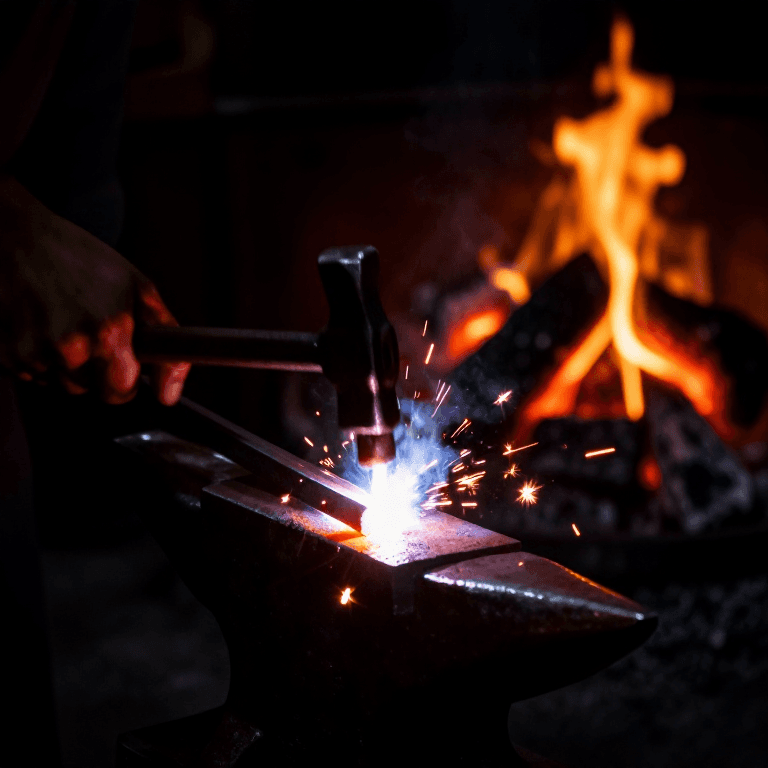
Shape the outside with a hatchet
Shape the outside with a hatchet
Strumenti necessari:
 Accetta
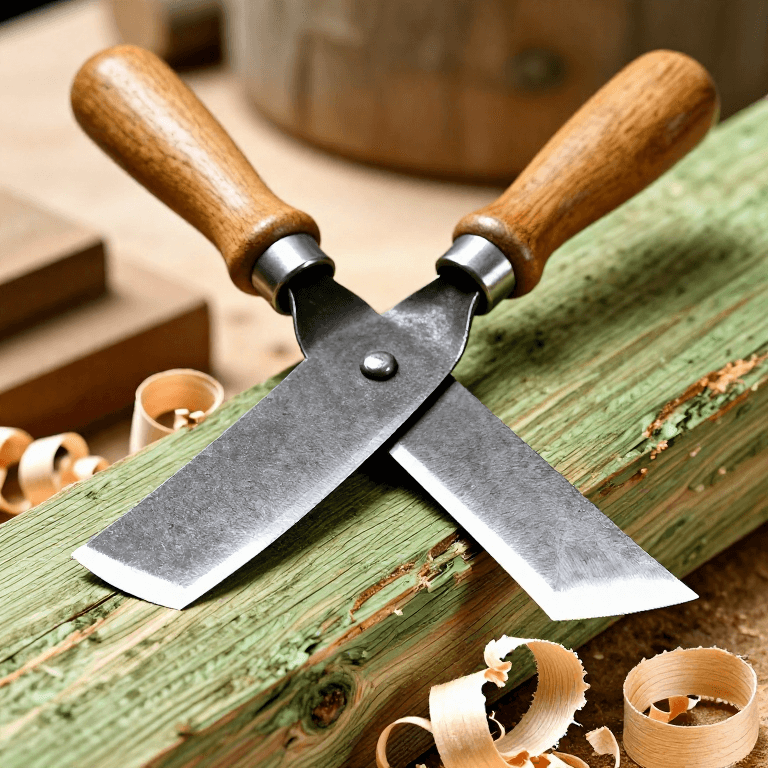
Hollow with the adze
Hollow with the adze
Strumenti necessari:
 Ascia a sgorbia
Refine with a gouge
Refine with a gouge
Strumenti necessari:
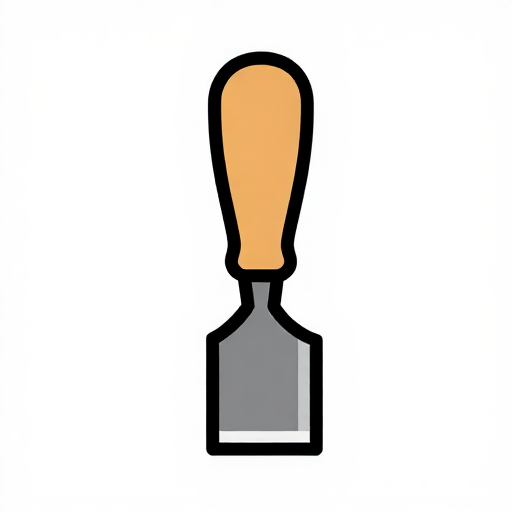 Sgorbia da legno
 Mazzuolo di legno
Even the wall thickness
Even the wall thickness
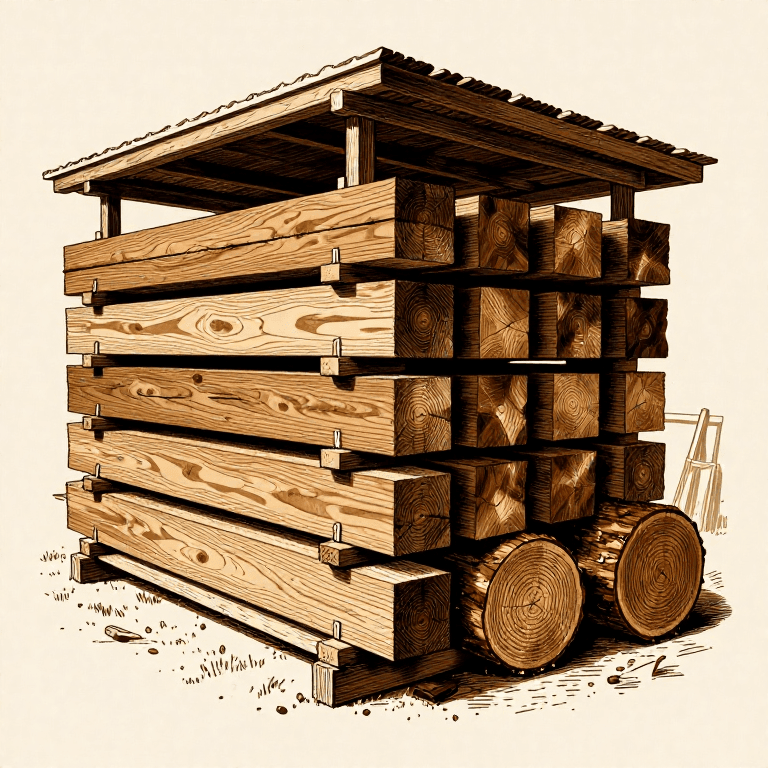
Dry the bowl slowly
Dry the bowl slowly
Materiali per questo passaggio:
 Cera d'api1 pezzo
Materiali
2- 1 pezzoSegnaposto
- 1 pezzoSegnaposto
Strumenti richiesti
4- Segnaposto
- Segnaposto
- Segnaposto
- Segnaposto
Materiali dei progetti collegati
Blueprint correlati
Questi blueprint condividono conoscenze — tecniche, materiali o principi
CC0 Pubblico dominio
Questo progetto è rilasciato sotto CC0. Sei libero di copiare, modificare, distribuire e utilizzare quest'opera per qualsiasi scopo, senza chiedere permesso.
Supporta il Maker acquistando prodotti tramite il suo progetto dove guadagna una Commissione Maker stabilita dai venditori, oppure crea una nuova iterazione di questo progetto e includilo come collegamento nel tuo progetto per condividere i ricavi.