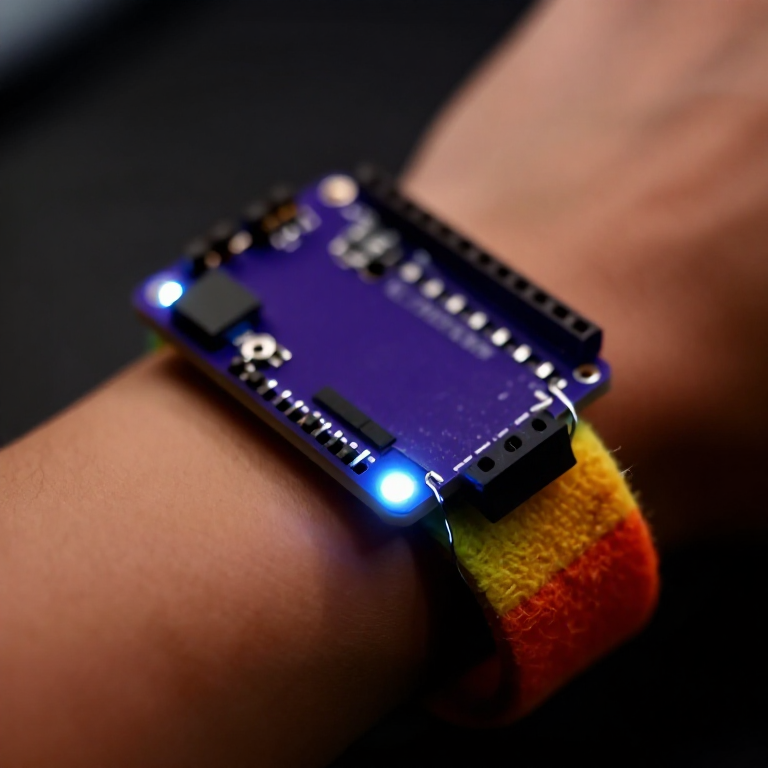


Making a Motion-Reactive LilyPad Patch
Sew a patch that lights up when it moves. A LilyPad accelerometer senses motion in three directions, and a short program flashes an LED whenever you shake or swing it — a reactive costume piece, a dance accessory, or a 'don't-touch' bag alarm. Introduces the accelerometer and reading three sensor axes at once.
Istruzioni
Sew the board, accelerometer and LED
Sew the board, accelerometer and LED
Sew a LilyPad Arduino, a LilyPad accelerometer and a LilyPad LED onto felt. Wire it: the accelerometer's + to the board's +, its - to -, and its X, Y and Z tabs to analog pins A2, A3 and A4; the LED to pin 5 and to -. Keep every line separate.
Materiali per questo passaggio:
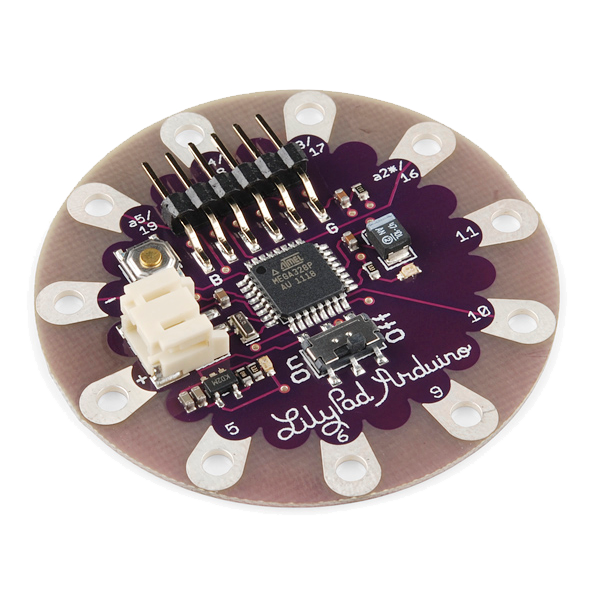 LilyPad Arduino Simple Board1 pezzo
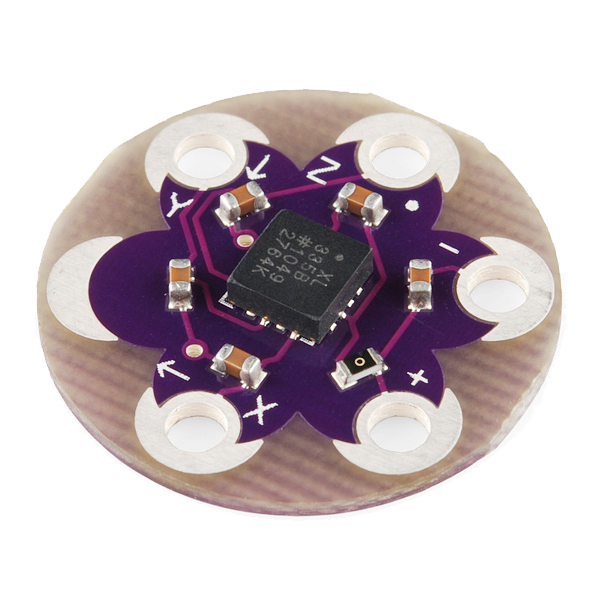 LilyPad Accelerometer ADXL3351 pezzo
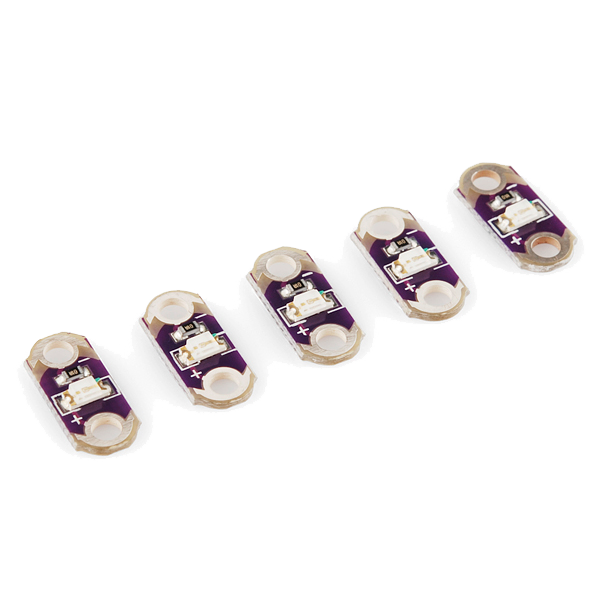 LilyPad LED - 5 pcs1 confezione
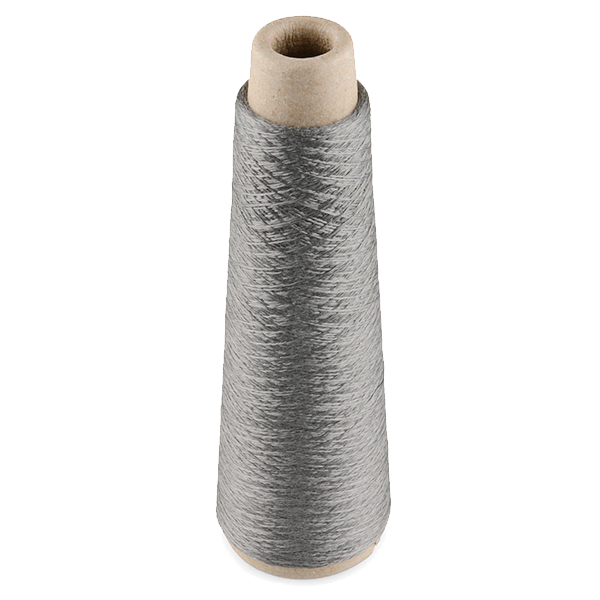 Conductive Thread - 60g (Stainless Steel)1 rocchetto
 Hand Sewing Needles (Assorted, 30-Pack)1 confezione
 Wool Felt Sheet1 foglio
Connect the programmer
Connect the programmer
Plug the LilyPad FTDI onto the programming header and connect the USB cable. Open the Arduino IDE and select the LilyPad Arduino board and its serial port.
Materiali per questo passaggio:
 LilyPad FTDI Basic Breakout - 5V1 pezzo
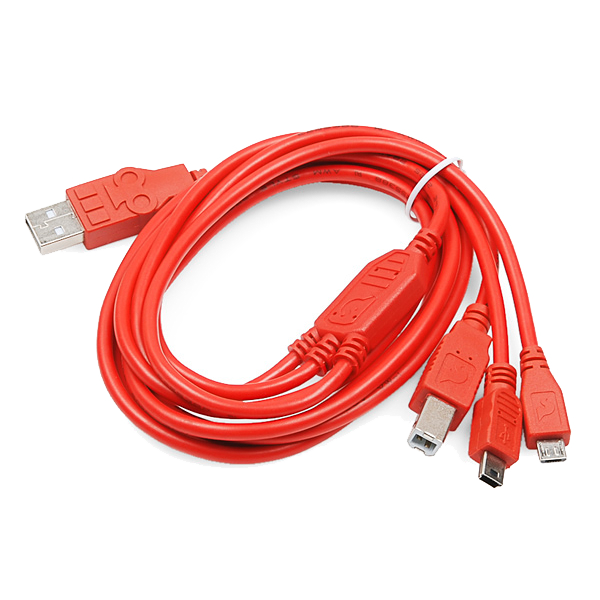 SparkFun Cerberus USB Cable - 1.8 meter1 pezzo
Strumenti necessari:
 Computer with Arduino IDE
Upload the motion sketch
Upload the motion sketch
Paste this sketch and upload. It watches how much the three axes change between readings and lights the LED when the patch moves.
Test and tune the sensitivity
Test and tune the sensitivity
Hold the patch still — the LED stays off. Shake or swing it — the LED lights. If it's too twitchy or not sensitive enough, change moveThreshold in the sketch (higher = needs a bigger movement) and re-upload.
Go wireless and wear it
Go wireless and wear it
Unplug the FTDI, sew a LilyPad coin-cell holder to the board (+ to +, - to -), drop in a CR2032 and switch on. Sew the felt onto a sleeve, shoe or bag — it flashes whenever you move.
Materiali per questo passaggio:
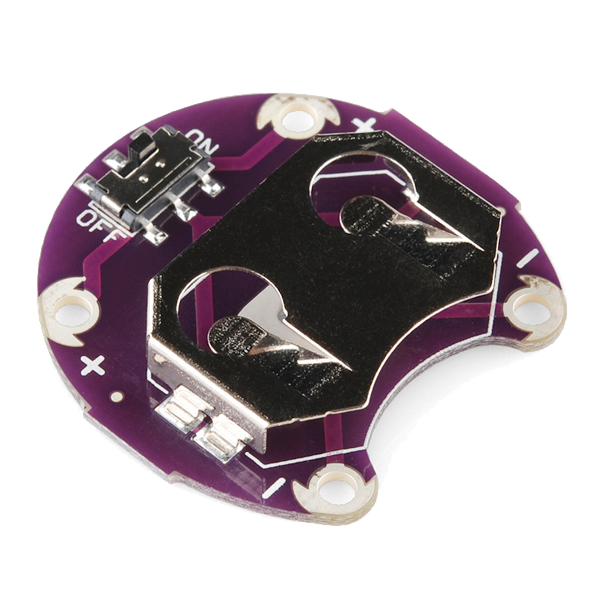 LilyPad Coin Cell Battery Holder - w/Switch - 20mm1 pezzo
 CR2032 Coin Cell Battery1 pezzo
Materiali
10- 1 pezzo€17.00
- €13.00
- 1 confezione€4.00
- 1 rocchetto€34.00
- 1 confezioneSegnaposto
- 1 foglioSegnaposto
- €13.00
- 1 pezzoSegnaposto
Strumenti richiesti
1- Segnaposto
Blueprint correlati
Questi blueprint condividono conoscenze — tecniche, materiali o principi
Related blueprints
Other builds that share materials, tools, or techniques with this one.
CC0 Pubblico dominio
Questo progetto è rilasciato sotto CC0. Sei libero di copiare, modificare, distribuire e utilizzare quest'opera per qualsiasi scopo, senza chiedere permesso.
Supporta il Maker acquistando prodotti tramite il suo progetto dove guadagna una Commissione Maker stabilita dai venditori, oppure crea una nuova iterazione di questo progetto e includilo come collegamento nel tuo progetto per condividere i ricavi.