
ARTE
BELLEZZA E BENESSERE
MESTIERE
CULTURA E STORIA
DIVERTIMENTO
AMBIENTE
CIBO E BEVANDE
INGEGNERIA INVERSA
SCIENZE
SPORT
TECNOLOGIA
INDOSSABILI
Telegraph Beater Churn: Nested Knife-Edged Beaters That Whip the Cream
Martin

Creato da

Martin

6. ottobre 2026NO
19
0
0
0
0

Telegraph Beater Churn: Nested Knife-Edged Beaters That Whip the Cream

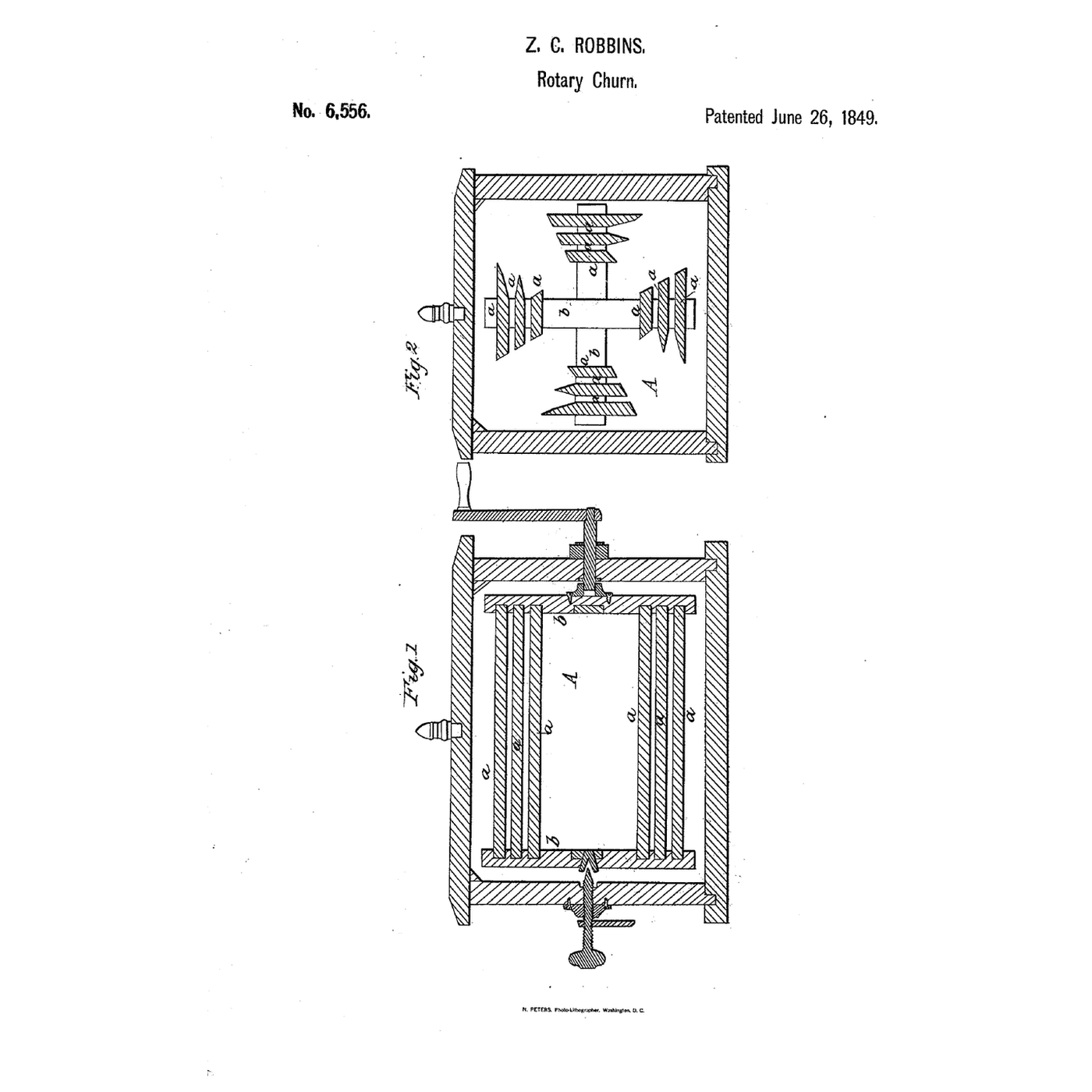
Robbins compared his agitator's work on cream to that "produced by knives upon the whites of eggs, during the process of what is called whipping them up." Z. C. Robbins of St. Louis, Missouri, received US 6,556, dated 26 June 1849 (antedated 1 June 1849, reissued as No. 159), for what he called the Telegraph Churn: a rotating agitator of four series of thin beaters on radial arms, each series of two, three or more slats one within another with narrow spaces between, narrowing inward. Their front edges are bevelled sharp, their rear edges blunt; reversed, "the butter will be collected into the center." This rung works out when the cream would fly off, then prints the beater series and spiders, fits them in a box, and makes butter.
Intermedio
About 3 hours, plus printing

Istruzioni

1

When the cream flies off

Caricamento del notebook Jupyter…
2

Bevelled beaters on a crank before it

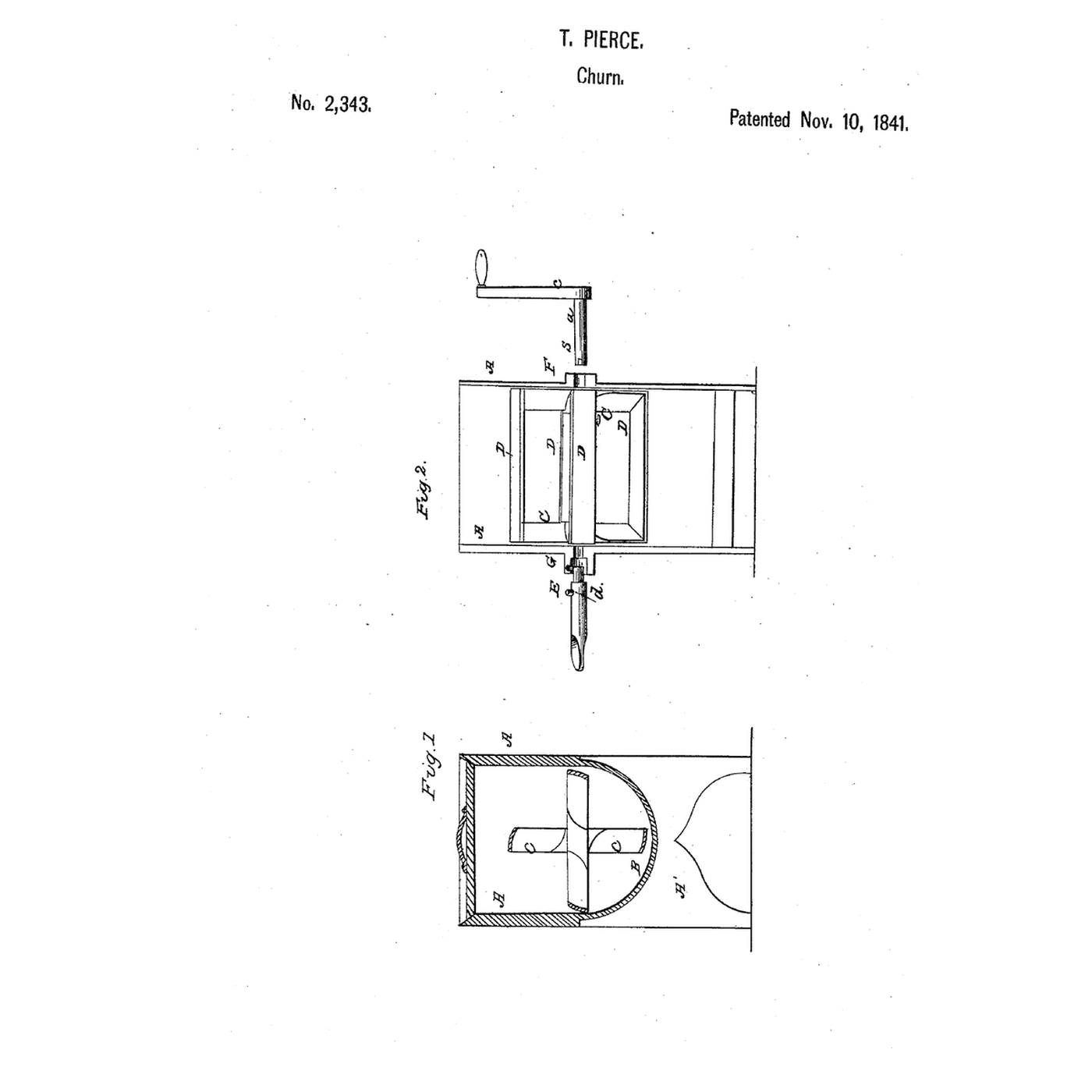
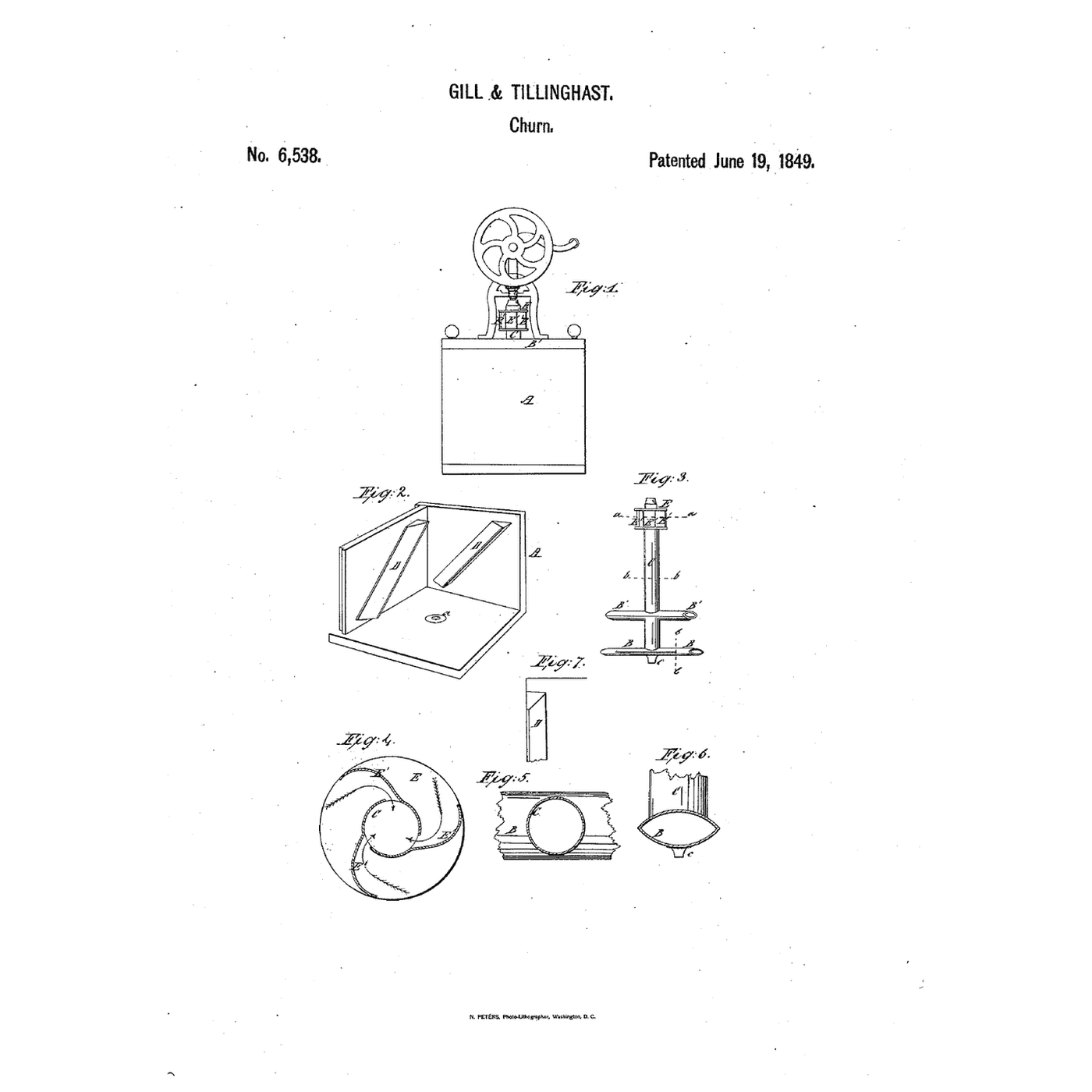
The embedded blueprint bevels its buckets to drive the cream inward. Robbins nests thin knife-edged slats and reverses them to gather the butter.
3

Read US 6,556

"When the agitator is rotated in milk or cream placed in the churn box, the sharp edges of the beaters cut into and divide the particles, and gather the milk or cream between them by their converging surfaces; and as the beaters ascend, they carry up quantities of milk or cream in the spaces between them, which is discharged in their curved sheets at their rear edges in the atmosphere in the upper part of the churn."
4

Print the parts

Print four beater series on end (/uploads/blueprints/telegraph-beater-churn-beater-series.stl): three nested slats, narrowing inward, sharp at the front and blunt at the rear, joined at both ends. Print two spiders (/uploads/blueprints/telegraph-beater-churn-spider.stl) and the crank arm (/uploads/blueprints/telegraph-beater-churn-crank-arm.stl). Print in PETG at 0.2 mm layers, 30 % infill, 4 walls; wash before first use.

Materiali per questo passaggio:

Filamento PETGFilamento PETG1 pezzo

Strumenti necessari:

Stampante 3D a filamento (FDM)Stampante 3D a filamento (FDM)
5

Assemble the agitator

Glue the two spiders on a 10 mm square hardwood axle 130 mm apart, arms in line. Screw a beater series between each pair of arms with M3 screws, all with their sharp edges leading the same way.

Materiali per questo passaggio:

Tasselli di legno duroTasselli di legno duro1 pezzo
Viti da metalloViti da metallo1 pezzo
Colla da legnoColla da legno1 pezzo

Strumenti necessari:

Sega a manoSega a mano
Set di cacciavitiSet di cacciaviti
6

The box

Take a food-safe box about 200 × 170 × 170 mm. Drill both ends on the axis 85 mm up, round the axle where it runs, pass it through, and glue the crank arm and a dowel handle on its outer end. He found it could run uncovered.

Materiali per questo passaggio:

Contenitore di conservazione per uso alimentareContenitore di conservazione per uso alimentare1 pezzo
Colla da legnoColla da legno1 pezzo

Strumenti necessari:

Trapano a batteriaTrapano a batteria
Serie di punte da trapanoSerie di punte da trapano
Carta abrasivaCarta abrasiva
7

The build in 3D

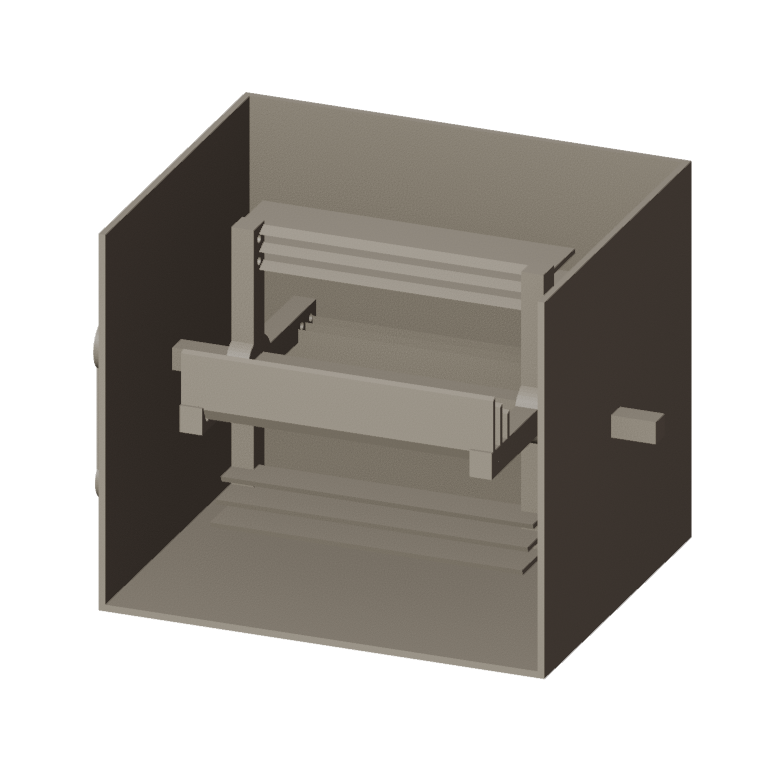
FreeCAD model of this build, not of the patent: the box with one side off to show the agitator of two spiders and four series of nested beaters on the axle, and the crank.
File di designBLENDCC0 - Free
8

Crank, then reverse to gather

Let the heavy cream stand until it reaches about 15 °C, checked with the thermometer. Pour in 1.5 litres. Crank steadily, sharp edges leading; time until the butter comes. Then crank backward a while so the blunt rear edges gather it to the centre. Pour off the buttermilk, add cold water, churn a little and pour off again until it runs clear; work in a pinch of salt and weigh the butter.
Passo 8 - Image 1

Materiali per questo passaggio:

Panna da montarePanna da montare1500 ml
Sale marino grossoSale marino grosso1 pezzo
AcquaAcqua1 pezzo

Strumenti necessari:

Termometro a sonda permanenteTermometro a sonda permanente
CronometroCronometro
Bilancia digitale da cucinaBilancia digitale da cucina
Grande ciotola da impasto in acciaio inossidabileGrande ciotola da impasto in acciaio inossidabile
9

Cream thrown out, butter not gathered

Telegraph beater churn troubleshooting.

Flow

Loading...
10

History and honest limits

**Z. C. Robbins** of St. Louis, Missouri, received US 6,556, dated 26 June 1849; antedated by request 1 June 1849; reissued as No. 159. He wrote that "butter has been produced from milk at the usual churning temperature with this churn, in two minutes"; that is his claim, not our measurement. He did not limit himself to the number or proportions of the parts, nor to any material. He claimed the series of floats or beaters so formed that their thick inclined rear edges gather the butter toward the centre when the motion is reversed. **Honest limits.** A food-safe box and printed beaters stand in for his. FDM prints hold food in their layer lines, so wash well and replace when worn. Your times and weights are the result.

Materiali

8

Strumenti richiesti

10

File di progetto

1

Questo progetto realizza

CC0 Pubblico dominio

Questo progetto è rilasciato sotto CC0. Sei libero di copiare, modificare, distribuire e utilizzare quest'opera per qualsiasi scopo, senza chiedere permesso.

Supporta il Maker acquistando prodotti tramite il suo progetto dove guadagna una Commissione Maker stabilita dai venditori, oppure crea una nuova iterazione di questo progetto e includilo come collegamento nel tuo progetto per condividere i ricavi.

Commenti

(0)

Accedi per partecipare alla discussione

Caricamento commenti...