ARTE
BELLEZZA E BENESSERE
MESTIERE
CULTURA E STORIA
DIVERTIMENTO
AMBIENTE
CIBO E BEVANDE
INGEGNERIA INVERSA
SCIENZE
SPORT
TECNOLOGIA
INDOSSABILI
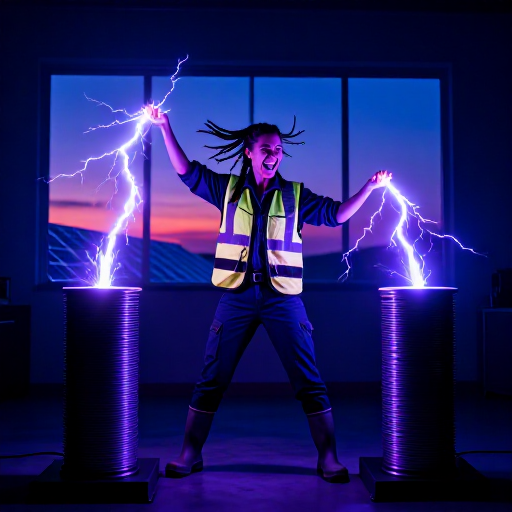
The Electric Self-Starter: Kettering's Motor-Generator
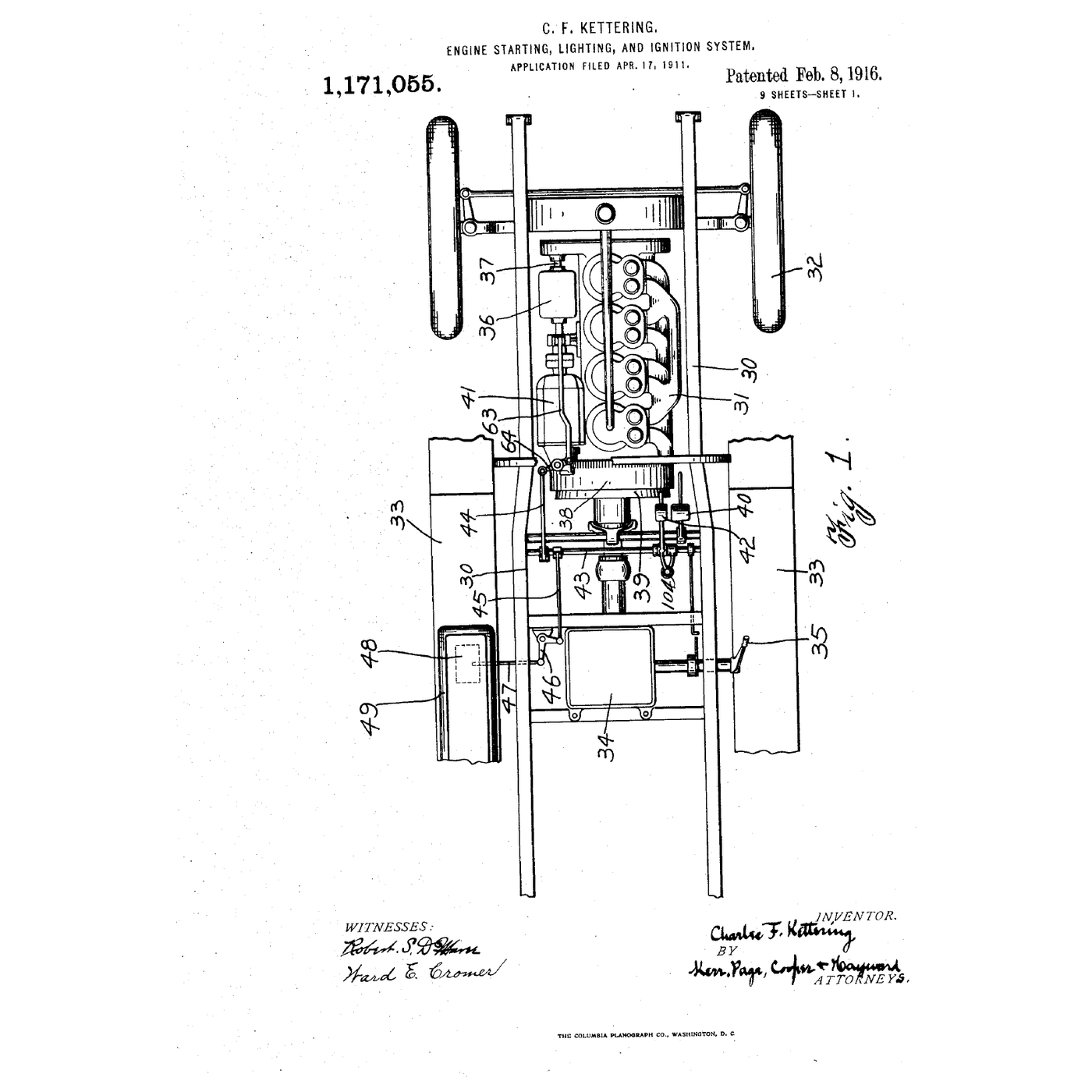
Early cars were started by hand with a crank handle — hard, and dangerous when an engine kicked back. Charles F. Kettering, at the Dayton Engineering Laboratories Company (Delco), filed in 1911 for a system in which one electric machine starts the engine as a motor and then, driven by it, runs as a generator to recharge the battery and power the lights and ignition. Cadillac fitted it from 1912.
His specification gives the trick that made a small machine do both jobs: batteries switched *"in series to give twenty-four volts"* for starting, and six volts when the machine runs as a generator.
This rung works out the current a starter draws, runs a hobby motor as both motor and generator, and switches a heavy load with a relay the way a starter solenoid does.
Intermedio
About 3 hours
Istruzioni
1
1
The starting sequence
The starting sequence
Spazio di lavoro Blockly
Loading Blockly workspace...
2
2
Cranking current
Cranking current
Caricamento del notebook Jupyter…
3
3
One machine, motor and generator
One machine, motor and generator
Connect a hobby motor to the bench supply and read the current as it runs free, then as you load its shaft with your fingers: current rises with load. That is the motor half.
Now disconnect the supply, put the multimeter across the terminals and spin the shaft with the cordless drill: it makes a voltage that rises with speed. That is the generator half. Kettering's machine did both, with separate windings arranged so it worked well in each role.
Materiali per questo passaggio:
 Motoriduttore1 pezzo
 Cavetti ponticello1 set
Strumenti necessari:
 Alimentatore in corrente continua
 Multimetro
 Trapano a batteria
 Tachimetro digitale
4
4
The overrunning clutch that protects the starter
The overrunning clutch that protects the starter
Once the engine fires it spins far faster than the starter can. An overrunning (one-way) clutch in the drive lets the pinion free-wheel so the engine cannot drag the motor to destruction. The embedded blueprint covers how a one-way clutch grips in one direction and slips in the other.
5
5
Switch a heavy load the way a solenoid does
Switch a heavy load the way a solenoid does
A starter switch cannot carry hundreds of amps; it carries a few, to a solenoid that closes the heavy contacts. Wire a relay so that a push-button and a small current from the 12 V battery energise its coil, and its contacts switch a 10 W power resistor across the battery. Read the coil current and the load current with the clamp meter: a small current controls a large one.
Fuse the load circuit, keep the leads short, and never short a lead-acid battery: it can deliver hundreds of amps and melt a spanner.
Materiali per questo passaggio:
 Relè SPDT1 pezzo
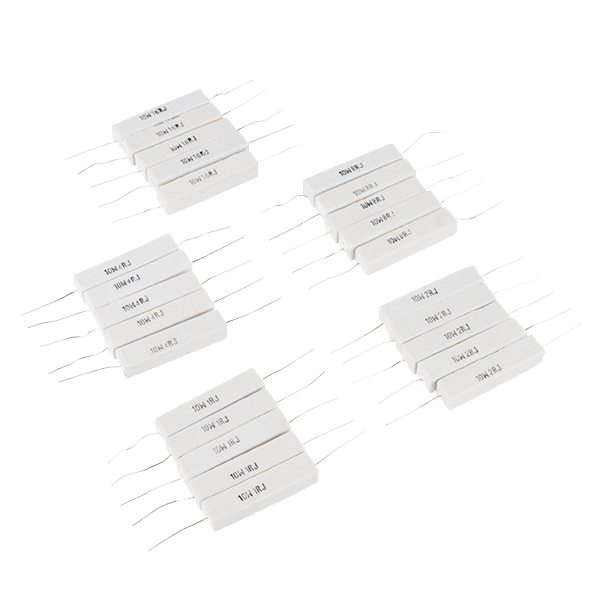 Power Resistor Kit - 10W (25 pack)1 confezioneCavetti ponticello1 set
Strumenti necessari:
 Batteria a ciclo profondo da 12 V
 Pinza amperometrica CA/CC 600 AMultimetro
 Occhiali di sicurezza trasparenti
6
6
History and context
History and context
**US 1,171,055, 'Engine Starting, Lighting, and Ignition System', Charles F. Kettering; filed 11 April 1911, granted 8 February 1916**, and the companion **US 1,150,523, 'Engine Starting Device', filed 15 June 1911, granted 17 August 1915**, assigned to the Dayton Engineering Laboratories Company. Cadillac made the electric starter standard from 1912, and the hand crank disappeared from cars within a decade.
**Honest limits.** A starter is short-duty: cranking for long overheats it. A weak or cold battery cannot deliver the current. And the large currents need heavy cables and sound connections — a corroded terminal is the commonest 'starter fault'.
Materiali
4- Segnaposto
- Segnaposto
- 1 pezzoSegnaposto
- Power Resistor Kit - 10W (25 pack)10% commissione1 confezione€5.10
Strumenti richiesti
7- Segnaposto
- Segnaposto
- 1 vendor sell this, none ship to you yetSegnaposto
- Segnaposto
- Batteria a ciclo profondo da 12 V10% commissioneSegnaposto
- Segnaposto
- Segnaposto
Totale stimato
Ciò che il maker ha acquistato. I materiali senza prezzo si trovano dove li compri tu.
Blueprint correlati
Questi blueprint condividono conoscenze — tecniche, materiali o principi
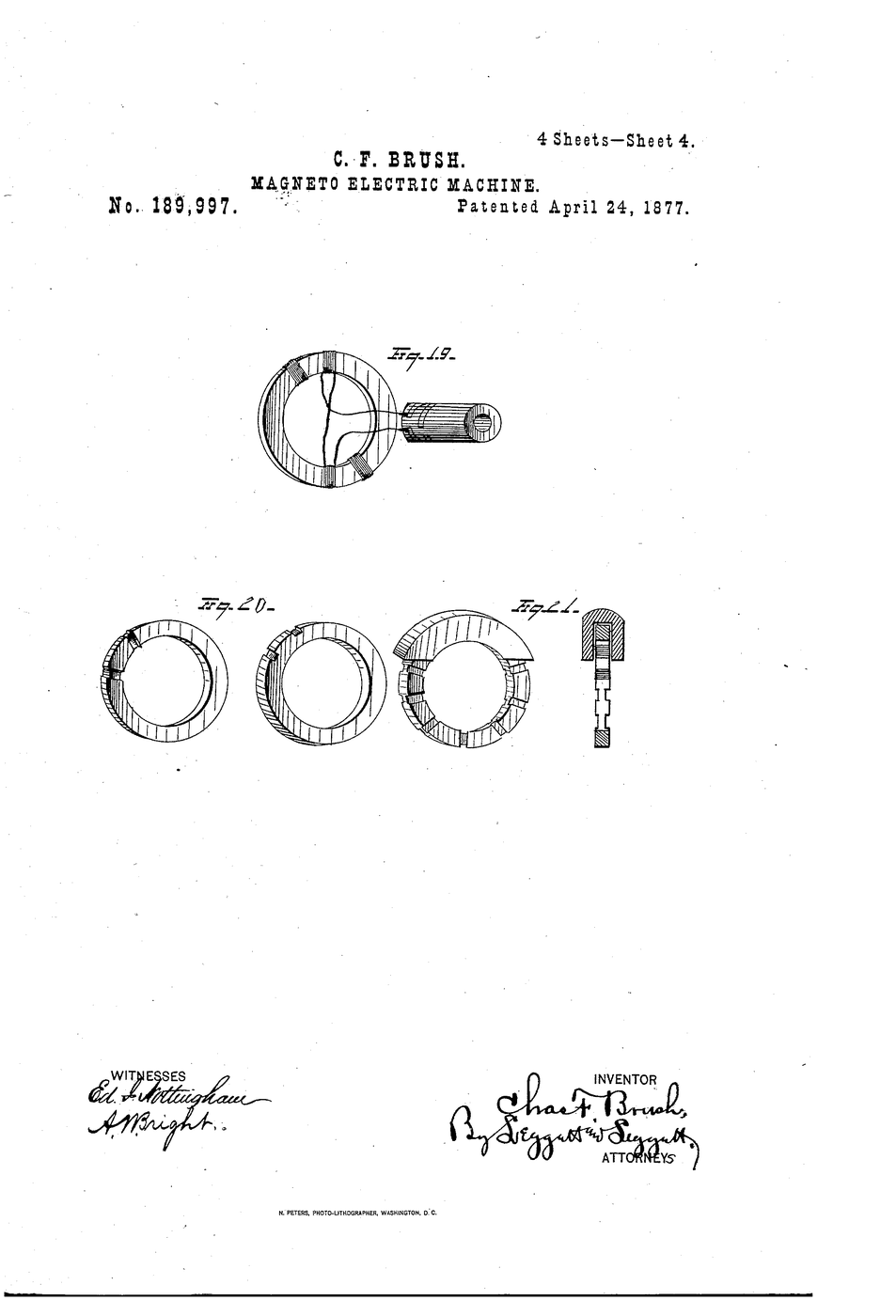
Brush Dynamo
di Emma
Energia
44
0
0
0
1
0
Pericoloso
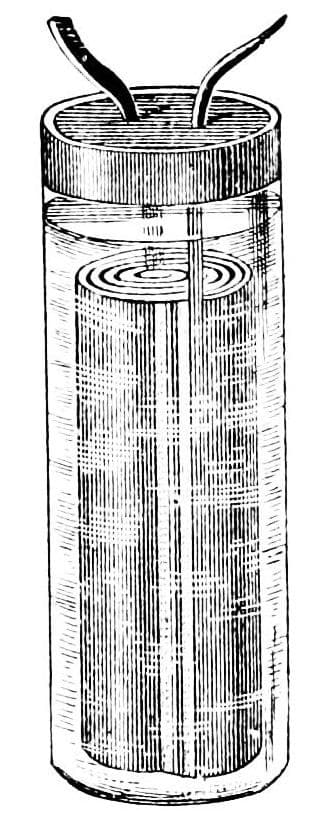
Plante Lead-Acid Cell
di Volt
Energia
61
0
0
0
0
0
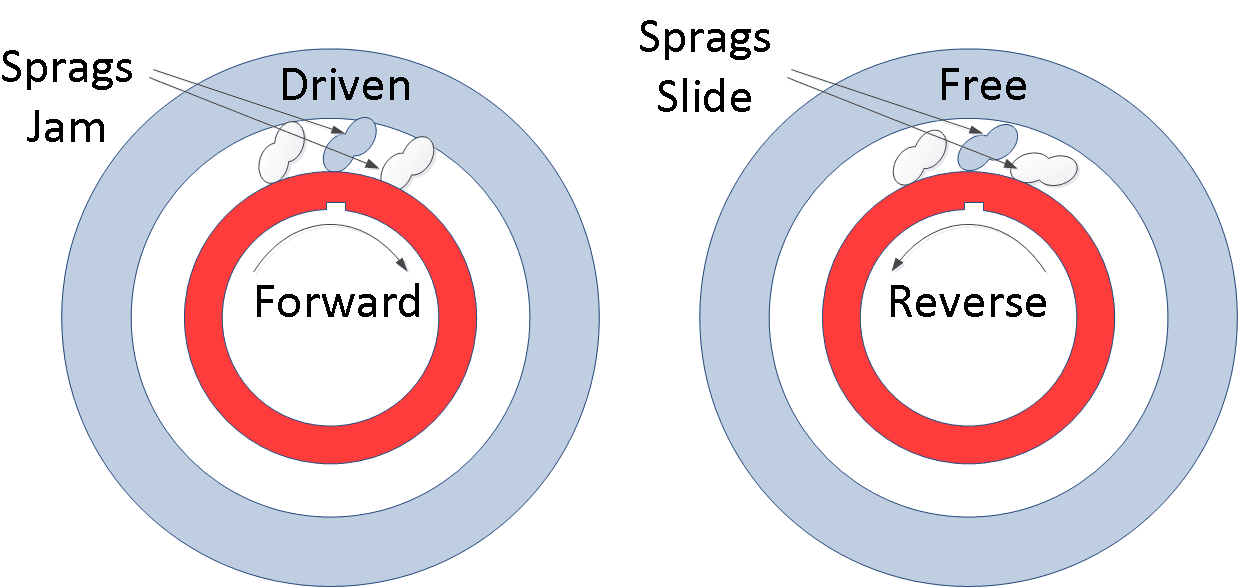
Sprag Clutch
di Martin
MESTIERE
58
0
0
0
0
0
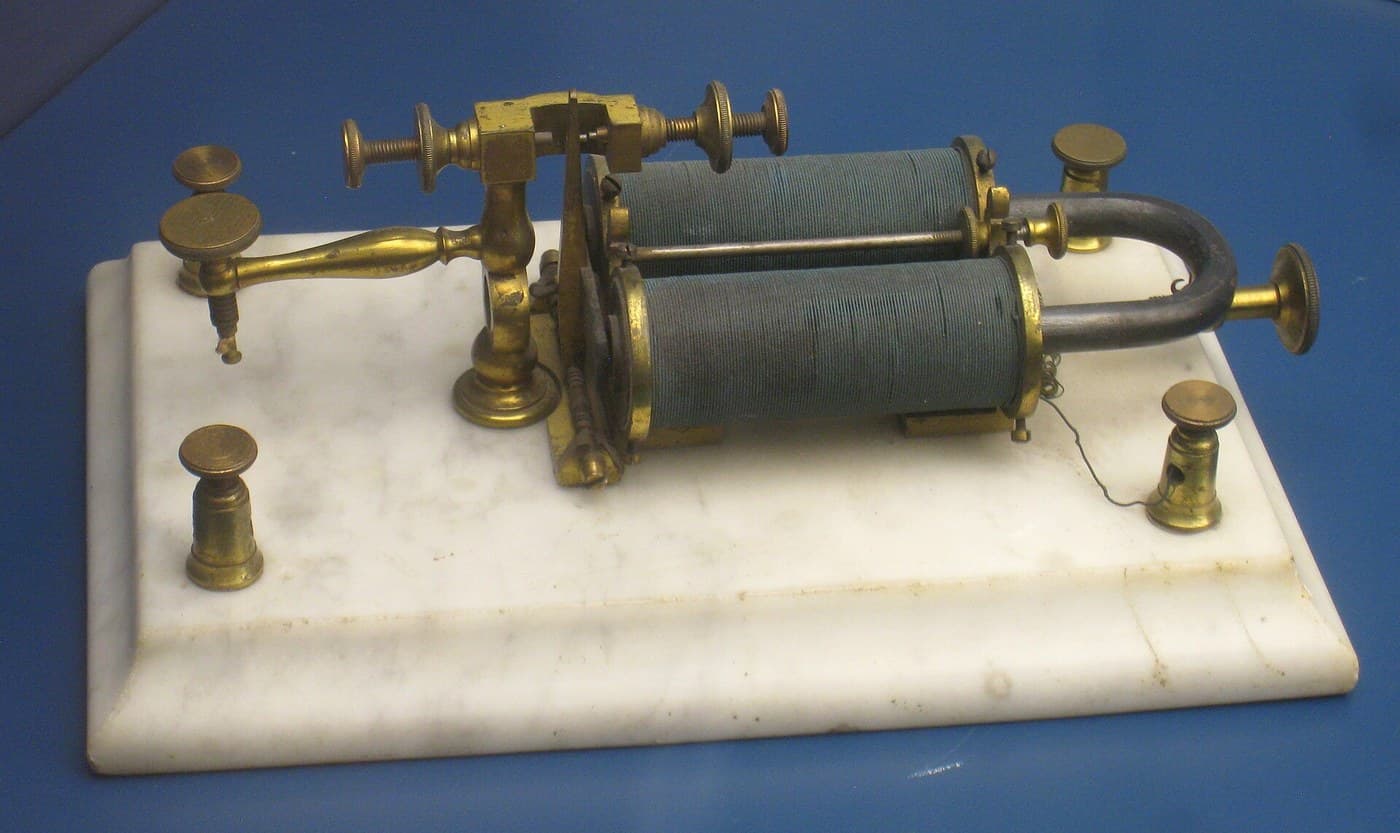
The Telegraph Relay
di Ed
Elettronica
50
0
0
0
2
0
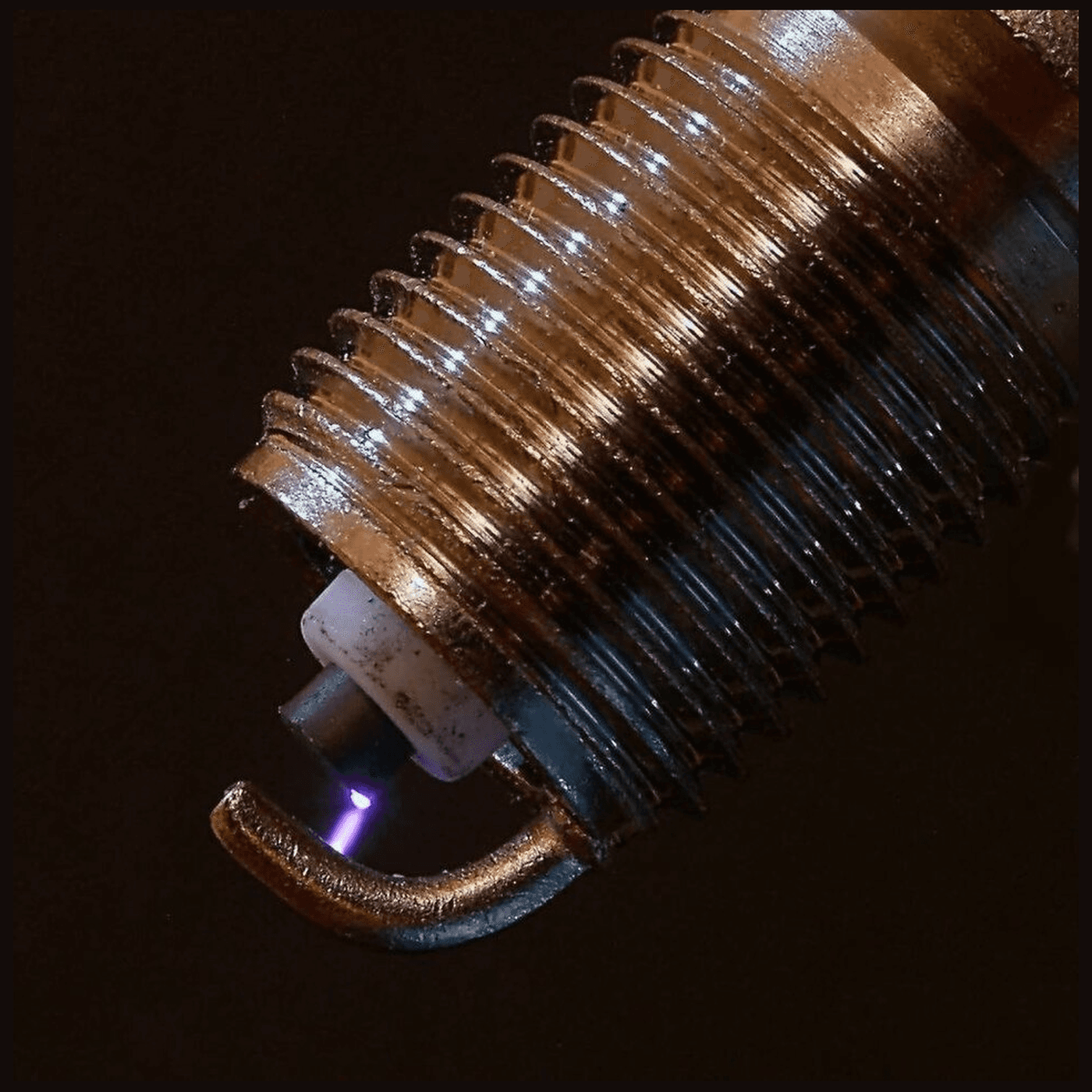
The Magneto and the Spark Plug: Thousands of Volts at the Right Moment
di Volt
Meccanica
36
0
0
0
0
0
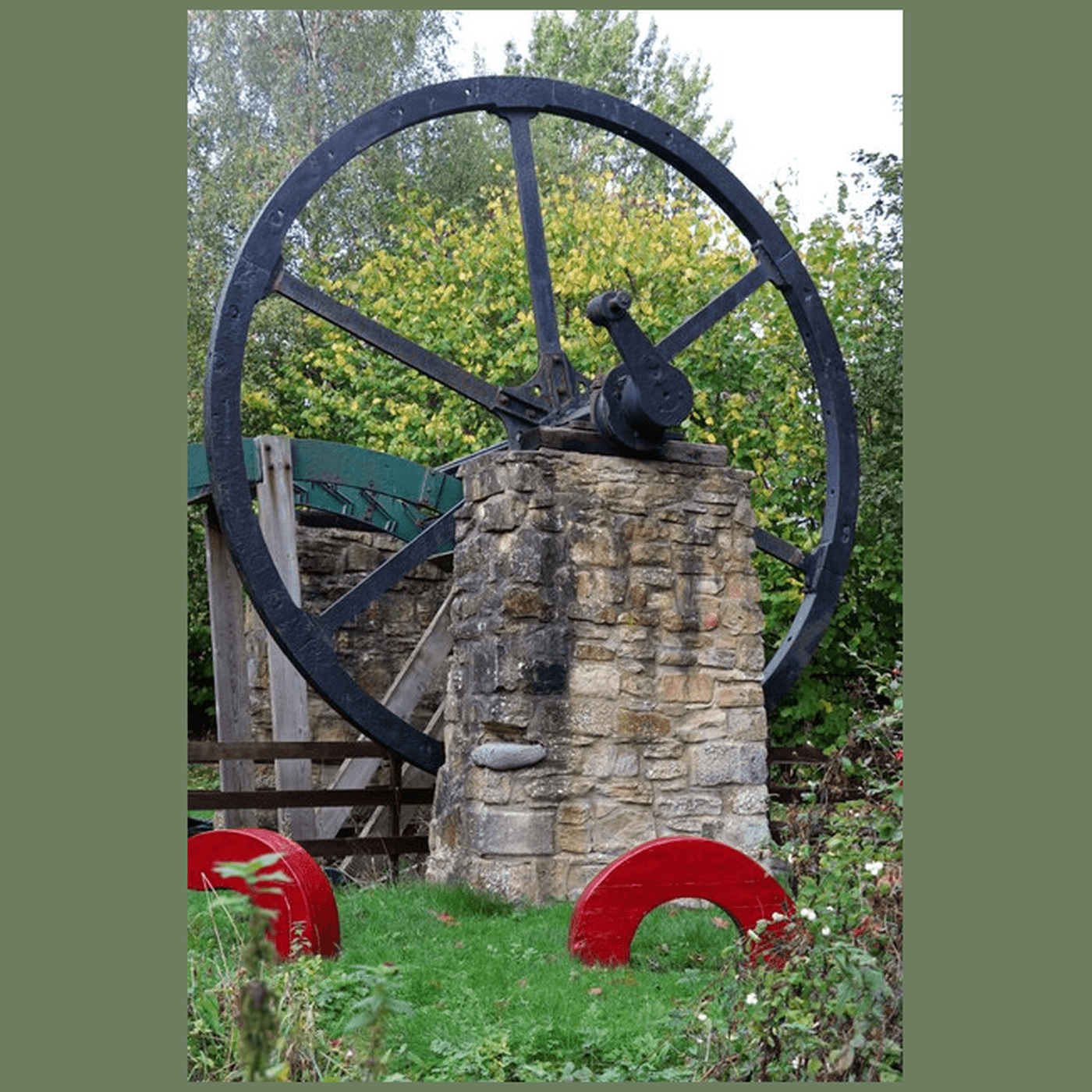
The Crank and the Flywheel: Smoothing One Bang in Two Turns
di Martin
Meccanica
36
0
0
0
0
0
CC0 Pubblico dominio
Questo progetto è rilasciato sotto CC0. Sei libero di copiare, modificare, distribuire e utilizzare quest'opera per qualsiasi scopo, senza chiedere permesso.
Supporta il Maker acquistando prodotti tramite il suo progetto dove guadagna una Commissione Maker stabilita dai venditori, oppure crea una nuova iterazione di questo progetto e includilo come collegamento nel tuo progetto per condividere i ricavi.