ARTE
BELLEZZA E BENESSERE
MESTIERE
CULTURA E STORIA
DIVERTIMENTO
AMBIENTE
CIBO E BEVANDE
INGEGNERIA INVERSA
SCIENZE
SPORT
TECNOLOGIA
INDOSSABILI


Twisted-Strip Egg Beater: Faces Beat and Edges Cut
A wire beater passes through the egg and leaves a wake without much froth.
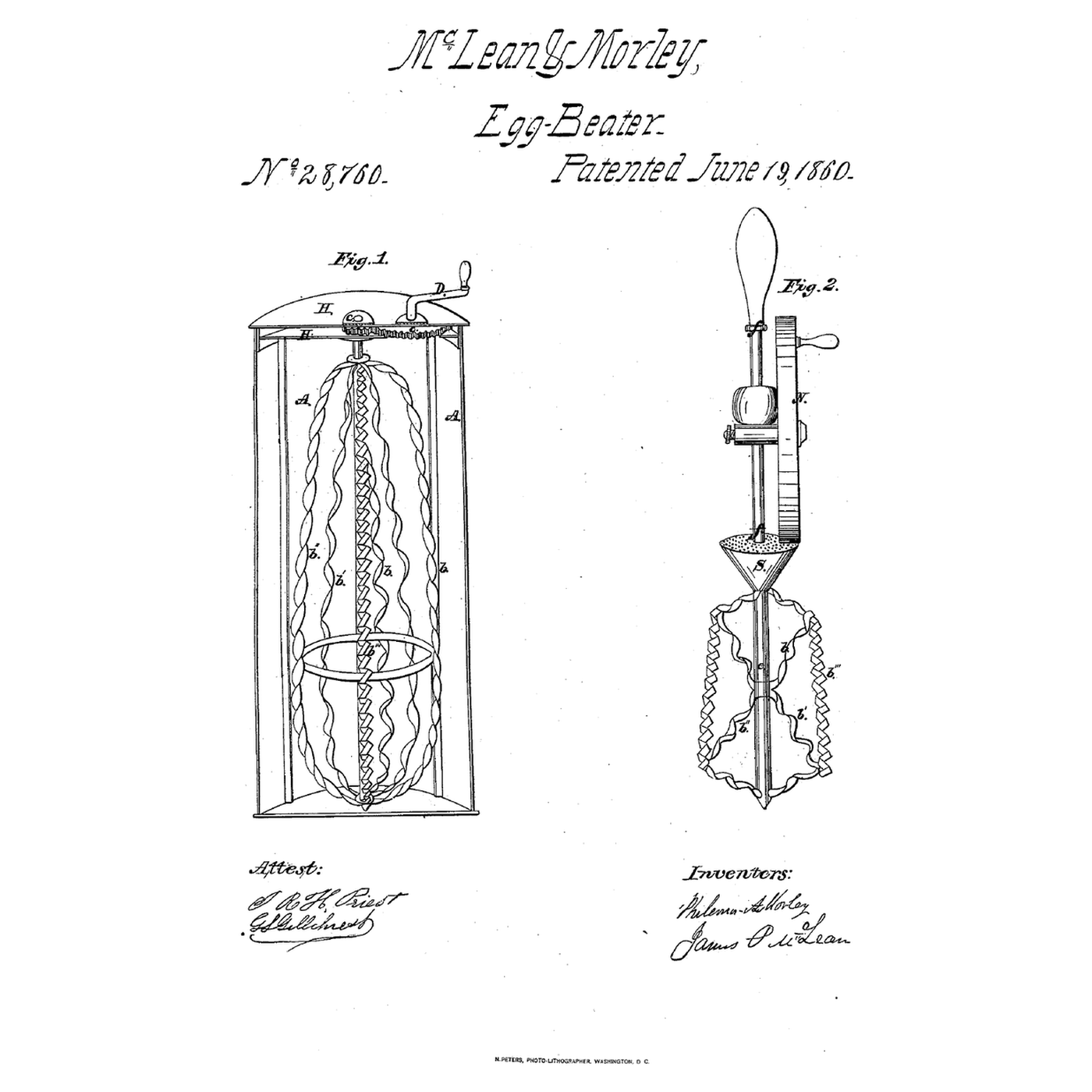
James P. McLean and Philemon A. Morley of Brooklyn received US 28,760, dated 19 June 1860, for an egg beater of corrugated or twisted strips of tin turned inside a can by a large and a small cog gear set between the double heads of its lid: "by means of twisted or corrugated strips of metal the gelatin mass is beaten by the flat surfaces as well as being broken or cut by the sharp edges thereof."
This rung works out how much of a twisted face pushes, then prints the gears and a cage of twisted strips, builds the lid drive on a can, and times a beating.
Intermedio
About 4 hours, plus printing
Istruzioni
1
1
How a twisted face beats
How a twisted face beats
Caricamento del notebook Jupyter…
2
2
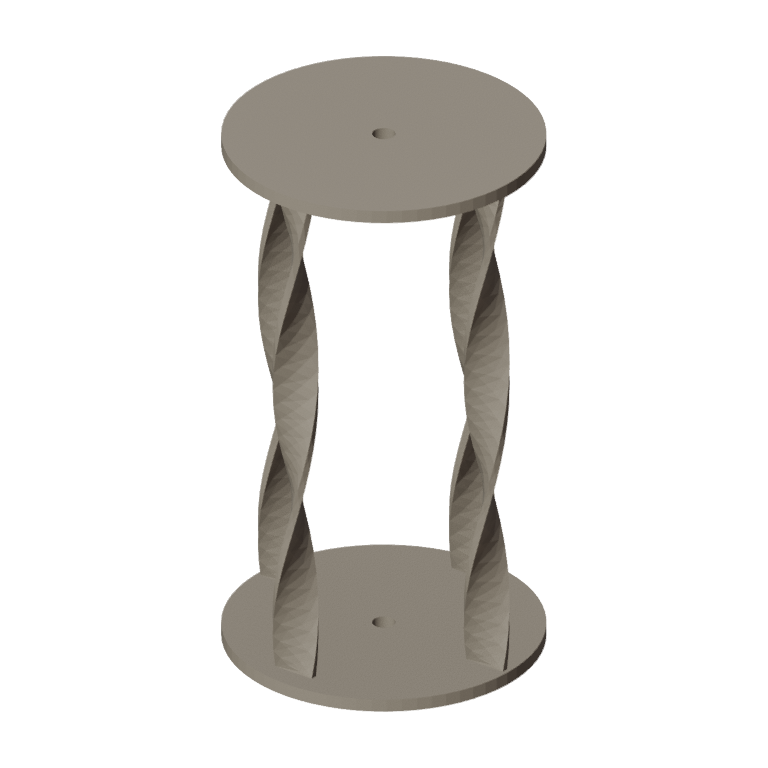
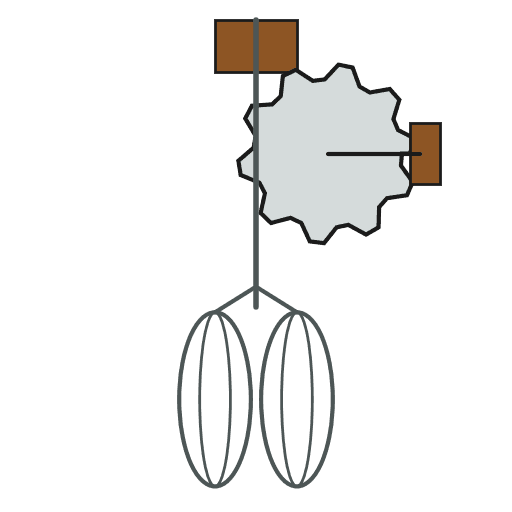
A geared wire beater before it
A geared wire beater before it
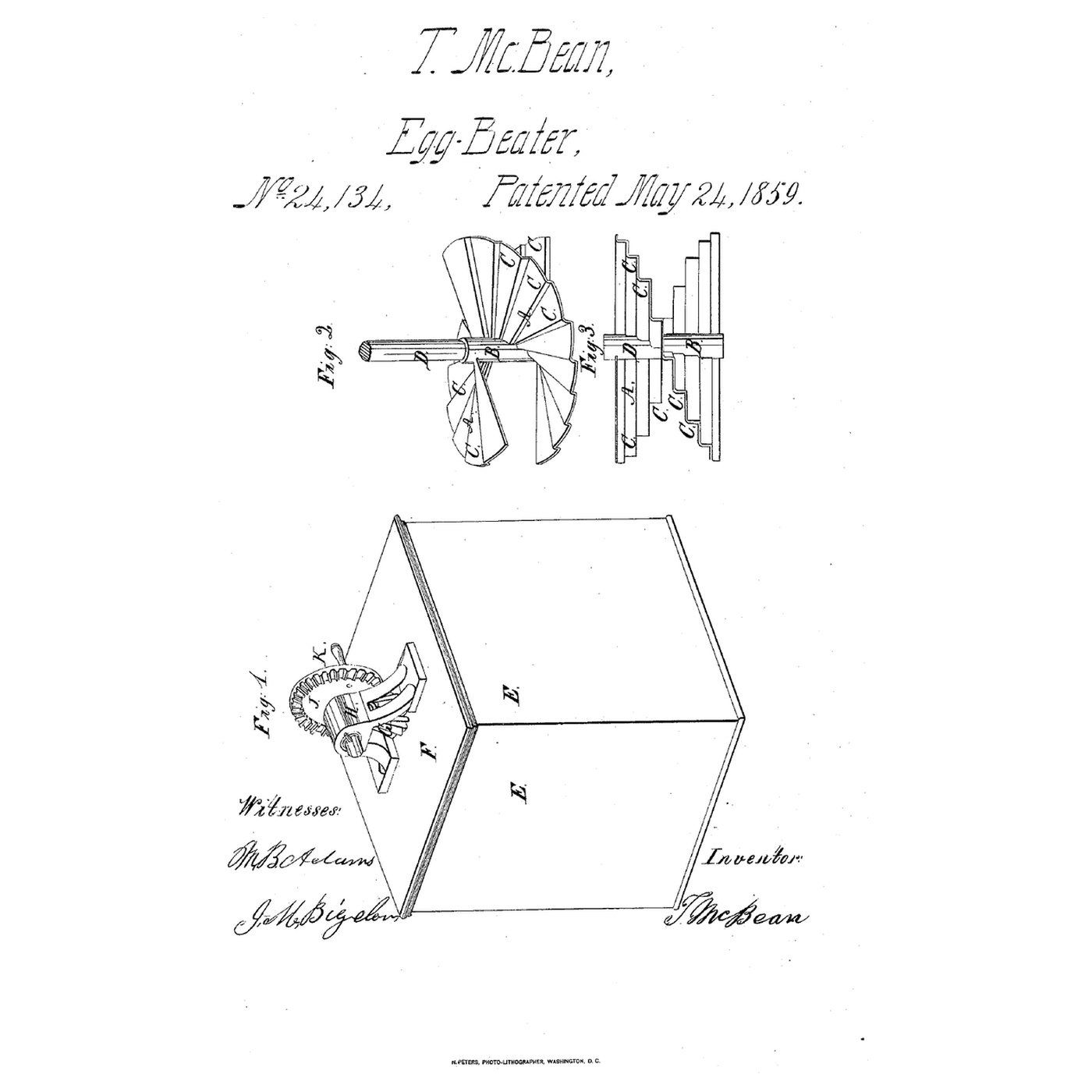
The embedded blueprint beats with bent wires. McLean and Morley use twisted strips with faces and edges.
3
3
Read US 28,760
Read US 28,760
"The superiority of our arrangement of egg beaters over those that are in common use, is that by means of twisted or corrugated strips of metal the gelatin mass is beaten by the flat surfaces as well as being broken or cut by the sharp edges thereof, hence the action is analogous to the motion produced by the hand and spoon, whereas an ordinary wire beater simply passes through the egg like the rudder of a boat, leaving a simple wake behind it without producing an immediate fomentation as is the case with our beater."
4
4
Print the gears and cage
Print the gears and cage
Print the 36-tooth gear (/uploads/blueprints/twisted-strip-egg-beater-gear-36.stl), the 12-tooth gear (/uploads/blueprints/twisted-strip-egg-beater-gear-12.stl) and the cage of four twisted strips (/uploads/blueprints/twisted-strip-egg-beater-cage.stl). Print in PETG at 0.2 mm layers, 30 % infill, 4 walls.
Materiali per questo passaggio:
 Filamento PETG1 pezzo
Strumenti necessari:
 Stampante 3D a filamento (FDM)
5
5
Make the double lid
Make the double lid
Cut two plywood disks to the can's mouth. Space them 20 mm apart on three M5 screws with nuts, and drill both for the crank shaft and the cage shaft 48 mm apart.
Materiali per questo passaggio:
 Pannello di compensato1 pezzo
 Viti da metallo1 pezzo
 Dado esagonale1 pezzo
 Rondella piana1 pezzo
Strumenti necessari:
 Sega da traforo
 Trapano a batteria
 Serie di punte da trapano
 Chiave regolabile a rullino
 Calibro digitale da 6 pollici
6
6
Fit the shafts and gears
Fit the shafts and gears
Epoxy the large gear on a crank shaft of 5 mm rod with a bent handle, and the small gear on the cage shaft, both between the heads. Epoxy the cage on the cage shaft's lower end.
Materiali per questo passaggio:
 Tondo di acciaio dolce1 pezzo
 Resina epossidica bicomponente1 pezzo
Strumenti necessari:
 Seghetto per metalli
 Morsa da banco
 Pinze a becchi piatti
7
7
The patent drawing
The patent drawing
US 28,760 drawing sheet, public domain (expired patent).
8
8
Beat egg whites
Beat egg whites
Put two egg whites in the can, fit the lid, and crank about once a second; time to stiff peaks.
Materiali per questo passaggio:
 Barattolo di latta1 pezzo
 Uovo2 pezzi
Strumenti necessari:
 Cronometro
9
9
Gears that skip, a cage that scrapes
Gears that skip, a cage that scrapes
Twisted-strip egg beater troubleshooting.
Flow
Loading...
10
10
History and honest limits
History and honest limits
**James P. McLean** and **Philemon A. Morley** of Brooklyn, assignors to P. A. Morley, received US 28,760, dated 19 June 1860. Their Fig. 2, for bakers, puts the strips on a vertical water-tight cylinder turning round a stationary handle, driven by a hand wheel whose rubber band grips the cylinder's grater-like funnel top instead of cog wheels. They claimed the twisted beaters in combination with the cylinder.
**Honest limits.** FDM prints hold food in their layer lines, so wash well and replace when worn. Printed strips and plywood heads stand in for tin. Your times are the result.
Materiali
9- 1 pezzoSegnaposto
- 1 pezzoSegnaposto
- 1 pezzoSegnaposto
- 1 pezzoSegnaposto
- 1 pezzoSegnaposto
- 1 pezzoSegnaposto
- Segnaposto
- 1 pezzoSegnaposto
- 2 pezziSegnaposto
Strumenti richiesti
10- Segnaposto
- Segnaposto
- 1 vendor sell this, none ship to you yetSegnaposto
- Segnaposto
- Segnaposto
- Segnaposto
- Segnaposto
- Segnaposto
- Segnaposto
- Segnaposto
Questo progetto realizza
Blueprint correlati
Questi blueprint condividono conoscenze — tecniche, materiali o principi
CC0 Pubblico dominio
Questo progetto è rilasciato sotto CC0. Sei libero di copiare, modificare, distribuire e utilizzare quest'opera per qualsiasi scopo, senza chiedere permesso.
Supporta il Maker acquistando prodotti tramite il suo progetto dove guadagna una Commissione Maker stabilita dai venditori, oppure crea una nuova iterazione di questo progetto e includilo come collegamento nel tuo progetto per condividere i ricavi.