コラボレーション
アート
美容とウェルネス
工芸
文化と歴史
エンターテインメント
環境
食品と飲料
リバースエンジニアリング
科学
スポーツ
テクノロジー
ウェアラブル
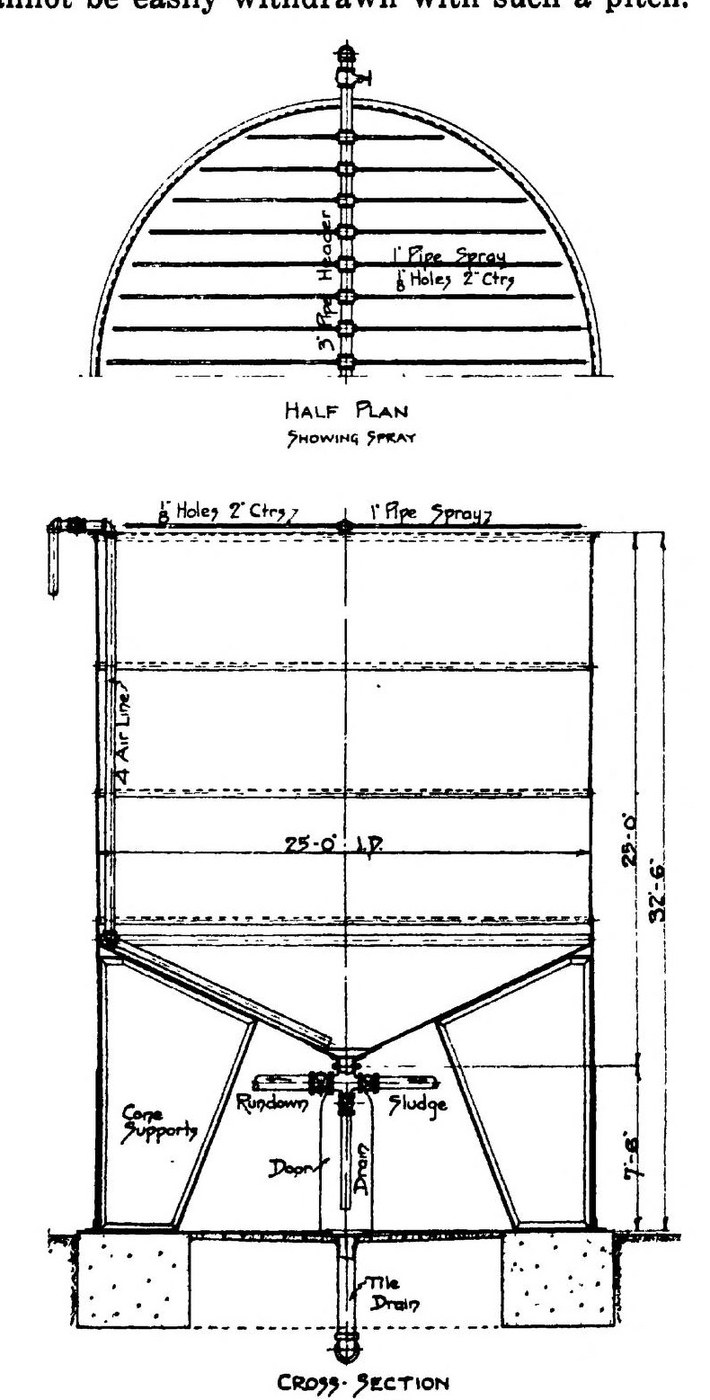


Agitated Mixing Tank: the Cone-Bottom Light-Oil Agitator (Bell, 1923)
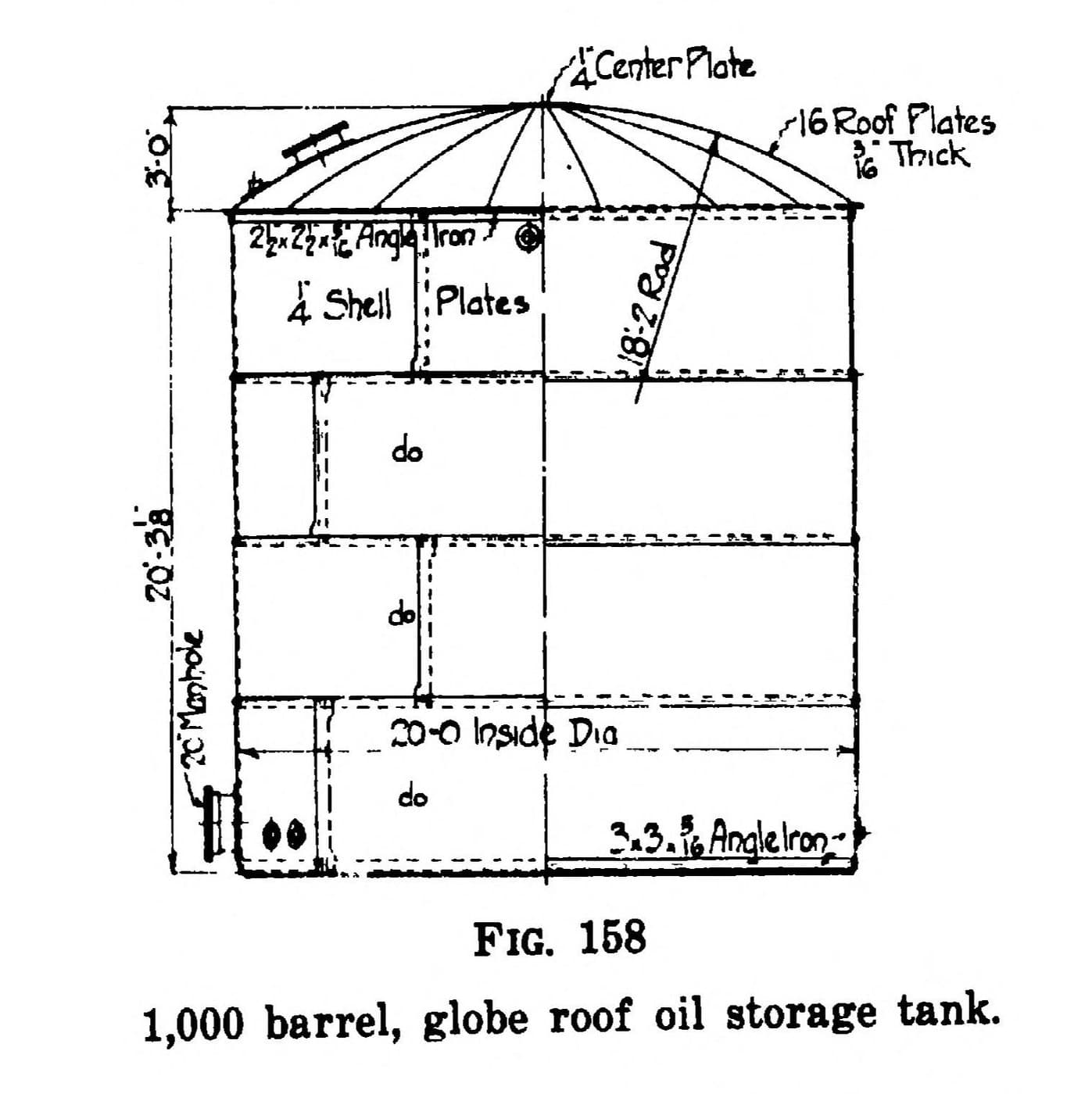
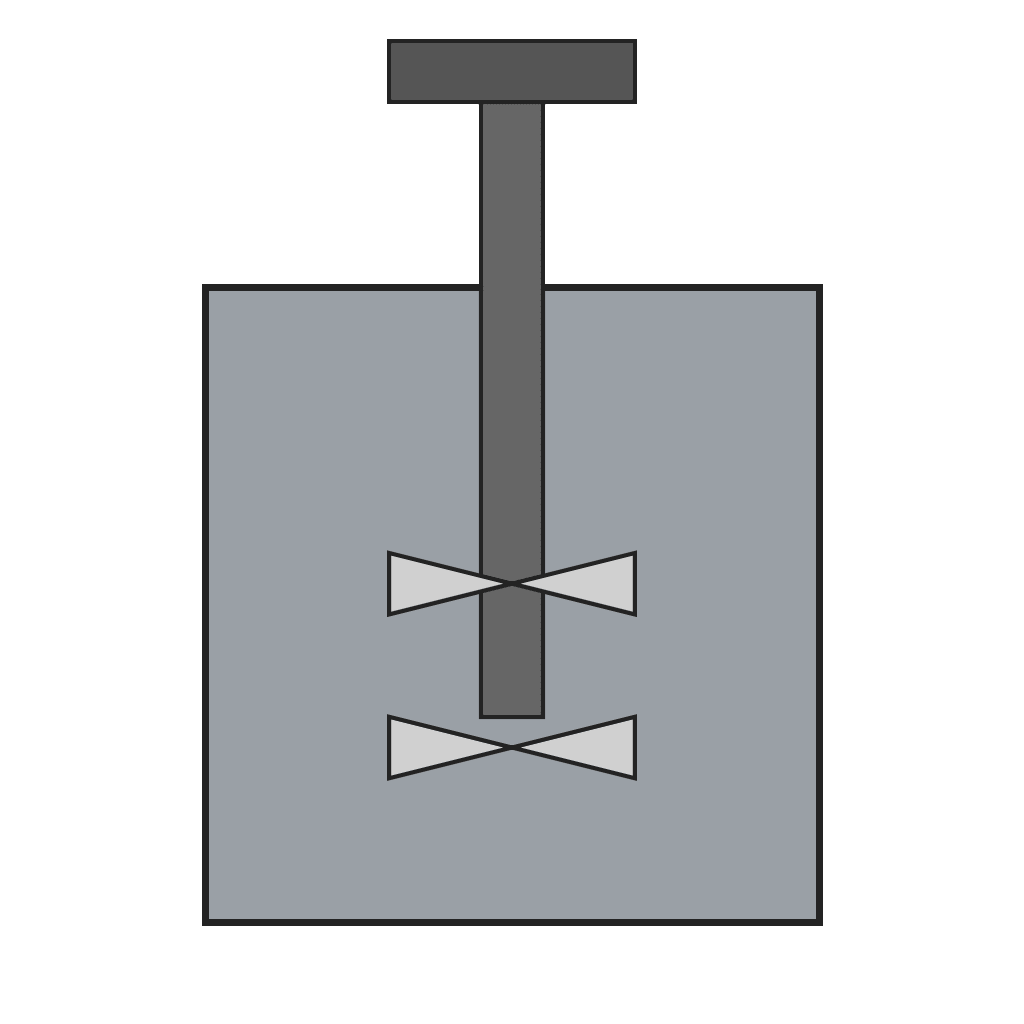
The refinery agitator for washing oil with acid, soda and water: a lead-lined riveted steel tank with a cone bottom, an air line that blows up through the charge to mix it, a spray header for wash water, and draw-offs at the tip of the cone for sludge and finished oil.
Variable: capacity, 160 to 5,000 barrels. Bell's Fig. 87 is 1,000 barrels: 25 ft inside diameter, 25 ft shell, 7 ft 6 in cone, 32 ft 6 in overall.
Source: H. S. Bell, American Petroleum Refining (1923), pp. 195-200. Unknown: plate thickness. Picture: Fig. 87 of the book.
エキスパート
Unknown
手順
1
1
Set the foundation and columns
Set the foundation and columns
Choose the capacity (160 to 5,000 barrels). Rest the tank on lugs on steel or concrete columns, fireproofing steel ones; the older way of extending the shell down with gussets under the cone is heavy. Fig. 87 stands on concrete footings with a tile drain under the cone tip.
このステップの材料:
 コンクリート1 footings, columns
必要な工具:
 不明な寸法
2
2
Build the shell and cone
Build the shell and cone
Rivet a cylindrical shell (Fig. 87: 25 ft inside, 25 ft high) onto a cone bottom pitched no more than 4 in per foot from the horizontal for light oils; sludge still runs out at that slope. With a tight lead lining the shell need not be caulked; leave out an occasional rivet so lining leaks show. Not given: plate thickness.
このステップの材料:
 軟鋼板1 shell, cone
 軟鋼の山形鋼1 top and cone angles
 鋼製リベット1 個
必要な工具:
 パンチプレス
 リベットハンマー
3
3
Fit a low roof with relief
Fit a low roof with relief
Use a low globe roof, not the old hemispherical 'gas bag', with plenty of explosion hatches; even 10 % relief area has not always saved a roof. Bell's preferred form (Fig. 89) has two roof segments that lift in an explosion and fall back to smother the fire.
このステップの材料:
軟鋼板1 roof鋼製リベット1 個必要な工具:
リベットハンマー4
4
Pipe the air, spray and draw-offs
Pipe the air, spray and draw-offs
Run a 4 in air line down to the cone tip; the blast needs at least 200 to 250 cu ft of free air per minute per 1,000 barrels, at just enough pressure to beat the oil head. Across the top fit a 3 in header with 1 in spray pipes drilled with 1/8 in holes at 2 in centres. At the cone tip fit valved rundown, sludge and drain lines.
このステップの材料:
 鋼管(厚肉・両端ねじ切り)1 4 in air, 3 in header, 1 in sprays
 仕切弁3 rundown, sludge, drain
必要な工具:
 ハンドドリル
 送風機
5
5
Line it with lead
Line it with lead
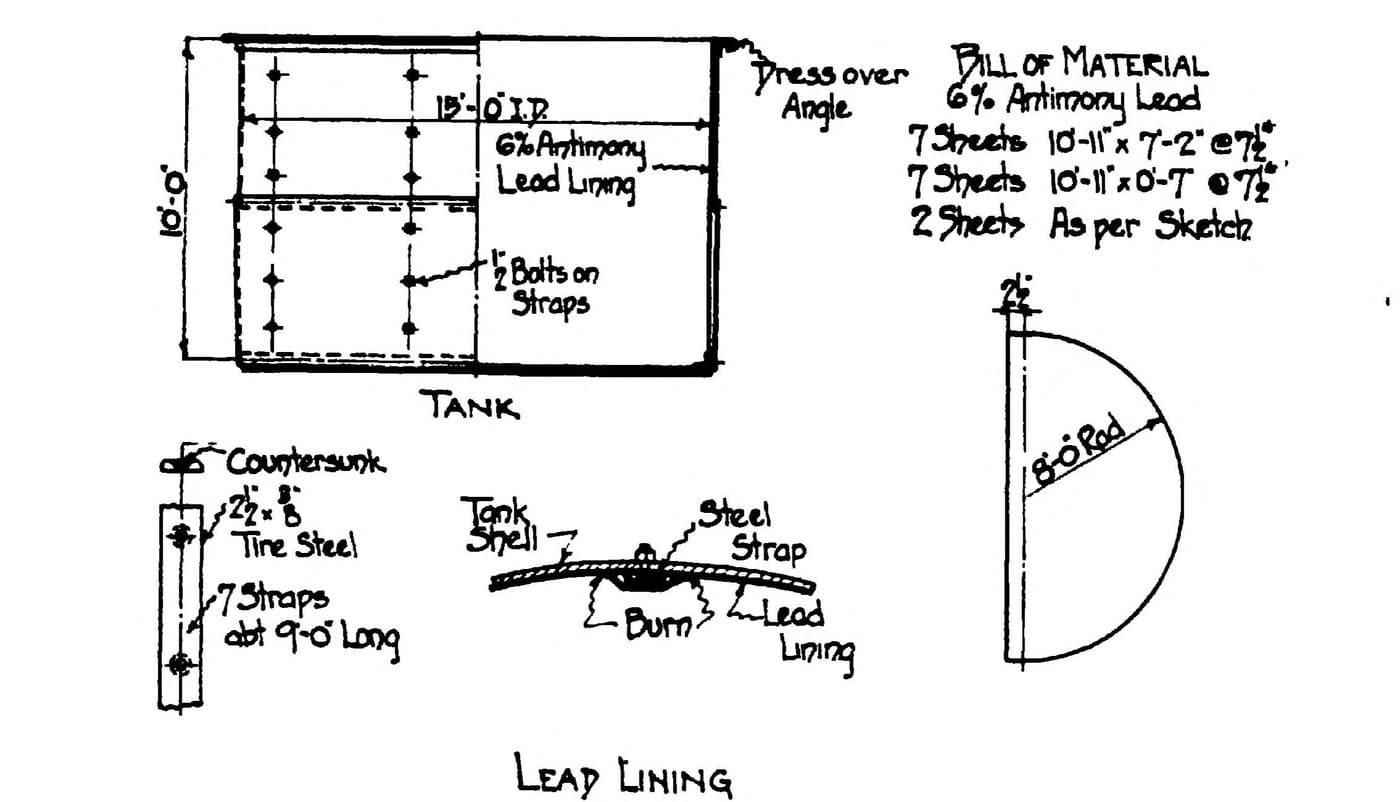
Weak acid from the washes eats steel, so line it with lead: 8 lb per sq ft on the shell, 10 lb on the cone, or 6 % antimony lead half a pound lighter. Don't just hang it from the top angle: agitation makes a loose lining creep and crack. Hold it with lead-covered steel straps about 8 ft apart, bolted through the shell, and bring the lining out through the draw-off neck.
このステップの材料:
 鉛板1 8 lb shell, 10 lb cone
 軟鋼平鋼1 straps
 六角ボルト - 強度区分 8.81 個
必要な工具:
 木槌
 松明
材料
9- 1 footings, columnsプレースホルダー
- 1 roofプレースホルダー
- 1 top and cone anglesプレースホルダー
- 1 個プレースホルダー
- 1 4 in air, 3 in header, 1 in spraysプレースホルダー
- 3 rundown, sludge, drainプレースホルダー
- 1 8 lb shell, 10 lb coneプレースホルダー
- 1 strapsプレースホルダー
- プレースホルダー
接続ブループリントの材料
この設計図で作るもの
CC0 パブリックドメイン
このブループリントはCC0で公開されています。許可を求めずに、自由にコピー、修正、配布、あらゆる目的で使用できます。
メイカーを応援するには、ブループリント経由で製品を購入してください。メイカーには メイカーコミッション がベンダーにより設定されています。または、このブループリントの新しいイテレーションを作成し、自分のブループリントにコネクションとして含めて収益を共有できます。