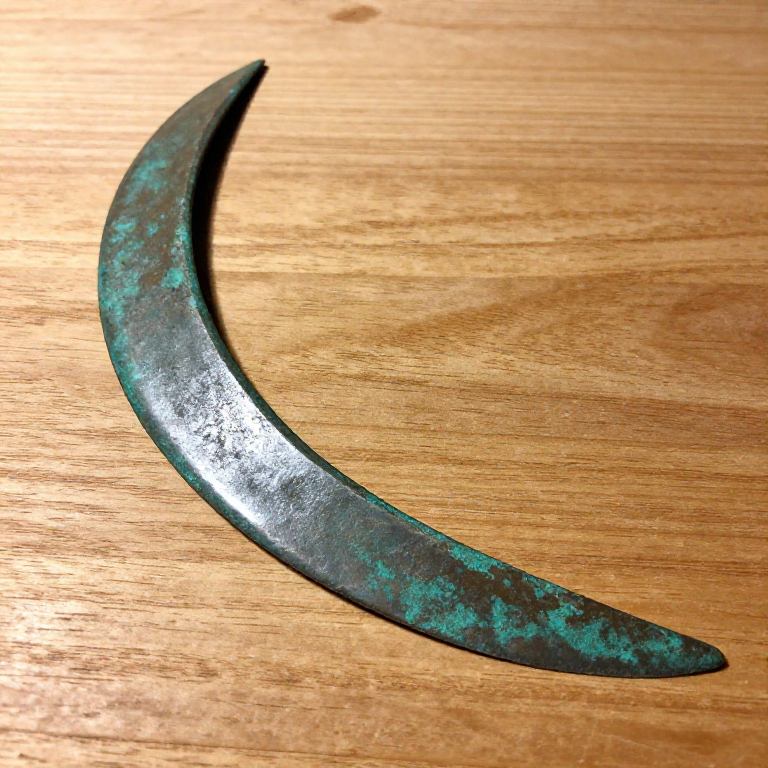


Casting a Bronze Sickle — The Harvesting Tool That Fed Civilisation
The bronze sickle was the tool that made large-scale grain agriculture possible. Its curved blade could cut a handful of wheat or barley stalks in a single sweeping motion — ten times faster than plucking individual seed heads by hand. When bronze sickles replaced flint-toothed sickles around 2000 BCE, a single farmer's harvest yield increased enough to feed several non-farming specialists, enabling the growth of cities, armies, and craft guilds.
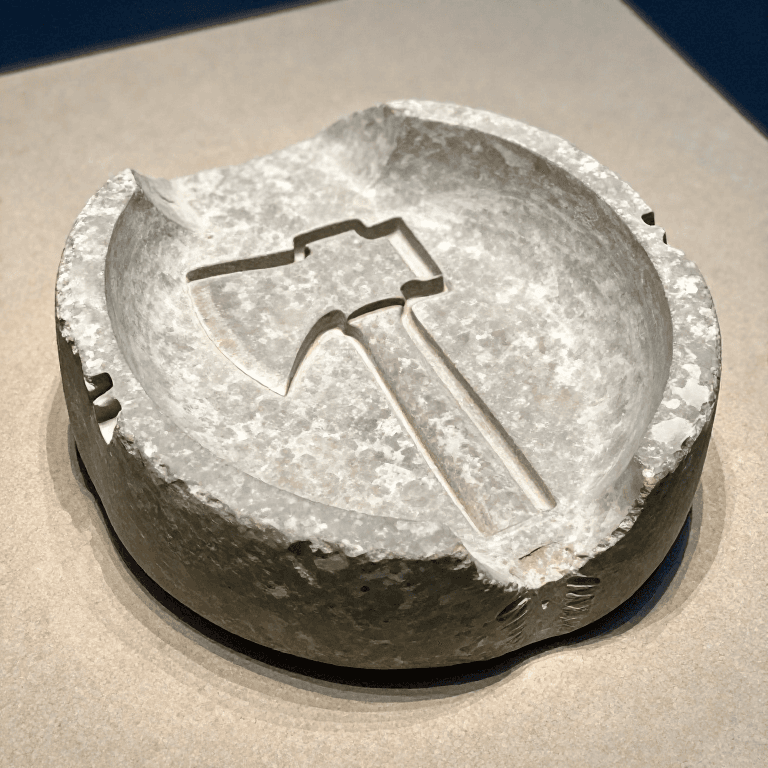
The sickle is cast in a bivalve stone mould as a flat crescent blade with a tang for hafting. The inner (cutting) edge is cold-hammered and ground sharp while the outer edge remains thick for rigidity. The curved form naturally guides the stalks into the blade as the farmer sweeps through a stand of grain.
Archaeological examples show distinctive wear polish (sickle sheen) on the cutting edge from contact with silica-rich grass stems — a telltale sign that identifies even fragmentary bronze sickles in the archaeological record.
手順
Prepare the bivalve mould
Prepare the bivalve mould
このステップの材料:
 ソープストーンのブロック2 個
Assemble and bind the mould
Assemble and bind the mould
このステップの材料:
 生皮の細ひも1 m
Melt and pour the bronze
Melt and pour the bronze
このステップの材料:
 木炭3 kg
必要な工具:
 るつぼばさみ
Cool, demould, and remove sprue
Cool, demould, and remove sprue
必要な工具:
 砂岩(研磨材)
Cold-hammer the cutting edge
Cold-hammer the cutting edge
必要な工具:
 敲石(ハンマーストーン)
 平らな石板
平らな石板Grind and sharpen
Grind and sharpen
必要な工具:
 砥石
砥石Shape the wooden handle
Shape the wooden handle
Haft the sickle and secure
Haft the sickle and secure
接続ブループリントの材料
この設計図で作るもの

関連ブループリント
これらのブループリントは知識を共有しています — 技術、材料、原理
CC0 パブリックドメイン
このブループリントはCC0で公開されています。許可を求めずに、自由にコピー、修正、配布、あらゆる目的で使用できます。
メイカーを応援するには、ブループリント経由で製品を購入してください。メイカーには メイカーコミッション がベンダーにより設定されています。または、このブループリントの新しいイテレーションを作成し、自分のブループリントにコネクションとして含めて収益を共有できます。