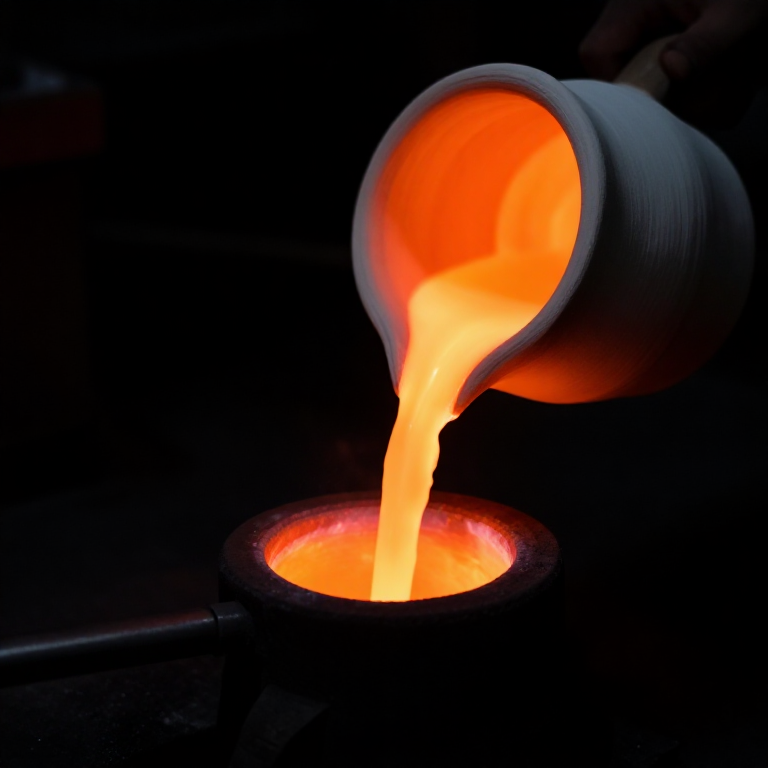


Crucible Cast Steel by the Huntsman Process — Remelting Blister Steel into Flawless Ingots
Blister steel was a triumph, but it had a flaw: its carbon was uneven, rich at the surface of each bar and poor in the core. For fine springs, watch parts, and razors, smiths needed steel that was the same all the way through. In 1740 the Sheffield clockmaker Benjamin Huntsman found the answer — melt the steel completely.
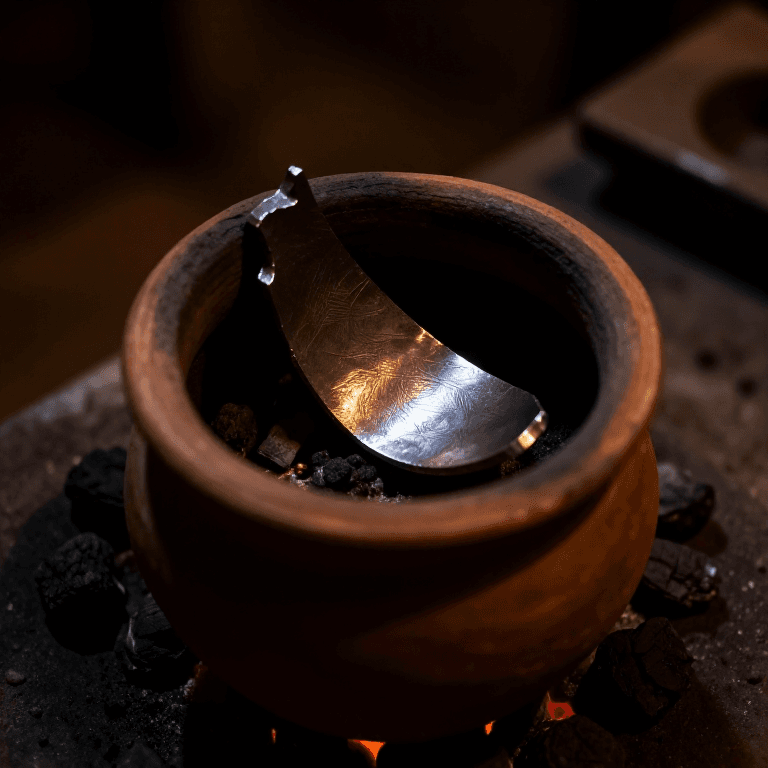
No furnace of the day could melt steel, so Huntsman built one that could. He broke blister steel into small pieces, sealed them in a covered clay crucible, and drove a coke fire hot enough — around 1600 degrees Celsius — to turn the solid steel into a clear liquid. Fully molten, the carbon spread perfectly evenly through the metal and the impurities floated off as slag. Poured into a mould, it set into a flawless ingot of cast steel.
Huntsman's crucible steel was the finest in the world and made Sheffield the steel capital of the age. The principle — melt it to make it uniform — is the same one that still underlies steelmaking today, and it sits at the very top of the iron-and-steel chain that runs from ore to coke to pig iron to wrought iron to blister steel to this.
手順
Understand the goal
Understand the goal
Break up the blister steel
Break up the blister steel
このステップの材料:
 泡鋼の棒材12 kg
必要な工具:
 ハンマー
ハンマーPrepare a clay crucible
Prepare a clay crucible
このステップの材料:
 深型の粘土るつぼ1 個
Charge the crucible
Charge the crucible
このステップの材料:
 石灰岩板1 kg
Build a coke melting furnace
Build a coke melting furnace
このステップの材料:
 冶金用コークス50 kg
必要な工具:
 ふいご
ふいごMelt the steel fully
Melt the steel fully
必要な工具:
 るつぼばさみ
Let the carbon even out
Let the carbon even out
Let the slag rise
Let the slag rise
Lift the crucible
Lift the crucible
必要な工具:
るつぼばさみCast the ingot
Cast the ingot
必要な工具:
 インゴット鋳型
Cool and strip
Cool and strip
必要な工具:
ハンマーIdentify cast steel
Identify cast steel
必要な工具:
 ヤスリセット
接続ブループリントの材料
関連ブループリント
これらのブループリントは知識を共有しています — 技術、材料、原理

CC0 パブリックドメイン
このブループリントはCC0で公開されています。許可を求めずに、自由にコピー、修正、配布、あらゆる目的で使用できます。
メイカーを応援するには、ブループリント経由で製品を購入してください。メイカーには メイカーコミッション がベンダーにより設定されています。または、このブループリントの新しいイテレーションを作成し、自分のブループリントにコネクションとして含めて収益を共有できます。