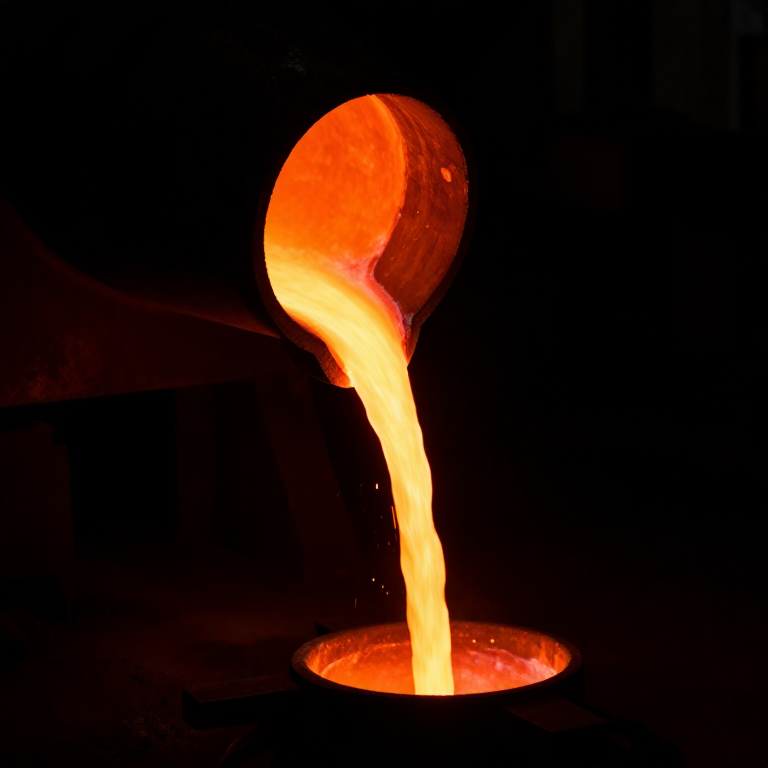


Casting Iron in a Cupola Furnace — Re-Melting Pig Iron into Finished Castings
The blast furnace makes pig iron by the tonne, but pig iron in bars is not yet a useful object. To turn it into pots, pipes, stoves, and machine frames, a foundry re-melts it and pours it into moulds — and the workhorse that does the re-melting is the cupola furnace.
A cupola is a tall iron chimney lined with firebrick, charged from the top with alternating layers of coke, pig iron, and limestone, and blown with air near its base. Unlike the blast furnace it does not smelt ore; it simply melts iron that is already made, quickly and cheaply, keeping a steady stream of molten metal ready to tap. The melting iron picks up a little carbon from the coke and runs out of the tap hole as grey cast iron.
Poured into sand moulds shaped from wooden patterns, that iron sets into castings of almost any form. Cast iron is brittle but immensely strong in compression and cheap to pour into complex shapes, which made the cupola the beating heart of Victorian industry — casting everything from cooking pots and drainpipes to the columns and machines of the factories themselves.
手順
Understand the cupola
Understand the cupola
Build and line the cupola
Build and line the cupola
このステップの材料:
 耐火れんが100 個
必要な工具:
 移植ごて
移植ごてLight the coke bed
Light the coke bed
このステップの材料:
 冶金用コークス60 kg
Start the blast
Start the blast
必要な工具:
 送風機
送風機Charge in layers
Charge in layers
このステップの材料:
 銑鉄の塊80 kg
 石灰岩板6 kg
Melt the iron
Melt the iron
Flux off the slag
Flux off the slag
必要な工具:
 出湯棒
出湯棒Prepare the sand moulds
Prepare the sand moulds
このステップの材料:
 鋳物砂60 kg
必要な工具:
 鋳型枠
鋳型枠Tap the molten iron
Tap the molten iron
必要な工具:
 鋳造用の柄杓
Pour the castings
Pour the castings
Shake out and clean
Shake out and clean
必要な工具:
 ディスクグラインダー
Identify cast iron
Identify cast iron
材料
5- 100 個プレースホルダー
- 60 kgプレースホルダー
- 80 kgプレースホルダー
- 6 kgプレースホルダー
- 60 kgプレースホルダー
接続ブループリントの材料

関連ブループリント
これらのブループリントは知識を共有しています — 技術、材料、原理

CC0 パブリックドメイン
このブループリントはCC0で公開されています。許可を求めずに、自由にコピー、修正、配布、あらゆる目的で使用できます。
メイカーを応援するには、ブループリント経由で製品を購入してください。メイカーには メイカーコミッション がベンダーにより設定されています。または、このブループリントの新しいイテレーションを作成し、自分のブループリントにコネクションとして含めて収益を共有できます。