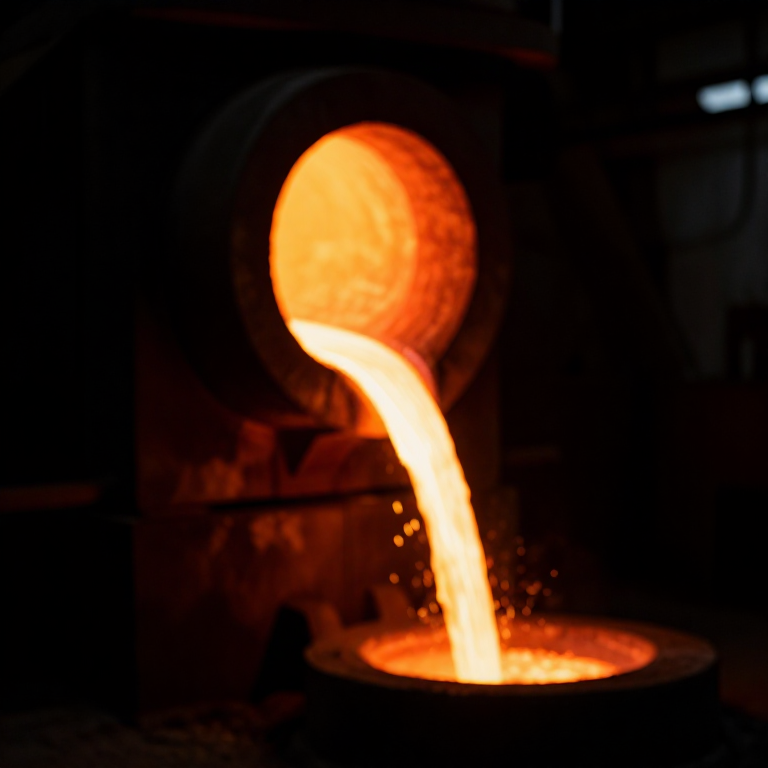


Smelting Pig Iron in a Coke Blast Furnace — Molten Iron at Industrial Scale
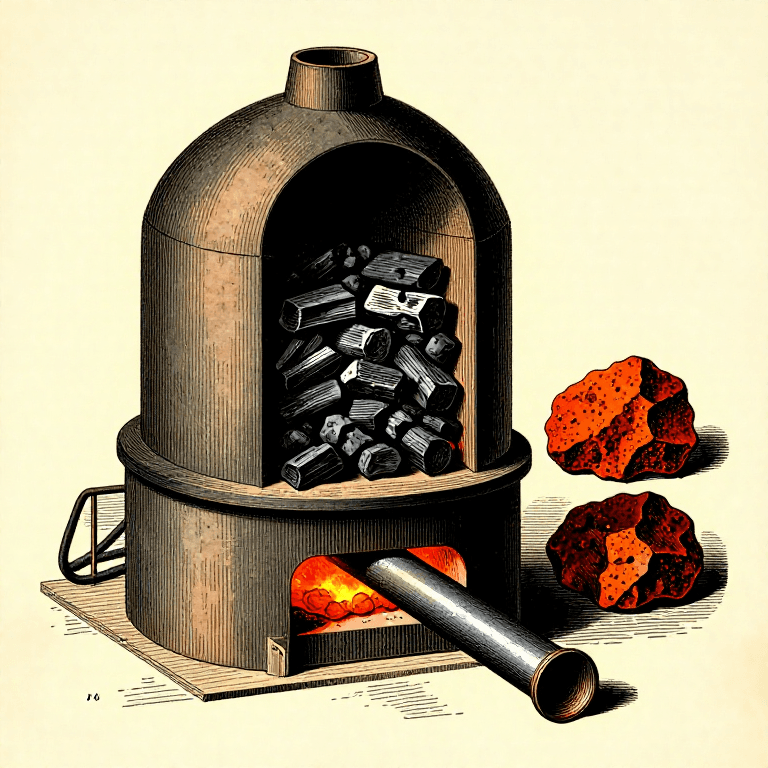
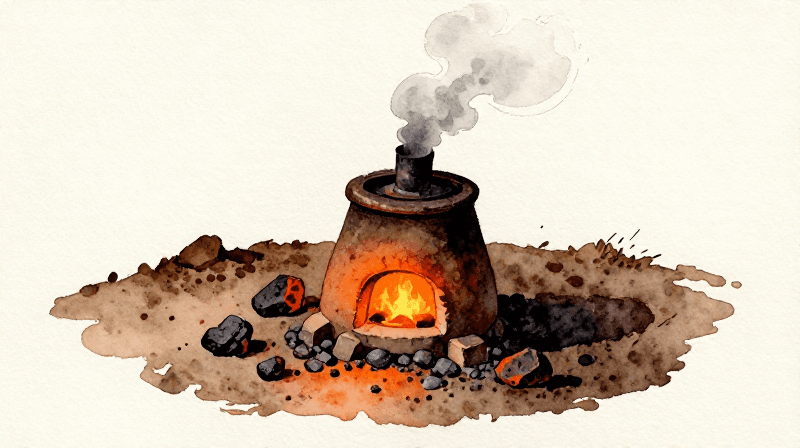
The bloomery gave the ancient world iron, but only in small spongy lumps, one slow batch at a time. The blast furnace changed everything: a tall shaft kept continuously charged and blown produces a steady river of molten iron. Where a bloomery never melts its metal, a blast furnace runs hot enough to liquefy iron entirely, letting it pool at the hearth and be tapped out by the tonne.
The key is heat and chemistry working together. A powerful air blast burns coke to carbon monoxide, which strips the oxygen from iron ore; meanwhile the descending iron soaks up carbon until it melts. Limestone added as flux carries off the stony impurities as a floating slag. What runs out of the tap hole is pig iron — iron saturated with about four percent carbon: hard, brittle, and perfect for casting or for refining into wrought iron and steel.
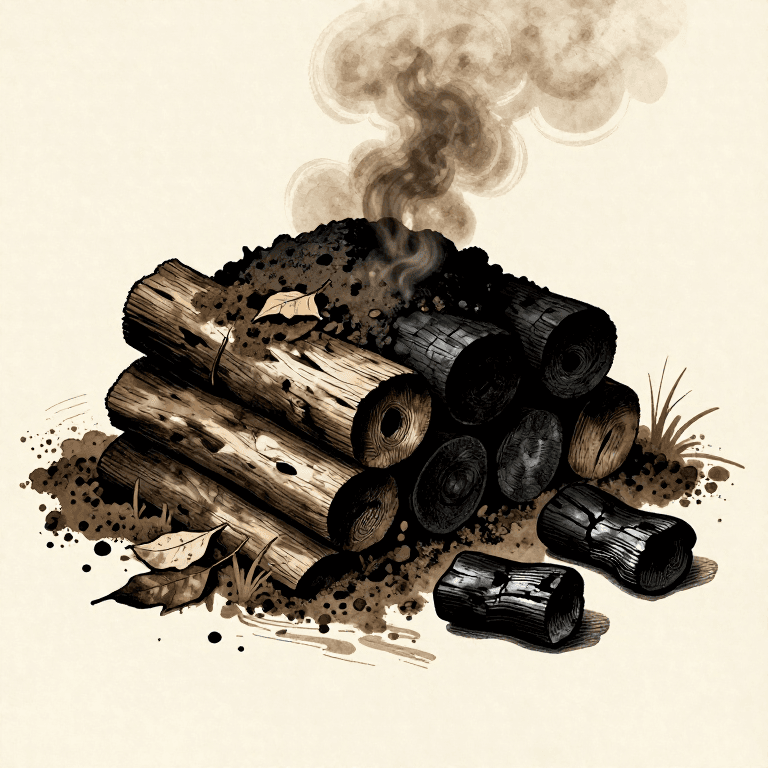
When coke replaced charcoal as the blast-furnace fuel in the early 1700s, iron could finally be made in unlimited quantity without consuming whole forests. Cheap pig iron became the raw material of the Industrial Revolution — the metal behind rails, bridges, engines, and machines.
手順
Understand pig iron
Understand pig iron
Build the shaft furnace
Build the shaft furnace
このステップの材料:
 耐火れんが80 個
必要な工具:
 移植ごて
移植ごてCrush the ore and flux
Crush the ore and flux
このステップの材料:
 乾かした沼鉄鉱30 kg
 石灰岩板8 kg
必要な工具:
 ハンマー
ハンマーSet up the air blast
Set up the air blast
必要な工具:
 ふいご
ふいごLight the coke bed
Light the coke bed
このステップの材料:
 冶金用コークス40 kg
Charge in layers
Charge in layers
このステップの材料:
冶金用コークス40 kgReduce the ore
Reduce the ore
Melt and carburize
Melt and carburize
Form and tap the slag
Form and tap the slag
必要な工具:
 出湯棒
出湯棒Tap the molten iron
Tap the molten iron
必要な工具:
出湯棒Cast the pigs
Cast the pigs
このステップの材料:
 鋳物砂50 kg
Cool, break, and identify
Cool, break, and identify
必要な工具:
ハンマー材料
5- 80 個プレースホルダー
- 30 kgプレースホルダー
- 8 kgプレースホルダー
- 40 kgプレースホルダー
- 50 kgプレースホルダー
接続ブループリントの材料
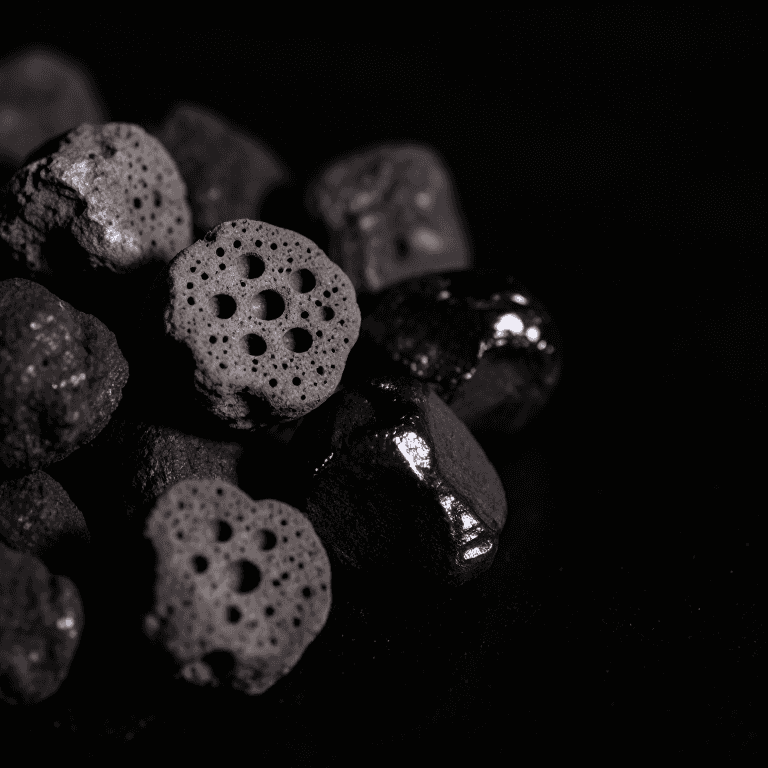

関連ブループリント
これらのブループリントは知識を共有しています — 技術、材料、原理


CC0 パブリックドメイン
このブループリントはCC0で公開されています。許可を求めずに、自由にコピー、修正、配布、あらゆる目的で使用できます。
メイカーを応援するには、ブループリント経由で製品を購入してください。メイカーには メイカーコミッション がベンダーにより設定されています。または、このブループリントの新しいイテレーションを作成し、自分のブループリントにコネクションとして含めて収益を共有できます。