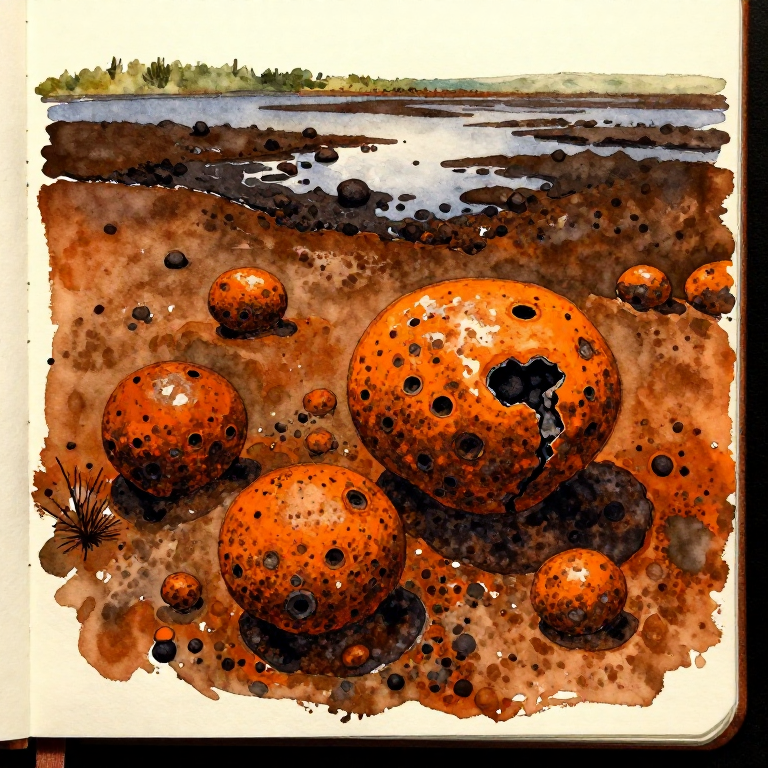


Collecting Bog Iron from Marshland — Extracting Iron Ore from Wetlands
手順
Identify Iron-Rich Marsh
Identify Iron-Rich Marsh
Locate a marshy area where slow-moving groundwater drains through iron-rich soil — look for permanent wetlands with rusty water
Spot Surface Signs
Spot Surface Signs
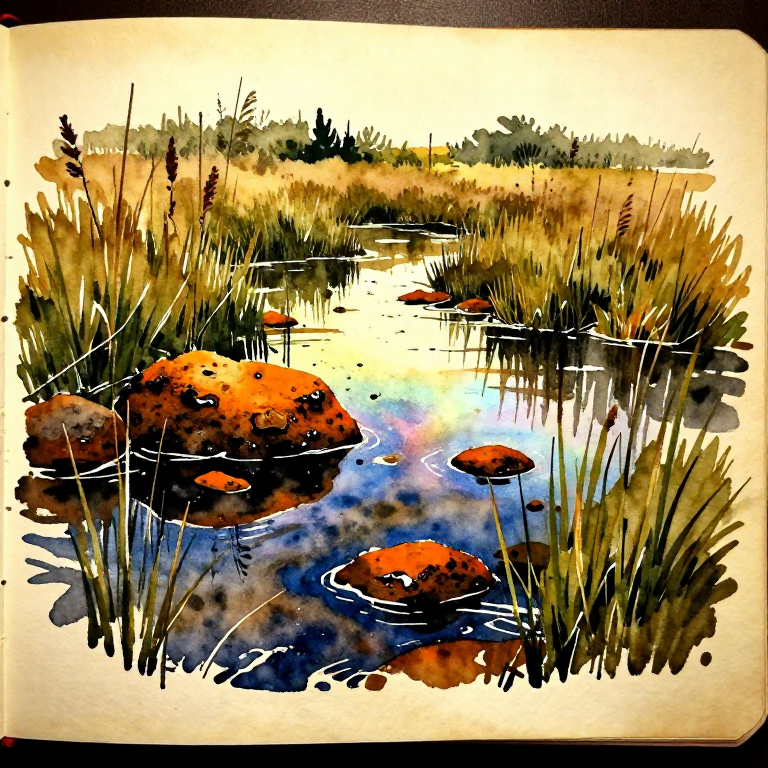
Look for orange-brown staining on stones, roots, and mud at the water's edge
Check for Iron Film
Check for Iron Film
Check for thin iridescent films on standing water — this rainbow sheen indicates dissolved iron oxidising at the surface
Probe the Bed
Probe the Bed
Push a wooden pole into the marsh bed to test for a firm layer of ochre-coloured sediment 30-50 cm below the surface
必要な工具:
 堅木の長材
堅木の長材Dig into Ore Layer
Dig into Ore Layer
Dig into the iron-rich layer with a shovel or digging stick, scooping out dark rust-coloured mud
必要な工具:
 スコップ
スコップExtract Ore Nodules
Extract Ore Nodules
Pull out lumps of dark, rust-coloured bog ore — limonite nodules range from pebble-sized to fist-sized
必要な工具:
スコップRinse in Water
Rinse in Water
Rinse each lump in clean running water to wash away mud, roots, and organic debris
このステップの材料:
 水1 bucket
Sort by Density
Sort by Density
Sort the ore — keep dense, heavy pieces that ring when struck; discard light, crumbly, or porous ones
必要な工具:
 敲石(ハンマーストーン)
Break Large Lumps
Break Large Lumps
Break larger lumps into fist-sized pieces with a hammerstone to speed drying
必要な工具:
敲石(ハンマーストーン)Lay Out to Dry
Lay Out to Dry
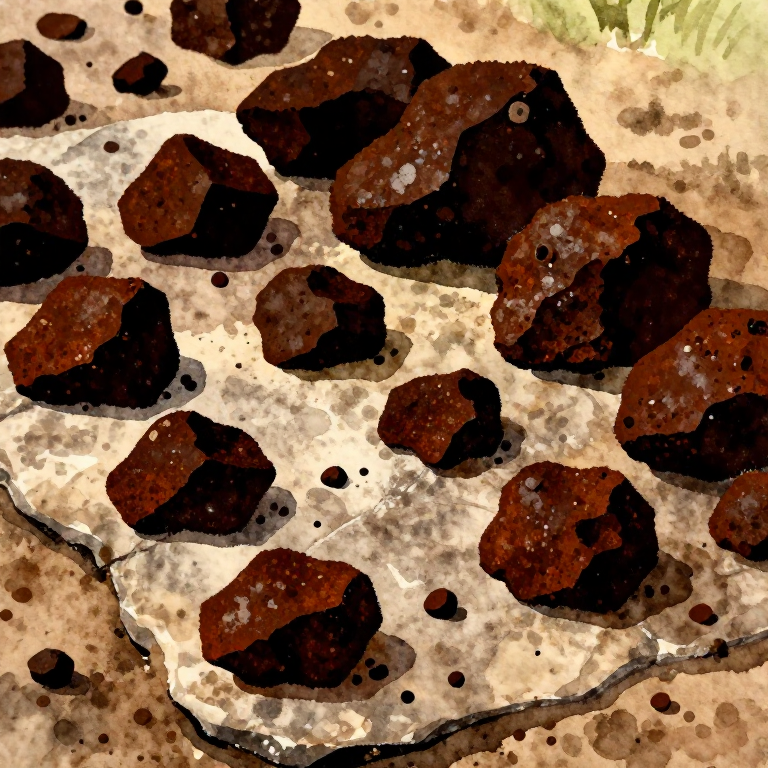
Spread the ore pieces on flat stones in direct sunlight and leave for 2-3 days to air-dry
Turn Daily
Turn Daily
Turn the pieces once daily to ensure even drying on all sides
Build Roasting Fire
Build Roasting Fire
Build a small open fire and let it burn down to a strong bed of coals
このステップの材料:
 薪1 束
薪1 束Roast the Ore
Roast the Ore
Place dried ore chunks around the fire perimeter and roast for 1-2 hours to drive off remaining moisture
Listen for Cracking
Listen for Cracking
Listen for cracking and popping sounds — this indicates chemically-bound water escaping from the ore structure
Cool Completely
Cool Completely
Remove roasted ore from the fire area and allow it to cool completely before handling
Crush Roasted Ore
Crush Roasted Ore
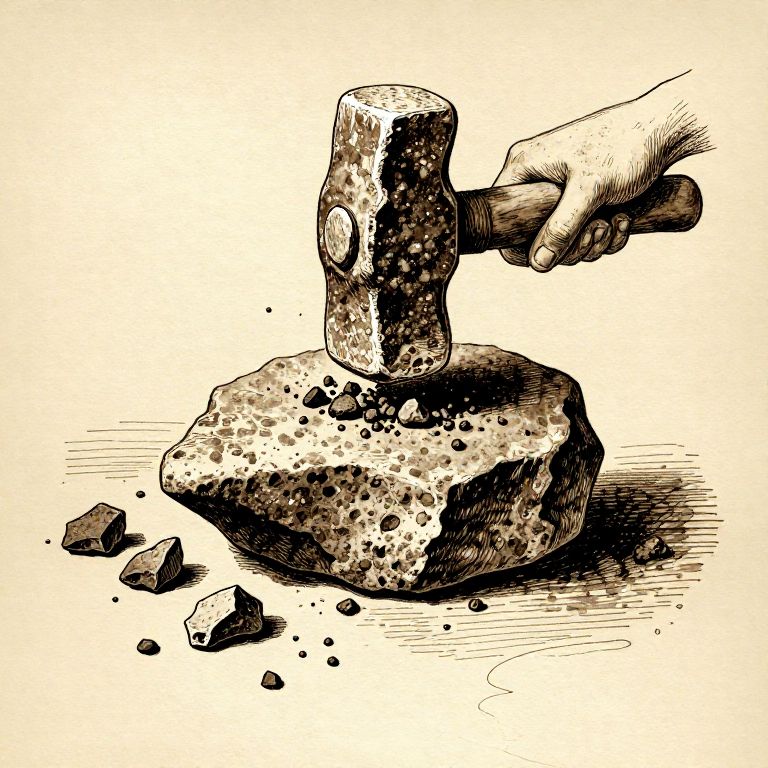
Crush the roasted ore into walnut-sized fragments with a hammerstone on a flat stone anvil
必要な工具:
敲石(ハンマーストーン)Sift the Fragments
Sift the Fragments
Sift the crushed ore through a coarse basket to separate fine powder from the usable fragments
必要な工具:
 容器
容器Store for Smelting
Store for Smelting
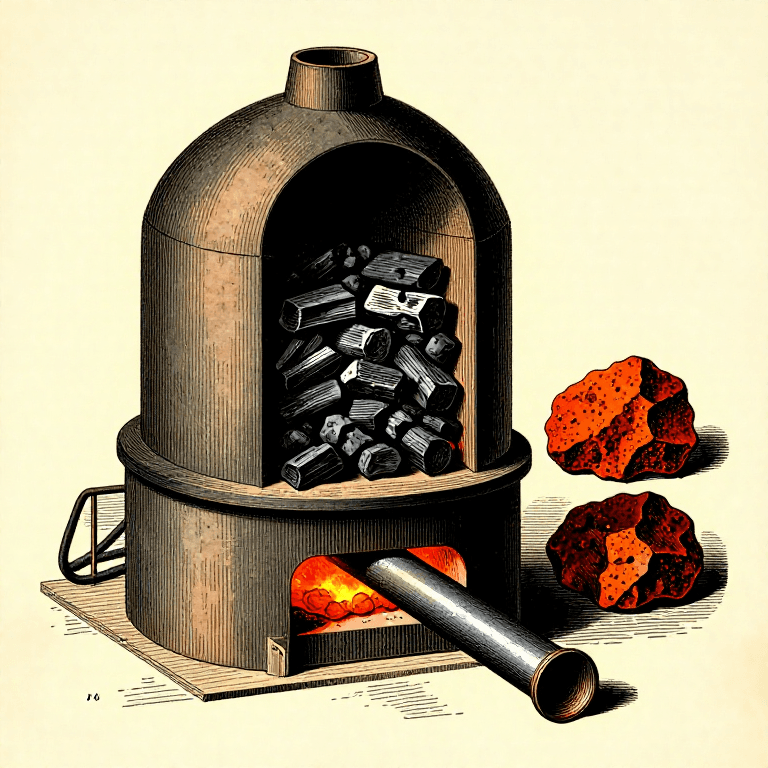
Store the processed ore in a dry container — it is now ready to charge into a bloomery furnace for smelting
必要な工具:
容器接続ブループリントの材料

関連ブループリント
これらのブループリントは知識を共有しています — 技術、材料、原理

CC0 パブリックドメイン
このブループリントはCC0で公開されています。許可を求めずに、自由にコピー、修正、配布、あらゆる目的で使用できます。
メイカーを応援するには、ブループリント経由で製品を購入してください。メイカーには メイカーコミッション がベンダーにより設定されています。または、このブループリントの新しいイテレーションを作成し、自分のブループリントにコネクションとして含めて収益を共有できます。