赤鉄鉱からの鉄の抽出 — ブルームリー製錬:鉱石からブルームへ
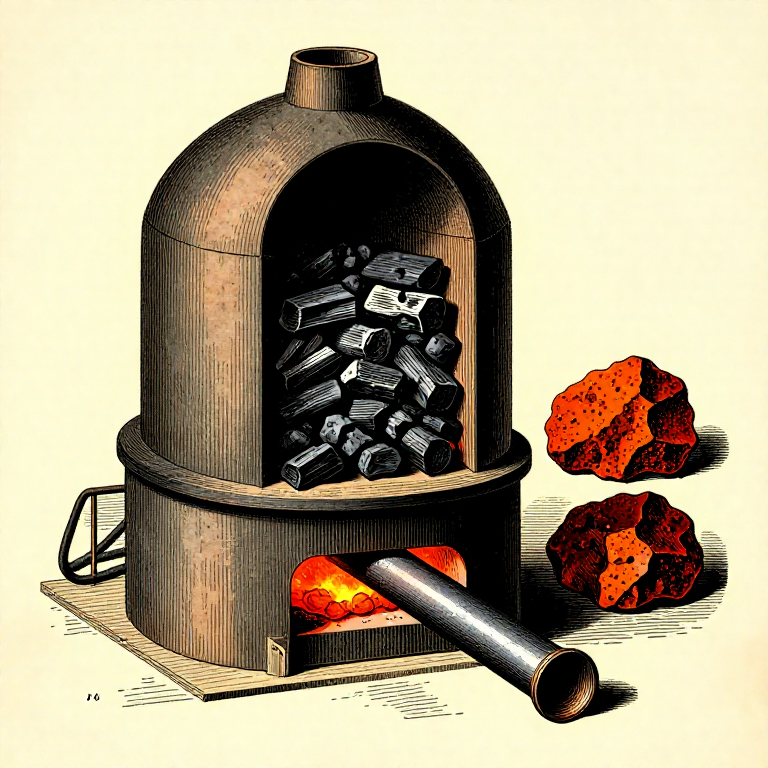
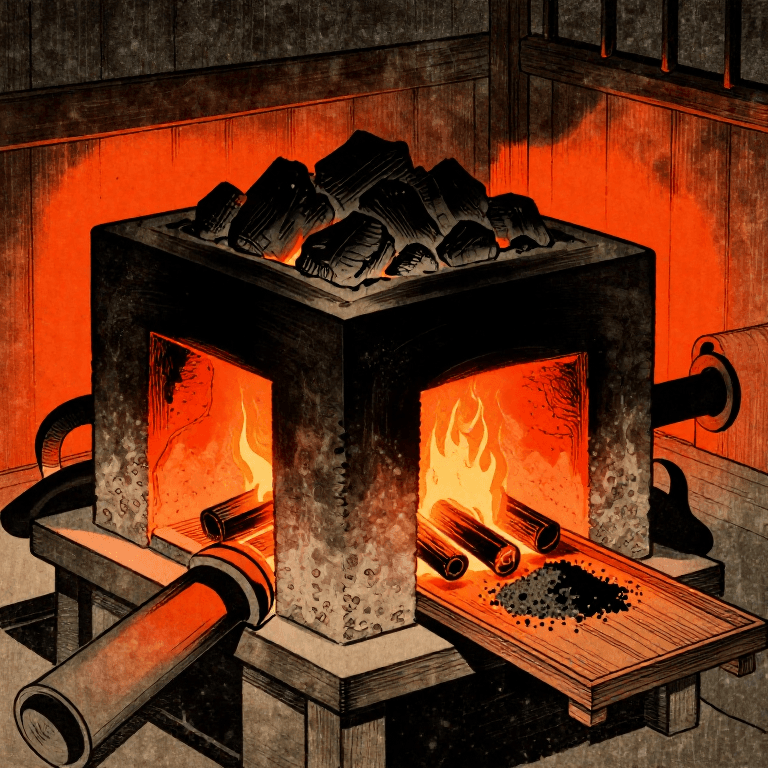
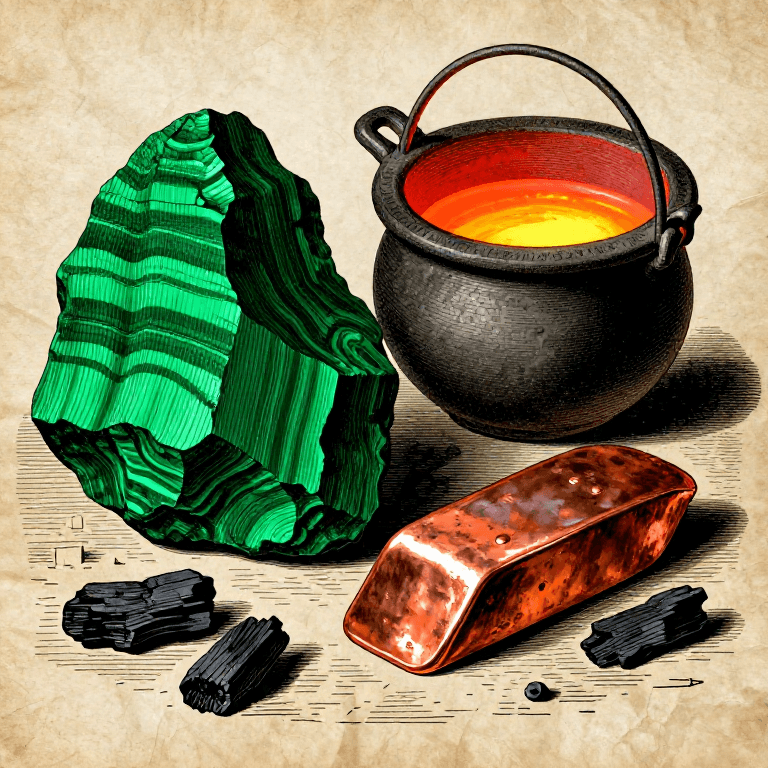
ブルームリー炉を使用して、赤鉄鉱鉱石から酸化鉄 (Fe₂O₃) を金属鉄に還元する方法。この古い方法は紀元前 1200 年頃から使用されており、スラグと混合したスポンジ状鉄塊 (ブルーム) を生成します。鉱石の準備、粘土からの炉の構築、木炭燃料、温度制御、およびブルームの抽出が含まれます。粘土鉄または赤鉄鉱を収集した後の鉄チェーンの2番目のステップ。
手順
Naiintindihan ang Kemikal
Naiintindihan ang Kemikal
Ang hematite (Fe₂O₃) ay naglalaman ng tungkol sa 70% ng bakal ayon sa masa. Sa isang oven bloomery, ang carbon monoxide (CO) mula sa pagkasunog ng charcoal ay binabawasan ang oxide ng bakal: Fe₂O₃ + 3CO → 2Fe + 3CO₂. Ang bakal ay hindi gumagaw ng kumpletong (temperatura ng bloomery 1100–1300°C, ang bakal ay umaabot sa 1538°C). Sa halip nito, bumubuo ito ng isang maluwag na masa na tinatawag na bloom.
Paghahanda ng Mineral
Paghahanda ng Mineral
Basagin ang mineral ng hematite gamit ang isang martilyo sa isang patag na bato sa mga piraso na 2–3 cm. Ang mas maliit na piraso ay naglalantad ng mas malaking ibabaw na lugar sa mga gas na nagpapababa, na nagpapabuti ng ani ng bakal. Alisin ang anumang malinaw na hindi ferrous na bato (quartz, limestone) habang nagsasagawa.
このステップの材料:
 赤鉄鉱の鉱石5 kilogram
必要な工具:
 地質ハンマー
Pagsama ng Mineral (Opsyonal ngunit Inirekomenda)
Pagsama ng Mineral (Opsyonal ngunit Inirekomenda)
Painitin ang mga piraso ng mineral sa isang bukas na apoy sa loob ng 2–3 oras sa 700–800°C. Ang pagsama ay nag-alis ng kahalumigmigan at nagbabago ng anumang pinagsasama ng oxide ng bakal (limonite, goethite) sa walang tubig na hematite. Ang pinalaki na mineral ay mas marupok din at mas madali na masira pa. Ang mineral ay nagbabago ng kulay mula sa lupa na kayumanggi hanggang brick red.
このステップの材料:
 塊炭(堅木)10 kilogram
Pumili ng Lokasyon ng Oven
Pumili ng Lokasyon ng Oven
Pumili ng isang patag, mahusay na drainage na lugar malayo sa mga bukas na istruktura. Ang isang likas na slope o hillside ay perpekto – maaari kang bumuo ng oven sa slope para sa suporta sa istruktura. Tiyakin na mayroong magandang access sa daloy ng hangin para sa mga baligi at espasyo upang magtrabaho nang ligtas sa paligid ng mainit na oven.
Bumuo ng Oven Bloomery Mula sa Laya
Bumuo ng Oven Bloomery Mula sa Laya
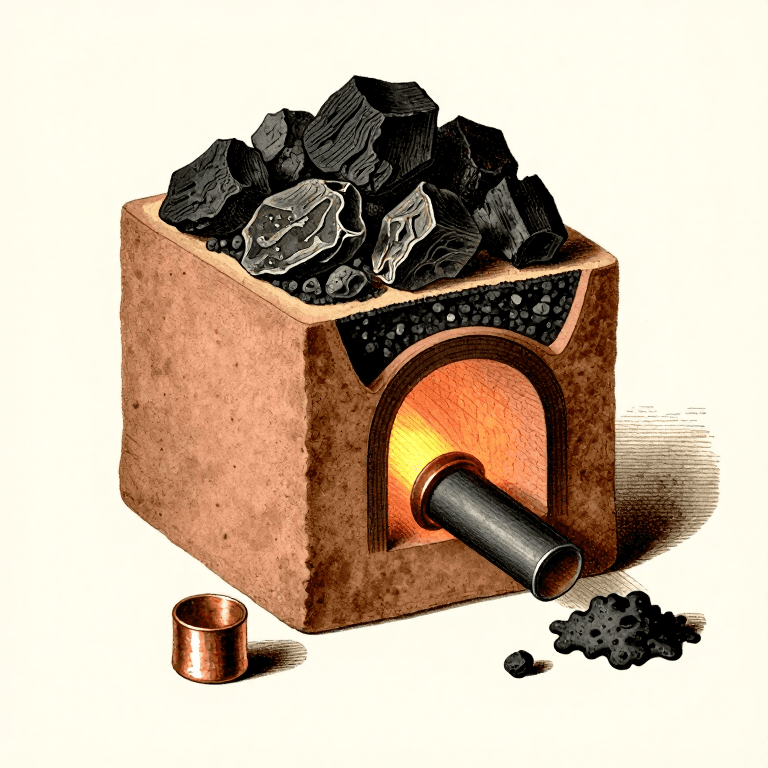
Pagsama ng laya sa buhangin at masusing naisip na pinagsasama ang halaman (ratio 3:1:0.5) upang gawing refractive na materyales. Bumuo ng isang patayong silindro na mga 30 cm sa diameter at 80–100 cm na taas. Magiwang isang tuyere opening (air inlet) sa base, 5–7 cm diameter, bahagyang na hinihilig pataas. Iwanan ang isang slag tap opening sa harapan sa ilalim upang makalusot ang slag.
このステップの材料:
 耐火粘土20 kilogram
 細砂7 kilogram
 刻みわら2 kilogram
Hayaang Tumuyo ang Oven
Hayaang Tumuyo ang Oven
Hayaan ang oven na tumuyo sa loob ng hindi bababa sa 3–5 araw bago ang unang paggamit. Ang mabilis na pag-init ng mabasang oven ay nagiging dahilan ng mga pagsabog ng singaw na nakakasama sa mga dinding ng laya. Ang isang maliit na apoy sa pagpapainit sa huling araw ay unti-unting nag-aalis ng natitirang kahalumigmigan.
Ihanda ang Charcoal Fuel
Ihanda ang Charcoal Fuel
Kailangan mo ng tungkol sa 8–10 kg ng charcoal para sa 1 kg ng mineral. Ang hardwood charcoal (oak, beech, birch) ay pinakamahusay – sinisindihan nito ang mas mainit at mas mahaba kaysa sa softwood charcoal. Gupitin ang charcoal sa 2–4 cm na mga piraso. Kabuuang peligroso na kinakailangan para sa 5 kg ng mineral load: 40–50 kg ng charcoal.
このステップの材料:
 塊炭(木炭)50 kilogram
Ihanda ang mga Baligi
Ihanda ang mga Baligi
Ipasok ang nozzle ng baligi (tuyere tube) sa tuyere opening. Ang tubo ay dapat na gawa sa ceramic o bakal – ito ay dapat makipagtulungan sa 1200°C+. Ang tuyere tip ay dapat na umaabot ng mga 3–5 cm sa loob ng oven. Ang isang koponan ng dalawang tao na umiikot sa mga baligi ay nagbibigay ng pinakamahusay na patuloy na daloy ng hangin.
必要な工具:
 ふいご
ふいご 陶製の羽口
陶製の羽口Preheat ang Oven
Preheat ang Oven
Punan ang oven ng charcoal at apuhin ito mula sa itaas. I-pump ang mga baligi nang maingat sa loob ng 30–45 minuto upang itaas ang temperatura ng operasyon. Ang loob ng oven ay dapat na rannag na orange-white (1100–1300°C) bago magdagdag ng anumang mineral.
必要な工具:
 長柄やっとこ
I-load ang Mineral at Charcoal sa mga Layer
I-load ang Mineral at Charcoal sa mga Layer
Kapag naabot na ang temperatura, magdagdag ng mga alternating layer ng charcoal at pinasang-abot na mineral mula sa itaas: 5 cm charcoal layer, pagkatapos ay isang manipis na mineral layer (isang kamay sa bawat pagkakataon). Ang ratio ng volume ng charcoal sa mineral ay dapat na humigit-kumulang 3:1. Magdagdag ng isang bagong load tuwing 10–15 minuto habang bumababa ang antas.
Panatilihin ang Daloy ng Hangin Gamit ang Baligi
Panatilihin ang Daloy ng Hangin Gamit ang Baligi
I-pump ang mga baligi sa isang patuloy na ritmo – mga 15–20 puno ng bawat minuto. Ang tuloy-tuloy na daloy ng hangin ay kritikal: napakaunting hangin at ang temperatura ay bumababa sa ilalim ng pagbawas, masyadong maraming hangin at ang bakal ay nagkasunog sa slag. Ang tunog ng oven ay nagbabago mula sa isang katamtamang gumuhong tunog sa isang mas mataas na tono kapag ang temperatura ay tama.
I-drain ang Slag
I-drain ang Slag
Bawat 30–60 minuto, buksan ang slag tap sa base at hayaang ang likidong slag ay dumaloy. Ang slag ay isang madilim na baso-parang likido ng iron silicate (fayalite). Kung ang slag ay nagsasama, ito ay naghahadlang sa daloy ng hangin at bumababa ng temperatura. Gumamit ng isang stick upang malinis ang tap opening kung ito ay nasisilid. Magsuot ng isang balat na apron at mukha na proteksyon.
必要な工具:
 鉄滓突き棒
鉄滓突き棒 革のエプロン
 フェイスシールド
Patuloy na Ang Pagsasagawa sa loob ng 4–8 Oras
Patuloy na Ang Pagsasagawa sa loob ng 4–8 Oras
Ang kabuuang oras ng pagsasagawa ay 4–8 oras ng tuloy-tuloy na operasyon. Patuloy na magdagdag ng charcoal at mineral sa mga layer. Patuloy na i-pump ang mga baligi. Ang bloom ay bumubuo sa ilalim ng oven kung saan ang mga nabawasang particle ng bakal ay nagsasama-sama sa init. Ang 5 kg na mineral load ay karaniwang tumatagal ng mga 6 oras.
Hayaang Ang Oven ay Bahagyang Lumamig
Hayaang Ang Oven ay Bahagyang Lumamig
Kapag nabago ang lahat ng mineral at charcoal, ihinto ang mga baligi at hayaang ang oven ay lumamig sa loob ng 1–2 oras. Huwag lamig ng tubig – ang thermal shock ay maaaring baling ang bloom. Ang bloom ay dapat na sapat na mainit upang hawakan gamit ang pincers ngunit hindi masyadong mainit upang maging deformed sa paglabas.
I-extract ang Bloom
I-extract ang Bloom
Basagin ang harap na dinding ng oven sa slag tap. Gamit ang mga pincers na may mahabang handle, hilahin ang bloom. Ito ay magiging isang magaspang, malambot na bloom na masa ng bakal na pinagsama ng nakakulong na slag at charcoal, humigit-kumulang mula sa laki ng bukong kamay hanggang sa isang melon depende sa mineral load. Ito ay kumikislap na pula na maitim.
必要な工具:
長柄やっとこPagsasama ng Bloom Gamit ang Martilyo
Pagsasama ng Bloom Gamit ang Martilyo
Habang mainitin pa rin ito (sa itaas ng 800°C, kumikislap na pula), martilyo ang bloom sa isang anvil o patag na bato upang i-squeeze ang nakakulong na slag. Ang slag ay tumutulo bilang mga kumikinang na spark. Umulit na tuklupin at martilyo. Ang prosesong ito ay tinatawag na welding at ino-compact ang malambot na bakal sa isang mas sipit at mas naaaasahang bloom mass.
必要な工具:
 金床
金床Suriin ang Ani
Suriin ang Ani
Timbangin ang pagsasama ng bloom. Ang karaniwang bloomery na ani ay 10–25% ng mineral mass bilang metalikong bakal. Mula sa 5 kg ng hematite, inaasahan ang 500 g hanggang 1.25 kg ng maaaring gamitin na bakal. Ang bakal ay mababa sa carbon (forged iron) maliban kung sumusulong ito ng carbon mula sa charcoal sa oras ng pagsasagawa.
必要な工具:
 デジタルキッチンスケール
Magimbak ng Bloom ng Bakal
Magimbak ng Bloom ng Bakal
Hayaang ang bloom ay ganap na lumamig sa matuguran ang hangin. Magimbak sa isang tuyo na lugar – ang forged iron ay madaling tumayo. Takpan gamit ang isang manipis na layer ng langis o beeswax upang maiwasan ang oxidation sa oras ng pag-ipon. Ang bakal na ito ay handang i-hammer sa mga tool, sandata, o mga aparato.
このステップの材料:
 亜麻仁油50 milliliter
材料
7- 5 kilogramプレースホルダー
- 10 kilogramプレースホルダー
- 20 kilogramプレースホルダー
- 7 kilogramプレースホルダー
- 2 kilogramプレースホルダー
- 50 kilogramプレースホルダー
- 50 milliliterプレースホルダー
接続ブループリントの材料
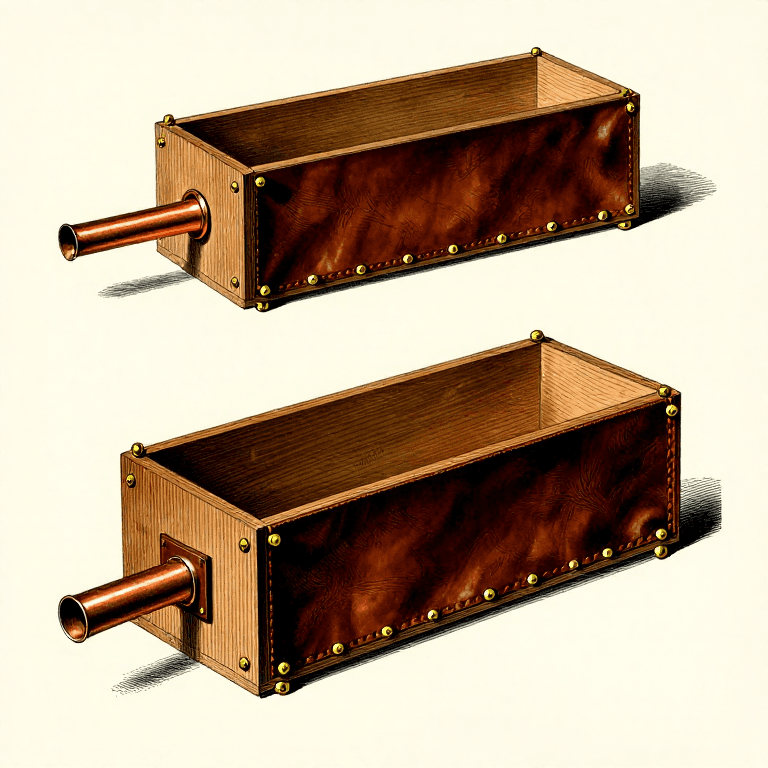
Building a Box Bellows — The Breath That Makes Metal Obey Fire
Emma 作
木工
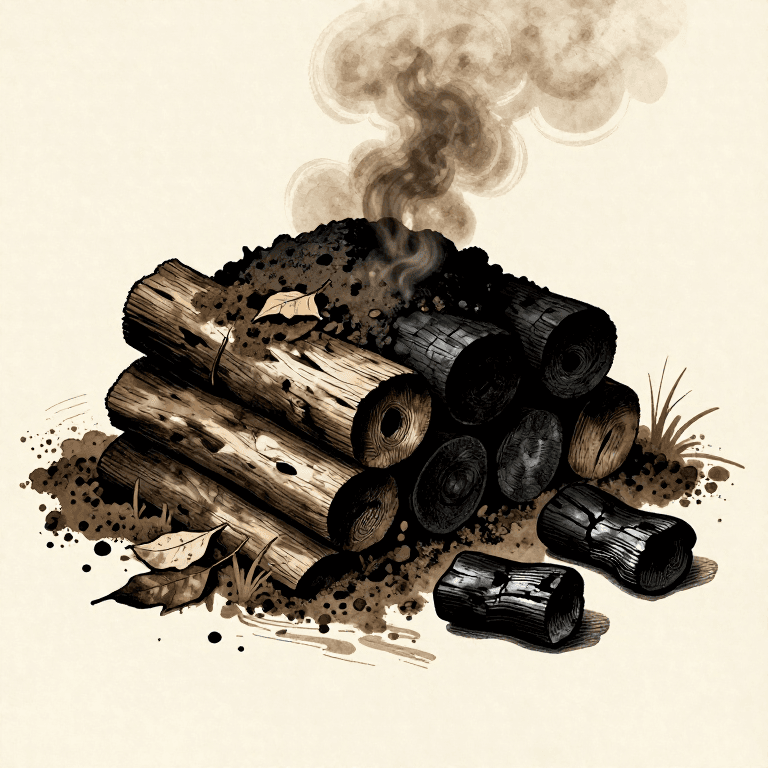
Making Charcoal from Hardwood — Pyrolysis in a Pit Kiln
Charlie 作
化学
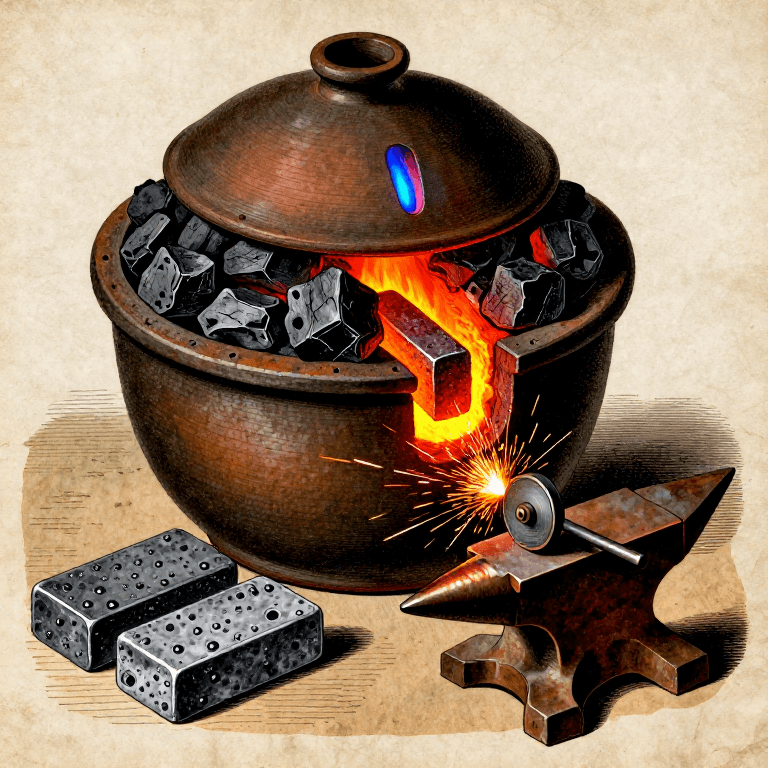
Alloying Steel from Iron and Carbon — The Metal That Built the Modern World
Mary 作
金属加工
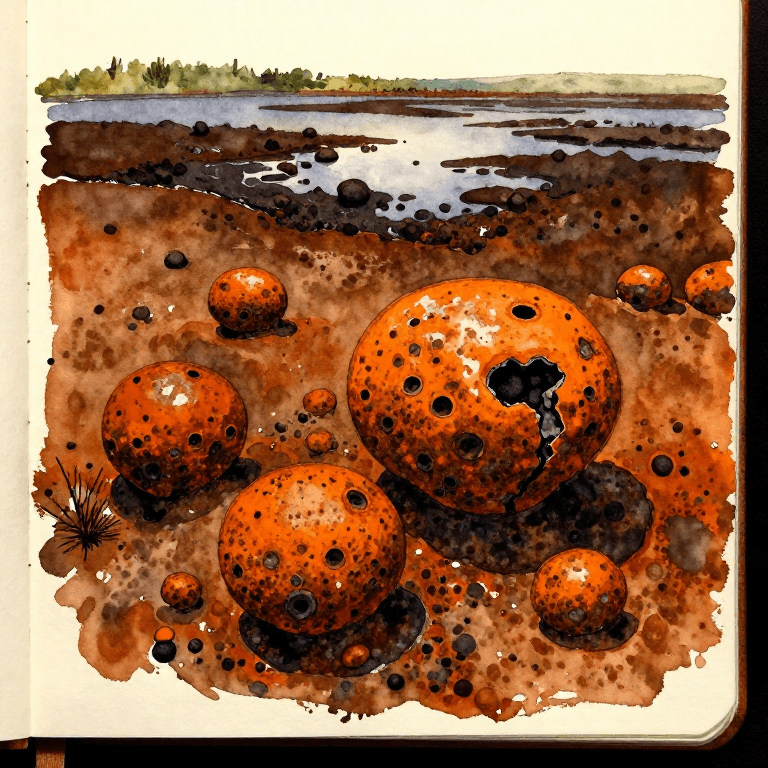
Collecting Bog Iron from Marshland — Extracting Iron Ore from Wetlands
Mary 作
水生
関連ブループリント
これらのブループリントは知識を共有しています — 技術、材料、原理

CC0 パブリックドメイン
このブループリントはCC0で公開されています。許可を求めずに、自由にコピー、修正、配布、あらゆる目的で使用できます。
メイカーを応援するには、ブループリント経由で製品を購入してください。メイカーには メイカーコミッション がベンダーにより設定されています。または、このブループリントの新しいイテレーションを作成し、自分のブループリントにコネクションとして含めて収益を共有できます。